
 By admin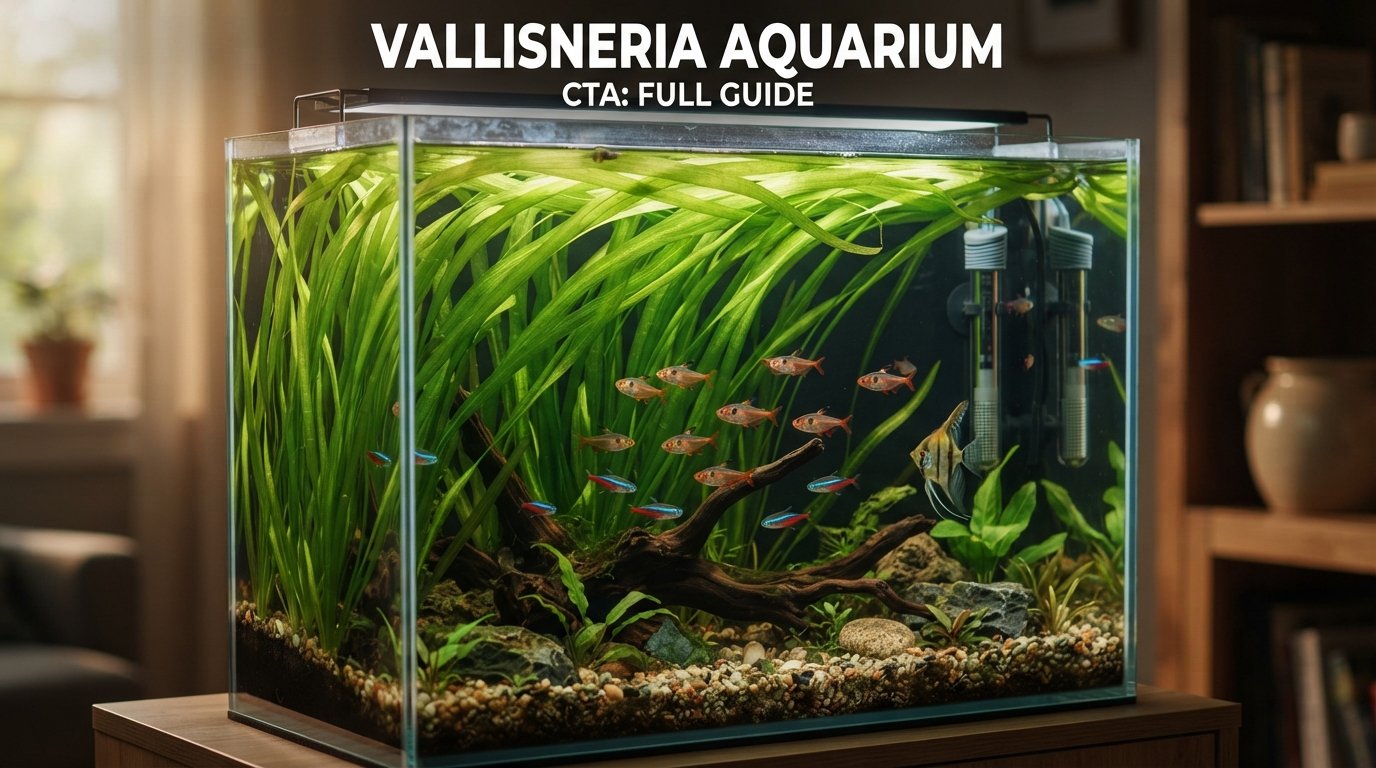
A vallisneria aquarium is a beautiful choice for anyone who wants to create a lush, natural-looking underwater environment. Vallisneria is one of the most popular aquarium plants because it grows tall, spreads through runners, and creates a grass-like underwater forest. Its long flowing leaves can move gently with the water current, giving an aquarium a peaceful and natural appearance.
Whether you have a small freshwater aquarium or a large community tank, Vallisneria can become an attractive background plant. It is also relatively easy to grow compared with many more demanding aquatic plants. With suitable lighting, nutrients, substrate, and water conditions, Vallisneria can establish itself quickly and produce new plants.
What Is Vallisneria?
Vallisneria is a group of freshwater aquatic plants commonly used in planted aquariums. It is sometimes called eelgrass, tape grass, or aquarium grass because of its long, narrow leaves.
Unlike carpeting plants that stay close to the substrate, Vallisneria grows upward and can eventually reach the surface. Some varieties have relatively short leaves, while others can grow several feet long in suitable conditions.
One of the most attractive features of Vallisneria is its ability to reproduce through runners. Once a plant becomes established, it can send horizontal runners through the substrate. New plants develop from these runners, gradually creating a dense group of plants.
This makes Vallisneria particularly useful for aquarium keepers who want a natural background without purchasing large numbers of plants.
Why Choose Vallisneria for an Aquarium?
There are several reasons Vallisneria remains popular among freshwater aquarium enthusiasts.
First, it creates height. Its long leaves can fill the empty space behind shorter aquarium plants and decorations.
Second, Vallisneria provides a natural appearance. A group of tall plants moving with the current can make an aquarium look more like an underwater habitat.
Third, it can provide shelter for fish and small aquatic animals. Dense plants create hiding spaces where shy fish can feel more comfortable.
Vallisneria is also useful for beginners because many varieties can adapt to a range of aquarium conditions.
Best Vallisneria Varieties for Aquariums
Different Vallisneria varieties can create very different appearances. Choosing the right type depends on the size and design of your aquarium.
| Vallisneria Type | Appearance | Best Aquarium Use |
|---|---|---|
| Vallisneria spiralis | Long, narrow leaves | Background planting |
| Jungle Vallisneria | Very tall flowing leaves | Large aquariums |
| Corkscrew Vallisneria | Twisted spiral leaves | Decorative backgrounds |
| Vallisneria nana | Shorter, narrow leaves | Smaller aquariums |
| Giant Vallisneria | Very long leaves | Large tanks and tall aquariums |
Vallisneria Spiralis
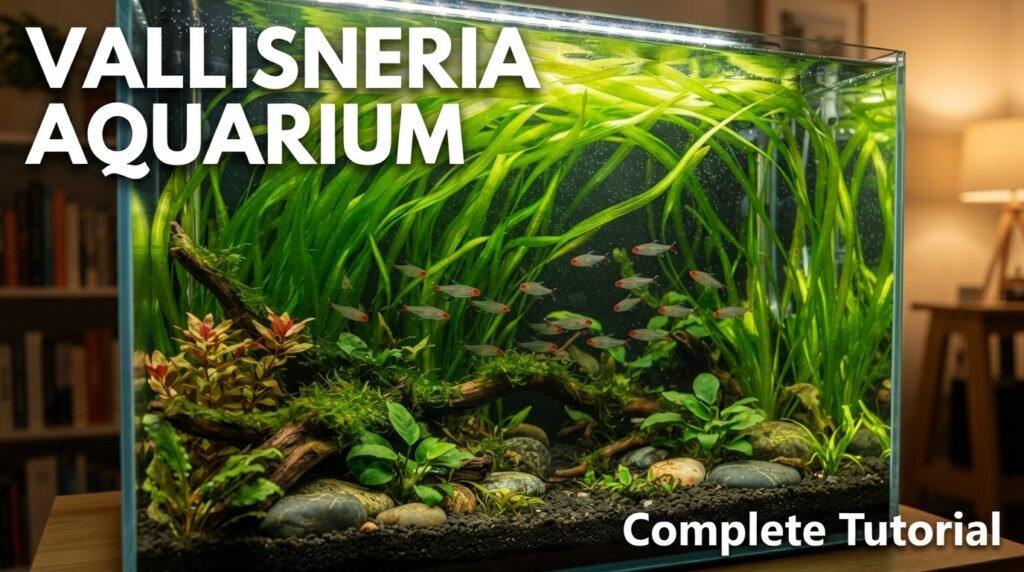
Vallisneria spiralis is one of the most commonly used types in freshwater aquariums. It produces long green leaves and can form a dense background when several plants are grown together.
Despite its scientific name, not every plant sold under this name necessarily has strongly spiral leaves. Aquarium plants are sometimes sold under common trade names that can vary between suppliers.
Jungle Vallisneria
Jungle Vallisneria is especially popular in larger aquariums. Its long leaves can grow toward the water surface and create a dramatic planted background.
It works particularly well in large community tanks where there is plenty of vertical space.
Corkscrew Vallisneria
Corkscrew Vallisneria is known for its twisted leaves. Instead of producing completely straight blades, the leaves curl and spiral, giving the aquarium a more textured appearance.
It can be an excellent choice when you want a Vallisneria aquarium that looks different from a traditional planted tank.
Vallisneria Nana
Vallisneria nana is generally smaller and more compact than many tall varieties. It can be useful in medium-sized aquariums where traditional Jungle Vallisneria might become too large.
Where Should You Plant Vallisneria?
Vallisneria is primarily a background plant. Planting it toward the back of the aquarium allows the long leaves to grow upward without blocking the view of fish and foreground plants.
You can also plant Vallisneria along the sides of the aquarium. This creates a natural frame around the central swimming area.
Another attractive design is to create a large group in one corner rather than spreading the plants evenly across the entire background.
This can make the aquarium look more natural because plants in nature rarely grow in perfectly symmetrical rows.
How to Plant Vallisneria
Planting Vallisneria is relatively simple, but there is one important detail: do not bury the crown too deeply.
The crown is the area where the leaves emerge from the roots. Place the roots into the substrate while keeping the crown near the surface.
If the entire base is buried deeply, the plant may struggle or begin to deteriorate.
A simple planting process is:
- Prepare a clean aquarium substrate.
- Separate the Vallisneria plants carefully.
- Trim excessively long damaged roots if necessary.
- Make a small hole in the substrate.
- Place the roots into the hole.
- Gently cover the roots.
- Keep the crown exposed.
- Leave some space between individual plants.
Avoid packing plants too tightly. Giving them room allows runners to spread naturally.
Vallisneria Aquarium Substrate
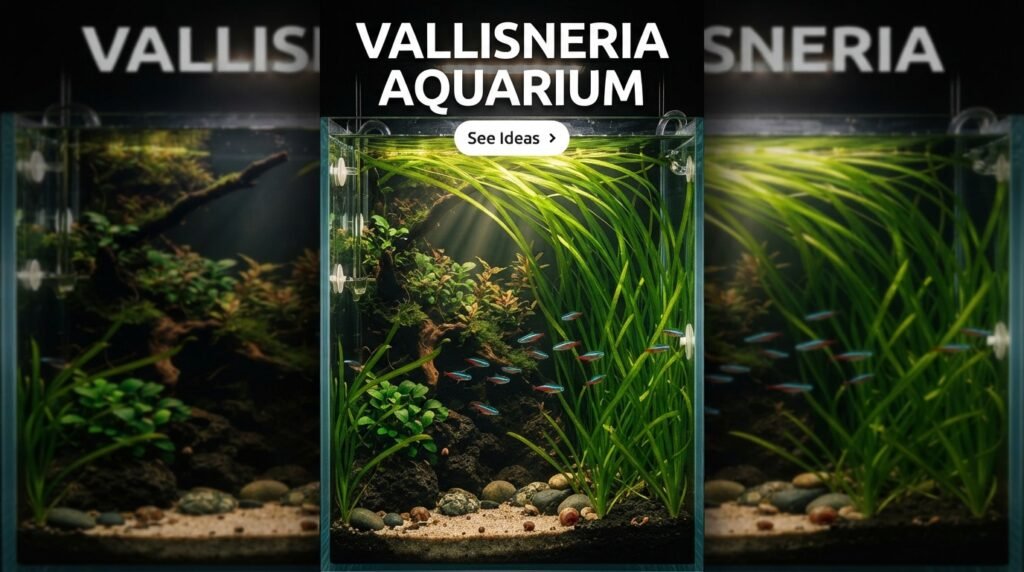
Vallisneria can grow in many aquarium substrates, but a suitable planting substrate can make establishment easier.
Sand, gravel, and planted aquarium substrates can all be used. A substrate with some nutrient content can be especially helpful because Vallisneria develops an extensive root system.
If you are using plain gravel or sand, root fertilizers can provide additional nutrients around the roots.
However, avoid disturbing the roots repeatedly. Vallisneria generally benefits from being left alone once it has been planted.
Lighting Requirements
Vallisneria is generally adaptable to aquarium lighting, but adequate light is important for healthy growth.
Low to moderate lighting can work for many Vallisneria varieties, while stronger lighting may encourage faster growth. The exact requirements depend on the variety and the rest of the aquarium.
A consistent lighting schedule is usually better than leaving aquarium lights on for extremely long periods.
For many planted aquariums, approximately 6 to 8 hours of lighting per day can be a reasonable starting point. Adjust the schedule according to plant growth and algae levels.
Too much light without sufficient plant growth and nutrient balance can encourage algae.
Does Vallisneria Need CO2?
One reason Vallisneria is popular with beginners is that it generally does not require injected CO2 to survive.
It can grow using the carbon dioxide naturally available in aquarium water. However, additional CO2 can sometimes increase plant growth in a well-maintained planted aquarium.
CO2 should not be considered essential for a basic Vallisneria aquarium.
If your goal is a simple, low-tech aquarium, Vallisneria can be an excellent choice.
Water Conditions for Vallisneria
Vallisneria can tolerate a relatively broad range of freshwater conditions. Stable conditions are usually more important than trying to achieve a single perfect number.
Temperature, pH, hardness, filtration, and water quality should be appropriate for the fish and other plants living in the aquarium.
Regular water changes help maintain stable conditions and remove accumulated waste.
Sudden changes in water chemistry should generally be avoided because both plants and fish benefit from stability.
Vallisneria Growth Rate
The growth rate of Vallisneria can vary depending on lighting, nutrients, water conditions, temperature, and the particular variety.
Once established, it can grow quickly enough to fill a background with long leaves.
One of its most useful characteristics is its ability to reproduce through runners. A healthy parent plant can produce several new plants over time.
If you want a dense Vallisneria aquarium, allowing runners to develop can eventually produce a natural-looking plant group.
How Vallisneria Reproduces
Vallisneria commonly reproduces through runners.
A runner grows horizontally through the substrate from the parent plant. A small new plant develops along the runner and eventually establishes its own roots.
Once the new plant is large enough, you can leave it connected or separate it carefully.
This natural propagation method makes Vallisneria one of the easiest aquarium plants to multiply.
Should You Trim Vallisneria?
Trimming Vallisneria requires some care.
If individual leaves become damaged or excessively long, they can be removed. However, cutting the leaves across the middle can sometimes produce an unattractive appearance because the cut ends remain visible.
When possible, remove damaged leaves from near the base instead of repeatedly cutting their tips.
If Vallisneria reaches the surface, you do not necessarily need to cut it immediately. Some aquarium keepers enjoy the appearance of long leaves floating across the surface.
However, excessive growth can block light from reaching plants underneath.
Common Vallisneria Problems
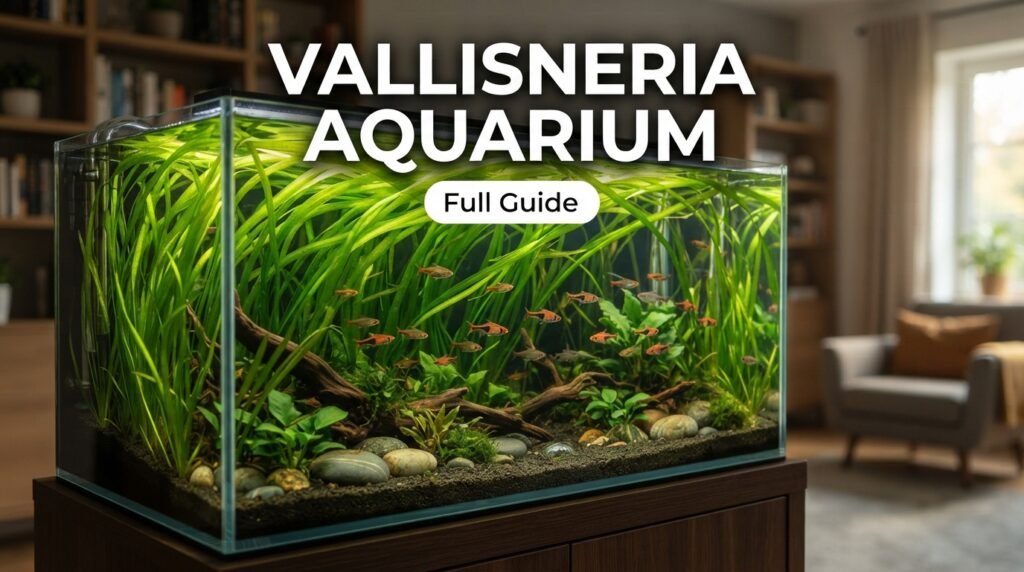
Although Vallisneria is relatively easy to grow, problems can still occur.
Yellow Leaves
Yellowing leaves may indicate nutrient deficiencies, aging leaves, poor growing conditions, or another aquarium imbalance.
Remove severely damaged leaves and check the overall condition of the aquarium.
Melting Leaves
Newly introduced Vallisneria may sometimes lose its existing leaves after being planted.
This can happen when plants transition from one growing environment to another. New leaves may eventually appear once the plant adapts.
Do not immediately assume the plant is dead if older leaves begin deteriorating.
Brown or Transparent Leaves
Leaves that become brown, pale, or transparent may indicate stress or deteriorating tissue.
Check lighting, nutrients, water quality, and planting depth.
Algae on Vallisneria
Long Vallisneria leaves can collect algae, particularly when the aquarium has excessive light or nutrient imbalance.
Keeping water quality stable, controlling light duration, and maintaining healthy plant growth can help reduce algae problems.
Vallisneria Aquarium Design Ideas
Vallisneria can be used in many different aquarium layouts.
Dense Jungle Background
Plant Vallisneria across the back of the aquarium and allow it to grow naturally.
Over time, the plants can form a thick green wall that creates a jungle-like appearance.
Vallisneria Corner
Instead of planting the entire background, create a dense group in one corner.
Leave the opposite side open for swimming space. This creates an asymmetrical and natural aquascape.
Vallisneria With Driftwood
Combine tall Vallisneria with driftwood and shorter plants.
The contrast between vertical leaves and horizontal wood can create a balanced natural environment.
Vallisneria and Rocks
Large rocks can be positioned in front of Vallisneria to create depth.
The plants provide a soft green background while the rocks provide structure and contrast.
Low-Tech Vallisneria Aquarium
For beginners, a low-tech setup can be one of the easiest approaches.
Use moderate lighting, a suitable substrate, basic filtration, regular water changes, and hardy aquarium plants. Vallisneria can serve as the primary background plant.
Fish That Look Great With Vallisneria
Vallisneria works well with many peaceful freshwater fish.
Small schooling fish can swim through the open areas in front of the plants, while shy species can use the dense leaves as cover.
Guppies, tetras, rasboras, danios, mollies, platies, and many other community fish can look attractive in a planted Vallisneria aquarium.
The specific fish selection should always be based on compatibility, tank size, water requirements, and behavior.
Vallisneria in a Guppy Aquarium
Vallisneria can be particularly attractive in a guppy aquarium.
Guppies often look striking against a green plant background because their colorful bodies contrast with the leaves.
The dense foliage can also provide hiding areas for young fish.
A simple setup could include Vallisneria along the back, smaller plants in the middle, and an open swimming area in the front.
Vallisneria Aquarium for Beginners
If you are creating your first planted aquarium, Vallisneria is worth considering because it offers several beginner-friendly characteristics.
It can grow without advanced equipment, can reproduce naturally, and can tolerate a variety of freshwater aquarium conditions.
The most important thing is to establish stable aquarium conditions rather than constantly changing the setup.
Give the plant appropriate light, provide nutrients, avoid burying the crown, and allow the roots to establish.
How to Create a Natural Vallisneria Aquarium
A natural-looking aquarium does not have to be complicated.
Start with a suitable substrate and plant Vallisneria toward the back. Add a few pieces of natural-looking driftwood or rocks.
Use different plant heights to create depth. Keep the foreground relatively open so the aquarium does not appear overcrowded.
Instead of making everything symmetrical, allow some plants to grow naturally and use groups of plants to create visual interest.
A simple composition can often look more natural than a heavily decorated aquarium.
Vallisneria Aquarium Maintenance
Maintenance is straightforward once the plants become established.
Perform regular partial water changes according to the needs of your aquarium. Remove dead leaves and excessive plant debris.
Keep the filter functioning properly and monitor water parameters.
If Vallisneria becomes too dense, thin out some plants by removing older plants or excess runners.
Avoid constantly uprooting healthy plants because repeated disturbance can slow their establishment.
Frequently Asked Questions About Vallisneria Aquarium
Is Vallisneria good for an aquarium?
Yes. Vallisneria is a popular freshwater aquarium plant because it is attractive, adaptable, and capable of producing new plants through runners.
Does Vallisneria need CO2?
No. Vallisneria can grow without injected CO2, making it suitable for many low-tech aquariums. Additional CO2 may encourage growth in some setups but is not essential.
How fast does Vallisneria grow?
Growth varies depending on lighting, nutrients, water conditions, and plant variety. Once established, Vallisneria can grow quickly and produce runners.
Can Vallisneria grow in sand?
Yes. Vallisneria can grow in sand when its roots have access to appropriate nutrients. Root fertilizers can be useful in nutrient-poor substrates.
How tall does Vallisneria get?
Some varieties remain relatively short, while others can grow extremely long and reach the aquarium surface. Choose a variety according to your tank height.
Is Vallisneria good for a guppy tank?
Yes. Vallisneria can provide an attractive green background and hiding areas for guppies and their fry.
Why is my Vallisneria melting?
Newly introduced plants can lose older leaves while adapting to a new aquarium environment. Nutrient issues, water conditions, planting depth, and other environmental changes can also contribute.
Should Vallisneria be planted in the foreground?
It is usually better suited to the background or sides because many varieties grow tall. Smaller varieties can work in medium-ground areas.
Can Vallisneria grow without fertilizer?
It can survive without additional fertilizer in some aquariums, especially when nutrients are naturally available. However, providing appropriate nutrients can support healthier growth.
Does Vallisneria spread?
Yes. Vallisneria commonly spreads through runners that produce new plants around the parent plant.
Can you cut Vallisneria leaves?
You can remove damaged leaves, but repeatedly cutting leaves across the middle may leave unattractive cut ends. Removing damaged leaves near the base is often preferable.
Is Vallisneria good for beginners?
Yes. It is one of the more beginner-friendly aquarium plants and can be used in many simple freshwater setups.
Conclusion
A vallisneria aquarium can provide a beautiful combination of natural appearance, easy maintenance, and strong plant growth. Its long flowing leaves create an impressive background while its runners allow a healthy plant group to expand naturally.
Whether you are setting up a small community aquarium, a large planted tank, or a colorful guppy aquarium, Vallisneria can add height, movement, and natural shelter. Choose the right variety for your aquarium size, plant it correctly, provide stable water conditions and suitable lighting, and give it time to establish.
With a little patience, Vallisneria can transform a simple freshwater aquarium into a lush underwater landscape.