
 By admin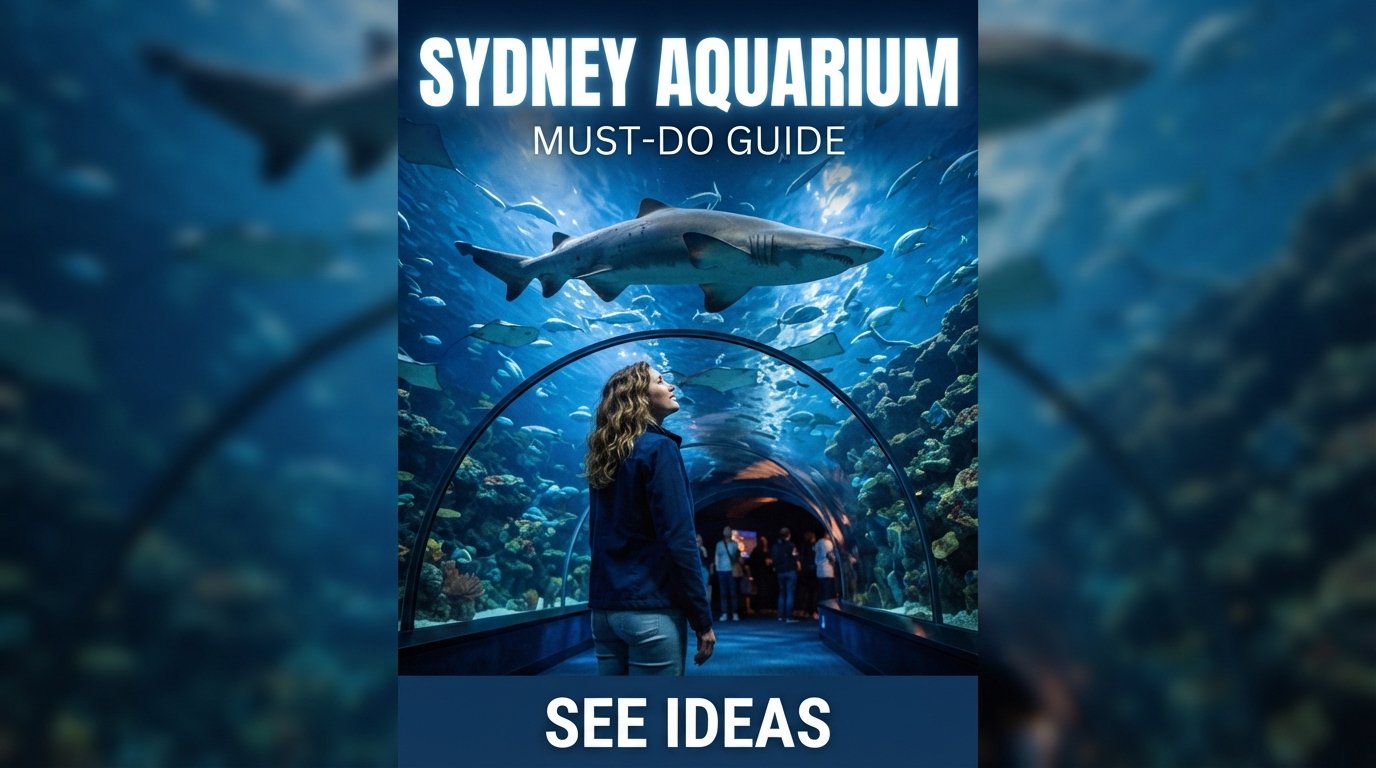
A visit to sydney aquarium is an exciting way to explore Australia’s incredible underwater world. Sydney is surrounded by the ocean, waterways, beaches, and marine habitats, making it an ideal city for discovering aquatic life. A large public aquarium allows visitors to see many of these animals up close while learning about marine ecosystems, conservation, and the unique species found around Australia.
Sydney’s major aquarium attraction is located in the heart of the city near Darling Harbour. It provides visitors with an opportunity to explore underwater environments featuring sharks, rays, penguins, tropical fish, seahorses, jellyfish, and other fascinating animals.
For aquarium enthusiasts, Sydney’s aquarium can also provide excellent inspiration for home fish tanks. The exhibits demonstrate how natural habitats can be recreated using rocks, plants, sand, lighting, and carefully designed underwater spaces.
What Is Sydney Aquarium?
Sydney Aquarium is a major public aquarium attraction in Sydney, Australia. It showcases a wide variety of marine and freshwater animals, with a particular focus on Australian aquatic environments.
The aquarium provides visitors with immersive exhibits where they can observe animals from large underwater viewing areas.
Instead of simply displaying individual fish in small tanks, modern public aquariums attempt to recreate habitats. This allows visitors to see how animals behave and interact with their environment.
The experience can be both educational and entertaining, making it popular with families, tourists, school groups, and people interested in marine biology.
Where Is Sydney Aquarium?
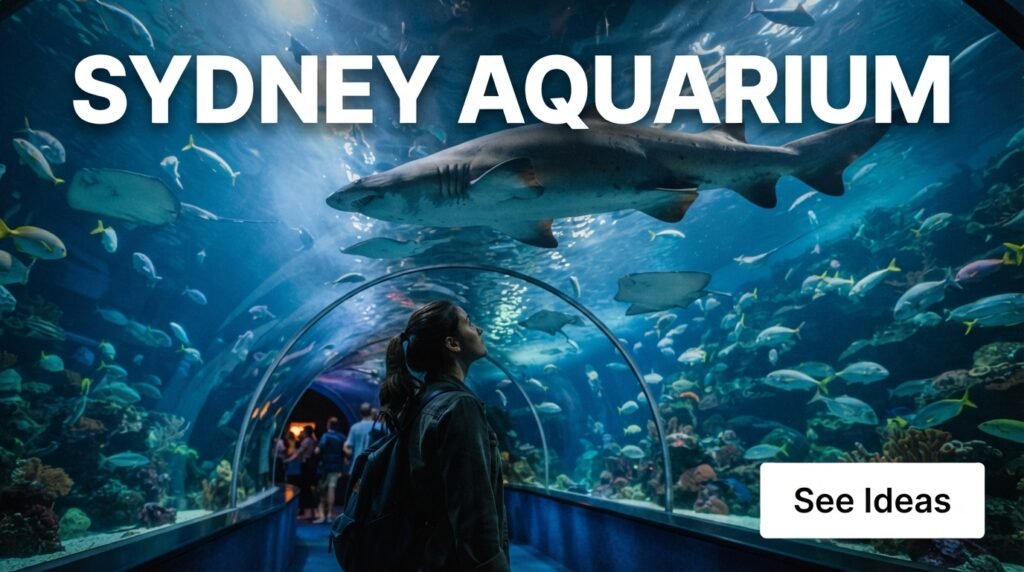
The aquarium is located at Darling Harbour in central Sydney.
Its location makes it convenient for visitors exploring other attractions in the surrounding area. Being close to the waterfront also makes the aquarium particularly appropriate for a city so strongly connected to the ocean.
Before visiting, it is sensible to check current opening hours, ticket information, exhibits, animal presentations, and visitor policies because these details can change.
Why Is Sydney Aquarium Popular?
Sydney Aquarium is popular because it provides visitors with an opportunity to experience Australia’s aquatic wildlife in one location.
Australia has an enormous variety of marine and freshwater species. Some are familiar around the world, while others are much less commonly seen outside Australia.
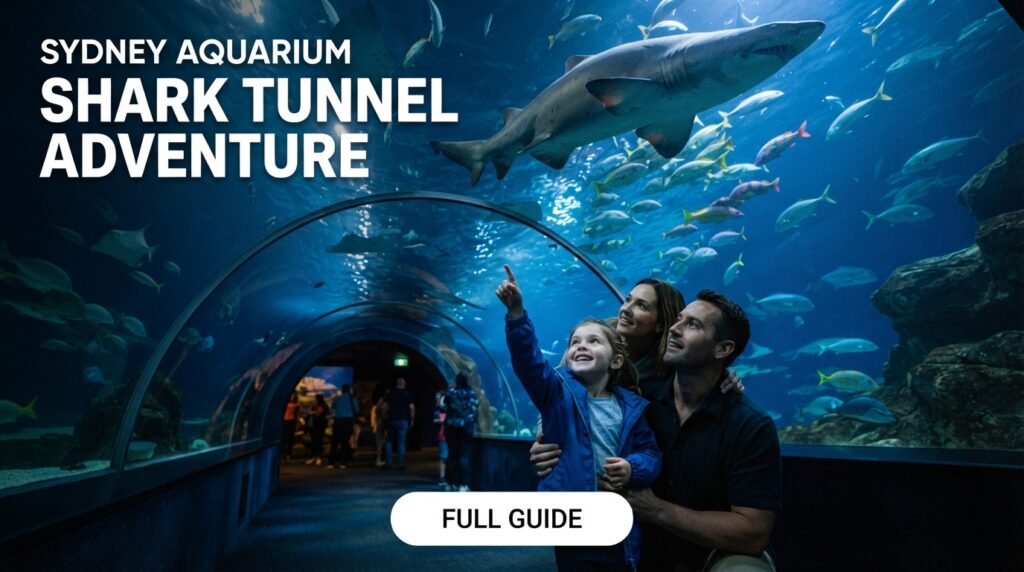
Large underwater habitats also create memorable viewing experiences. Walking through an underwater tunnel while sharks and rays swim nearby can feel very different from looking at a conventional fish tank.
Australian Aquatic Life
Australia has a huge variety of aquatic ecosystems.
These include:
- Coral reefs
- Coastal waters
- Estuaries
- Rivers
- Wetlands
- Seagrass meadows
- Rocky shorelines
- Open ocean environments
Each habitat supports different animals and plants.
A major aquarium can help visitors understand these differences by recreating several types of aquatic environments.
Sharks at Sydney Aquarium
Sharks are among the most exciting animals to see in a large aquarium.
They have powerful bodies, unique swimming patterns, and important ecological roles.
Large aquarium habitats provide enough space for visitors to observe sharks moving through the water while learning more about their behavior and biology.
Seeing sharks in a spacious environment can also help visitors understand that different shark species have different habitats, diets, and behaviors.
Sharks are important predators in marine ecosystems and play a role in maintaining ecological balance.
Rays and Stingrays
Rays are another major attraction for aquarium visitors.
Their flattened bodies and graceful movements make them fascinating to watch.
Rays often spend time near the bottom of aquatic habitats, while others move through open water.
A well-designed aquarium allows visitors to observe these animals from multiple viewing angles.
Rays also demonstrate how aquatic animals can evolve highly specialized body shapes for their environments.
Penguins
Penguins are among the most popular animals at many aquariums.
Their behavior both in and out of water makes them interesting for visitors of all ages.
Aquarium penguin habitats need to provide suitable water, temperature, resting areas, and environmental conditions.
Watching penguins swim can also demonstrate how their bodies are adapted for underwater movement.
Tropical Fish
Colorful tropical fish are a major part of aquarium exhibits.
Bright blue, yellow, orange, red, and striped fish can create spectacular underwater displays.
Schools of fish moving together can also create a strong visual effect.
For home aquarium owners, tropical fish exhibits can provide inspiration for choosing compatible species and creating natural-looking aquascapes.
However, aquarium owners should never select fish simply because they look attractive. Tank size, water parameters, diet, temperament, and compatibility are all important.
Jellyfish Exhibits
Jellyfish are among the most visually fascinating animals in a modern aquarium.
Their transparent bodies and slow movements create a peaceful appearance.
Aquariums often use carefully controlled lighting to emphasize their shapes and movement.
Jellyfish exhibits can also demonstrate how different aquatic animals can thrive using completely different body structures and survival strategies.
Seahorses
Seahorses are another fascinating group of marine animals.
Their unusual body shape, upright swimming style, and specialized behavior make them very different from most fish.
Aquariums can provide an opportunity to observe these animals closely while learning about their natural habitats.
Seahorses also remind visitors that marine ecosystems contain animals with an incredible variety of adaptations.
Coral Reef Exhibits
Coral reefs are among the most diverse marine ecosystems on Earth.
A reef aquarium may contain corals, tropical fish, invertebrates, rocks, and other organisms.
Creating a healthy reef aquarium at home can be considerably more demanding than maintaining a basic freshwater aquarium.
Marine aquariums require careful management of salinity, water chemistry, filtration, lighting, and livestock compatibility.
For beginners, a freshwater planted aquarium may be a simpler way to learn aquarium keeping.
Sydney Aquarium-Inspired Home Aquarium Ideas
A visit to a large aquarium can provide excellent inspiration for a home aquarium.
You do not need a massive tank to apply professional design principles.
A simple freshwater aquarium can use natural materials such as:
- Sand
- Gravel
- Rocks
- Driftwood
- Aquatic plants
- Moss
- Open swimming areas
Instead of filling the aquarium with artificial decorations, create a habitat that resembles a natural environment.
Australian-Themed Aquarium
An Australian-themed aquarium can be inspired by the country’s rivers, wetlands, coastal areas, or marine environments.
A freshwater setup might use natural stones, driftwood, sand, and aquatic plants.
A marine aquarium could focus on reef-inspired elements and colorful saltwater fish.
If you want to keep native Australian species, research local regulations and the exact care requirements of each species. Never collect wild aquatic animals without appropriate authorization.
Modern Sydney Aquarium Design
Sydney aquarium exhibits can also inspire modern interior aquarium designs.
A minimalist tank with clear glass, natural hardscape, carefully arranged plants, and subtle lighting can create a contemporary appearance.
Rimless aquariums are particularly suitable for modern interiors because they emphasize the glass and aquascape rather than a heavy external frame.
Aquarium in a Sydney Home
A home aquarium can fit into many different rooms.
Popular locations include:
- Living room
- Bedroom
- Home office
- Kitchen
- Dining room
- Hallway
- Entry area
The best location should be stable, away from direct sunlight, and easy to access for maintenance.
Avoid placing an aquarium near ovens, radiators, strong heat sources, or areas where water can easily reach electrical equipment.
Sydney Aquarium for Families
Aquariums are particularly suitable for family outings.
Young children can enjoy watching colorful fish, sharks, penguins, and other animals.
Older children can learn about marine ecosystems, animal adaptations, conservation, and environmental issues.
Parents can turn the visit into an educational experience by discussing why different animals live in different habitats.
Reading exhibit information can also make the visit more meaningful.
Aquarium Conservation and Education
Modern public aquariums can play an important role in conservation education.
Visitors can learn about threats facing aquatic ecosystems, including pollution, habitat destruction, overfishing, climate change, and other environmental challenges.
Learning about conservation can encourage people to make more responsible choices in their everyday lives.
Even aquarium hobbyists can contribute by purchasing captive-bred animals when appropriate, avoiding irresponsible collection, and maintaining healthy aquariums.
Aquarium Photography Tips
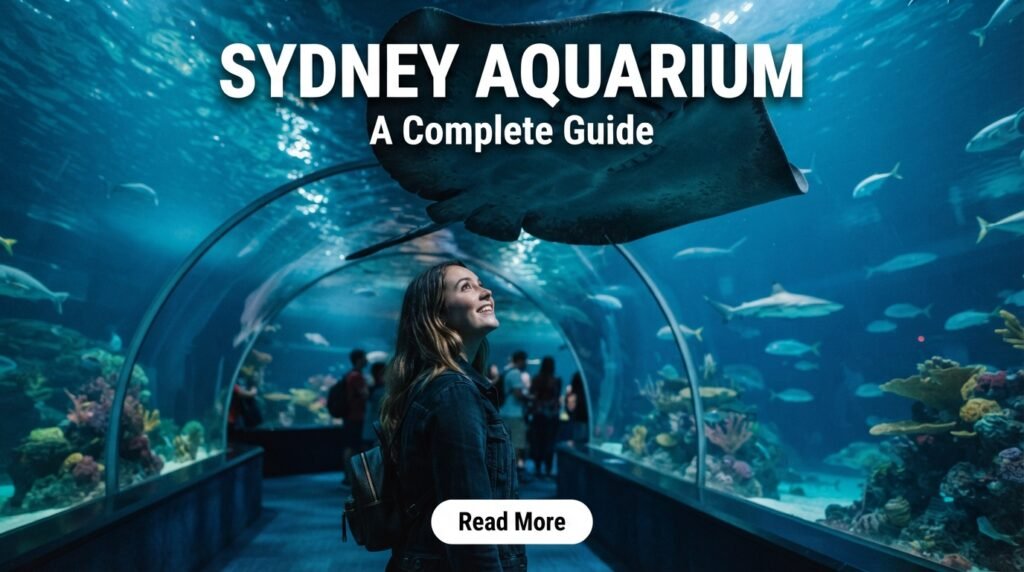
Aquariums can be challenging places for photography.
The lighting is often low, and reflections can appear on glass surfaces.
If photography is permitted, avoid flash when aquarium rules prohibit it.
Try positioning the camera close to the glass to reduce reflections.
Instead of photographing every animal, wait for interesting behavior or a clear composition.
Large aquarium windows can also provide opportunities to capture the scale of the habitat.
What Aquarium Owners Can Learn From Sydney Aquarium
One of the most useful lessons from professional aquarium exhibits is habitat design.
A fish tank should not simply contain water and fish.
The environment should provide appropriate shelter, swimming space, hiding areas, water movement, and suitable environmental conditions.
Plants and hardscape can also help create a more natural appearance.
Even a small home aquarium can use these principles.
Creating a Natural Aquarium
If you want to create an aquarium inspired by Sydney’s aquatic exhibits, focus on natural materials.
Start with an appropriate substrate.
Add rocks or driftwood to create structure.
Place aquatic plants at different heights to create depth.
Leave enough open water for fish to swim comfortably.
Finally, select fish that are appropriate for the aquarium size and compatible with one another.
Best Fish for a Home Aquarium
There are many suitable freshwater fish for home aquariums.
Depending on the tank size, possible choices include:
- Guppies
- Neon tetras
- Rasboras
- Corydoras
- Platies
- Mollies
- Other peaceful community fish
Do not combine species without checking compatibility.
Some fish require very specific water conditions, while others may grow too large for smaller aquariums.
Aquarium Plants
Live plants can make a home aquarium look much more natural.
Beginner-friendly plants can include Anubias, Java fern, Cryptocoryne, Amazon sword, Vallisneria, and various mosses.
Plant selection should depend on lighting, substrate, nutrients, water conditions, and aquarium size.
A planted aquarium also requires regular trimming and maintenance.
Aquarium Lighting
Lighting is important for both appearance and plant growth.
LED aquarium lights are widely used because they are available in different sizes and intensities.
Avoid excessive lighting because it can encourage algae growth.
If the aquarium contains live plants, choose lighting according to their requirements rather than selecting a light only for appearance.
A timer can help provide a consistent daily schedule.
Aquarium Maintenance
A beautiful aquarium requires regular care.
Important tasks include:
- Checking water temperature
- Monitoring fish behavior
- Testing water when appropriate
- Cleaning algae
- Removing dead plant leaves
- Performing partial water changes
- Maintaining filtration
- Checking heaters and other equipment
- Feeding fish appropriately
Avoid overfeeding because uneaten food can contribute to water-quality problems.
Common Aquarium Mistakes
One of the biggest mistakes beginners make is adding too many fish.
Another is choosing species based solely on appearance.
Poor filtration, irregular maintenance, unsuitable water conditions, and excessive feeding can also cause problems.
Aquarium equipment should also be selected according to tank size.
A beautiful aquascape is not successful if its inhabitants are stressed or unhealthy.
Planning a Sydney Aquarium Visit
If you are planning a visit, check the aquarium’s current information before traveling.
Look at opening hours, ticket requirements, exhibit information, accessibility options, and any special programs.
Allow enough time to explore the different habitats.
If traveling with children, consider planning breaks so the visit remains enjoyable rather than rushed.
Best Things to Observe During Your Visit
When exploring an aquarium, pay attention to more than the animals.
Look at the way each habitat is designed.
Notice how rocks, plants, sand, wood, and open water are arranged.
Observe how fish use different areas of the tank.
Pay attention to lighting and how it changes the appearance of the habitat.
These details can provide excellent inspiration for your own aquarium.
Final Thoughts on Sydney Aquarium
The sydney aquarium experience offers an exciting opportunity to discover Australia’s aquatic wildlife and learn more about marine and freshwater ecosystems. From sharks and rays to penguins, tropical fish, jellyfish, and seahorses, the variety of aquatic life makes a public aquarium an unforgettable destination for many visitors.
For aquarium enthusiasts, the exhibits also provide valuable design inspiration. Natural materials, carefully planned habitats, appropriate lighting, and open swimming areas can all be adapted to smaller home aquariums.
Whether you are interested in visiting an aquarium, learning about marine animals, or designing your own underwater world, Sydney’s aquarium environment offers plenty of ideas to explore.
FAQs About Sydney Aquarium
Where is Sydney Aquarium located?
Sydney Aquarium is located at Darling Harbour in central Sydney, Australia.
What animals can you see at Sydney Aquarium?
Depending on current exhibits, visitors can see sharks, rays, penguins, tropical fish, jellyfish, seahorses, and many other aquatic animals.
Is Sydney Aquarium good for children?
Yes. The aquarium offers educational and visually engaging exhibits that can be enjoyed by children and adults.
Does Sydney Aquarium have sharks?
Sharks are among the major marine animals featured in large aquarium exhibits. Specific species and displays can change over time.
Does Sydney Aquarium have penguins?
Penguins have been featured in aquarium exhibits, although specific animal presentations and availability can change.
Can Sydney Aquarium inspire a home fish tank?
Yes. Visitors can get ideas about aquascaping, habitat design, lighting, natural decorations, and fish environments.
What fish are good for a Sydney-inspired aquarium?
For a general freshwater setup, suitable community species such as guppies, tetras, rasboras, and corydoras can be considered when the aquarium conditions and tank size are appropriate.
Can I create an Australian-themed aquarium at home?
Yes. You can create a habitat inspired by Australian freshwater, coastal, or marine environments, but research the needs and legal requirements of any native species before keeping them.
How can I make my aquarium look like a public aquarium?
Use natural materials, create a carefully planned aquascape, maintain clean glass, organize equipment, use appropriate lighting, and avoid overcrowding the aquarium.
How often should a home aquarium be maintained?
Maintenance depends on the aquarium and its inhabitants, but regular water-quality checks, partial water changes, equipment inspection, glass cleaning, and plant maintenance are important.
What makes Sydney’s aquatic environments special?
Sydney is surrounded by diverse marine and coastal habitats, including rocky shorelines, estuaries, beaches, and offshore marine environments, which support a wide variety of aquatic life.