
 By admin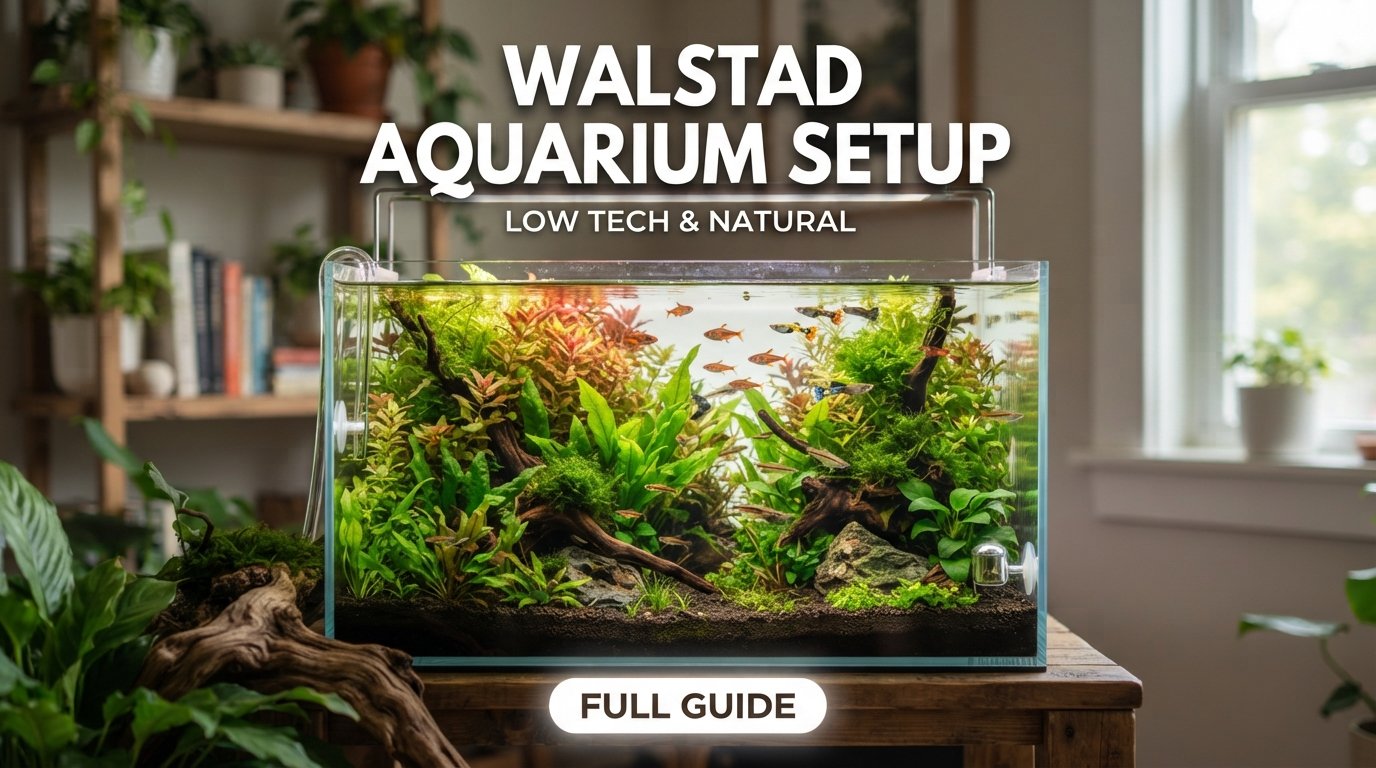
A planted aquarium setup is a beautiful way to bring a natural underwater landscape into your home. Unlike a traditional aquarium that focuses mainly on fish and decorations, a planted aquarium uses living aquatic plants as an important part of the design. Plants provide color, texture, shelter, and a natural appearance while helping create a more interesting environment for fish and other aquatic animals.
Creating a planted aquarium does not necessarily require expensive equipment or advanced aquascaping skills. Beginners can start with a simple low-tech setup using hardy plants, basic lighting, a suitable substrate, and regular maintenance. More experienced aquarium keepers can build advanced systems using CO2 injection, powerful lighting, nutrient-rich substrates, and carefully selected plants.
The most important part of a successful planted aquarium is balance. Light, carbon dioxide, nutrients, water quality, plants, fish, and maintenance all influence one another. When these factors are balanced, plants can grow strongly and the aquarium can become a stable and attractive underwater ecosystem.
What Is a Planted Aquarium?
A planted aquarium is an aquarium where living aquatic plants are intentionally grown as a major part of the environment.
Plants can be used in the foreground, middle ground, background, or attached to hardscape such as rocks and driftwood.
Some planted aquariums contain only a few hardy plants, while others are heavily planted with dozens of species.
The style you choose depends on your experience, aquarium size, available equipment, and the appearance you want to create.
Why Create a Planted Aquarium?
There are many reasons aquarium keepers choose planted tanks.
Living plants can make an aquarium look more natural and visually interesting. They provide hiding places and resting areas for fish and can create a more complex environment.
Plants also absorb nutrients from the water as they grow. Healthy plant growth can contribute to overall aquarium stability, although plants should not be considered a replacement for proper filtration and water changes.
A planted aquarium can also become a creative project. Aquascaping allows you to arrange plants, rocks, wood, and open spaces into a miniature underwater landscape.
Types of Planted Aquarium Setups
Before buying equipment, decide what type of planted aquarium you want.
| Setup Type | Equipment Level | Suitable For |
|---|---|---|
| Low-Tech | Basic | Beginners and hardy plants |
| Medium-Tech | Moderate | More plant variety |
| High-Tech | Advanced | Demanding plants and aquascaping |
| Nano Planted Tank | Compact | Small spaces |
| Heavily Planted Tank | Moderate to advanced | Dense underwater landscapes |
Low-Tech Planted Aquarium
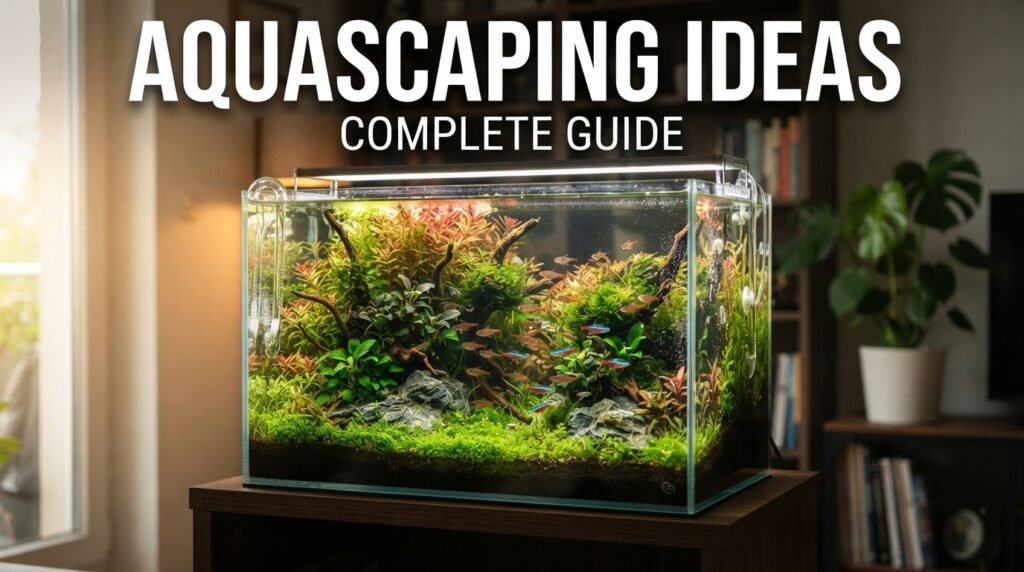
A low-tech setup is often the best starting point for beginners.
It typically uses moderate lighting, a suitable substrate, hardy plants, filtration, and regular water changes without injected CO2.
Plants such as Anubias, Java fern, Cryptocoryne, Vallisneria, and some mosses can work well in many low-tech systems.
High-Tech Planted Aquarium
A high-tech setup generally includes stronger lighting, CO2 injection, nutrient management, and more demanding plants.
This approach can produce fast plant growth and detailed aquascapes, but it requires closer monitoring.
If you are new to planted aquariums, starting with low-tech equipment can make the learning process easier.
Choosing the Right Aquarium
Almost any suitable freshwater aquarium can become a planted tank.
The aquarium’s dimensions should match the plants and fish you intend to keep.
Long aquariums provide plenty of horizontal swimming space and can be excellent for natural aquascaping.
Tall aquariums provide vertical space for plants such as Vallisneria, but reaching the bottom during maintenance can be more difficult.
Nano tanks are attractive for small spaces but require careful monitoring because water parameters can change more quickly.
Choosing a Substrate
Substrate is one of the foundations of a planted aquarium setup.
Plants use their roots to absorb nutrients, although not every aquatic plant depends heavily on root feeding.
Common substrate options include:
- Aquarium gravel
- Sand
- Nutrient-rich planted substrates
- Aquasoil
- Layered substrates
A nutrient-rich substrate can be useful for plants with extensive root systems.
Sand and gravel can also work, particularly when combined with appropriate root fertilizers.
Choose a substrate that fits both your plants and the visual style of your aquascape.
How Deep Should the Substrate Be?
A moderate substrate depth provides room for roots to develop.
The exact depth depends on the aquarium size and plants being used.
A deeper substrate can also help create slopes, which are useful for adding visual depth to an aquascape.
For example, you can create a higher substrate level toward the back and a lower level toward the front.
This makes the aquarium appear deeper than it actually is.
Choosing Aquarium Plants
Plant selection is one of the most enjoyable parts of creating a planted aquarium.
Choose plants according to their lighting, nutrient, CO2, temperature, and placement requirements.
Foreground Plants
Foreground plants remain relatively short and can create a carpet-like appearance.
Examples include certain carpeting species such as dwarf hairgrass and other appropriately selected small plants.
Midground Plants
Midground plants add height and texture without completely covering the background.
Cryptocoryne species and smaller stem plants can work well in this area.
Background Plants
Tall plants are usually placed toward the back.
Vallisneria, taller stem plants, and other large aquatic plants can create a natural background.
Epiphyte Plants
Some plants can be attached to rocks or driftwood rather than planted directly into the substrate.
Java fern and Anubias are popular examples.
Their rhizomes should not be buried deeply in the substrate.
Popular Plants for Beginners
If you are creating your first planted aquarium, consider hardy species.
| Plant | Placement | General Difficulty |
|---|---|---|
| Anubias | Rock or wood | Easy |
| Java Fern | Rock or wood | Easy |
| Java Moss | Rock or wood | Easy |
| Vallisneria | Background | Easy |
| Cryptocoryne | Foreground/midground | Easy to moderate |
| Amazon Sword | Midground/background | Moderate |
| Dwarf Hairgrass | Foreground | Moderate |
| Stem Plants | Background | Varies |
Plant requirements vary by species, so always check the needs of the exact plant before adding it to your aquarium.
Aquarium Lighting
Lighting is one of the most important components of a planted aquarium setup.
Plants need light for photosynthesis, but more light is not always better.
A common beginner mistake is installing very strong lighting without providing enough carbon dioxide and nutrients. This can encourage algae instead of healthy plant growth.
Start with a reasonable lighting schedule and observe plant growth and algae.
Many planted aquariums can begin with approximately 6 to 8 hours of light per day, with adjustments based on the system.
Choosing an Aquarium Light
Look for a light designed for aquatic plant growth.
The size and depth of the aquarium should influence your choice.
A shallow aquarium may require less light intensity than a deep aquarium.
If you plan to grow demanding carpeting plants, you may need stronger lighting than a simple low-tech tank containing Anubias and Java fern.
Do Planted Aquariums Need CO2?
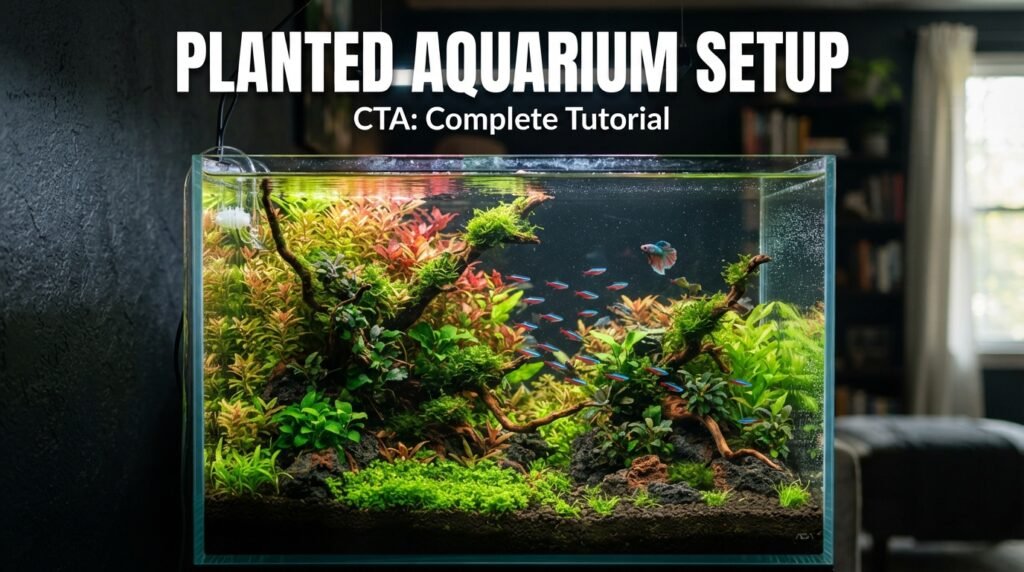
Not every planted aquarium requires injected CO2.
A low-tech aquarium can be successful without a CO2 system, especially when using hardy plants and moderate lighting.
CO2 injection becomes more useful when you want rapid growth, dense carpeting plants, or species with higher carbon requirements.
If you add CO2, you must balance it with lighting and nutrients.
Increasing CO2 and light without understanding nutrient requirements can create instability and algae problems.
Filtration for a Planted Aquarium
Filtration remains important even when an aquarium contains many plants.
A suitable filter helps remove suspended particles, supports beneficial bacteria, and keeps water moving.
The filter should provide appropriate circulation without creating excessive flow for fish or delicate plants.
Aquarium size and fish population should be considered when choosing filtration.
Water Flow
Water movement distributes nutrients and carbon dioxide throughout the aquarium.
It also prevents stagnant areas.
However, plants and fish have different flow preferences.
Some fish prefer gentle water, while certain plants benefit from moderate circulation.
Aim for consistent movement without creating a powerful current that constantly bends or uproots plants.
Adding Hardscape
Hardscape refers to non-living structural elements such as rocks and driftwood.
Hardscape can give a planted aquarium its basic shape before plants are added.
Popular styles include:
- Nature-style aquascapes
- Rock-focused layouts
- Driftwood layouts
- Island designs
- Triangular compositions
- Open minimalist designs
Choose aquarium-safe materials and make sure heavy rocks are stable.
How to Arrange a Planted Aquarium
A good aquascape usually benefits from varying plant heights.
Place shorter plants in the foreground and taller plants toward the back.
Create open spaces rather than filling every part of the aquarium.
A central focal point can be created with a large piece of driftwood, a rock formation, or a distinctive plant.
Avoid arranging everything in perfectly straight lines.
Natural-looking groups often produce a more attractive result.
The Importance of Negative Space
Negative space is the open area around plants and hardscape.
It is often overlooked by beginners because they want to fill the aquarium with as many plants as possible.
However, open areas give fish room to swim and make the planted sections more visually powerful.
A balanced aquarium usually contains both planted areas and open spaces.
Adding Fish
Fish should be selected after considering the aquarium’s mature size and plant layout.
Small peaceful community fish can look excellent in planted aquariums.
Guppies, tetras, rasboras, danios, some gouramis, and other compatible species can work in suitable setups.
Bottom-dwelling fish can also add activity to the lower part of the aquarium.
Always research compatibility rather than mixing fish based only on appearance.
Fish That May Damage Plants
Some fish are more likely to dig, uproot, or consume aquatic plants.
Large herbivorous or digging species may not be ideal for delicate planted aquascapes.
If plants are your main priority, choose fish that are naturally compatible with planted environments.
Cycling a Planted Aquarium
Before adding fish, the aquarium should be properly cycled.
Cycling allows beneficial bacteria to establish themselves and process toxic nitrogen compounds.
Plants can be added during the cycling process, but their presence does not eliminate the need for biological cycling.
Test the water and make sure the aquarium is ready before introducing fish.
Fertilizing a Planted Aquarium
Plants require nutrients to grow.
Important nutrients include nitrogen, phosphorus, potassium, iron, and various trace elements.
Plants obtain nutrients from both the water and substrate.
The exact fertilizer requirements depend on plant species, fish population, substrate, lighting, and CO2 availability.
Start conservatively rather than adding large quantities of fertilizer.
Excess nutrients combined with excessive light can contribute to algae.
Root Tabs
Root tabs are useful for plants that obtain substantial nutrition through their roots.
They can be placed beneath the substrate near plants such as Amazon swords and certain Cryptocoryne species.
Follow the product instructions and avoid disturbing plant roots unnecessarily.
Algae Control
Algae are among the most common challenges in planted aquariums.
Some algae are normal and can exist in healthy aquariums.
Excessive algae, however, may indicate an imbalance involving lighting, nutrients, CO2, maintenance, or aquarium conditions.
Common strategies include controlling lighting duration, avoiding overfeeding, performing regular water changes, and maintaining healthy plant growth.
Do not try to eliminate every microscopic trace of algae. Focus on maintaining balance.
Water Changes
Regular water changes help maintain good water quality.
The exact frequency depends on the aquarium, fish population, plant growth, feeding, and filtration.
During a water change, remove an appropriate portion of old water and replace it with properly prepared water.
Avoid making sudden changes to temperature or water chemistry.
Pruning Aquarium Plants
Regular pruning keeps a planted aquarium attractive and prevents fast-growing plants from taking over.
Stem plants can be trimmed and replanted.
Long leaves can be removed when damaged.
Vallisneria and similar plants may require occasional thinning.
When pruning, think about the final shape you want rather than simply cutting everything to the same height.
Common Planted Aquarium Problems
Plants Turning Yellow
Yellow leaves can be associated with nutrient deficiencies, insufficient light, natural aging, or other environmental problems.
Look at the entire aquarium rather than assuming one cause immediately.
Plants Melting
Some aquarium plants lose leaves after being introduced to a new environment.
This can happen when plants transition between different growing conditions.
If the roots or growing point remain healthy, new growth may eventually appear.
Brown Leaves
Brown or damaged leaves can result from poor conditions, aging, algae, or physical damage.
Remove severely damaged tissue and review the aquarium environment.
Plants Not Growing
Slow growth can result from insufficient light, nutrients, carbon availability, poor planting, or unsuitable conditions.
Check each major factor before making dramatic changes.
Beginner Planted Aquarium Setup
A simple beginner setup might include:
- Suitable aquarium
- Aquarium stand
- Substrate
- Aquarium-safe rocks or driftwood
- Hardy aquatic plants
- Appropriate LED light
- Filter
- Heater if required
- Thermometer
- Water conditioner
- Basic test kit
- Fish after cycling
This setup does not need to be expensive.
Starting simple gives you time to learn how plants respond to your aquarium conditions.
How to Make a Planted Aquarium Look Professional
Professional-looking aquascapes are usually based on planning rather than simply buying expensive equipment.
Use groups of plants instead of scattering individual plants randomly.
Create height differences.
Use a limited number of hardscape materials.
Keep the glass clean.
Hide equipment where practical without making it difficult to maintain.
Most importantly, give plants time to grow.
Many aquascapes look much better several weeks or months after planting than they do on the first day.
Frequently Asked Questions About Planted Aquarium Setup
How do I start a planted aquarium?
Start by choosing an appropriately sized aquarium, substrate, lighting, filtration, and beginner-friendly plants. Arrange the hardscape, plant the aquarium, cycle it properly, and establish a consistent maintenance routine.
Does a planted aquarium need CO2?
No. Many hardy aquarium plants can grow without injected CO2. CO2 becomes more useful for demanding plants and high-light aquascapes.
What is the best substrate for a planted aquarium?
There is no single best substrate for every tank. Nutrient-rich planted substrates are useful for many plants, while gravel or sand can also work with appropriate fertilization.
How long should planted aquarium lights be on?
Around 6 to 8 hours per day can be a reasonable starting point for many setups. Adjust according to plant growth and algae levels.
What are the easiest plants for beginners?
Anubias, Java fern, Java moss, Vallisneria, and many Cryptocoryne varieties are popular beginner choices.
Do aquarium plants need fertilizer?
Plants need nutrients, but the amount required depends on the aquarium. Fish waste and substrate may provide some nutrients, while additional fertilizer can be useful when natural nutrients are insufficient.
Can I have fish in a planted aquarium?
Yes. Many freshwater fish thrive in planted aquariums. Select fish according to aquarium size, water conditions, behavior, and compatibility.
Why are my aquarium plants turning yellow?
Possible causes include nutrient deficiencies, inadequate light, aging leaves, or unsuitable water conditions. Examine the complete setup before making changes.
Why are algae growing in my planted tank?
Algae can increase when light, nutrients, CO2, feeding, and maintenance are out of balance. Adjusting lighting and improving overall aquarium balance can help.
How often should I change water in a planted aquarium?
Water-change schedules vary by aquarium. Regular partial water changes are generally an important part of maintaining stable water quality.
Can I make a planted aquarium without CO2?
Yes. A low-tech aquarium using hardy plants is one of the simplest ways to begin planted aquascaping.
How long does it take for a planted aquarium to look mature?
It can take several weeks or months for plants to establish and fill out. Growth speed depends on plant species and aquarium conditions.
Can I use sand in a planted aquarium?
Yes. Sand can be used successfully, particularly with plants that do not require deep nutrient-rich substrate. Root-feeding plants may benefit from additional root nutrients.
Conclusion
A successful planted aquarium setup is built around balance rather than expensive equipment. The aquarium, substrate, lighting, plants, filtration, nutrients, water conditions, and maintenance routine all work together.
Beginners can start with a simple low-tech aquarium containing hardy plants such as Anubias, Java fern, Vallisneria, and mosses. As your experience grows, you can experiment with more demanding plants, stronger lighting, CO2 injection, and advanced aquascaping techniques.
The most important thing is to plan before adding equipment or livestock. Choose plants that match your setup, avoid excessive lighting and fertilization, maintain stable water conditions, and give the aquarium time to mature. With patience and consistent care, even a simple planted aquarium can develop into a beautiful underwater landscape.