
 By admin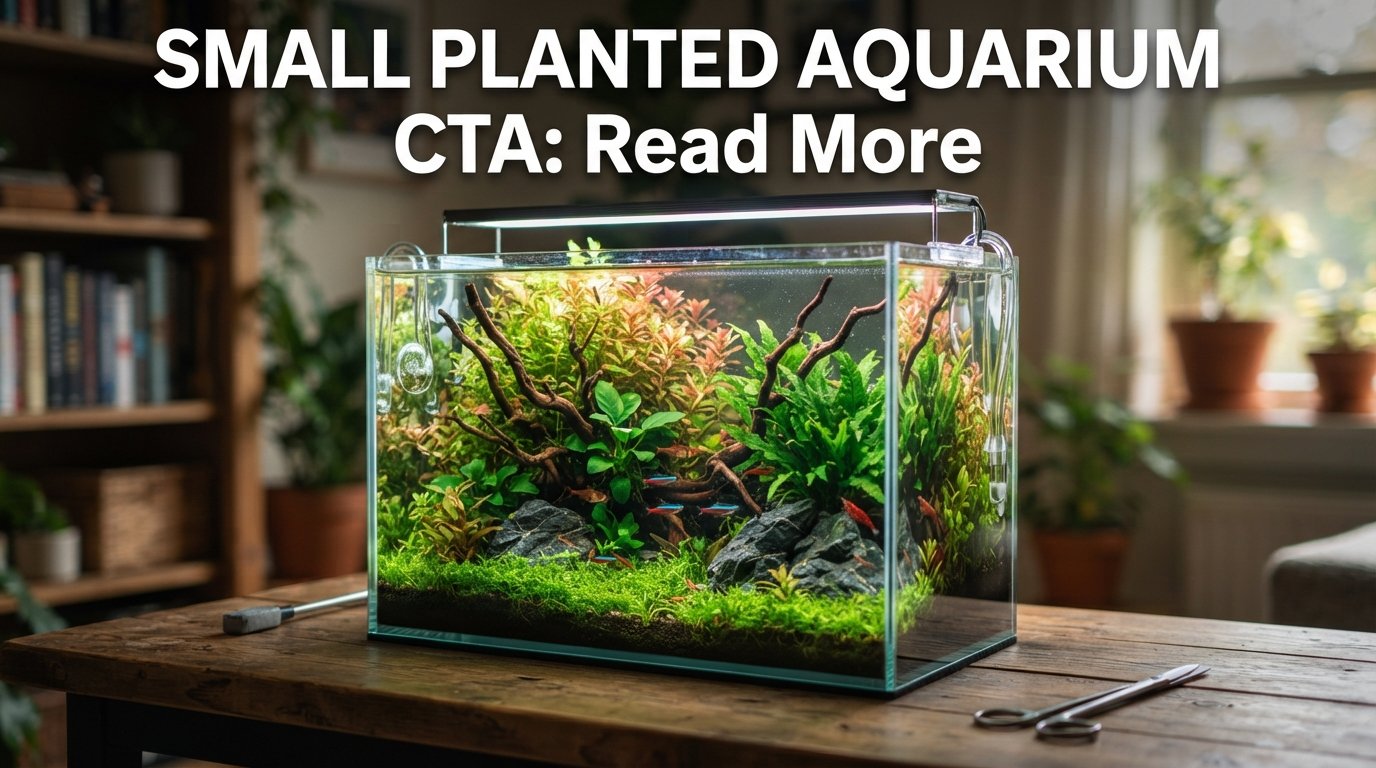
A small planted aquarium can transform a desk, bedroom, living room, or office into a peaceful natural display. Even with limited space, you can create an attractive underwater landscape using live aquatic plants, natural rocks, driftwood, and carefully selected fish or shrimp.
Small planted aquariums are often called nano aquariums when they hold only a few gallons of water. Their compact size makes them appealing, but they require careful planning because water parameters can change faster than in larger aquariums.
Whether you want a minimalist aquascape, a lush green jungle, a shrimp tank, or a simple planted aquarium for a betta, the key is to balance the plants, livestock, lighting, filtration, and maintenance.
What Is a Small Planted Aquarium?
A small planted aquarium is a compact fish tank designed around live aquatic plants. Instead of relying mainly on artificial decorations, the aquarium uses plants as an important part of the layout and ecosystem.
A typical small planted aquarium may include:
- Live aquatic plants
- Aquarium soil or nutrient-rich substrate
- Driftwood
- Natural rocks
- LED aquarium lighting
- Small filtration system
- Heater when required
- Fish, shrimp, or snails
- Water conditioner
- Optional liquid fertilizer or root tabs
The exact equipment depends on the tank size and livestock.
How Small Should a Small Planted Aquarium Be?
There is no single size that defines a small planted aquarium. Tanks from a few gallons to around 20 gallons can reasonably be considered small depending on their dimensions and purpose.
| Aquarium Size | Best Use | Difficulty |
|---|---|---|
| 2–3 gallons | Plants, limited invertebrates | Moderate |
| 5 gallons | Shrimp, snails, selected betta setups | Beginner to moderate |
| 10 gallons | Planted community or betta aquarium | Beginner |
| 15 gallons | More planting and livestock options | Beginner |
| 20 gallons | Larger planted community | Beginner to moderate |
A larger small aquarium is often easier to maintain because it provides more water volume and greater stability.
Best Small Planted Aquarium Ideas
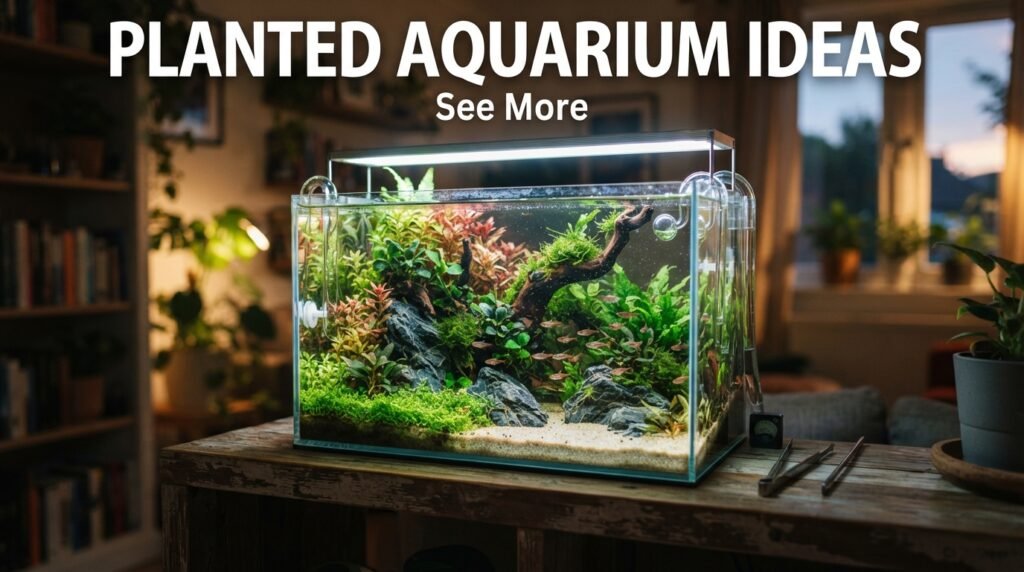
There are many ways to design a small planted aquarium. The best style depends on the plants you like, the livestock you plan to keep, and the amount of maintenance you want.
1. Minimalist Small Planted Aquarium
A minimalist aquascape uses only a few carefully selected elements.
Try using:
- One attractive piece of driftwood
- Two or three rock formations
- A simple foreground plant
- One or two background plants
- Dark natural substrate
Leaving some open space makes the aquarium look larger and cleaner.
2. Small Jungle Aquarium
A jungle-style aquarium is ideal if you love dense greenery.
Plant different species at different heights. Use shorter plants toward the front and taller plants toward the back.
Avoid filling every available space immediately. Plants grow, and an aquarium that looks slightly empty at first can become beautifully dense after several weeks.
3. Small Shrimp Aquarium
Shrimp are popular for small planted tanks because they have a small biological footprint and look excellent among live plants.
A shrimp-focused aquascape can include:
- Java moss
- Anubias
- Java fern
- Bucephalandra
- Small carpeting plants
- Driftwood
- Small rocks
Moss is especially useful because it provides surfaces for biofilm and places for young shrimp to hide.
4. Small Betta Planted Aquarium
A properly planned small planted aquarium can work well for a betta, provided the tank meets the fish’s welfare needs and has stable, heated, filtered water.
Plants provide visual cover and resting areas.
Good choices include:
- Anubias
- Java fern
- Cryptocoryne
- Amazon sword in appropriately sized tanks
- Floating plants
- Moss
Avoid sharp decorations and excessively strong water flow.
5. Small Iwagumi Aquarium
Iwagumi aquascaping is based mainly on rocks, open space, and carefully arranged plants.
For a small aquarium, choose a few stones rather than trying to recreate a large mountain landscape.
A simple arrangement can feature:
- One dominant stone
- Two or three supporting stones
- Low-growing foreground plants
- Fine substrate
- Open swimming space
The simplicity makes the tank look sophisticated.
6. Small Driftwood Aquarium
Driftwood can become the main focal point of a planted aquarium.
Choose a piece that fits the tank rather than one that dominates the entire aquarium. Attach moss or small epiphytic plants to parts of the wood to create a natural appearance.
A branch extending diagonally upward can also create the impression of greater height.
7. Small Moss Aquarium
A moss-focused aquarium is one of the easiest ways to create a natural miniature landscape.
Moss can be attached to:
- Driftwood
- Rocks
- Mesh
- Aquarium-safe hardscape
As it grows, it creates a soft green appearance that works particularly well with shrimp and snails.
Best Plants for a Small Planted Aquarium
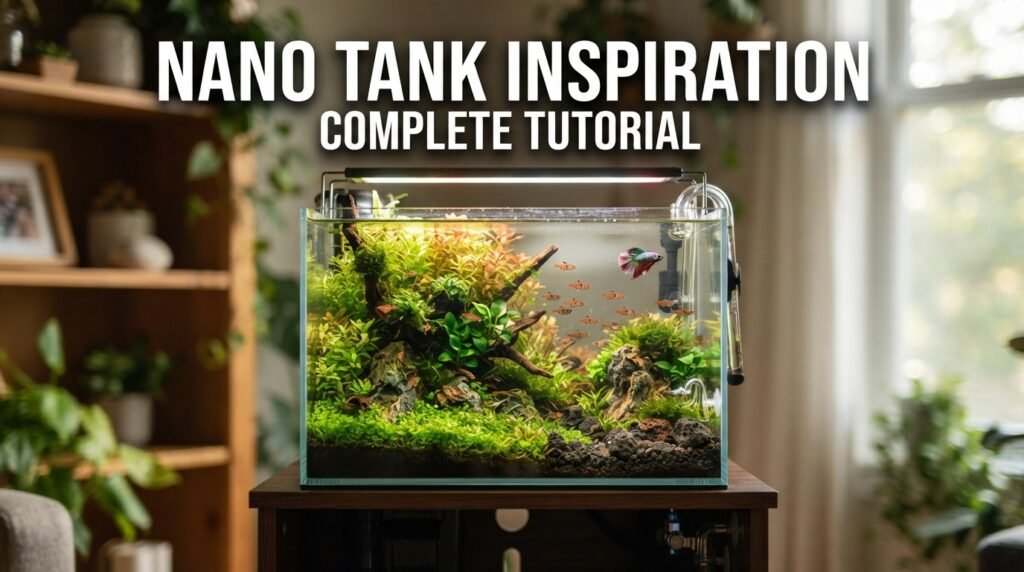
Choosing plants that remain manageable is important. Large plants can quickly overwhelm a small tank.
Anubias
Anubias is popular because it tolerates relatively low light and grows slowly. Its broad leaves provide a strong contrast against smaller plants.
The rhizome should not be completely buried in substrate.
Java Fern
Java fern is another hardy choice. It can be attached to rocks or driftwood and does not require nutrient-rich substrate in the same way many rooted plants do.
Cryptocoryne
Cryptocoryne species offer attractive leaves and work well as midground or background plants depending on the species.
They can experience temporary leaf loss after planting while adapting to new conditions.
Java Moss
Java moss is excellent for shrimp aquariums and miniature landscapes. It can create a natural, aged appearance on rocks and driftwood.
Bucephalandra
Bucephalandra is compact and available in many attractive forms. It is particularly useful in small aquascapes because many varieties remain relatively small.
Dwarf Hairgrass
Dwarf hairgrass can create a grass-like foreground when conditions are suitable.
Monte Carlo
Monte Carlo is commonly used as a carpeting plant. It can create a dense green foreground, although adequate light and suitable growing conditions are important.
Choosing the Right Substrate
Substrate is more than decoration. It can influence plant growth and the overall appearance of the aquarium.
Common options include:
Aquasoil
Aquasoil is popular for planted aquariums because it provides a growing medium for many aquatic plants.
Gravel
Fine aquarium gravel can work well for plants that do not require heavy root feeding. Root tabs can supplement nutrients for suitable rooted plants.
Sand
Sand provides a clean, natural appearance but can compact more easily. Choose aquarium-safe sand and avoid creating excessively deep anaerobic areas.
For a planted aquascape, a dark substrate can make green plants stand out strongly.
Lighting for a Small Planted Aquarium
Lighting is one of the most important factors in a planted aquarium.
Plants require light for photosynthesis, but increasing light does not automatically produce a better aquarium.
Too much light combined with insufficient plant growth and nutrient or carbon balance can encourage algae.
For many beginner tanks, start with a moderate lighting schedule and observe how plants and algae respond.
A timer is useful because it keeps the lighting period consistent.
Does a Small Planted Aquarium Need CO2?
Not every planted aquarium requires injected CO2.
Low-tech plants such as Anubias, Java fern, many mosses, and some Cryptocoryne can grow successfully without a dedicated CO2 system when other conditions are appropriate.
CO2 injection can help demanding plants grow faster and can improve carpeting and dense plant growth, but it also adds complexity.
For a beginner’s small planted aquarium, a low-tech setup can be an excellent starting point.
Filtration for a Small Planted Aquarium
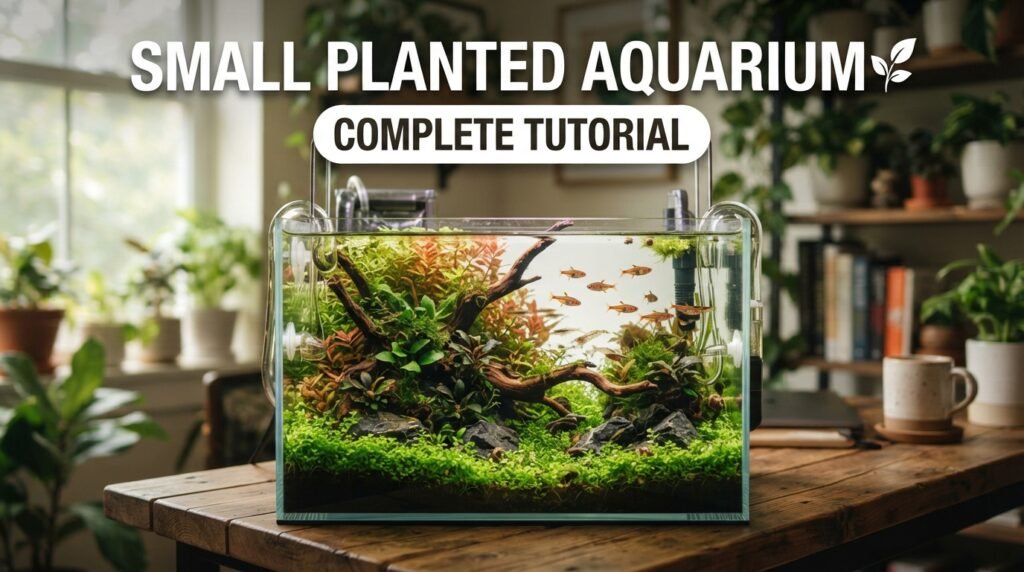
Even a heavily planted aquarium needs appropriate filtration.
A small sponge filter is a popular choice for shrimp tanks because it provides biological filtration without creating excessive water movement.
Hang-on-back filters can provide stronger circulation and filtration but should be adjusted so the current is appropriate for the livestock.
When selecting a filter, consider:
- Tank volume
- Flow rate
- Livestock
- Filter media capacity
- Ease of maintenance
- Noise
- Water movement
The goal is stable, clean water rather than simply choosing the strongest filter available.
Do You Need a Heater?
The need for a heater depends on the livestock and room temperature.
Tropical fish generally require stable warm water, while some invertebrates and temperate species have different requirements.
A small aquarium can experience temperature changes relatively quickly, so monitoring temperature is particularly important.
Choose a properly sized aquarium heater and use a reliable thermometer.
Small Planted Aquarium With Shrimp
Shrimp can make a beautiful centerpiece for a planted nano aquarium.
A shrimp tank benefits from plenty of surfaces where biofilm can develop. Moss, driftwood, rocks, and plant leaves all contribute to a complex environment.
Before adding shrimp:
- Cycle the aquarium.
- Confirm that ammonia and nitrite remain at zero.
- Make sure water parameters are appropriate for the selected shrimp.
- Acclimate the shrimp carefully.
- Avoid sudden changes in water chemistry.
A mature planted aquarium is often more suitable for shrimp than a newly established tank.
Small Planted Aquarium With Fish
Not every fish is suitable for a small aquarium.
Before selecting fish, consider:
- Adult size
- Swimming behavior
- Social requirements
- Territorial behavior
- Temperature requirements
- Water parameters
- Bioload
- Tank dimensions
A fish that remains physically small may still require considerable swimming space or companionship.
Do not choose livestock simply because it appears small in a store.
How to Make a Small Aquarium Look Bigger
Good aquascaping can make a compact aquarium appear much more spacious.
Use a Strong Focal Point
One dominant piece of driftwood or one major rock formation can create visual structure.
Keep the Foreground Open
Avoid covering the entire front section with large plants and decorations.
Use Smaller Plants
Scale matters. Tiny plants make the aquarium appear larger.
Create Height
Place taller plants toward the back and shorter plants toward the front.
Use Perspective
A substrate slope that is slightly higher toward the back can create the illusion of greater depth.
Avoid Too Many Decorations
Too many ornaments make a small aquarium look crowded.
Small Planted Aquarium Lighting and Algae Control
Algae is one of the most common problems beginners experience.
Algae can appear when there is an imbalance between light, nutrients, plant growth, and maintenance.
To reduce algae problems:
- Avoid excessive lighting
- Keep a consistent lighting schedule
- Perform regular water changes
- Remove dead leaves
- Avoid overfeeding
- Maintain appropriate filtration
- Keep plants healthy
- Clean aquarium glass when necessary
A small amount of algae is not necessarily a disaster. A mature aquarium can naturally contain some algae and microorganisms.
Water Changes
Regular water changes help maintain water quality.
For a small aquarium, consistency is more important than blindly following one percentage for every tank.
The appropriate schedule depends on:
- Stocking level
- Feeding
- Plant growth
- Filtration
- Water parameters
- Accumulation of nitrate and other dissolved substances
Always treat replacement water appropriately and avoid sudden temperature or chemistry changes.
How to Set Up a Small Planted Aquarium
Step 1: Choose the Aquarium
Select a tank that fits your available space while providing enough volume and suitable dimensions for your planned livestock.
Step 2: Plan the Layout
Decide where the rocks, driftwood, plants, and open swimming areas will go before adding water.
Step 3: Add the Substrate
Create an appropriate substrate layer. A gentle slope toward the back can improve visual depth.
Step 4: Add Hardscape
Position rocks and driftwood securely. Make sure heavy pieces cannot fall against the glass.
Step 5: Plant the Aquarium
Place taller plants in the background, medium plants in the middle, and small carpeting or foreground plants toward the front.
Step 6: Fill the Tank
Add water slowly to prevent disturbing the substrate and newly planted vegetation.
Step 7: Install Equipment
Install the filter, heater if necessary, lighting, and thermometer.
Step 8: Cycle the Aquarium
Allow the aquarium to establish its biological filtration before adding fish or shrimp.
Step 9: Introduce Livestock Slowly
Once the aquarium is stable and appropriate for the selected livestock, introduce animals gradually.
Common Mistakes With Small Planted Aquariums
Overstocking
Adding too many fish is one of the biggest problems in small tanks.
Too Much Light
More light is not always better. Excessive lighting can encourage algae.
Choosing Huge Plants
A plant that looks attractive in a large aquarium may quickly dominate a nano tank.
Skipping the Nitrogen Cycle
Never assume a new aquarium is safe simply because the water looks clean.
Overfeeding
Uneaten food decomposes and contributes to poor water quality.
Too Many Decorations
A small tank benefits from simplicity.
Ignoring Water Parameters
Stable water chemistry is especially important when working with a small water volume.
Small Planted Aquarium Maintenance Schedule
| Task | Suggested Frequency |
|---|---|
| Check fish/shrimp behavior | Daily |
| Check equipment | Daily or regularly |
| Remove dead leaves | As needed |
| Check temperature | Regularly |
| Clean glass | As needed |
| Test water | Regularly, especially during cycling |
| Water change | Based on tank conditions |
| Trim plants | As needed |
| Clean filter media | When flow decreases, using appropriate aquarium water |
The schedule should be adjusted according to the aquarium rather than followed as a rigid rule.
Small Planted Aquarium for a Desk
A small planted aquarium can be an attractive desktop feature.
For a desk setup, consider a compact tank with:
- Small LED light
- Quiet filter
- Moss
- Small rocks
- A single piece of driftwood
- Shrimp or snails where appropriate
Make sure the desk can safely support the aquarium’s total weight, including water, substrate, hardscape, and equipment.
Small Planted Aquarium for a Bedroom
A planted aquarium can create a relaxing natural display in a bedroom.
Choose quiet equipment and avoid excessive lighting at night. Aquarium lights should be controlled with a timer so the tank receives a predictable day and night cycle.
Small Planted Aquarium Design Ideas
Here are some simple design combinations:
| Style | Main Elements |
|---|---|
| Minimalist | Few rocks + moss + open space |
| Jungle | Dense plants + driftwood |
| Shrimp | Moss + wood + small plants |
| Iwagumi | Rocks + carpeting plants |
| Forest | Branching wood + moss |
| Blackwater | Wood + leaves + subdued plants |
| Zen | Sand + rocks + limited greenery |
| Modern | Clean glass + simple planting |
Frequently Asked Questions
Is a small planted aquarium easy to maintain?
It can be manageable, but small tanks are not automatically easier. Smaller water volumes can experience faster changes in temperature and water chemistry.
What is the best plant for a small aquarium?
Anubias, Java fern, Java moss, and many compact Cryptocoryne and Bucephalandra varieties are popular choices because they can work well in smaller layouts.
Can I keep fish in a small planted aquarium?
Yes, but the fish must be appropriate for the aquarium’s actual size and dimensions. Consider adult size, behavior, swimming requirements, social needs, and water parameters.
Can shrimp live in a small planted aquarium?
Yes. Shrimp can be excellent inhabitants of suitable small planted aquariums, especially mature tanks with plenty of plant growth and stable water conditions.
Does a small planted aquarium need CO2?
No. Many beginner-friendly aquatic plants can grow without injected CO2. CO2 is more useful when growing demanding plants or pursuing faster and denser growth.
How much light does a small planted aquarium need?
There is no single lighting level that works for every aquarium. Start with moderate lighting and adjust based on plant growth and algae levels.
How often should I change water in a small planted aquarium?
Water-change frequency depends on stocking, feeding, plant growth, filtration, and water quality. Test the aquarium and establish a consistent maintenance routine.
Can I use regular garden soil in a planted aquarium?
It is generally better to use an aquarium-specific substrate or a substrate method designed for aquatic plants. Ordinary garden soil can introduce unwanted organic matter, chemicals, and particles.
How do I stop algae in my small planted aquarium?
Maintain a balance between lighting, plant growth, nutrients, feeding, and maintenance. Avoid excessive light and overfeeding, and remove algae when necessary.
What is the best size for a beginner’s planted aquarium?
A 10-gallon aquarium is often a practical beginner size because it provides more stability than very small tanks while remaining compact enough for many homes and offices.
Final Thoughts
A small planted aquarium does not need to be complicated to look beautiful. A carefully selected tank, suitable plants, natural hardscape, appropriate lighting, reliable filtration, and responsible stocking can create a stunning miniature underwater environment.
The most important principle is to design the aquarium around the needs of its plants and livestock rather than focusing only on appearance. Start with a simple layout, choose plants that match your experience level, allow the aquarium to cycle properly, and maintain stable water conditions.
With patience and regular care, even a small planted aquarium can become a lush, natural-looking centerpiece for your home or workspace.