
 By admin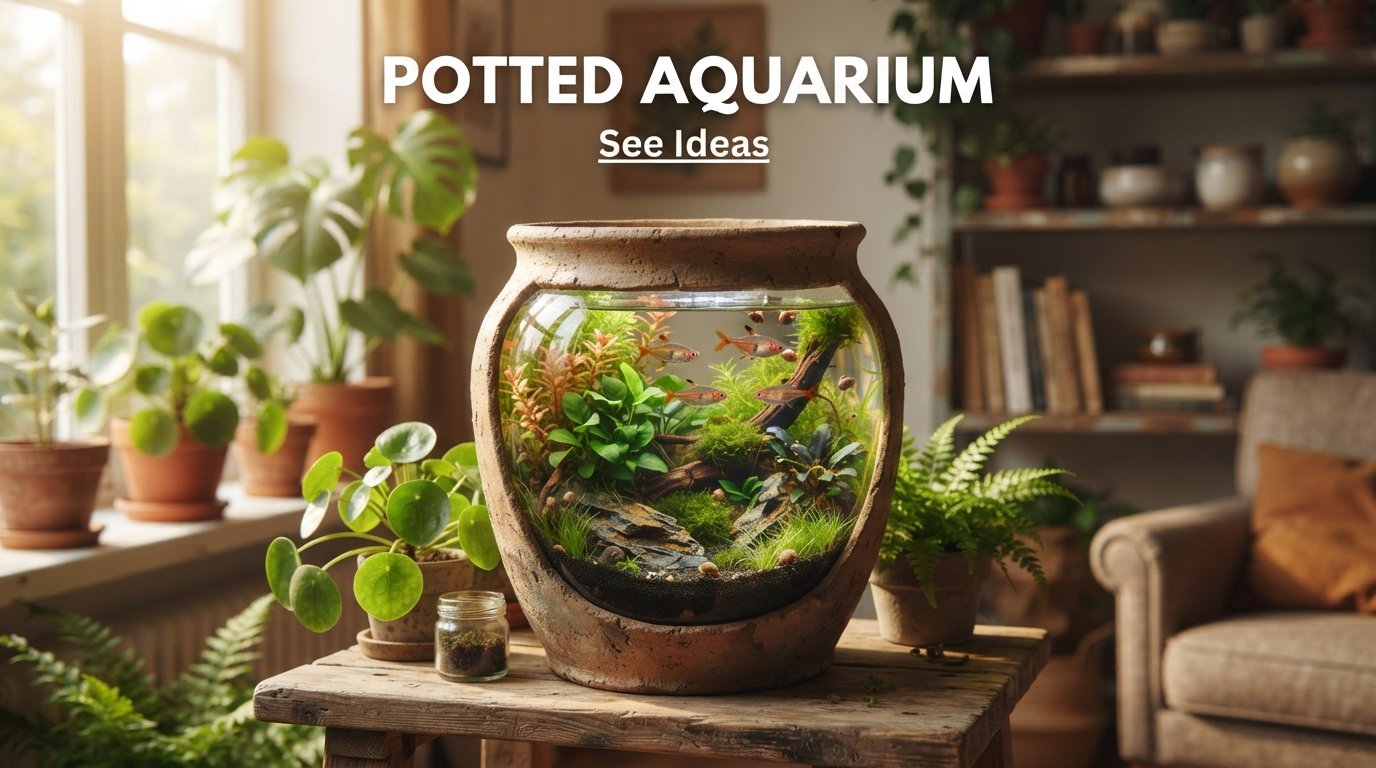
A pot aquarium is a creative way to bring aquatic life and greenery into a small space. Instead of using a traditional rectangular fish tank, a pot-shaped container or aquarium pot can be used to create a compact underwater landscape. These setups can range from simple planted displays to carefully designed miniature aquariums containing shrimp, snails, or suitable small fish.
Pot aquariums are especially attractive for people who want something different from a conventional aquarium. Their rounded shape, decorative appearance, and compact footprint can make them suitable for desks, shelves, patios, balconies, living rooms, and offices.
However, not every decorative pot is suitable for aquatic life. The container must be waterproof, aquarium-safe, stable, and large enough for the plants or animals you plan to keep.
What Is a Pot Aquarium?
A pot aquarium is an aquarium created inside a pot-shaped or bowl-like container. It may look similar to a decorative plant pot, but it is designed or adapted to hold water and aquatic plants.
Some pot aquariums are completely planted and contain no fish. Others may contain freshwater shrimp, snails, or carefully selected fish when the container provides sufficient space and suitable conditions.
The main attraction of a pot aquarium is its unusual appearance. It combines the visual appeal of a planted aquarium with the decorative character of a plant pot.
Pot Aquarium Ideas
There are many different ways to design a pot aquarium. The best approach depends on the container size, available lighting, plants, and livestock.
1. Minimalist Pot Aquarium
A minimalist pot aquarium uses only a few elements.
You can combine:
- Fine gravel or aquasoil
- One small rock
- A small piece of driftwood
- Moss
- One or two compact aquatic plants
Leaving open water around the hardscape creates a clean and modern appearance.
2. Planted Pot Aquarium
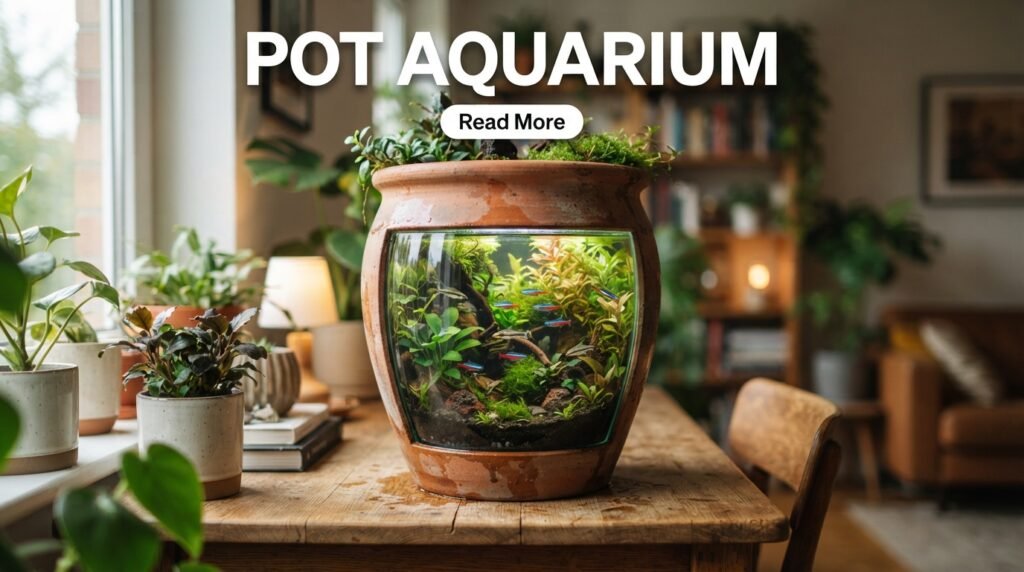
A planted pot aquarium focuses primarily on aquatic plants.
Use different plant heights to create depth. Small plants can be positioned around the front and sides while taller plants are placed toward the rear.
Because pot-shaped containers can have unusual dimensions, choose plants according to the available space rather than simply selecting plants that look attractive in a store.
3. Shrimp Pot Aquarium
A shrimp pot aquarium can be an excellent miniature aquatic display when the container is appropriately sized and stable.
Shrimp benefit from surfaces where biofilm can develop, so adding moss, driftwood, and natural rocks can make the environment more interesting.
A mature planted setup is generally preferable to placing shrimp immediately into a newly established container.
4. Moss Pot Aquarium
Moss works particularly well in small aquascapes.
It can be attached to:
- Driftwood
- Rocks
- Aquarium-safe mesh
- Decorative hardscape
Over time, moss can create a soft green appearance that makes the pot look like a miniature underwater forest.
5. Zen Pot Aquarium
A Zen-inspired pot aquarium can use a simple combination of sand, rocks, and a few plants.
Keep the design uncluttered. A single focal rock surrounded by low-growing plants can create a peaceful appearance.
6. Jungle Pot Aquarium
For a dense natural look, combine several types of aquatic plants.
Use:
- Low foreground plants
- Medium-height plants
- Tall background plants
- Moss
- Driftwood
Remember that plants grow. A container that looks perfectly balanced on the first day can become overcrowded after several months.
Choosing the Right Pot
The container is one of the most important parts of a pot aquarium.
A suitable container should be:
- Waterproof
- Strong and stable
- Free from toxic coatings
- Large enough for the planned setup
- Made from aquarium-safe materials
- Resistant to cracking
- Easy to clean
Avoid using containers that previously held chemicals, pesticides, cleaning products, or other substances that could contaminate the water.
Ceramic Pots
Glazed ceramic can work well if the glaze is appropriate for continuous water contact and does not release harmful substances.
Glass Pots
Glass containers provide excellent visibility and allow you to see the entire aquascape.
Acrylic Containers
Acrylic is lightweight and less likely to shatter than glass, although it can scratch more easily.
Decorative Plant Pots
A normal decorative plant pot should not automatically be assumed to be safe for aquarium use. Some pots have paints, coatings, sealants, metals, or porous materials that can affect water quality.
Can You Put Fish in a Pot Aquarium?
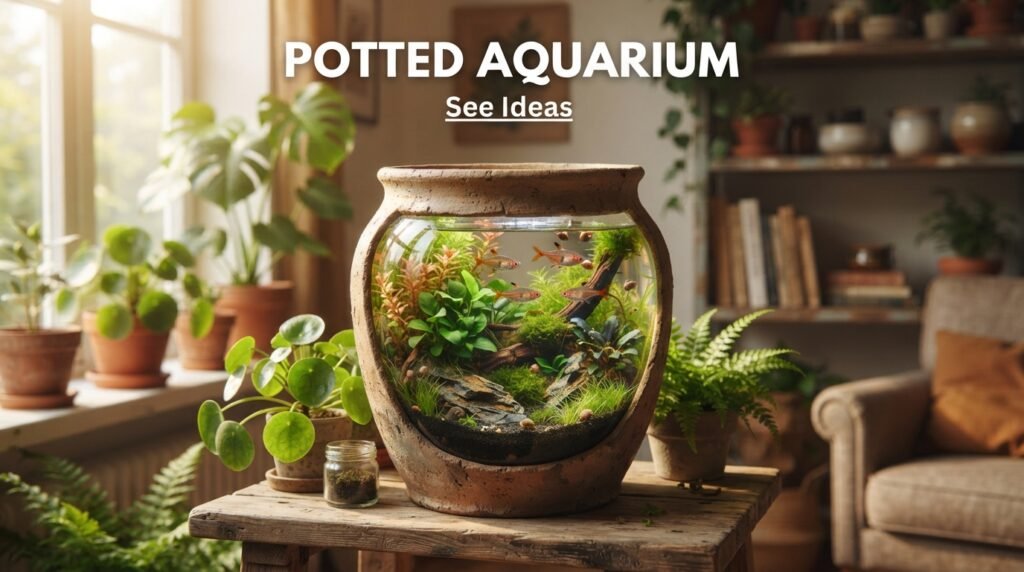
This depends entirely on the size and shape of the container.
A decorative pot that holds only a small amount of water is generally not appropriate for fish. Fish need adequate swimming space, stable water conditions, filtration, oxygenation, and an environment suited to their species.
A larger aquarium-style pot may potentially house appropriate fish, but the fish should be selected based on the actual water volume and dimensions.
Do not choose fish simply because they are small.
Consider:
- Adult size
- Swimming behavior
- Social requirements
- Temperature
- Water chemistry
- Filtration
- Oxygen requirements
- Bioload
- Available swimming length
For very small pot aquariums, plants, shrimp, or snails may be more appropriate than fish.
Best Plants for a Pot Aquarium
Compact aquatic plants are usually the easiest to manage in a small pot aquarium.
Anubias
Anubias is a hardy plant with attractive broad leaves. It grows relatively slowly and can be attached to rocks or driftwood.
Java Fern
Java fern is another popular choice for low-maintenance aquascapes. It can be attached to hardscape instead of being deeply buried.
Java Moss
Java moss is excellent for creating miniature landscapes. It can cover driftwood and rocks as it grows.
Bucephalandra
Bucephalandra varieties are well suited to compact aquariums because many remain relatively small.
Cryptocoryne
Cryptocoryne plants provide attractive foliage and can work well as midground plants depending on the species.
Dwarf Hairgrass
Dwarf hairgrass can be used to create a grassy foreground when the aquarium provides suitable conditions.
Floating Plants
Small floating plants can provide shade and create a natural appearance, but they should not completely cover the surface because gas exchange and lighting can be affected.
Pot Aquarium Substrate
The substrate provides a foundation for the aquascape and, depending on the plant species, can provide nutrients for roots.
Common options include:
| Substrate | Best For | Appearance |
|---|---|---|
| Aquasoil | Planted aquariums | Natural dark |
| Fine gravel | Simple planted setups | Clean and versatile |
| Aquarium sand | Minimalist layouts | Bright and natural |
| Decorative gravel | Certain themed designs | More colorful |
| Soil-based planted substrate | Rooted plants | Natural |
Choose aquarium-safe materials rather than ordinary garden materials unless you are specifically using a properly researched aquatic soil method.
Pot Aquarium Lighting
Lighting is essential for aquatic plants.
A small LED aquarium light is often sufficient for a low-tech setup, depending on the plants being grown.
The goal is not simply to provide as much light as possible. Excessive lighting can contribute to algae when plant growth, nutrients, and carbon availability are not balanced.
Using a timer helps provide a consistent lighting schedule.
Does a Pot Aquarium Need a Filter?
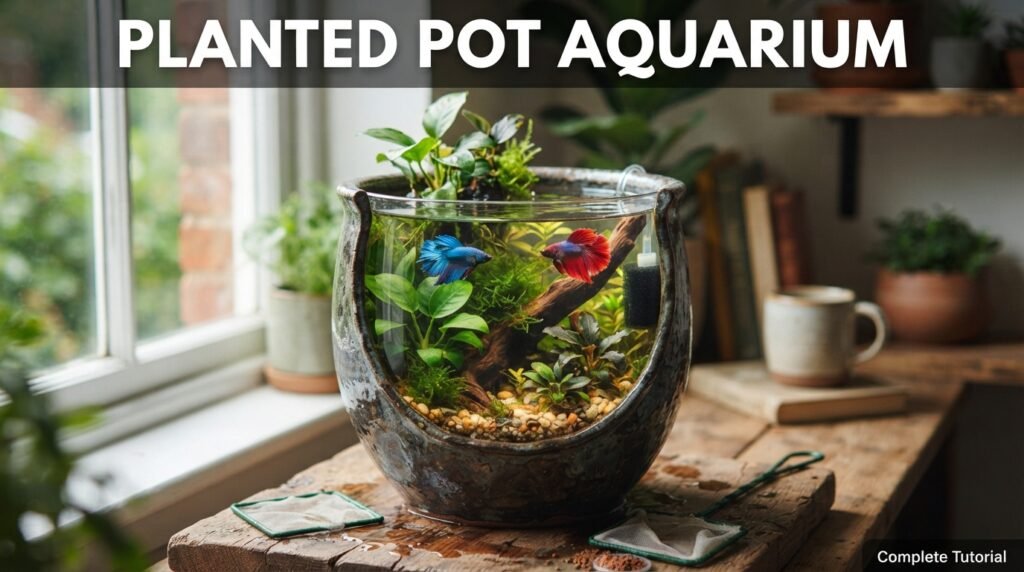
A filter may be necessary depending on the size and inhabitants.
A shrimp or heavily planted setup may use a small sponge filter or another appropriately sized filtration system.
Fish generally require more careful filtration because they produce waste and need stable water quality.
When selecting filtration, consider:
- Water volume
- Livestock
- Flow rate
- Biological filtration capacity
- Noise
- Maintenance requirements
Avoid creating extremely strong currents in containers with limited swimming space.
Pot Aquarium Without a Filter
Some small planted displays can be maintained without conventional filtration, particularly when they contain only plants and have a carefully managed biological balance.
However, a filter does not simply remove visible dirt. Biological filtration provides an important surface for beneficial microorganisms that help process fish waste.
A filterless aquarium requires careful stocking, feeding, planting, water management, and observation.
It should not be treated as a shortcut to easier maintenance.
Pot Aquarium With Shrimp
Shrimp can be fascinating inhabitants of an appropriately sized planted pot aquarium.
A good shrimp environment can include:
- Moss
- Small plants
- Driftwood
- Smooth rocks
- Gentle filtration
- Stable water parameters
Shrimp are sensitive to sudden changes in water chemistry, so stability is important.
Before adding shrimp, allow the aquarium to cycle and establish biological filtration.
Pot Aquarium With Snails
Small freshwater snails can also work in suitable setups.
Snails help consume certain types of algae and leftover food, although they should not be considered a replacement for aquarium maintenance.
Avoid overfeeding because excess food can cause rapid population growth and water-quality problems.
How to Make a Pot Aquarium
Creating a pot aquarium is relatively straightforward when the container and livestock requirements have been considered first.
Step 1: Select the Container
Choose a waterproof aquarium-safe pot or bowl with sufficient volume for your intended setup.
Step 2: Clean the Container
Clean it thoroughly with plain water. Avoid leaving soap or household cleaning chemicals inside.
Step 3: Add the Substrate
Add an appropriate substrate layer. Keep the depth suitable for your plants.
Step 4: Arrange the Hardscape
Position rocks and driftwood securely.
Heavy objects should not be placed in a way that could fall against the container walls.
Step 5: Add Plants
Plant or attach aquatic plants according to their growth requirements.
Place taller plants where they will not block the entire view.
Step 6: Add Water
Pour water slowly to prevent the substrate from becoming disturbed.
Step 7: Install Equipment
Add filtration, heating, and lighting if required.
Step 8: Cycle the Aquarium
Allow beneficial bacteria to establish before adding livestock.
Step 9: Add Livestock Carefully
Once the aquarium is stable and water parameters are appropriate, introduce suitable shrimp, snails, or fish gradually.
Pot Aquarium for a Desk
A small planted pot aquarium can look excellent on a desk.
Choose a compact design with a quiet filter and a small LED light.
A simple combination of moss, a small piece of wood, and a few stones can create a natural focal point without taking up much space.
Always check that the desk or shelf can safely support the total weight of the container.
Pot Aquarium for a Balcony
A pot aquarium can also be used outdoors, but outdoor conditions require extra attention.
Direct sunlight can rapidly heat a small volume of water and encourage algae growth.
Outdoor pot aquariums may also experience:
- Temperature fluctuations
- Dust
- Rainwater contamination
- Excessive sunlight
- Evaporation
- Pests
A shaded location with controlled conditions is generally easier to manage.
Pot Aquarium for Home Decor
One advantage of a pot aquarium is that it can function as both an aquarium and a decorative feature.
It can be placed:
- On a living room shelf
- On a desk
- On a side table
- In an office
- On a plant stand
- In a bedroom
- In a reading corner
Choose a container and aquascape that complement the surrounding furniture.
How to Make a Pot Aquarium Look Bigger
The unusual shape of a pot aquarium can make aquascaping challenging. Several techniques can improve the appearance.
Use Small Plants
Large leaves can make the container look crowded.
Create a Focal Point
Use one major rock or piece of driftwood rather than several competing decorations.
Leave Open Space
Open areas make the aquarium appear more spacious.
Use Height
Place taller plants toward the rear or center and shorter plants around them.
Create a Substrate Slope
A slightly raised substrate toward the back can create a greater sense of depth.
Pot Aquarium Maintenance
Regular maintenance is essential even in heavily planted aquariums.
Basic maintenance may include:
- Checking water temperature
- Observing livestock
- Removing dead leaves
- Cleaning algae from the container
- Checking filter flow
- Trimming plants
- Testing water when appropriate
- Performing water changes
- Replacing evaporated water correctly
Small aquariums can experience changes more quickly than large aquariums, so regular observation is particularly important.
Common Pot Aquarium Mistakes
Using an Unsafe Container
Not every decorative pot is designed for continuous water contact.
Adding Fish to a Tiny Container
A small container does not automatically become a suitable fish aquarium.
Skipping Cycling
A new setup needs time for beneficial biological filtration to establish.
Overfeeding
Excess food quickly becomes a water-quality problem.
Too Much Sunlight
Direct sunlight can cause overheating and excessive algae.
Too Many Plants
Plants need room to grow.
Too Many Decorations
A small pot can become visually overcrowded very quickly.
Ignoring Water Parameters
Stable water conditions are essential for healthy aquatic life.
Pot Aquarium vs Traditional Aquarium
| Feature | Pot Aquarium | Traditional Aquarium |
|---|---|---|
| Appearance | Decorative and unusual | Classic |
| Shape | Often rounded or irregular | Usually rectangular |
| Space | Can be compact | Available in many sizes |
| Aquascaping | More challenging | Easier to plan |
| Equipment | May be limited by shape | Easier to install |
| Livestock options | Often limited in small versions | Generally more flexible |
| Best use | Plants, shrimp, decorative displays | Fish and planted communities |
Is a Pot Aquarium Good for Beginners?
A small planted pot aquarium can be a good introduction to aquascaping if it is designed as a simple plant-focused setup.
Beginners should avoid starting with a complicated livestock setup in a very small container.
A simple arrangement containing hardy plants, appropriate substrate, gentle filtration, and minimal livestock can be easier to understand and maintain.
As your experience increases, you can experiment with more demanding plants and aquascaping styles.
Frequently Asked Questions
What is a pot aquarium?
A pot aquarium is a water-filled aquarium or aquatic display created inside a pot-shaped or bowl-like container, usually featuring aquatic plants and sometimes shrimp, snails, or suitable fish.
Can I use any pot as an aquarium?
No. The container should be waterproof, stable, and made from materials that are safe for continuous contact with aquarium water. Decorative coatings, paints, metals, and unknown materials can create problems.
Can fish live in a pot aquarium?
Fish can only be kept when the container provides sufficient volume, swimming space, filtration, temperature control, and suitable water conditions for the particular species.
What is the best plant for a pot aquarium?
Anubias, Java fern, Java moss, and compact Bucephalandra varieties are useful choices for many small planted designs.
Can shrimp live in a pot aquarium?
Yes, if the container is appropriately sized and the aquarium is fully cycled and maintained with stable water conditions.
Does a pot aquarium need a filter?
It depends on the setup. Plant-only displays may sometimes be maintained without conventional filtration, while livestock-containing aquariums generally benefit from appropriate biological filtration.
Can I put a pot aquarium outside?
Yes, but outdoor setups must be protected from excessive sunlight, overheating, contamination, and large temperature fluctuations.
How often should I clean a pot aquarium?
Clean algae and remove dead plant material as needed. Water changes should be based on livestock, water quality, feeding, and overall aquarium conditions.
Can I make a pot aquarium without fish?
Yes. A plant-only pot aquarium can be a beautiful low-stock or decorative aquascape and is often simpler than keeping fish in a very small container.
Is a pot aquarium easier than a normal aquarium?
Not necessarily. Its unusual shape can make equipment installation and maintenance more difficult. Smaller water volumes can also change more quickly than larger aquariums.
Final Thoughts
A pot aquarium is a creative alternative to the traditional fish tank and can turn a simple container into a beautiful miniature aquatic landscape. With the right pot, suitable plants, natural hardscape, appropriate lighting, and careful maintenance, you can create an attractive display for a desk, shelf, office, bedroom, or living space.
For very small containers, a plant-focused aquarium with moss, Anubias, Java fern, or other compact aquatic plants is often the simplest approach. If you want shrimp, snails, or fish, choose the livestock based on the actual size and conditions of the aquarium rather than appearance alone.
The best pot aquarium is not necessarily the most complicated one. A simple, stable, well-planned aquascape can be more attractive and much easier to maintain over the long term.