
 By admin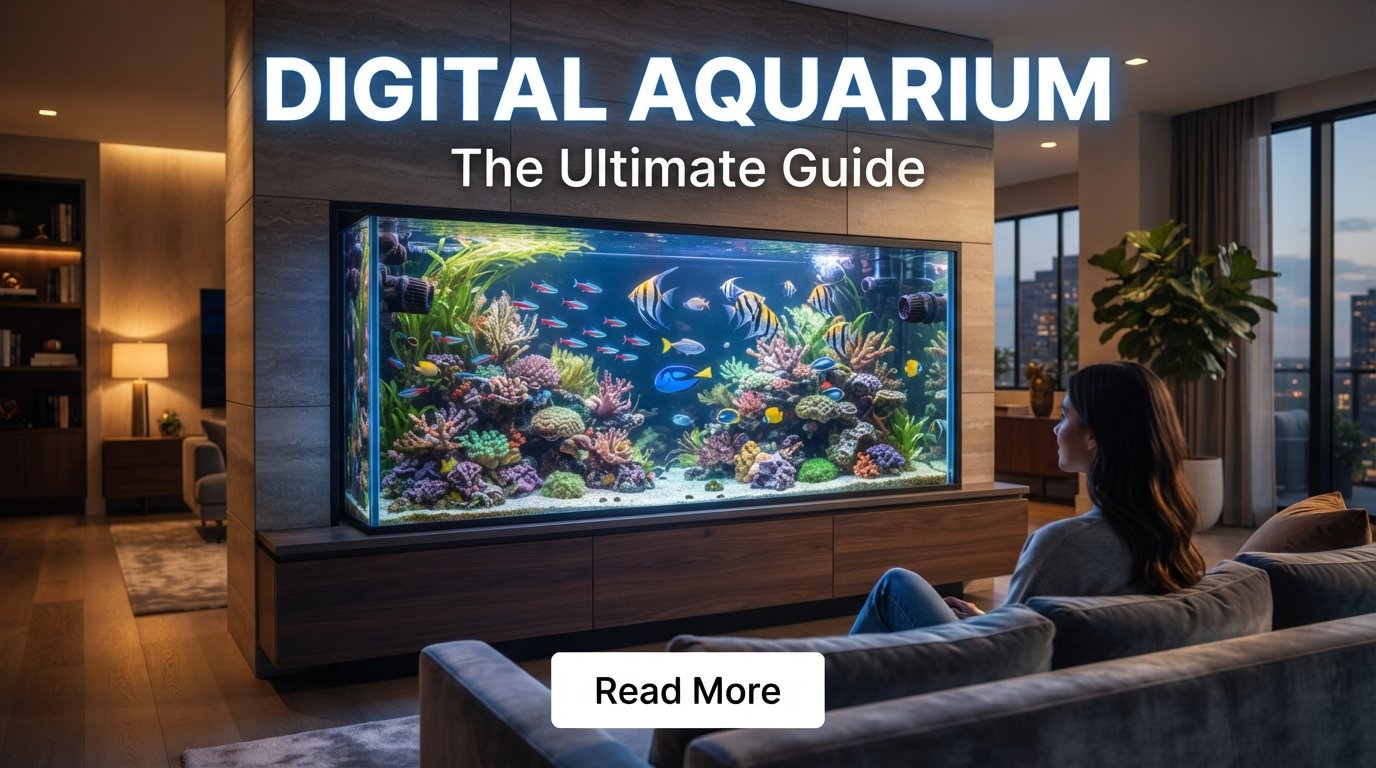
A digital aquarium is a modern alternative to a traditional fish tank that uses digital screens, software, animations, or interactive technology to create the appearance of an underwater environment. Instead of keeping real fish and aquatic plants, a digital aquarium can display realistic swimming fish, coral reefs, jellyfish, underwater landscapes, and other marine scenes on a television, monitor, tablet, computer, or dedicated digital display.
Digital aquariums have become an interesting choice for homes, offices, waiting rooms, restaurants, hotels, classrooms, and entertainment spaces. They can provide the relaxing appearance of an aquarium without requiring water changes, filtration, fish food, heaters, or other aquarium equipment.
For people who love the look of an aquarium but do not have enough space or time for fishkeeping, a digital aquarium can be a convenient solution. It can also be used as a decorative feature when you want something visually engaging without the maintenance associated with a real aquarium.
What Is a Digital Aquarium?
A digital aquarium is a simulated underwater environment displayed electronically.
The simplest version can be an animated aquarium screensaver running on a computer or television. More advanced versions may use large displays, interactive screens, projection technology, or specialized software.
A digital aquarium can simulate many types of environments, including tropical reefs, freshwater rivers, colorful coral gardens, deep oceans, and fantasy underwater worlds.
Because the environment is digital, you can change the appearance whenever you want.
You might display tropical fish during the day, jellyfish in the evening, or a colorful coral reef when entertaining guests.
How Does a Digital Aquarium Work?
A digital aquarium usually works by displaying prerecorded or computer-generated underwater animation.
The display can be connected to a computer, streaming device, media player, or other compatible technology.
Some systems use realistic video footage of fish swimming through actual aquariums or natural marine environments. Others use computer-generated graphics.
More advanced interactive systems can respond to touch, movement, or other inputs.
The basic concept is simple: the screen creates the visual illusion of an aquarium without containing real water or animals.
Digital Aquarium vs Real Aquarium
Both options can create an attractive focal point, but they have very different requirements.
| Feature | Digital Aquarium | Real Aquarium |
|---|---|---|
| Water | Not required | Required |
| Fish | Digital | Live |
| Feeding | Not required | Required |
| Water Changes | Not required | Required |
| Filtration | Not required | Required |
| Electricity | Required | Usually required |
| Maintenance | Very low | Regular |
| Design Flexibility | Very high | Moderate |
| Animal Care | None | Essential |
| Installation | Usually simple | More involved |
A digital aquarium is mainly a decorative and visual experience, while a real aquarium is a living ecosystem that requires ongoing care.
Why Choose a Digital Aquarium?
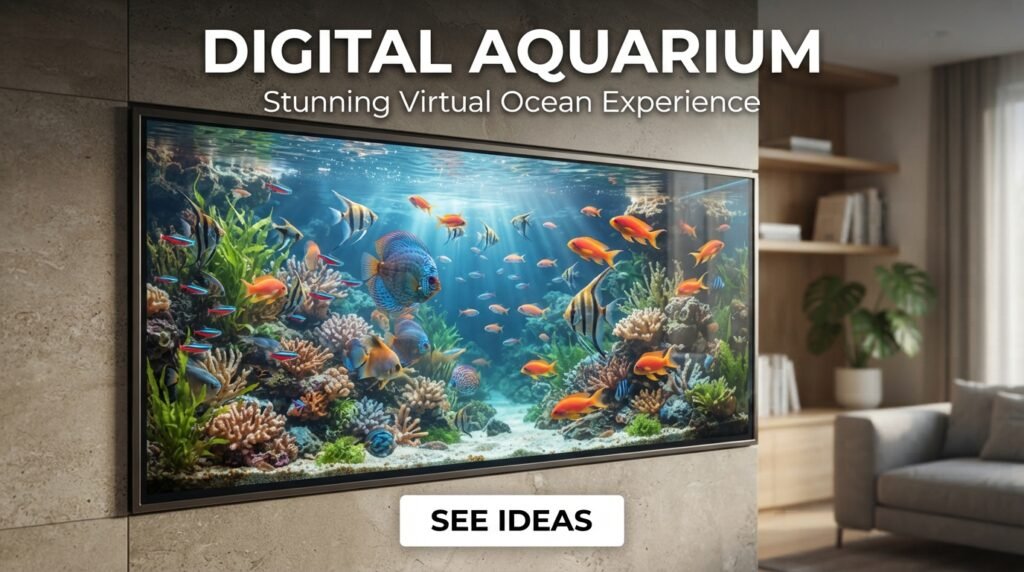
One of the biggest advantages is convenience.
A traditional aquarium requires regular feeding, cleaning, water testing, equipment maintenance, and monitoring. A digital aquarium eliminates almost all of these tasks.
It can also work in locations where a real aquarium would be impractical.
For example, an office wall might have enough space for a large screen but not enough structural support for a large aquarium filled with hundreds of liters of water.
A digital aquarium also gives you complete control over the appearance. You can change the fish, colors, environment, and animation without replacing anything physically.
Digital Aquarium for Home Decor
A digital aquarium can be used as an unusual home decoration.
A large television mounted on a wall can display an underwater scene when it is not being used for entertainment.
This can make the screen look more like a decorative feature.
In modern interiors, a digital aquarium can fit especially well with minimalist furniture and clean architectural lines.
Instead of adding another physical decoration, the screen itself becomes part of the room.
Digital Aquarium Living Room Ideas
The living room is one of the best places for a digital aquarium.
A large screen can display a peaceful underwater scene behind or near the main seating area.
Choose slow-moving fish and natural colors if you want a relaxing appearance.
For a more dramatic interior, a reef scene with colorful tropical fish can create a vibrant focal point.
You can also use a vertical display for a different visual effect.
Digital Aquarium for Bedroom
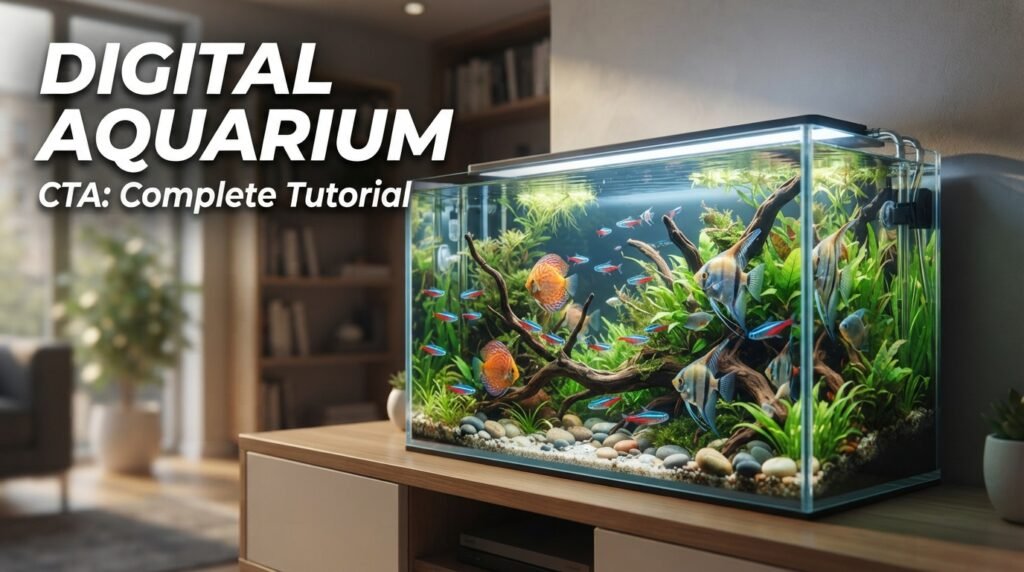
A digital aquarium can create a peaceful atmosphere in a bedroom.
Unlike a real aquarium, there is no filter or air pump producing mechanical noise.
You can choose slow-moving animations featuring jellyfish, small fish, coral reefs, or underwater plants.
If the display has adjustable brightness, lower the brightness at night to prevent the screen from becoming distracting.
Digital Aquarium for Office
A digital aquarium can add a natural visual element to an office without taking up much physical space.
A monitor or wall-mounted screen can display underwater footage during breaks or when the screen is not being used for work.
This can be especially useful in reception areas, meeting rooms, waiting rooms, and shared workspaces.
Digital Aquarium for Restaurants
Restaurants and cafes can use digital aquarium displays as decorative features.
A large underwater screen can create an interesting atmosphere without requiring staff to care for live fish.
The display can also be coordinated with the restaurant’s theme.
For example, a seafood restaurant might use an ocean environment, while a modern cafe could use a minimalist digital water scene.
Digital Aquarium for Hotels
Hotels can use large digital aquarium displays in lobbies, lounges, and waiting areas.
A large underwater animation can immediately attract attention when guests enter the building.
Because there are no live animals, the display can operate continuously with minimal maintenance.
Digital Aquarium for Small Spaces
One of the biggest benefits of a digital aquarium is that it does not require a dedicated floor area.
A wall-mounted screen can create the appearance of an aquarium without taking up much room.
This makes it suitable for apartments, small offices, bedrooms, hallways, and other compact spaces.
You can also use a tablet or computer monitor for a small digital aquarium experience.
Digital Aquarium Screensaver
A digital aquarium screensaver is one of the simplest versions.
It can turn an idle computer or compatible display into a virtual fish tank.
Traditional aquarium screensavers often feature fish swimming around rocks, plants, bubbles, and other underwater decorations.
Modern versions can provide much more realistic graphics.
If you have an unused monitor or television, it can potentially become a decorative aquarium display.
Digital Aquarium on a TV
A television can function as a digital aquarium when displaying underwater video or animation.
This is particularly useful because modern TVs have large screens and high-resolution displays.
A 4K screen can provide detailed underwater imagery that looks much more realistic than older aquarium animations.
You can place the television in a location where a real aquarium would normally serve as a focal point.
Digital Aquarium Wall
A large digital aquarium wall can create a dramatic interior design feature.
Multiple screens can sometimes be arranged together to create an extremely wide underwater scene.
However, even a single large display can produce an impressive effect.
For a realistic appearance, choose footage with natural swimming behavior and minimal distracting text or interface elements.
Interactive Digital Aquarium
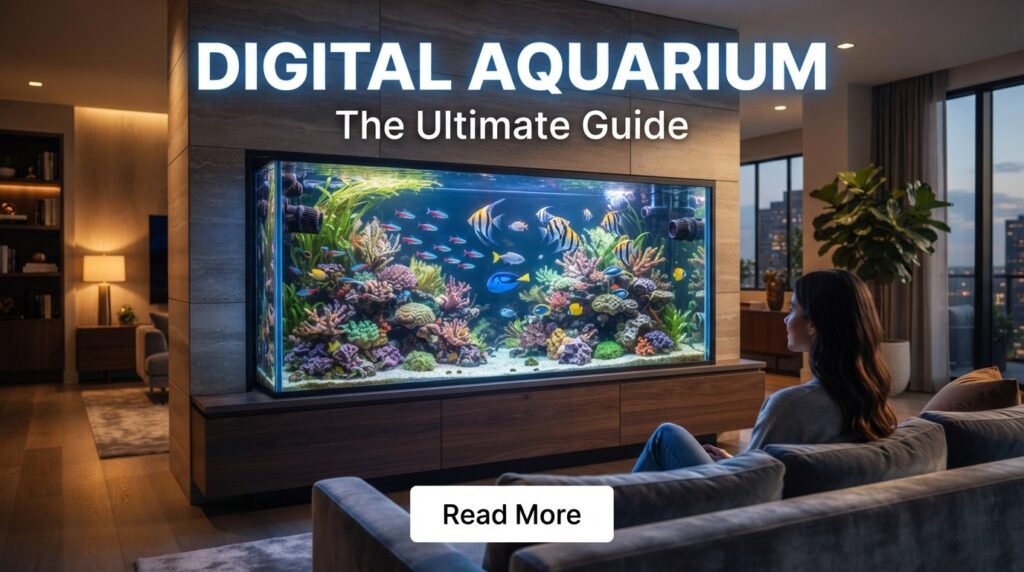
Interactive digital aquariums can take the concept further.
Instead of simply watching fish swim, viewers may be able to interact with the virtual environment.
Depending on the technology, users may be able to select fish, change environments, interact with objects, or influence the animation.
Interactive aquarium displays can be especially interesting for children, museums, educational facilities, and entertainment spaces.
Digital Aquarium for Children
A digital aquarium can introduce children to aquatic environments without requiring live animals.
Children can observe different fish, marine habitats, coral reefs, and underwater ecosystems through animations or educational videos.
An interactive display can make learning even more engaging.
However, a digital aquarium should ideally be used as an educational tool rather than presented as a complete substitute for learning about real aquatic ecosystems.
Educational Digital Aquarium
Schools and educational institutions can use digital aquariums to teach students about aquatic life.
A display can show different ecosystems and species that would be impossible to keep in a single physical aquarium.
For example, students could observe tropical coral reefs, freshwater rivers, deep-sea environments, and polar ecosystems on the same screen.
Digital technology allows teachers to switch between environments quickly.
Digital Aquarium for Fish Lovers
People who love fish but cannot maintain a real aquarium may find digital aquariums appealing.
Some people travel frequently or live in temporary housing where keeping fish is difficult.
Others simply prefer decoration without the responsibility of caring for live animals.
A digital aquarium can provide the visual experience while avoiding the long-term commitment of animal care.
Realistic Digital Aquarium Ideas
For the most natural appearance, choose high-resolution footage or realistic computer-generated animation.
Consider scenes featuring:
- Tropical reef fish
- Freshwater fish
- Jellyfish
- Seahorses
- Coral reefs
- Kelp forests
- Underwater caves
- Rocky ocean environments
- Schools of small fish
- Slow-moving marine life
Natural movement is particularly important. If fish animation looks repetitive or unrealistic, the display may quickly feel artificial.
Fantasy Digital Aquarium
A digital aquarium does not have to represent a real ecosystem.
You can create fantasy underwater environments featuring unusual colors, glowing plants, mythical creatures, futuristic structures, or imaginary aquatic landscapes.
This can be especially attractive for gaming rooms, children’s spaces, entertainment areas, and creative interiors.
Digital Jellyfish Aquarium
A jellyfish display can be particularly effective on large screens.
Jellyfish move slowly and gracefully, making them suitable for relaxing digital displays.
A dark background with glowing jellyfish can create a dramatic visual effect in bedrooms, lounges, restaurants, and entertainment spaces.
Digital Aquarium With Sound
Some digital aquarium experiences include underwater sounds, gentle bubbles, ambient music, or other audio effects.
Sound can make the experience more immersive.
However, sound is optional. A silent aquarium display can be better for offices, bedrooms, and areas where background noise is undesirable.
Energy Use
Although digital aquariums do not require water pumps or heaters, they still consume electricity because a screen must remain powered.
Energy consumption depends on the display size, brightness, technology, and how long it operates.
If the aquarium is primarily decorative, using an automatic schedule can reduce unnecessary electricity use.
For example, you can configure the display to turn off when nobody is using the room.
Digital Aquarium Maintenance
Maintenance is extremely simple compared with a real aquarium.
There is no need to:
- Feed fish
- Change water
- Clean algae
- Test water parameters
- Replace filter media
- Trim aquatic plants
- Monitor fish health
The main tasks involve keeping the screen clean, maintaining the software or media source, and ensuring the display has adequate ventilation.
How to Create a Digital Aquarium at Home
Creating a basic digital aquarium can be simple.
First, choose a suitable display such as a television, computer monitor, tablet, or dedicated screen.
Next, select appropriate aquarium footage or animation.
Connect the display to the required media source and configure the playback settings.
Adjust brightness and volume to suit the room.
Finally, position the display where it can be viewed comfortably.
For a more realistic appearance, hide unnecessary cables and choose a frame or mounting arrangement that complements the room.
Digital Aquarium Design Tips
The display should be positioned at a comfortable viewing height.
Avoid excessive brightness in dark rooms.
Choose animation that matches the style of the room.
Use realistic footage if you want a natural appearance.
Use fantasy animation if the goal is entertainment.
Keep cables organized.
Make sure the display has sufficient ventilation.
If using the screen for other purposes, configure the aquarium to start automatically when the display is idle.
Advantages of a Digital Aquarium
Digital aquariums offer several benefits:
- Very low maintenance
- No live animal care
- No water spills
- No filtration equipment
- Flexible designs
- Easy environment changes
- Suitable for small spaces
- Can operate as wall decor
- Useful for educational purposes
- Easy to customize
These advantages make them attractive to people who want aquarium-style decoration without traditional fishkeeping responsibilities.
Disadvantages of a Digital Aquarium
There are also limitations.
A digital aquarium does not provide a living ecosystem.
You cannot observe real fish behavior, plant growth, breeding, or natural interactions.
The display also depends on electricity and electronic equipment.
Some people may prefer the authenticity and biological interest of a real aquarium.
The choice ultimately depends on whether your main goal is decoration, entertainment, education, or keeping live aquatic animals.
Digital Aquarium vs Virtual Aquarium
The terms digital aquarium and virtual aquarium are often used interchangeably.
A virtual aquarium generally refers to a simulated aquarium environment created using software.
A digital aquarium is a broader term that can include videos, animations, interactive displays, screensavers, and other electronic aquarium experiences.
Both provide the visual appearance of an aquarium without requiring a physical tank containing live fish.
Frequently Asked Questions About Digital Aquarium
What is a digital aquarium?
A digital aquarium is an electronic display that simulates an underwater environment using video, animation, computer graphics, or interactive technology.
Can a TV be used as a digital aquarium?
Yes. A television can display aquarium videos or animations and function as a virtual fish tank.
Does a digital aquarium need water?
No. Digital aquariums are displayed electronically and do not contain real water.
Do digital aquariums have real fish?
No. The fish are displayed through video, animation, or computer-generated graphics.
Are digital aquariums good for bedrooms?
Yes. A digital aquarium can create a relaxing visual environment without the mechanical noise and maintenance associated with a traditional aquarium.
Can I use a digital aquarium in an office?
Yes. Digital aquarium displays can work well in offices, reception areas, meeting rooms, and waiting areas.
Is a digital aquarium better than a real aquarium?
Neither is universally better. A digital aquarium is easier to maintain, while a real aquarium provides the experience of caring for a living aquatic ecosystem.
Can children use a digital aquarium?
Yes. Digital aquariums can be useful for entertainment and education, especially when they include interactive or educational content.
Do digital aquariums use electricity?
Yes. The display requires electricity, although it does not require the pumps, heaters, and filtration equipment associated with a real aquarium.
Can a digital aquarium be interactive?
Some advanced systems can be interactive and allow users to influence or explore the virtual underwater environment.
What can a digital aquarium display?
It can display freshwater fish, tropical reef fish, jellyfish, coral reefs, underwater plants, ocean environments, fantasy scenes, and many other aquatic themes.
How do I make a digital aquarium look realistic?
Use a high-resolution display, realistic footage or animation, natural fish movement, appropriate brightness, and a clean installation with hidden cables.
Conclusion
A digital aquarium is a creative way to enjoy the appearance of an underwater world without maintaining a traditional fish tank. It can transform a television, monitor, wall display, or interactive screen into a colorful aquatic scene.
For homes, offices, restaurants, hotels, classrooms, and other spaces, digital aquariums offer exceptional flexibility. You can switch between tropical fish, coral reefs, jellyfish, freshwater environments, and fantasy underwater worlds whenever you want.
While a digital display cannot replace the experience of caring for real fish and aquatic plants, it can be an excellent decorative alternative for people who want minimal maintenance. With the right screen, high-quality animation, and thoughtful placement, a digital aquarium can become a beautiful and modern feature in almost any interior.