
 By admin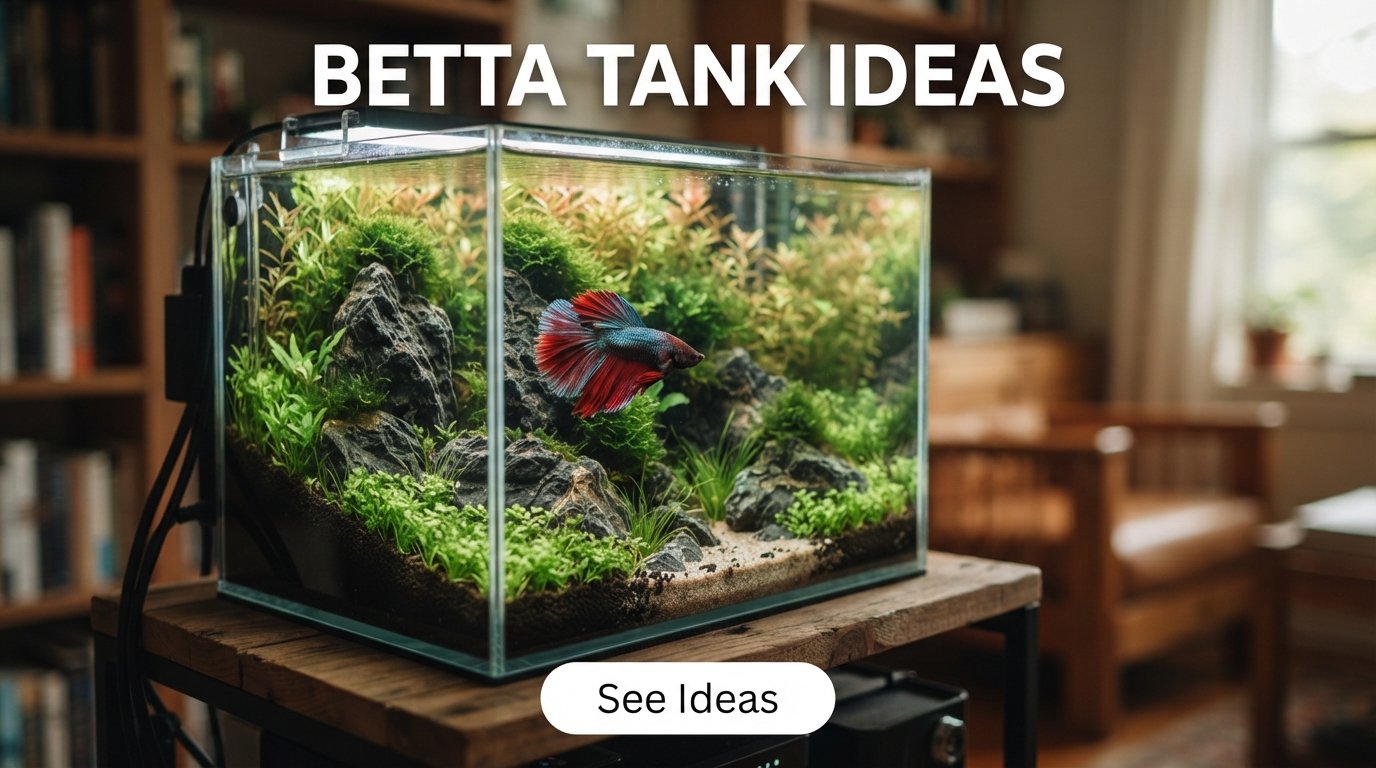
Betta tank ideas aquascaping can help transform a simple betta aquarium into a beautiful underwater landscape. Instead of filling the tank with random decorations, aquascaping focuses on arranging plants, rocks, driftwood, substrate, and open swimming areas into a balanced design that looks natural and gives your betta a comfortable environment.
A good betta aquascape should combine appearance with practicality. Bettas need access to the water surface, calm areas for resting, suitable hiding spaces, and enough room to swim. Plants and hardscape can provide structure and enrichment while also making the aquarium more attractive. Whether you have a small betta aquarium or a larger planted tank, there are many creative ways to build a beautiful aquascape.
What Is Betta Tank Aquascaping?
Betta tank aquascaping is the process of designing a betta aquarium using aquatic plants and hardscape materials to create an attractive underwater environment.
Unlike simply decorating a fish tank, aquascaping considers the relationship between plants, rocks, driftwood, substrate, lighting, swimming space, and the overall shape of the aquarium.
The goal is to create a miniature underwater landscape while keeping the environment suitable for the betta.
Why Aquascaping Is Good for a Betta Tank
Aquascaping can provide several practical benefits.
Plants create cover and can make a betta feel more secure. Driftwood and rocks can create interesting areas to explore, while dense vegetation can provide resting and hiding locations.
A planted aquarium can also create a more natural appearance.
However, decorations should never take up so much space that the betta cannot move comfortably through the aquarium.
Best Betta Tank Aquascaping Ideas
There are many different styles you can use depending on your aquarium size and personal taste.
| Aquascaping Idea | Main Features | Suitable Style |
|---|---|---|
| Jungle betta tank | Dense plants and natural textures | Natural |
| Minimalist betta tank | Open space and simple hardscape | Modern |
| Forest aquascape | Driftwood and moss | Natural |
| Rock garden | Stones and low plants | Minimalist |
| Betta river scene | Sand, rocks, and plants | Natural |
| Floating garden | Surface plants and rooted plants | Botanical |
| Blackwater style | Wood, leaves, and subdued appearance | Natural |
| Nano planted tank | Compact plants and small hardscape | Small aquariums |
| Island aquascape | Central rock or wood structure | Modern |
| Moss aquascape | Moss-covered rocks and wood | Natural |
1. Jungle Betta Tank
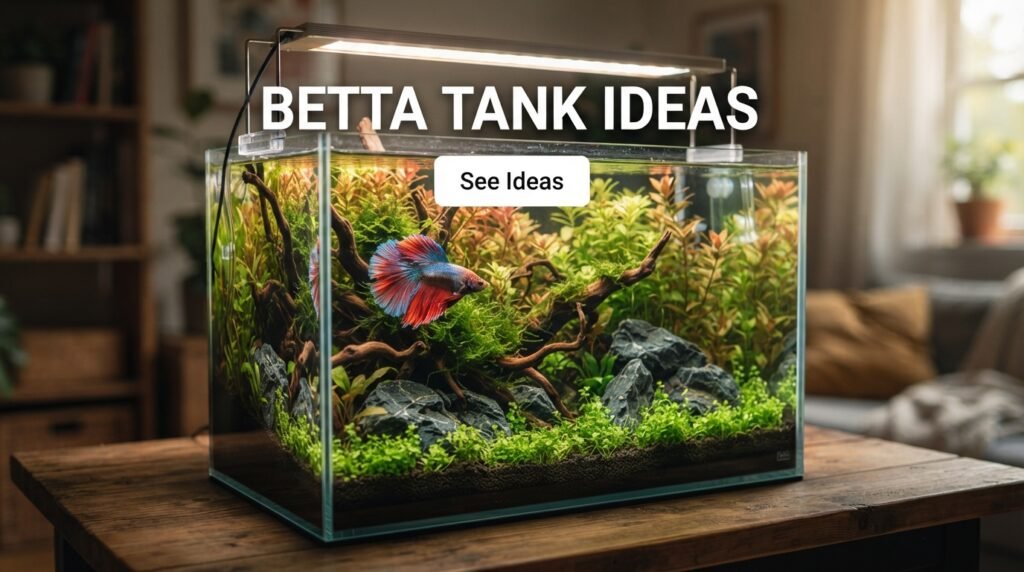
A jungle-style betta aquascape uses many plants to create a dense underwater environment.
Use a combination of foreground, midground, and background plants. Add a small piece of driftwood or a few rocks to create structure.
The aquarium should not become so dense that the betta cannot swim easily.
A jungle-style design works particularly well if you want a lush and natural appearance.
2. Minimalist Betta Aquascape
Minimalist aquascaping uses fewer decorative elements and focuses on open space.
One attractive piece of driftwood or a small group of rocks can serve as the focal point.
Add a few carefully selected plants rather than filling the entire tank.
The open areas make the aquarium look larger and give your betta plenty of swimming room.
3. Betta Forest Aquascape
A forest-style aquarium can recreate the appearance of submerged branches and vegetation.
Use branching driftwood as the main structure and attach moss or small plants to selected areas.
Tall plants can be placed behind the wood while shorter plants grow around its base.
The result can resemble a miniature underwater forest.
4. Rock Garden Betta Tank
A rock-based aquascape uses stones as the primary hardscape.
Choose a main rock and surround it with several smaller stones.
Add low-growing plants around the base to soften the hardscape.
Avoid sharp rocks that could injure a betta’s delicate fins. Smooth or appropriately textured aquarium-safe materials are preferable.
5. Betta River Aquascape
A river-inspired design can use sand, rounded rocks, driftwood, and aquatic plants.
Create an open sandy area through the center of the aquarium to resemble a river channel.
Place rocks along the edges and add plants toward the rear.
This design creates a clear swimming path and a strong sense of depth.
6. Floating Plant Betta Tank
Floating plants can create a soft, natural surface layer.
They can provide shade and cover, which some bettas may appreciate.
However, do not allow floating plants to completely cover the water surface. Bettas need access to atmospheric air, so maintaining clear access to the surface is important.
7. Blackwater-Inspired Betta Aquascape
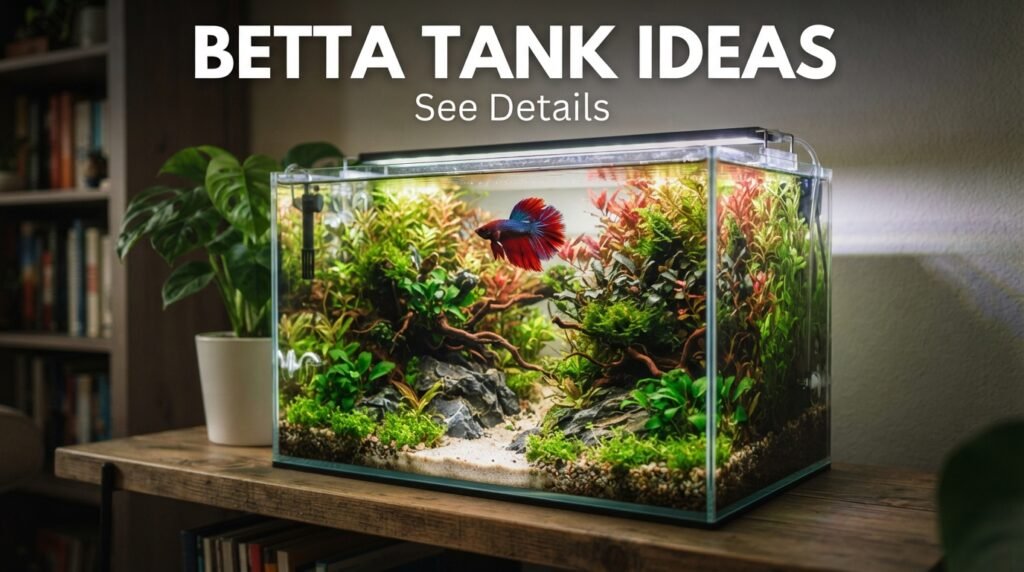
A blackwater-inspired design can feature driftwood, leaf litter, subdued colors, and aquatic plants.
The goal is to create a natural-looking environment rather than a brightly decorated aquarium.
Dark substrate and wood can create a dramatic background for a colorful betta.
If you intentionally tint the water with botanicals, monitor the aquarium’s water parameters and ensure all materials are suitable for aquarium use.
8. Moss Betta Aquascape
Moss is an excellent way to create a natural-looking betta aquarium.
Attach aquarium-safe moss to driftwood or suitable rocks.
As it grows, it can create a soft green texture across the hardscape.
Moss can also make simple decorations look more natural.
Choosing the Right Betta Tank Size
Aquascaping should always consider the aquarium’s available space.
A larger aquarium provides more room for plants, hardscape, and swimming areas.
A smaller tank requires careful selection of plant size and decoration.
Avoid choosing a large piece of driftwood simply because it looks attractive. It may occupy most of the available swimming space once placed inside the aquarium.
Best Plants for Betta Aquascaping
Plants can become the foundation of a beautiful betta aquascape.
Anubias
Anubias is a popular choice because of its broad leaves and relatively slow growth.
It can be attached to rocks and driftwood, making it useful for hardscape-focused designs.
Its leaves can also provide resting areas for bettas.
Java Fern
Java fern has long leaves and can create attractive midground or background texture.
It can be attached to hardscape instead of being deeply buried in substrate.
Java Moss
Java moss can cover driftwood and rocks.
It is useful for forest-style, jungle-style, and natural betta aquascapes.
Cryptocoryne
Cryptocoryne plants come in different sizes and leaf shapes.
They work well around rocks and driftwood and can create a dense midground.
Amazon Sword
Amazon sword can become a large focal plant.
It is better suited to aquariums with enough space for its mature size.
Floating Plants
Suitable floating plants can create shade and surface cover.
Keep enough open surface area for the betta to access the air.
Creating a Betta Tank Focal Point
A good aquascape usually has one main feature that attracts attention.
For a betta aquarium, this could be a piece of driftwood, a large rock, a plant cluster, or a small arch.
Place the focal point slightly off-center instead of directly in the middle.
Then arrange smaller plants and rocks around it.
This creates visual balance while keeping the layout natural.
Creating Open Swimming Space
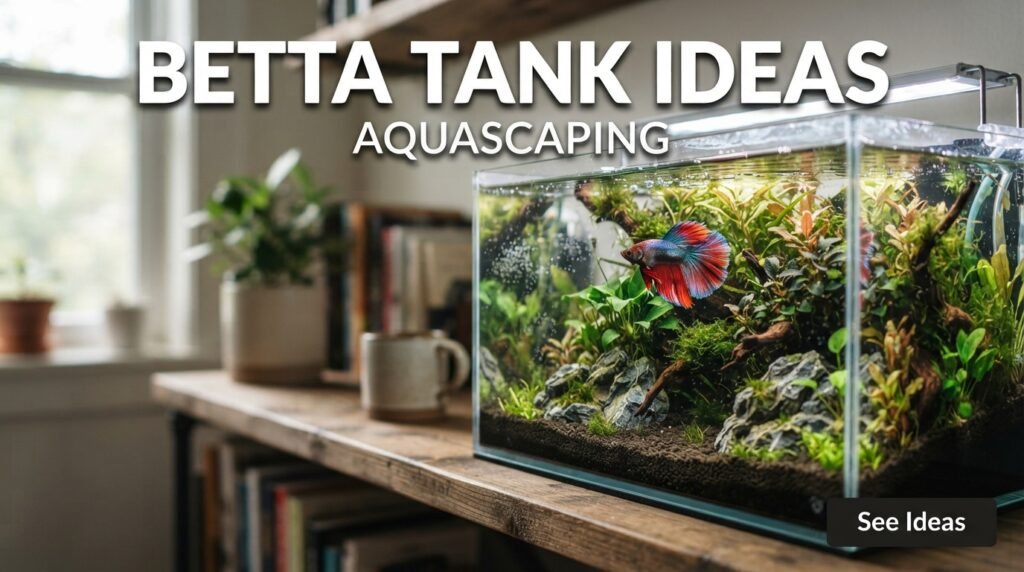
One of the biggest mistakes in betta aquascaping is filling every available area.
Bettas need room to swim.
Instead of creating a wall of decorations, leave an open section toward the front or center of the aquarium.
Plants can be concentrated around the sides and rear while the front remains relatively open.
Creating Resting Areas
Bettas often appreciate places where they can rest near the surface.
Broad-leaved plants can create useful resting locations.
You can also arrange plants and hardscape so there are sheltered areas throughout the aquarium.
Avoid decorations with sharp edges or rough surfaces that could damage fins.
Driftwood for Betta Aquascaping
Driftwood can become the centerpiece of a betta aquascape.
Branching wood works especially well for forest designs.
A curved piece can create a natural arch, while smaller branches can create a root-like appearance.
Before placing driftwood in an aquarium, make sure it is aquarium-safe and properly prepared.
Rocks for Betta Aquascaping
Rocks can provide structure and contrast.
Use a large primary stone with smaller supporting stones to create a natural arrangement.
Avoid unstable rock piles.
Also consider the surfaces of the rocks. Extremely sharp edges may pose a risk to delicate betta fins.
Substrate Ideas for Betta Aquascaping
Substrate color can dramatically affect the appearance of a betta aquarium.
Dark substrate can make colorful bettas and green plants stand out.
Natural brown or tan substrate can create a softer appearance.
Light sand can be used to create river-style pathways.
Choose substrate based on both appearance and the requirements of the plants you plan to grow.
Betta Tank Ideas With Sand
A sandy betta aquascape can create a peaceful natural appearance.
One option is to create a sandy foreground while planting the rear and sides heavily.
Another approach is to create a narrow sand pathway that runs between two planted areas.
Avoid creating unnecessarily deep substrate layers, particularly when the aquarium does not require them.
Betta Tank Ideas With Driftwood and Plants
Combining driftwood and plants is one of the easiest ways to create a natural-looking aquascape.
Place the wood at an angle instead of simply putting it vertically in the center.
Attach moss to some branches and place Anubias or Java fern around the structure.
Add taller plants behind the wood to create depth.
Betta Tank Ideas for Small Aquariums
Small betta aquariums benefit from simple designs.
Use one small piece of driftwood or one main rock instead of multiple large decorations.
Choose compact plants and leave open swimming space.
A small foreground carpet or moss-covered hardscape can provide plenty of visual interest without overwhelming the aquarium.
Betta Tank Ideas for Larger Aquariums
A larger betta aquarium gives you more room to create detailed landscapes.
You can combine driftwood, rocks, carpeting plants, midground plants, and tall background vegetation.
Try creating a valley, forest path, island, or river scene.
Keep the betta’s swimming areas in mind as the aquascape becomes more complex.
Betta Aquascaping With Floating Logs
A floating or elevated-looking piece of wood can create an interesting focal point.
You can use carefully positioned aquarium-safe hardscape to create the appearance of suspended branches.
Make sure all structures are stable and cannot fall or trap the fish.
Colorful Betta Aquascape
The betta itself can become the main source of color.
If your betta has bright red, blue, yellow, or multicolored fins, green plants and neutral rocks can provide an attractive background.
Avoid filling the aquarium with too many brightly colored decorations because they can compete visually with the fish.
Black Background Betta Tank
A dark background can make plants and colorful bettas stand out.
Black substrate combined with green plants can create a dramatic modern appearance.
A dark background can also visually hide equipment and make the aquarium look deeper.
Betta Aquascaping With Live Plants
Live plants are particularly useful for natural aquascapes.
They can provide cover, create visual layers, and gradually change the appearance of the aquarium as they grow.
However, live plants require appropriate lighting, nutrients, and maintenance.
Choose plants that match the equipment and maintenance level you are prepared to provide.
Betta Aquascaping With Artificial Plants
Artificial plants can also be used when live plants are not practical.
Choose aquarium-safe artificial plants with soft surfaces and avoid sharp plastic edges.
Artificial plants do not require lighting or fertilizers, but they should still be cleaned regularly.
Lighting for Betta Aquascaping
Lighting should support both the aquarium plants and the overall appearance of the tank.
Avoid excessively bright lighting if it causes stress or creates excessive algae.
Provide a consistent day-and-night cycle.
If you use live plants, choose lighting appropriate for their requirements rather than simply selecting the brightest possible light.
Filtration and Water Flow
Filtration is important in a betta aquarium, but excessive water movement can make swimming difficult for some bettas.
Aquascaping can help create calmer areas behind plants and hardscape.
Position plants and decorations so they do not completely block filtration.
If the betta struggles against the current, adjust the flow rather than relying entirely on the aquascape to reduce it.
Common Betta Aquascaping Mistakes
Overcrowding the Tank
Too many plants and decorations can eliminate swimming space.
Using Sharp Decorations
Sharp rocks, plastic plants, or rough decorations can damage delicate fins.
Blocking the Surface
Bettas need access to atmospheric air, so do not completely cover the water surface.
Using Oversized Decorations
Large rocks and driftwood can dominate a small aquarium.
Ignoring Plant Growth
Plants that look small when purchased may become much larger over time.
Creating Too Much Flow
A beautiful aquascape cannot compensate for water movement that is unsuitable for the betta.
Forgetting Maintenance Access
Leave enough space to clean the glass and perform routine aquarium maintenance.
How to Build a Betta Aquascape
Start by deciding on the theme.
Choose a minimalist, jungle, forest, river, blackwater-inspired, or rock-based design.
Place the largest hardscape element first.
Add supporting rocks or driftwood pieces.
Next, add taller background plants.
Place medium plants around the hardscape and shorter plants in the foreground.
Finally, leave an open swimming area and check that the betta can easily reach the surface.
Before introducing the fish, make sure the aquarium is properly established and the water conditions are appropriate.
How to Keep a Betta Aquascape Beautiful
Regular maintenance is essential.
Trim plants when they become too dense.
Remove dead leaves and debris.
Clean the aquarium glass.
Check that decorations remain stable.
Monitor water quality and perform appropriate routine maintenance.
As plants grow, the original aquascape may change. This is normal and can actually make the aquarium look more natural over time.
Final Thoughts
Betta tank ideas aquascaping can range from simple minimalist layouts to dense underwater forests. The most successful designs balance beauty with the needs of the betta.
Use aquarium