
 By admin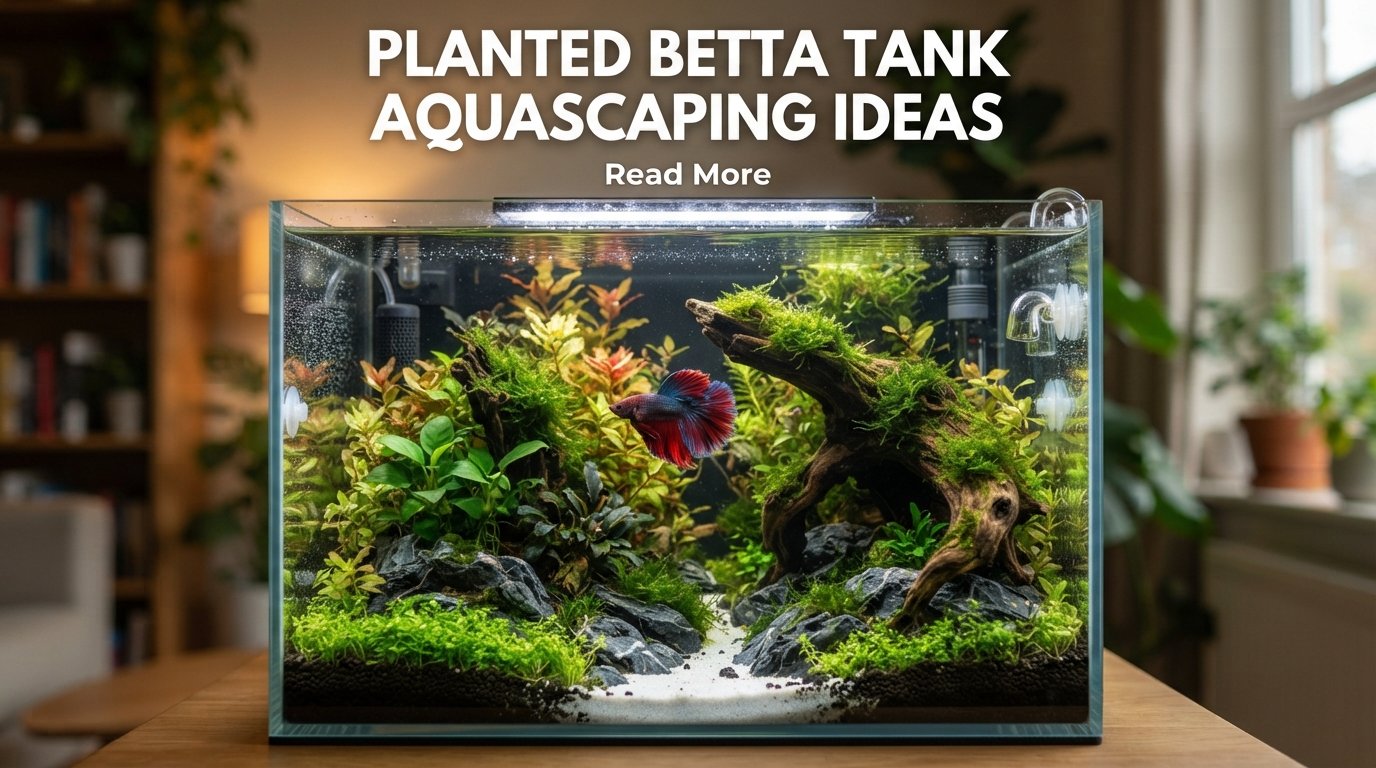
Planted betta tank aquascaping is a beautiful way to create a natural underwater environment while giving your betta fish plenty of plants, hiding areas, and swimming space. A well-designed planted betta tank can combine attractive aquascaping with practical features that support the fish’s comfort and daily behavior.
Betta fish are often kept in simple aquariums, but a planted setup can be much more visually interesting. Live plants provide structure, shade, cover, and surfaces for exploration. When plants, rocks, driftwood, substrate, and open swimming areas are carefully arranged, the result can look like a miniature underwater landscape.
The key is to remember that aquascaping a betta tank is not simply about filling the aquarium with as many plants as possible. Good design requires balance. Your betta needs open areas for swimming, gentle water movement, resting places, and enough room to reach the surface easily.
What Is Planted Betta Tank Aquascaping?
Planted betta tank aquascaping is the process of designing an aquarium around a betta fish while using live aquatic plants and carefully arranged hardscape.
The layout can be minimalist, jungle-inspired, nature-style, or even resemble a small underwater forest. The plants become an important part of the composition while also providing useful environmental structure.
A successful design combines three things: the needs of the betta, the requirements of the plants, and the visual balance of the aquascape.
Why Choose a Planted Betta Tank?
Live plants can make a betta aquarium feel more natural. Instead of having a bare tank with a single decoration, plants create multiple levels and areas for the fish to explore.
Plants can also provide resting places. Bettas often enjoy resting on broad leaves or among gentle vegetation.
A planted aquarium can also look more mature as it develops. The plants gradually grow, spread, and fill the landscape, making the aquarium feel like a living environment rather than a static decoration.
Popular Planted Betta Tank Aquascaping Styles
| Aquascaping Style | Main Features | Best Character |
|---|---|---|
| Minimalist | Few plants and open space | Clean and simple |
| Jungle | Dense plant growth | Natural and lush |
| Nature Aquarium | Plants, rocks, and wood | Balanced landscape |
| Island | Central hardscape with plants | Strong focal point |
| Forest | Vertical wood and plants | Dramatic depth |
| Betta Garden | Broad leaves and gentle plants | Restful environment |
| Blackwater | Wood, leaves, and subdued planting | Natural appearance |
| Nano Planted | Compact plants and hardscape | Small tanks |
Choosing the Right Aquarium Size
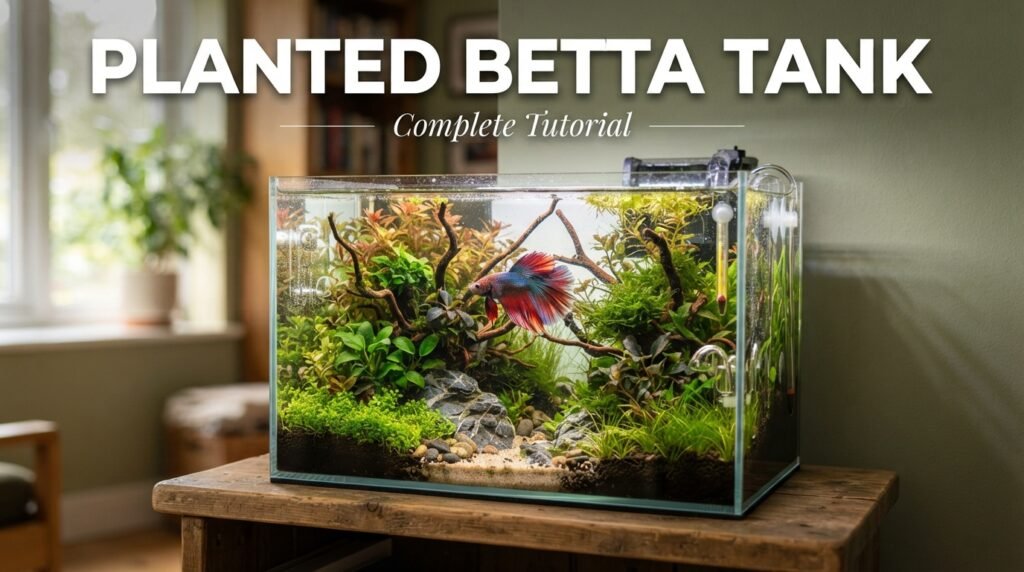
A planted betta aquarium should provide enough space for comfortable swimming and maintenance.
A larger aquarium generally gives you more room to create a balanced aquascape. More space also allows plants to grow without immediately taking over the entire layout.
Smaller aquariums can still be attractive, but they require careful planning. A few appropriately sized plants may look better than a large number of oversized plants.
Before choosing your aquascape, consider the mature size of every plant you plan to use.
Best Plants for a Betta Aquascape
Choosing appropriate plants is one of the most important parts of planted betta tank aquascaping.
Anubias
Anubias is a popular choice because many varieties have broad leaves that can provide useful resting surfaces for bettas.
They are generally slow-growing and can be attached to driftwood or rocks. Avoid burying the rhizome under the substrate.
Java Fern
Java fern is another beginner-friendly plant. Its long leaves can create vertical structure and natural cover.
It can be attached to wood or rocks rather than planted deeply into the substrate.
Amazon Sword
Amazon sword can create a large central or background focal point in a suitably sized aquarium.
Its broad leaves can contribute to a jungle-style appearance, although it can eventually become quite large.
Cryptocoryne
Cryptocoryne species are useful for the foreground and middle ground. Their varied shapes and colors can add texture without creating an overly artificial appearance.
Java Moss
Java moss can be attached to driftwood and rocks. It creates a soft, natural texture and can make hardscape look older and more established.
Anubias Nana
Anubias nana is particularly useful for smaller planted betta aquariums because it remains relatively compact.
Its broad leaves can create small resting areas while adding greenery near the foreground or middle ground.
Bucephalandra
Bucephalandra can add small, detailed leaves to the aquascape. It works well on rocks and driftwood and can help create a natural transition between hardscape and larger plants.
Floating Plants
Floating plants can provide shade and cover at the surface. However, avoid allowing them to completely cover the surface because your betta needs access to the air above the water.
Creating a Betta-Friendly Layout
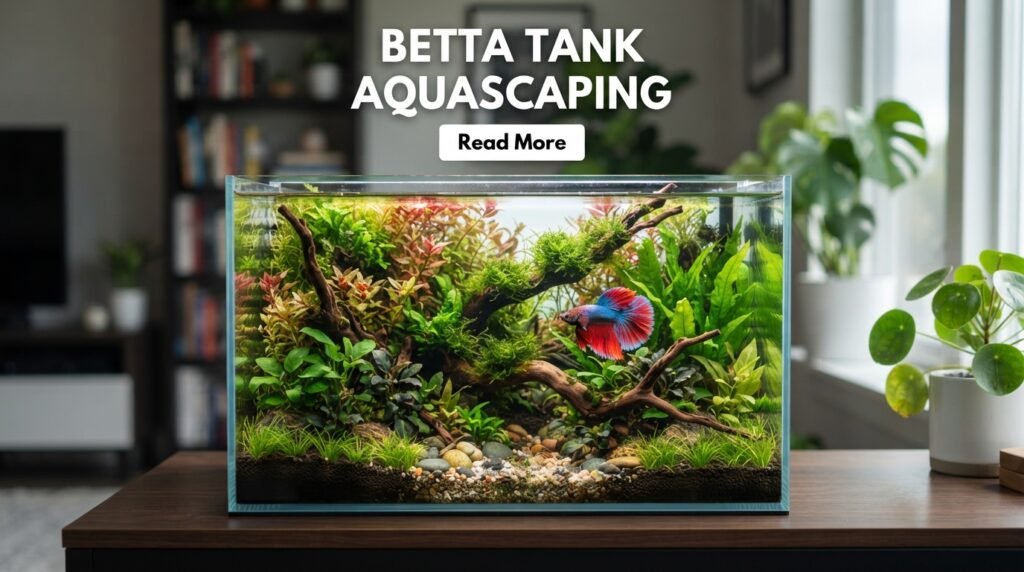
A beautiful aquascape should still prioritize the fish.
One useful approach is to create dense planting on one side and leave an open swimming area on the other. This creates both visual balance and functional space.
You can also place plants and wood toward the back and sides while keeping the center or front relatively open.
The betta should have enough room to move through the aquarium without constantly navigating through dense vegetation.
Creating Resting Places
Betta fish often appreciate places where they can rest near the surface.
Broad plant leaves can provide natural resting platforms. Driftwood branches can also create sheltered areas if they are smooth and safely positioned.
Try to create several resting points at different heights. This gives your betta options without forcing it to remain in one area.
Choosing Driftwood for a Betta Tank
Driftwood can become the main hardscape feature of a planted betta aquarium.
Choose pieces with smooth surfaces and natural shapes. Branching wood can create a miniature tree or forest appearance, while a curved piece can form an arch or shelter.
Avoid sharp edges that could damage delicate fins.
The wood should also be properly prepared for aquarium use before being introduced into the tank.
Rocks in a Planted Betta Aquascape
Rocks can help create structure and depth.
Use one main rock or a small group of complementary stones rather than filling the aquarium with unrelated rock types.
Place larger rocks toward the focal area and smaller stones around them to create a natural transition.
Make sure rocks are stable and cannot fall or shift when the betta moves around the aquarium or during maintenance.
Minimalist Planted Betta Tank
A minimalist design can be particularly attractive in a betta aquarium.
Use a simple piece of driftwood, several Anubias plants, a few Cryptocoryne plants, and an open foreground.
The empty space is important. It gives the betta room to swim while making the plants and hardscape more visually prominent.
A minimalist aquarium can also be easier to maintain because there are fewer plants and hardscape elements to manage.
Jungle-Style Betta Aquascaping
A jungle-style aquascape uses dense layers of plants to create a lush underwater environment.
Place taller plants in the background, medium-sized plants in the middle, and shorter plants toward the front.
Leave some open pathways through the vegetation so your betta can move comfortably.
The goal should be controlled natural growth rather than allowing plants to completely fill every available space.
Betta Aquarium With a Bonsai Tree
A bonsai-style tree can create a dramatic focal point in a planted betta aquarium.
Aquarium-safe driftwood can be arranged into a tree shape and covered with moss. Smaller plants can be placed around the base.
Keep the tree positioned so that it does not eliminate swimming space. A bonsai structure works especially well when one side of the aquarium remains relatively open.
Betta Aquarium With Sand Path
An open sand path can make a planted aquarium look deeper.
Create a curved path beginning in the foreground and moving toward the background. Surround it with plants and small rocks.
This technique naturally guides the viewer’s eyes through the aquascape.
It also leaves a useful open area for the betta to explore.
Blackwater-Inspired Betta Aquascaping
A blackwater-inspired aquarium can use driftwood, leaf litter, subdued lighting, and aquatic plants to create a natural-looking environment.
The darker appearance can make a brightly colored betta stand out visually.
If you choose this style, make sure every component is appropriate for aquarium use and that water conditions remain suitable for your fish.
Substrate Choices for Planted Betta Tanks
The substrate should match both your plants and your design.
Aquarium soil can be useful for plants that benefit from nutrient-rich substrates. Sand creates a clean, natural appearance and can work well with plants that obtain nutrients primarily through the water column or are attached to hardscape.
Gravel is another versatile option.
The important thing is to choose a substrate based on your planting plan rather than selecting it only for appearance.
Foreground, Midground, and Background
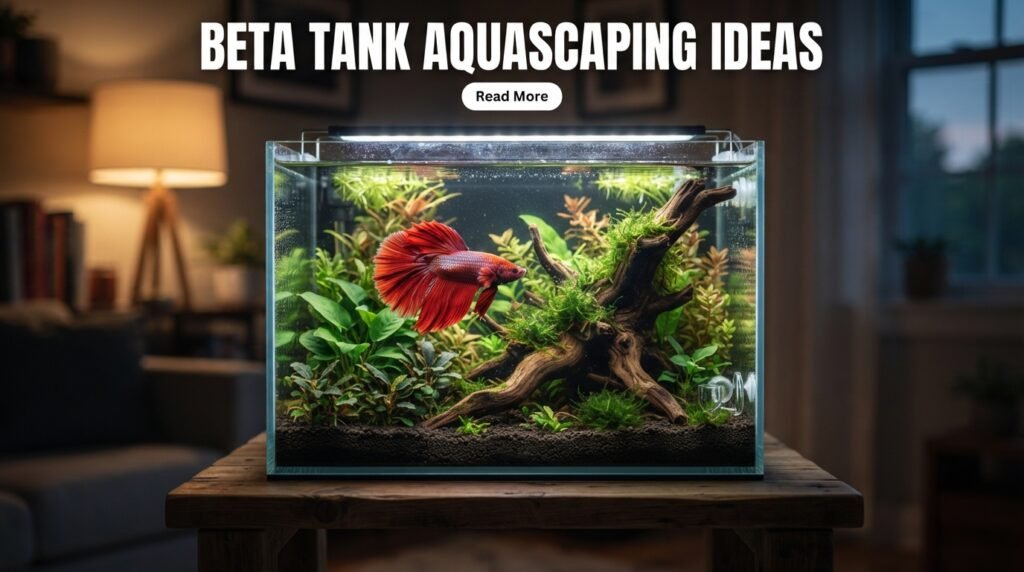
Dividing your aquascape into three visual levels can make it much easier to design.
The foreground should contain shorter plants or open substrate. The midground can include medium-sized plants, rocks, and smaller pieces of wood.
The background is where taller plants can create height and visual depth.
This arrangement prevents the aquarium from looking flat.
Using Negative Space
Negative space is simply the area that is intentionally left open.
It may seem strange to leave part of a planted aquarium empty, but open space can make the entire composition more attractive.
For a betta tank, negative space is especially useful because it provides room for swimming.
Instead of filling every corner, allow some areas to remain open and let the focal point stand out.
Lighting for Planted Betta Tanks
Lighting should be selected according to the plants you are growing.
Low-light plants such as Anubias and Java fern generally do not require extremely intense lighting. If you use more demanding plants, their lighting requirements may be higher.
Too much light combined with an imbalance of nutrients can encourage algae growth.
A consistent lighting schedule is usually more useful than simply increasing intensity.
Do Betta Plants Need CO2?
Not every planted betta tank needs injected CO2.
Many beginner-friendly plants can grow successfully without additional CO2 when lighting, nutrients, and water conditions are appropriate.
CO2 can help demanding plants grow faster, but it also adds complexity.
For a simple betta aquascape, low-demand plants can make the setup easier to maintain.
Water Flow for a Betta Aquascape
Betta fish generally do better with gentle water movement than with extremely strong current.
When choosing filtration, consider how the outlet affects the aquarium’s flow.
Plants, driftwood, and rocks can sometimes help break up water movement. Positioning hardscape strategically can create calmer areas where the betta can rest.
A planted aquarium should still have adequate circulation and filtration, but excessive turbulence can make the environment uncomfortable for a betta.
Creating a Surface Resting Area
A planted betta aquarium should include areas near the surface where the fish can rest.
Broad leaves positioned close to the surface can become natural resting platforms.
Floating plants can also provide shade and cover, but do not allow them to form an impenetrable layer over the entire surface.
Because bettas breathe atmospheric air, maintaining easy surface access is important.
Common Planted Betta Tank Aquascaping Mistakes
One common mistake is overcrowding the aquarium with plants.
Another is choosing plants based only on appearance without considering their mature size.
Sharp rocks and rough wood can also be problematic for betta fins.
Excessive water flow is another issue. A beautiful aquascape is not successful if the fish struggles to swim comfortably.
Beginners sometimes place every decoration in the center of the aquarium. Moving the focal point slightly to one side can create a more natural composition.
Finally, avoid introducing too many different plant species at once. A smaller selection of compatible plants can create a more cohesive design.
How to Build a Planted Betta Tank Aquascape
Start by choosing the aquarium and deciding how much open swimming space you want.
Next, select your primary hardscape. This could be driftwood, rocks, or a combination of both.
Position the largest element first. Then add smaller rocks or pieces of wood to create balance.
Add your substrate and establish the foreground, middle ground, and background.
Attach plants such as Anubias, Java fern, Bucephalandra, and moss to hardscape where appropriate.
Plant rooted species according to their requirements.
Leave an open swimming area and create several sheltered resting locations.
Once the layout is complete, fill the aquarium carefully and allow the system to establish properly before introducing your betta.
Planted Betta Tank Maintenance
Maintenance is essential for keeping an aquascape healthy.
Trim plants when they become too large or begin blocking important areas.
Remove dead leaves and excess debris. Keep the substrate clean without excessively disturbing plant roots.
Clean algae when necessary and maintain the filter according to its requirements.
Regularly observe your betta’s behavior. If the fish spends too much time struggling against the current or has difficulty reaching the surface, the aquarium layout or flow may need adjustment.
How to Make a Betta Aquascape Look More Natural
Natural aquascapes usually avoid perfect symmetry.
Use different plant heights, irregular rocks, and naturally shaped driftwood.
Allow some plants to grow freely while keeping focal areas trimmed.
Repeat the same plant species in several parts of the aquarium rather than using many unrelated species.
A consistent color and texture palette can make the aquascape feel like one connected landscape.
Small Planted Betta Tank Ideas
For a small aquarium, focus on simplicity.
A small piece of driftwood, Anubias nana, Java moss, and a few Cryptocoryne plants can create an attractive layout.
Avoid large plants that quickly dominate the aquarium.
A small open foreground can make the tank appear larger while providing swimming space.
Large Planted Betta Tank Ideas
A larger aquarium provides more room for detailed aquascaping.
You can create a large driftwood centerpiece surrounded by plants, build a rocky landscape, or design a miniature underwater forest.
Use different plant heights to create depth and leave several open areas for swimming.
A larger aquarium also gives you more flexibility when creating resting areas near the surface.
Final Thoughts
Planted betta tank aquascaping is about creating a balance between beauty and functionality. Live plants, driftwood, rocks, and substrate can transform a simple aquarium into a peaceful underwater landscape, but the needs of the betta should always remain part of the design.
A successful layout does not have to be complicated. A few carefully selected plants, gentle hardscape, open swimming space, and suitable resting areas can create an attractive and practical aquarium.
Whether you prefer a minimalist planted tank, a dense jungle design, a bonsai aquascape, or a natural river-inspired layout, careful planning will help you create a healthy and visually appealing home for your betta.
Frequently Asked Questions
What are the best plants for a planted betta tank?
Anubias, Java fern, Java moss, Cryptocoryne, Bucephalandra, and suitable floating plants are popular choices. The best plants depend on aquarium conditions and the layout you want to create.
Is a planted tank good for betta fish?
A properly maintained planted tank can provide cover, resting places, visual structure, and an attractive natural environment for a betta.
Does a betta tank need live plants?
Live plants are not absolutely required, but they can provide useful structure and make the aquarium more natural. Artificial decorations should also be aquarium safe and free from sharp edges.
How many plants should I put in a betta tank?
There is no fixed number. Choose enough plants to create cover and visual interest while maintaining open swimming space and easy access to the surface.
Can Anubias grow in a betta tank?
Yes. Anubias is commonly used in planted aquariums and can work well in betta setups. Its broad leaves can also provide resting surfaces.
Can I use Java fern in a betta aquarium?
Yes. Java fern is a popular aquarium plant that can add height and structure without requiring extremely demanding conditions.
Do betta fish like heavily planted tanks?
Bettas can benefit from vegetation and cover, but the aquarium should not become so dense that swimming and access to the surface are restricted.
Do betta tanks need CO2?
No. Many easy aquarium plants can grow without injected CO2. CO2 is mainly useful when keeping more demanding plants or pursuing faster growth.
What substrate is best for planted betta tanks?
Aquarium soil, sand, and gravel can all be suitable depending on your plants and aquascaping goals. Choose the substrate according to the needs of the plants you intend to grow.
How strong should the filter be for a betta tank?
The filtration should provide appropriate circulation and biological filtration without creating excessive current. If the betta is constantly struggling against the flow, reduce or redirect the current.
Can I use driftwood in a betta tank?
Yes, aquarium-safe driftwood can be used. Make sure it is properly prepared and does not have sharp areas that could damage the fish.
How do I create a resting area for my betta?
Broad plant leaves positioned near the surface can provide natural resting spots. Smooth decorations can also be used if they are specifically suitable for aquariums.
Can floating plants be used in a betta tank?
Yes, floating plants can provide shade and cover. However, keep enough of the water surface open so the betta can easily reach atmospheric air.
How can I make a small betta tank look bigger?
Use open foreground space, smaller plants, appropriate hardscape, and a layout that creates depth. Avoid filling every area with large decorations.
What is the best aquascaping style for a betta?
There is no single style that fits every aquarium. Minimalist, jungle, nature-style, bonsai, and blackwater-inspired layouts can all be adapted to betta tanks when swimming space, resting areas, and suitable water movement are maintained.