
 By admin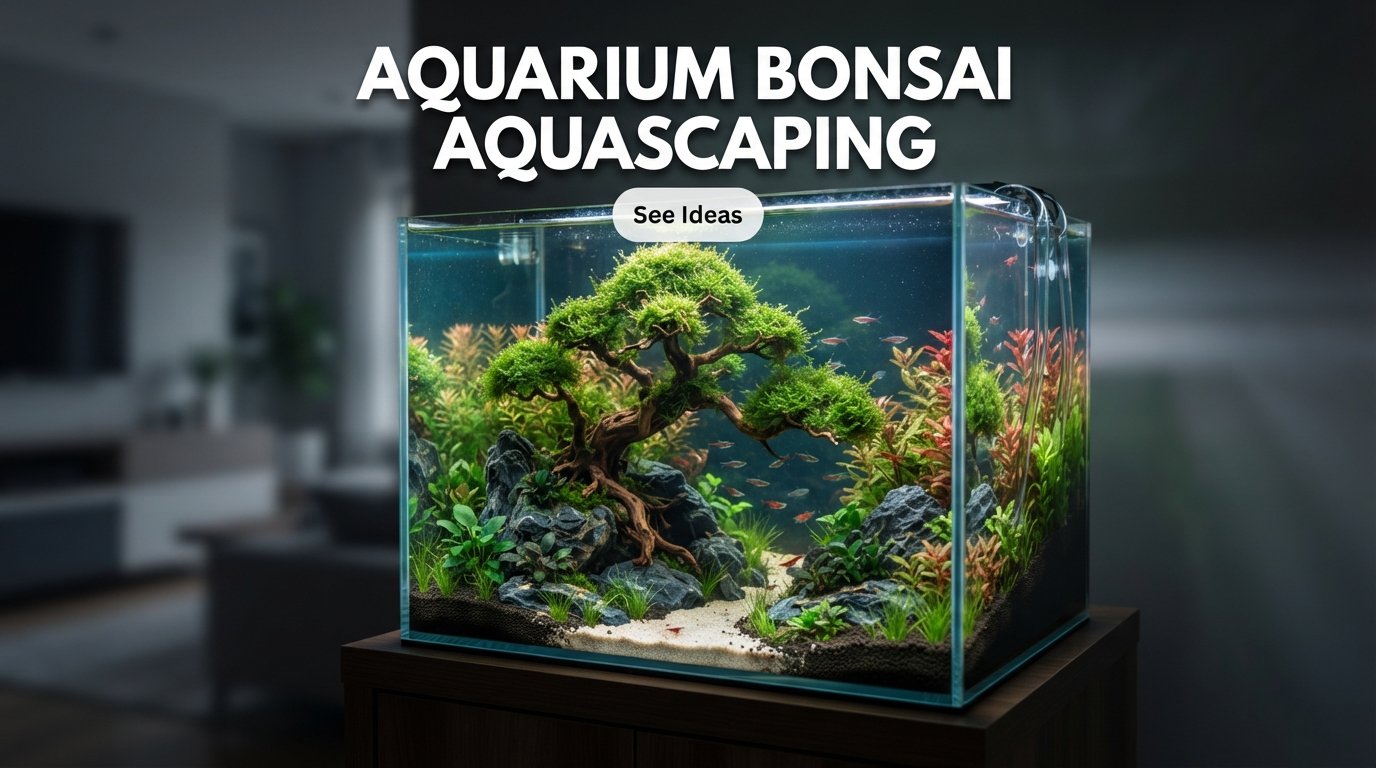
Aquarium bonsai aquascaping is a beautiful way to bring the appearance of a miniature bonsai tree into an underwater environment. By combining driftwood, aquarium plants, moss, rocks, and carefully selected substrate, you can create a small underwater landscape that looks like a natural tree growing inside your aquarium. This style has become popular among aquascaping enthusiasts because it creates a strong focal point while still giving the aquarium a peaceful and natural appearance.
Unlike traditional bonsai trees that grow in soil, aquarium bonsai designs use specially shaped aquarium-safe wood as the tree structure. Moss and other aquatic plants are attached to the branches to create the appearance of leaves and foliage. With the right arrangement, an ordinary aquarium can become a miniature underwater forest.
What Is Aquarium Bonsai Aquascaping?
Aquarium bonsai aquascaping is an aquascaping style centered around a tree-shaped hardscape. The tree is usually created from aquarium-safe driftwood or several pieces of wood connected together. Moss or other suitable plants are then attached to the branches to imitate the foliage of a miniature tree.
The tree can be placed on rocks, surrounded by carpeting plants, or positioned above an open sandy area. The surrounding hardscape helps create the impression of a complete landscape rather than simply placing a piece of wood inside a tank.
One of the most attractive features of this style is its flexibility. A bonsai aquascape can look like a large forest, a lonely tree on a mountain, a small woodland, or a simple minimalist landscape depending on the materials and plants you choose.
Why Choose an Aquarium Bonsai Design?
A bonsai-style aquascape gives your aquarium a clear focal point. Instead of having plants and decorations scattered throughout the tank, the viewer’s attention naturally moves toward the tree.
This style can also make a relatively small aquarium feel much more interesting. A carefully positioned tree can create depth and perspective, especially when smaller plants are placed toward the back of the aquarium.
Another advantage is that bonsai aquascaping can be adapted to many aquarium sizes. Nano tanks can feature a tiny tree with delicate branches, while larger aquariums can accommodate an impressive forest-style composition.
Popular Aquarium Bonsai Aquascaping Styles
| Style | Main Features | Best For |
|---|---|---|
| Moss Bonsai | Tree covered with moss | Natural green appearance |
| Forest Bonsai | Multiple trees or branches | Large aquariums |
| Mountain Bonsai | Tree surrounded by rocks | Dramatic landscapes |
| Minimalist Bonsai | One tree with open space | Simple aquascapes |
| Island Bonsai | Tree positioned on a raised island | Modern layouts |
| River Bonsai | Tree beside sand and stones | Flowing natural appearance |
| Jungle Bonsai | Dense plants and moss | Wild environments |
| Shrimp Bonsai | Moss and hiding spaces | Shrimp aquariums |
Choosing the Right Aquarium Bonsai Wood
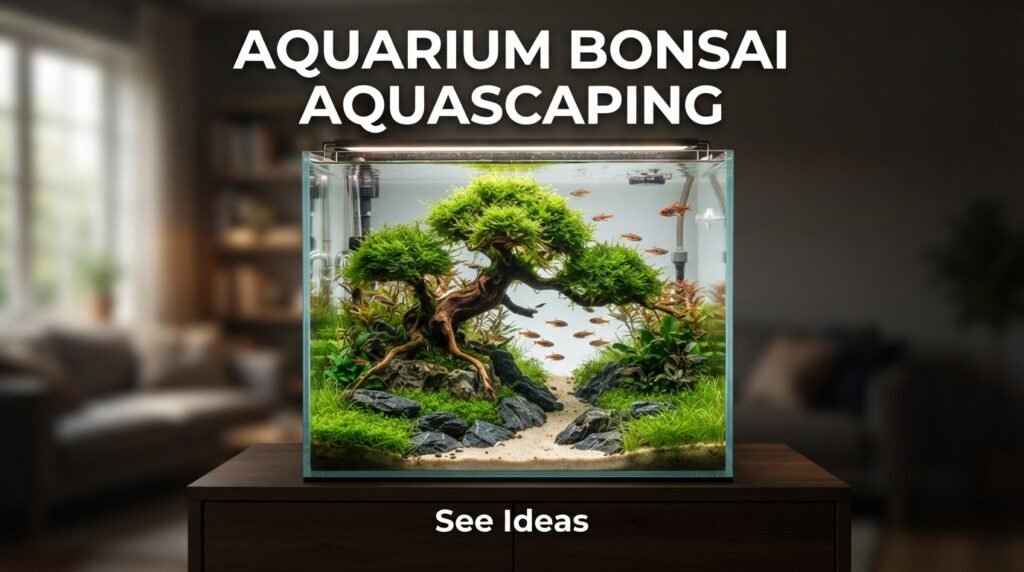
The tree is the centerpiece of this aquascaping style, so choosing suitable wood is extremely important. You can purchase commercially prepared aquarium bonsai wood or construct your own design using several pieces of aquarium-safe driftwood.
Look for wood with natural branches and an interesting trunk structure. Branches that become gradually thinner toward their tips usually create a more realistic tree appearance.
The wood should be aquarium safe and properly prepared before it enters the tank. Avoid untreated wood collected from unknown locations because it may contain chemicals, contaminants, or materials that are unsuitable for aquatic environments.
A good bonsai structure does not need to look perfectly symmetrical. Natural trees are irregular, and small imperfections often make an underwater bonsai look more realistic.
Creating the Tree Structure
If you cannot find a ready-made bonsai aquarium decoration in the shape you want, you can build one yourself.
Start with a strong piece of driftwood as the trunk. Smaller branches can then be arranged around it to create the tree’s structure. Aquarium-safe adhesive, suitable thread, or other appropriate aquascaping methods can be used to secure the pieces.
Try to avoid making the tree too symmetrical. One side can have slightly longer branches while the other side remains more open. This asymmetry helps create a natural appearance.
The base of the tree should also be stable. You do not want the entire structure moving every time you perform aquarium maintenance.
Best Plants for Aquarium Bonsai Aquascaping
Moss is one of the most popular choices for bonsai aquascaping because it naturally grows over wood and creates the appearance of tree foliage.
Java Moss
Java moss is one of the easiest choices for a bonsai tree. It can attach to wood and gradually cover the branches with green growth.
Its relatively undemanding nature makes it suitable for beginners.
Christmas Moss
Christmas moss can create a fuller and more layered appearance. When trimmed carefully, it can make branches resemble miniature tree canopies.
Weeping Moss
Weeping moss can be especially attractive on bonsai structures because its growth can hang downward from branches. This creates an appearance similar to the cascading foliage of some real trees.
Flame Moss
Flame moss grows upward in a distinctive pattern. It can give the tree a slightly different texture and may work well when used selectively rather than covering every branch.
Anubias
Small Anubias varieties can be used around the base of the tree or incorporated into nearby hardscape. They generally grow slowly and can add broad leaves to contrast with delicate moss.
Bucephalandra
Bucephalandra is another excellent plant for detailed aquascapes. Its small leaves and slow growth can work particularly well around rocks and the lower portions of a bonsai composition.
How to Make the Bonsai Tree Look Natural
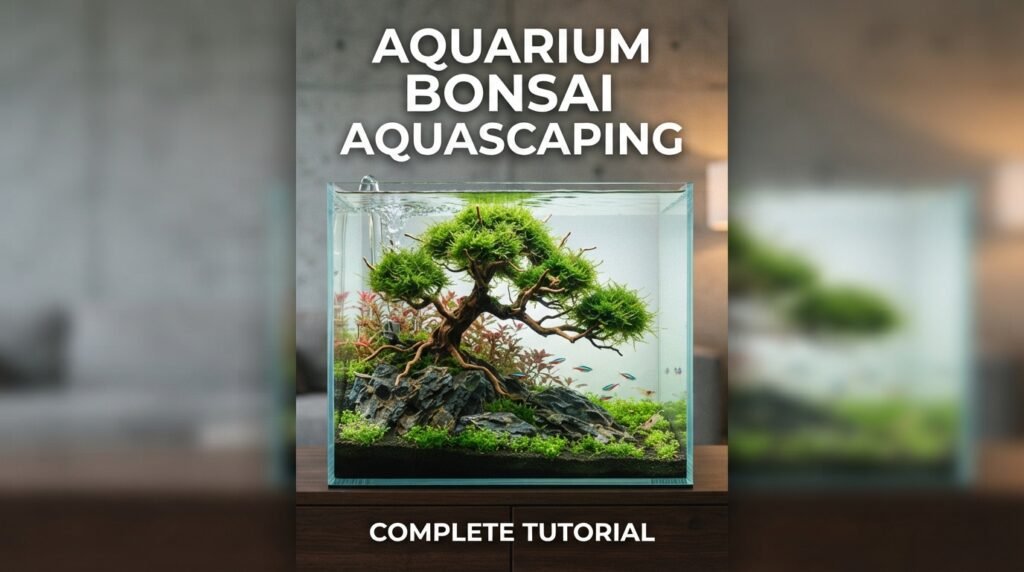
The biggest challenge with aquarium bonsai aquascaping is making the tree look like part of a natural environment.
Avoid covering every branch with the same amount of moss. Real trees do not have perfectly uniform foliage. Leave some branch sections exposed and allow other areas to become denser.
You can also trim the moss regularly to maintain the desired shape. A rounded canopy can create a classic bonsai appearance, while uneven growth can make the aquarium look more like a wild forest.
The size of the leaves and plants should also match the size of the tree. Very large plants can make a small bonsai structure look unrealistic.
Creating Depth Around the Bonsai
Depth is one of the most important elements of successful aquascaping.
Place the main tree slightly away from the exact center of the aquarium when possible. You can then use smaller rocks, plants, and pieces of wood to create a visual path toward the background.
Larger elements should generally be placed closer to the foreground, while smaller elements toward the back can create the impression of distance.
A bonsai tree with an open area in front can look much deeper than a tank filled completely with plants and decorations.
Using Rocks With Aquarium Bonsai
Rocks can dramatically improve a bonsai aquascape. They can make the tree appear as though it is growing from a mountain or rocky landscape.
Choose rocks that complement the color and texture of the wood. Large rocks can be placed around the base of the tree, while smaller stones can transition gradually into the substrate.
Avoid using too many different rock types. Keeping the hardscape consistent usually creates a more unified appearance.
Bonsai Tree on a Rocky Mountain
One popular design involves placing the bonsai tree on top of a rocky formation. The tree becomes the highest point of the composition while rocks create the impression of a miniature mountain.
Small plants can be placed between the rocks to soften the hardscape. Moss around the rock surfaces can further integrate the tree into the landscape.
This style works particularly well in aquariums where you want a dramatic focal point.
Bonsai Tree With an Open Sand Path
Another beautiful idea is to create an open sand path leading toward the bonsai tree.
Instead of covering the entire foreground with plants, leave a curved or narrow sandy area. The path can guide the viewer’s eyes toward the tree.
Small stones along the edges of the sand can make the transition between the planted areas and the open space look more natural.
Forest-Style Aquarium Bonsai
If your aquarium is large enough, you do not necessarily need to use only one tree.
Several smaller bonsai-style structures can create the appearance of an underwater forest. Use different tree heights and positions to prevent the composition from looking repetitive.
The tallest tree can act as the primary focal point, while smaller trees gradually decrease in size toward the background.
This technique creates strong perspective and can make the aquarium appear much deeper.
Minimalist Aquarium Bonsai Aquascaping
A minimalist bonsai aquascape uses fewer elements but places greater importance on composition.
A single tree, a few rocks, a clean substrate, and limited plant growth can create a sophisticated design. The empty space becomes an important part of the aquascape.
Minimalist designs are especially useful for smaller aquariums because they prevent the tank from becoming visually crowded.
Aquarium Bonsai for Shrimp
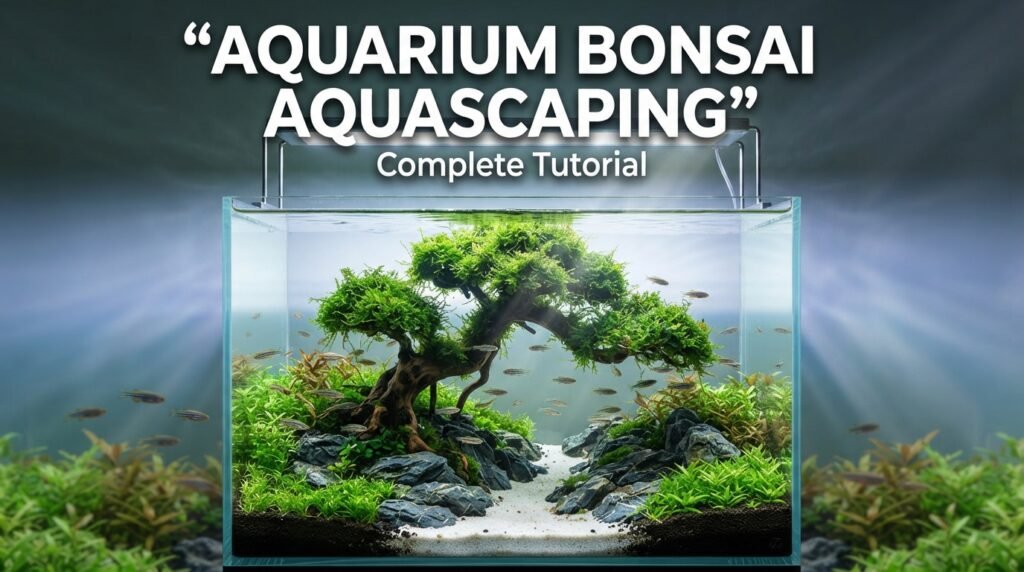
Bonsai aquascaping can work extremely well in shrimp aquariums.
Moss-covered branches provide surfaces where shrimp can graze and explore. The branches also create a three-dimensional environment with plenty of small spaces.
When designing a shrimp bonsai aquarium, avoid creating areas where shrimp could become trapped. Keep the structure stable and make sure there is enough open space for movement.
Small mosses and slow-growing plants are particularly useful because they can create a natural environment without overwhelming the aquarium.
Aquarium Bonsai for Betta Fish
A bonsai aquascape can also be adapted for a betta aquarium. However, the structure should be designed carefully.
Avoid sharp branches or rough surfaces that could damage delicate fins. Make sure the aquarium has suitable open swimming areas and that the tree does not occupy the entire tank.
Plants around the base of the bonsai can create additional cover while maintaining open swimming space.
Choosing the Right Substrate
The substrate should complement the bonsai rather than compete with it.
Natural brown, black, gray, and earthy-colored substrates can work well with driftwood. Light-colored sand can create a strong contrast and make the tree stand out.
If you plan to grow carpeting plants, select a substrate that supports their growth requirements. For a minimalist design, sand can be enough if your chosen plants do not require nutrient-rich substrate.
Aquarium Bonsai With Carpet Plants
Carpet plants can transform the foreground into a miniature grassy landscape.
Plants such as dwarf hairgrass or other suitable carpeting species can create the appearance of a forest floor. However, carpeting plants may require stronger lighting and additional care compared with low-maintenance moss.
Do not allow the carpet to completely hide the hardscape. Leaving some areas of substrate visible can improve contrast and make the composition easier to appreciate.
Lighting for Bonsai Aquascaping
Lighting affects both the appearance of the aquarium and the growth of the plants.
Moss generally requires suitable aquarium lighting to maintain healthy growth, but excessive light can encourage unwanted algae.
The lighting intensity should match the plants you are growing. If you use demanding carpeting plants, their requirements may be very different from those of a simple moss-based bonsai.
A consistent lighting schedule is usually more useful than simply choosing the strongest light available.
Do You Need CO2?
CO2 is not always necessary for an aquarium bonsai aquascape.
A simple design based on moss, Anubias, and Bucephalandra can often be maintained without injected CO2 when other conditions are appropriate.
However, CO2 can be beneficial when you want rapid plant growth or plan to use demanding carpeting plants and other high-light species.
Beginners may find it easier to start with low-demand plants before adding more demanding species.
Aquarium Bonsai and Water Flow
Water movement should reach the entire aquarium without creating excessive turbulence.
Moss-covered branches can collect debris if water flow is too weak. At the same time, extremely strong flow can disturb loose substrate or make delicate plants difficult to maintain.
Adjust the filter outlet so that water circulates throughout the aquarium while remaining suitable for the fish or shrimp you keep.
Common Aquarium Bonsai Aquascaping Mistakes
One common mistake is making the tree too large for the aquarium. A bonsai structure should leave enough room for surrounding landscape elements and aquatic animals.
Another mistake is covering the entire tree with excessive moss. Although moss can create beautiful foliage, too much growth can make the structure lose its definition.
Using too many different plants can also create a messy appearance. Choose a limited plant palette and repeat plants throughout the design for consistency.
Poorly secured wood is another problem. If the tree shifts after the aquarium is filled, it can disturb the substrate and damage plants.
Finally, avoid overcrowding the foreground. Open space is often just as important as plants and decorations.
How to Build an Aquarium Bonsai Aquascape
Start by deciding the overall concept. Think about whether you want a forest, mountain, island, river, or minimalist design.
Next, choose the aquarium and determine the appropriate tree size.
Position the bonsai wood before adding water. Move it around until you find an attractive location.
Add large rocks around the base if your design requires them. Then add substrate and smaller stones to create transitions.
Attach moss and other plants to the wood using an appropriate aquarium-safe method.
Add foreground plants if desired, while leaving enough open space around the tree.
Finally, fill the aquarium carefully so that the substrate and plants are not disturbed.
Aquarium Bonsai Maintenance
Regular maintenance keeps the design attractive as it matures.
Trim moss when it becomes too thick or starts hiding the branches. Remove dead leaves and plant debris before they accumulate.
Check the tree regularly to make sure it remains stable. Inspect attached plants and reattach any sections that have come loose.
Water changes should be performed according to the needs of the aquarium’s livestock and plants. Keep filtration working properly and monitor water parameters appropriate for the species you keep.
Algae should also be controlled before it becomes excessive.
How to Make Your Bonsai Look Older
A mature appearance can make an aquarium bonsai much more attractive.
Allowing moss to develop naturally over time can create the impression of an old tree. You can also leave some sections of the trunk exposed while allowing foliage to become thicker toward the ends of the branches.
Uneven branch lengths and irregular foliage often look more realistic than a perfectly symmetrical design.
The goal is not to make the tree look artificial and perfectly shaped. Instead, aim for the appearance of a miniature tree that has developed naturally over many years.
Aquarium Bonsai Aquascaping Ideas for Small Tanks
Small aquariums can use a compact bonsai with thin branches.
Keep the surrounding hardscape simple. One small tree, a few stones, moss, and an open foreground can be enough to create a beautiful nano aquascape.
Avoid using a tree that fills the entire tank from side to side. Leaving negative space around the branches can make the aquarium feel larger.
Aquarium Bonsai Aquascaping Ideas for Large Tanks
Large aquariums provide more opportunities for detailed compositions.
You can create a large central tree surrounded by rocks and carpeting plants, or use multiple trees to create an underwater forest.
Another option is to combine a large bonsai tree with a sandy riverbed that travels through the aquarium.
Large tanks also allow you to create stronger differences in height between foreground, middle ground, and background.
Final Thoughts
Aquarium bonsai aquascaping combines the beauty of miniature trees with the natural atmosphere of an underwater landscape. The tree becomes the focal point, while moss, rocks, substrate, and aquatic plants complete the surrounding environment.
The best designs do not necessarily use the most expensive materials or the greatest number of plants. Good composition, proportion, depth, and careful maintenance are much more important.
Whether you prefer a minimalist nano aquarium, a moss-covered bonsai, a rocky mountain scene, or a large underwater forest, this aquascaping style gives you plenty of creative possibilities. Start with a simple design, choose aquarium-safe materials, and allow the landscape to develop naturally over time.
Frequently Asked Questions
What is aquarium bonsai aquascaping?
Aquarium bonsai aquascaping is a style of underwater landscaping that uses tree-shaped driftwood covered with moss or other aquatic plants to create the appearance of a miniature bonsai tree.
What is the best moss for an aquarium bonsai?
Java moss is a popular beginner-friendly option. Christmas moss, weeping moss, and flame moss can also create different foliage textures.
Can I make an aquarium bonsai myself?
Yes. You can create a bonsai structure using aquarium-safe driftwood and smaller branches. The pieces can be arranged and secured to create a natural tree shape.
Do aquarium bonsai trees need CO2?
Not necessarily. Moss and many low-demand plants can grow without injected CO2. CO2 can be useful if you want to grow demanding plants or carpeting species.
Can aquarium bonsai aquascaping be used in a shrimp tank?
Yes. Moss-covered bonsai structures can provide grazing surfaces and additional areas for shrimp to explore.
How do I make moss look like bonsai leaves?
Attach small amounts of moss to the branches and allow it to grow. Regular trimming can help maintain a rounded or natural foliage shape.
Should the bonsai tree be in the center of the aquarium?
It does not have to be. Positioning the tree slightly to one side can create better balance and leave room for open space, rocks, or a sand path.
What substrate is best for aquarium bonsai aquascaping?
The best substrate depends on your plants and livestock. Dark natural substrates work well with driftwood, while light sand can create attractive contrast.
How do I stop aquarium bonsai wood from moving?
Make sure the wood is stable before filling the aquarium. It can also be secured to rocks or another stable base using appropriate aquarium-safe methods.
Can I use artificial bonsai trees in an aquarium?
Only use decorations specifically manufactured and labeled as aquarium safe. Materials not designed for aquarium use may release unwanted substances into the water.
How often should I trim moss on an aquarium bonsai?
Trim moss whenever it becomes too thick, covers the branch structure, or begins to look untidy. The exact frequency depends on growth speed and lighting.
Can I keep fish with an aquarium bonsai?
Yes, provided the aquarium is appropriately sized and the bonsai structure is safe for the selected fish. Avoid sharp edges and maintain sufficient swimming space.
How long does an aquarium bonsai take to mature?
The appearance can change significantly over several weeks and months as moss and other plants establish themselves. A mature appearance usually develops gradually rather than immediately.
Is aquarium bonsai aquascaping good for beginners?
A simple moss-based bonsai can be suitable for beginners. Starting with undemanding plants and a straightforward layout makes maintenance easier while you learn aquarium care.