
 By admin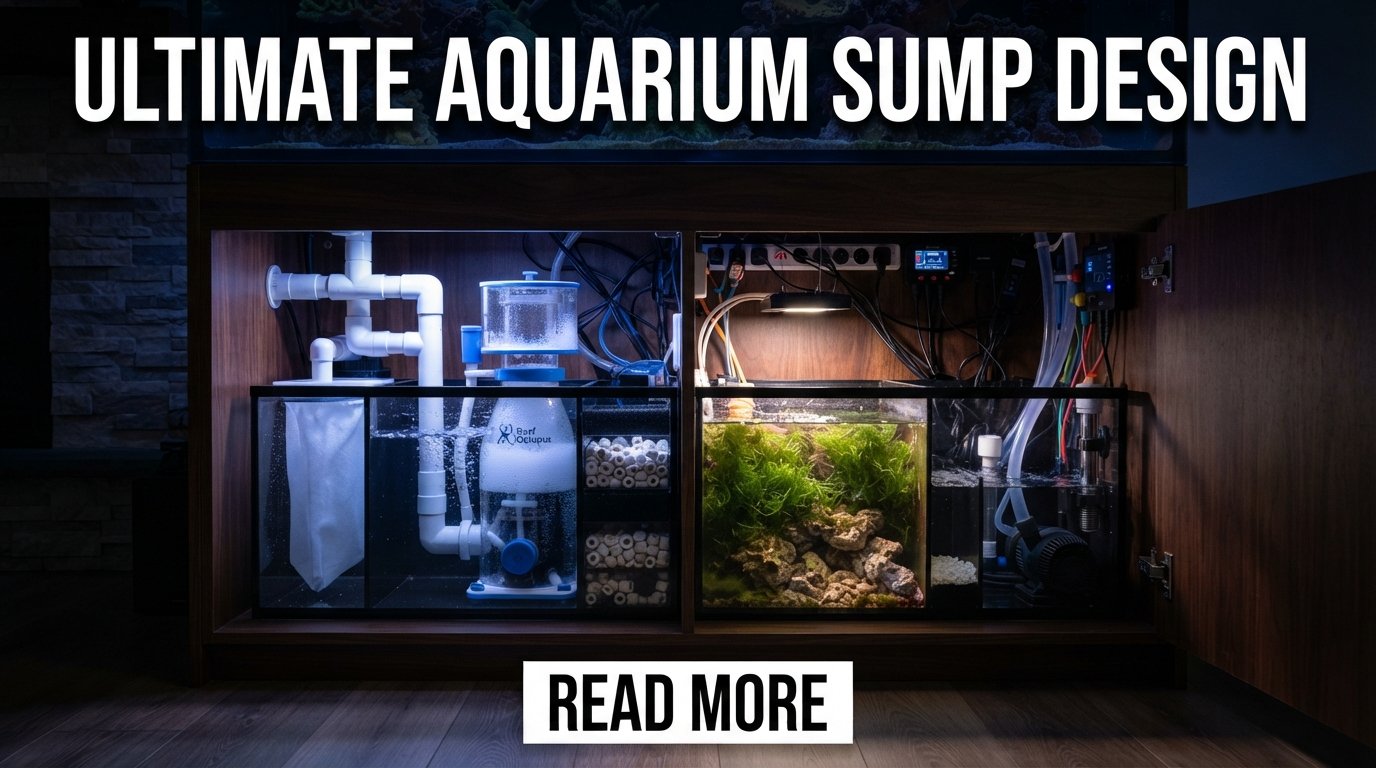
Aquarium sump design is an important part of building an efficient filtration system for freshwater and saltwater aquariums. A well-designed sump can increase filtration capacity, hide equipment, improve water circulation, and make aquarium maintenance easier. Unlike a traditional filter that sits inside or directly behind the aquarium, a sump is usually a separate container positioned below or beside the main tank.
A properly planned sump can contain mechanical filtration, biological media, chemical filtration, heaters, protein skimmers, return pumps, and other equipment. The water flows from the main aquarium into the sump, passes through different filtration sections, and is then pumped back into the display tank. This creates a continuous filtration cycle.
Whether you are designing a sump for a small freshwater aquarium, planted tank, cichlid aquarium, reef tank, or large marine system, the layout should be based on the aquarium size, equipment requirements, water volume, and available space.
What Is an Aquarium Sump?
An aquarium sump is a separate container that works as an external filtration and equipment chamber for the main aquarium.
Water is normally drained from the display aquarium into the sump. Inside the sump, the water passes through various filtration stages before a return pump sends it back to the main tank.
A sump can be made from:
- Glass
- Acrylic
- Custom aquarium containers
- Food-safe plastic containers
- Purpose-built sump systems
Many aquarium sumps use internal baffles to create separate chambers for different types of filtration equipment.
Why Use an Aquarium Sump?
A sump provides several advantages over relying entirely on equipment inside the display tank.
It can:
- Increase total system water volume
- Hide aquarium equipment
- Provide more space for filtration media
- Improve water circulation
- Make equipment easier to access
- Reduce clutter in the display aquarium
- Provide space for a protein skimmer
- Support additional biological filtration
- Allow more flexible equipment placement
- Make water changes and maintenance easier
The additional water volume can also help make changes in water parameters less abrupt, although a sump does not replace proper aquarium maintenance.
Basic Aquarium Sump Design
A basic sump usually contains several sections.
| Sump Section | Main Purpose | Common Equipment |
|---|---|---|
| Drain Chamber | Receives water from display tank | Filter sock or mechanical media |
| Mechanical Filtration | Removes solid waste | Filter floss, sponge |
| Biological Chamber | Supports beneficial bacteria | Ceramic media, live rock |
| Equipment Chamber | Houses specialized equipment | Skimmer, heater |
| Return Chamber | Sends water back to aquarium | Return pump |
The exact number and arrangement of chambers can vary according to the aquarium system.
How an Aquarium Sump Works
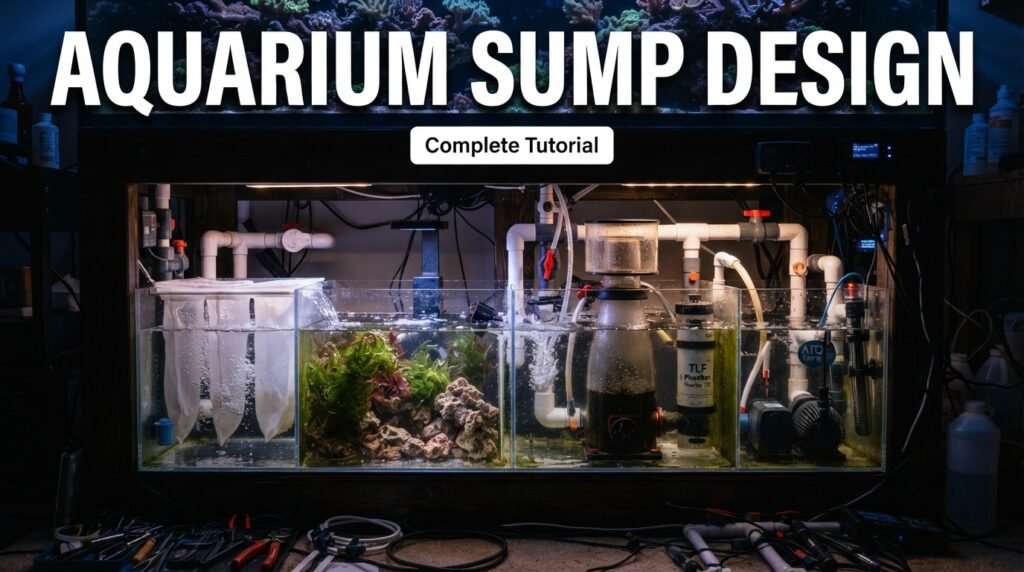
The basic water cycle is simple.
Water leaves the display aquarium through an overflow or drain.
It enters the first sump chamber, where large particles can be removed through mechanical filtration.
The water then moves through biological or other filtration areas.
Finally, filtered water reaches the return chamber.
A return pump sends the water back to the aquarium through a return line.
This cycle continues continuously while the system is operating.
Aquarium Sump Baffle Design
Baffles are vertical partitions installed inside the sump.
They control the direction and level of water as it moves between chambers.
A baffle system can also help manage bubbles and create stable equipment sections.
The spacing and height of the baffles depend on the sump dimensions and the equipment being used.
Avoid designing baffles without considering the operating water level of the skimmer or other equipment.
Three-Chamber Aquarium Sump Design
A three-chamber sump is a simple and popular layout.
The first chamber receives water from the display aquarium.
The second chamber can contain biological media or specialized filtration equipment.
The third chamber contains the return pump.
A simple arrangement could be:
Drain → Mechanical Filtration → Biological/Equipment Chamber → Return Pump
This design is relatively easy to understand and maintain.
Four-Chamber Sump Design
A four-chamber sump provides additional flexibility.
For example:
- Drain and mechanical filtration
- Biological filtration
- Equipment or refugium
- Return chamber
This design can be useful for larger aquariums where several types of filtration equipment are required.
The layout should still prioritize simple water movement and easy maintenance.
Freshwater Aquarium Sump Design
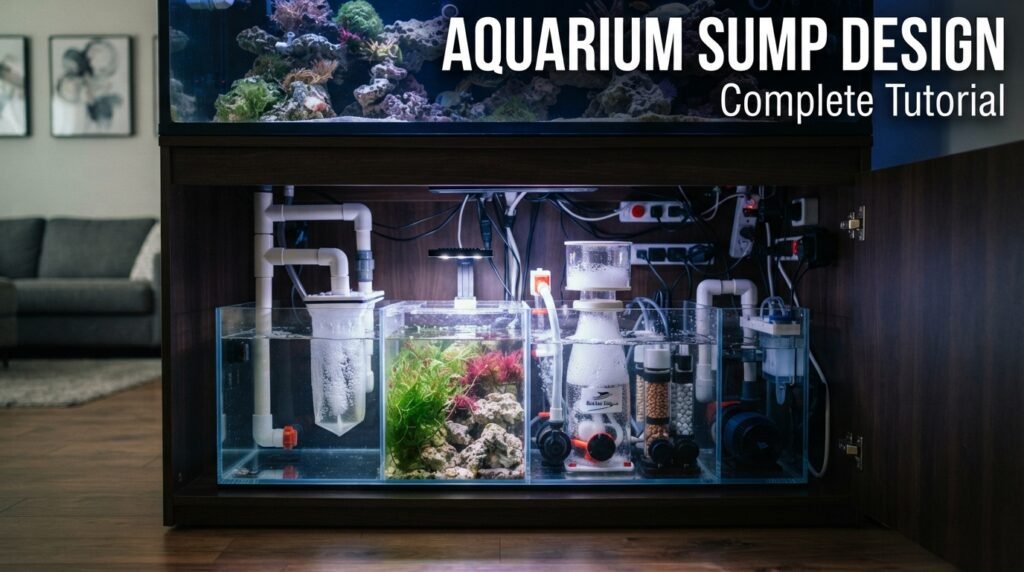
Sumps are not limited to saltwater aquariums.
Freshwater systems can also benefit from sump filtration, especially larger community aquariums, planted tanks, cichlid systems, and large fish aquariums.
A freshwater sump can use:
- Filter socks
- Filter floss
- Sponges
- Ceramic biological media
- Bio balls
- Heaters
- UV sterilizers
- Return pumps
The equipment should be selected according to the aquarium’s needs.
Reef Aquarium Sump Design
Reef aquariums often use more complex sump systems.
A reef sump may include space for:
- Mechanical filtration
- Protein skimmer
- Biological media
- Refugium
- Auto top-off equipment
- Chemical filtration
- Return pump
- Reactors
Because reef systems can contain sensitive corals and invertebrates, water quality and stable circulation are particularly important.
Saltwater Aquarium Sump Design
Saltwater sumps need to accommodate equipment appropriate for marine systems.
A protein skimmer is commonly placed in a chamber with a relatively stable water level.
The return chamber is usually the section where evaporation becomes most noticeable because it is often the final chamber before water returns to the display aquarium.
This makes the return chamber an important area for monitoring water level.
Aquarium Sump for a Planted Tank
A sump can be used with a planted aquarium, although the design should account for the needs of aquatic plants.
Excessive surface agitation can contribute to increased gas exchange, which may affect a high-CO2 planted aquarium.
The return system should provide adequate circulation without creating unnecessary turbulence.
A planted tank sump can include mechanical filtration, biological media, heaters, and other equipment.
Mechanical Filtration Chamber
Mechanical filtration is usually positioned near the beginning of the sump.
Its purpose is to capture solid particles before they reach the biological media or other equipment.
Common materials include:
- Filter floss
- Filter pads
- Filter socks
- Foam sponges
- Fine mechanical media
Mechanical filtration should be easy to remove and clean because it collects waste.
Biological Filtration Chamber
Biological filtration provides surface area for beneficial microorganisms.
These microorganisms help process nitrogenous waste within the aquarium system.
Common biological media includes:
- Ceramic rings
- Sintered glass media
- Bio balls
- Porous rock
- Other aquarium-specific biological media
The exact amount required depends on the aquarium’s livestock, feeding levels, filtration design, and water conditions.
Protein Skimmer Chamber
In marine systems, the protein skimmer is often placed in the first or second chamber after mechanical filtration.
The skimmer requires an appropriate operating water depth.
This means the baffle height should be planned around the manufacturer’s recommended water level.
A skimmer chamber that fluctuates too much can affect skimmer performance.
Refugium Sump Design
A refugium is an optional section of a marine sump where macroalgae and other organisms can be maintained.
The refugium can provide additional biological habitat and nutrient-management capacity.
A refugium section may contain:
- Macroalgae
- Live rock or rubble
- Suitable substrate
- Small aquatic organisms
- Dedicated lighting
The refugium should have appropriate flow and lighting for the organisms being kept.
Return Chamber Design
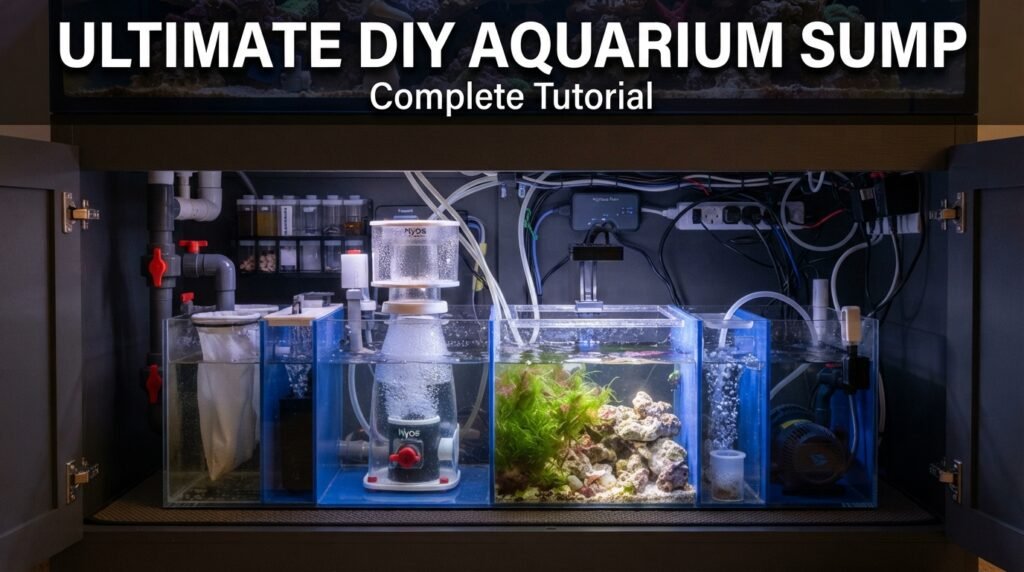
The return chamber is where the return pump sits.
The pump sends water from the sump back to the display aquarium.
Because evaporation generally becomes most noticeable in this chamber, its water level can change over time.
An automatic top-off system can be used in some setups to maintain a more consistent water level.
Aquarium Sump Return Pump
The return pump should provide appropriate flow for the aquarium system.
When choosing a pump, consider:
- Required flow rate
- Vertical lift
- Pipe diameter
- Plumbing resistance
- Energy consumption
- Noise
- Reliability
- Adjustability
A pump’s advertised flow rate does not necessarily represent the flow it will provide once connected to plumbing and lifting water to the aquarium.
Drain and Overflow Design
The overflow is responsible for moving water from the aquarium to the sump.
A properly designed overflow should handle the required flow while providing appropriate protection against excessive water levels.
Many sump systems use an emergency drain or another backup method to reduce the risk of overflow if the primary drain becomes blocked.
The exact plumbing arrangement depends on the aquarium design and overflow system.
Sump Water Level
Maintaining the correct water level is important.
Some equipment, particularly protein skimmers, may require a specific operating depth.
The return chamber typically experiences the most visible water-level change due to evaporation.
When designing the sump, leave sufficient empty volume so that water draining from the display aquarium during a pump shutdown can be safely contained.
Preventing Aquarium Sump Overflow
Overflow planning is essential.
When the return pump stops, water from the display aquarium and plumbing can drain back into the sump.
The sump should have enough free capacity to hold this additional water without overflowing.
Before operating the system, simulate a power outage and confirm that the sump can safely contain the resulting water volume.
This simple test can reveal design problems before they cause water damage.
Bubble Trap Design
Bubbles can sometimes travel from the drain chamber toward the return pump.
If they enter the return line, they may be released into the display aquarium.
A bubble trap can help reduce this problem.
A common approach uses several baffles arranged so that water moves over and under them before reaching the return chamber.
The exact configuration can vary depending on sump size and flow.
Aquarium Sump Plumbing Design
Sump plumbing should be designed for reliable water movement.
Common components include:
- Drain pipe
- Overflow box
- Return pipe
- Valves
- Unions
- Bulkheads
- Flexible or rigid tubing
- Return nozzle
Using unions in appropriate locations can make equipment removal and maintenance easier.
Avoid unnecessary bends because complicated plumbing can increase resistance and make maintenance more difficult.
Silent Aquarium Sump Design
Noise can become a problem if the sump is poorly designed.
Common sources include:
- Water falling into the sump
- Vibrating pumps
- Air entering drain pipes
- Water splashing between chambers
- Loose plumbing
Appropriate drain configuration, stable plumbing, adequate water depth, and vibration isolation can help reduce noise.
Aquarium Sump Cabinet Design
Many home aquariums place the sump inside the cabinet beneath the display tank.
This creates a clean appearance because most equipment is hidden.
The cabinet should provide enough space for:
- Sump removal
- Filter maintenance
- Plumbing
- Electrical connections
- Water changes
- Equipment replacement
Do not design a cabinet so tightly that major equipment cannot be removed later.
Sump Design for Small Aquariums
Small aquariums can use compact sump systems if there is sufficient space.
However, the sump should not become so small that filtration equipment is difficult to access.
For very small aquariums, alternative filtration systems may be simpler.
A sump becomes particularly useful as aquarium size and equipment requirements increase.
Large Aquarium Sump Design
Large aquariums often benefit significantly from dedicated sump systems.
A larger sump can accommodate multiple filtration stages and specialized equipment.
For very large installations, a dedicated filtration room can provide easier access and allow equipment to be arranged without crowding.
This approach is common in large custom aquariums and commercial installations.
Aquarium Sump Design With Filter Socks
Filter socks are commonly used for mechanical filtration.
They capture suspended particles before the water moves through the rest of the sump.
Their main advantage is easy removal and replacement.
However, they need regular cleaning or replacement because accumulated waste can reduce water flow.
Aquarium Sump Design With Filter Floss
Filter floss can provide simple mechanical filtration.
It can be placed in a dedicated chamber or filter tray.
Because it collects debris, it should be replaced or cleaned regularly.
A removable tray can make this process easier.
Aquarium Sump Design With UV Sterilizer
A UV sterilizer can be incorporated into some aquarium systems.
Depending on the equipment, it may be installed on a dedicated line rather than directly inside a sump chamber.
Flow rate should be matched to the intended application of the UV unit.
The equipment should remain accessible for bulb or maintenance needs.
Aquarium Sump Maintenance
A sump requires regular maintenance just like the display aquarium.
Important tasks include:
- Cleaning mechanical media
- Inspecting pumps
- Cleaning skimmer components
- Checking plumbing
- Removing accumulated debris
- Inspecting baffles
- Monitoring water levels
- Checking return flow
- Cleaning algae when necessary
A clean sump contributes to a more reliable filtration system.
Common Aquarium Sump Design Mistakes
Several design mistakes can reduce sump performance.
Common problems include:
- Making chambers too small
- Not leaving enough emergency capacity
- Incorrect baffle height
- Poor maintenance access
- Oversized equipment
- Undersized return pump
- Excessive plumbing bends
- No backup drain
- Poor bubble management
- Unstable water levels
- Crowding the sump with unnecessary equipment
A good sump should be designed around the equipment rather than trying to force equipment into an unsuitable layout.
How to Design an Aquarium Sump
Start by determining the display aquarium’s dimensions and water volume.
Next, identify the equipment that needs to fit inside the sump.
Draw the sump layout before construction.
Mark the drain chamber, mechanical filtration section, biological section, equipment area, and return chamber.
Then determine baffle heights and water levels.
Leave sufficient free space for water that may drain into the sump when the return pump is switched off.
Finally, test the complete system before adding livestock.
Simple Aquarium Sump Layout
For a straightforward freshwater setup, a basic layout could be:
Display Tank → Mechanical Filtration → Biological Media → Equipment → Return Pump → Display Tank
For a marine system, a more complex layout might include:
Display Tank → Mechanical Filtration → Protein Skimmer → Refugium/Media → Return Chamber → Display Tank
The exact arrangement should be adapted to the equipment and aquarium requirements.
Final Thoughts
Aquarium sump design can greatly improve the functionality and appearance of a larger aquarium system. By moving filtration and equipment into a separate chamber, the display tank can remain cleaner and less cluttered while providing more room for fish, plants, rocks, or corals.
The most important part of sump design is planning. Water flow, baffle placement, equipment dimensions, water levels, plumbing, maintenance access, and emergency capacity should all be considered before construction.
A simple three-chamber sump can be enough for a basic freshwater aquarium, while a large reef system may require several specialized sections. Regardless of the design, the sump should be easy to maintain and capable of safely handling water during normal operation and power interruptions.
A well-designed sump is not just another filter. It becomes the central equipment and filtration hub of the aquarium system.
Frequently Asked Questions
What is the best aquarium sump design?
A practical sump with separate sections for mechanical filtration, biological filtration or equipment, and a return pump is a common starting point. The best layout depends on the aquarium and equipment requirements.
How many chambers should an aquarium sump have?
There is no universal number. Three or four chambers are common, but larger marine systems may use additional sections for equipment or a refugium.
What should be the first chamber of a sump?
The first chamber normally receives water from the aquarium overflow and commonly contains mechanical filtration such as a filter sock, sponge, or filter floss.
Where should the return pump go?
The return pump is normally placed in the final chamber. It sends filtered water back to the main aquarium.
How much water should be in an aquarium sump?
The operating water level depends on the equipment and sump design. Most importantly, the sump must have enough empty capacity to safely contain water that drains from the display tank when the return pump stops.
Do freshwater aquariums need a sump?
No. Freshwater aquariums can operate successfully with other filtration systems. However, sumps can be useful for large freshwater tanks because they provide additional filtration and equipment capacity.
Is a sump good for a reef aquarium?
Yes. Sumps are commonly used with reef aquariums because they can accommodate protein skimmers, biological media, refugiums, return pumps, and other marine equipment.
What is the purpose of baffles in a sump?
Baffles direct water between chambers, establish operating water levels, separate equipment areas, and can help reduce bubbles entering the return chamber.
How do I stop bubbles from entering my aquarium from the sump?
A properly designed bubble trap, appropriate water levels, suitable flow, and good drain configuration can help reduce bubbles reaching the return pump.
Can a sump overflow during a power outage?
It can if the system is not designed with sufficient free capacity. Always test the sump with the return pump switched off before putting the system into regular operation.
How do I make an aquarium sump quieter?
Reduce water splashing, stabilize plumbing, manage air entering drain pipes, isolate pump vibrations, and use an appropriate drain configuration.
Can I put a heater in an aquarium sump?
Yes. A sump can provide a convenient location for a heater, provided the heater is correctly sized and positioned according to its manufacturer’s instructions.
What is the difference between a sump and a canister filter?
A sump is a separate water reservoir that can hold multiple filtration stages and aquarium equipment. A canister filter is a closed external filtration unit that pumps water through internal media.
Does an aquarium sump increase water volume?
Yes. Water contained in the sump becomes part of the aquarium system’s total water volume.
Can I build my own aquarium sump?
Yes. Some aquarists build custom sumps from glass or other suitable materials. The construction must be watertight, structurally sound, and designed around the required water flow and equipment.