
 By admin
Aquarium building design is a creative way to incorporate aquatic life directly into the architecture of a home, office, restaurant, hotel, or commercial space. Instead of treating an aquarium as a separate piece of furniture, building design can make the tank part of a wall, partition, staircase, reception area, cabinet, or other architectural feature. A well-planned aquarium can become a striking focal point while adding a natural and relaxing element to an interior.
Modern aquarium building designs range from simple built-in tanks to large architectural installations that extend from floor to ceiling. Some designs are subtle and minimalist, while others are dramatic enough to become the defining feature of an entire room. However, successful aquarium architecture requires more than visual planning. Structural support, filtration, plumbing, electrical systems, maintenance access, lighting, and the needs of aquatic life all need to be considered from the beginning.
What Is Aquarium Building Design?
Aquarium building design is the process of incorporating an aquarium into the physical architecture of a building.
A conventional aquarium is usually placed on a stand after a room has already been designed. A built-in aquarium, on the other hand, is considered during the architectural or interior planning stage.
Examples include:
- Aquarium built into a wall
- Floor-to-ceiling aquarium
- Aquarium room divider
- Staircase aquarium
- Aquarium inside a cabinet
- Aquarium behind a reception desk
- Aquarium integrated into a TV wall
- Under-stair aquarium
- Double-sided aquarium
- Large commercial aquarium installation
The design can be adapted to both residential and commercial buildings.
Why Use an Aquarium in Building Design?
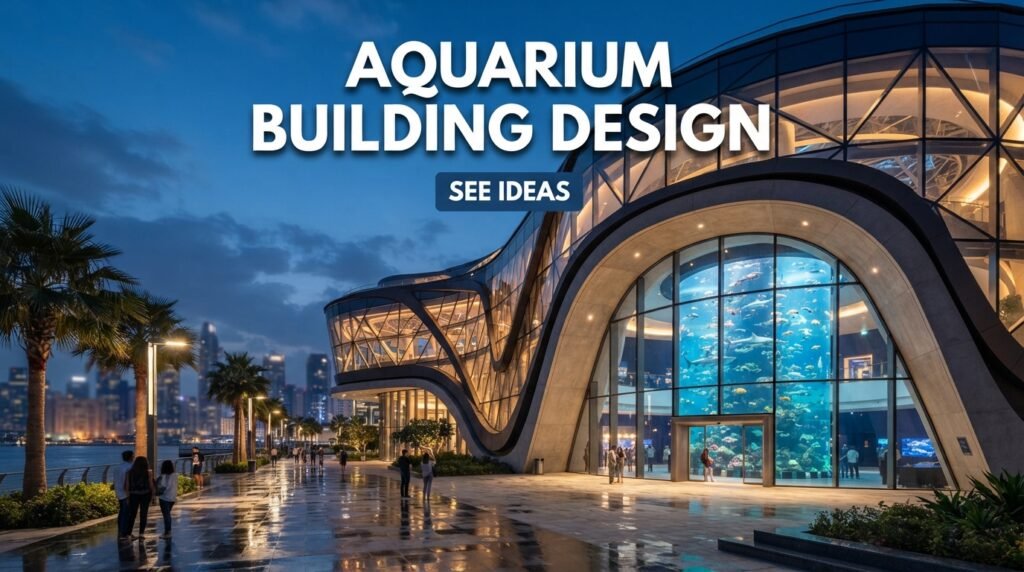
An aquarium can serve as both decoration and architecture.
A large built-in aquarium can transform an otherwise plain wall into a living feature. A double-sided aquarium can connect two rooms visually, while an aquarium partition can divide a space without completely blocking it.
Some advantages include:
- Creates a strong architectural focal point
- Adds natural movement to an interior
- Makes a room visually distinctive
- Can separate spaces without a solid wall
- Uses wall space efficiently
- Can complement modern architecture
- Creates a relaxing visual environment
- Provides opportunities for creative lighting
- Can strengthen the identity of commercial spaces
The aquarium should be planned as part of the building rather than added as an afterthought.
Popular Aquarium Building Design Ideas
| Design | Main Feature | Suitable Space |
|---|---|---|
| Built-In Wall Aquarium | Tank integrated into a wall | Living rooms and offices |
| Floor-to-Ceiling Aquarium | Tall architectural display | Large modern interiors |
| Double-Sided Aquarium | Visible from two rooms | Open-plan homes |
| Aquarium Room Divider | Tank separates spaces | Living and dining areas |
| Staircase Aquarium | Tank integrated near stairs | Contemporary homes |
| Under-Stair Aquarium | Uses unused space | Compact interiors |
| TV Wall Aquarium | Aquarium integrated with media unit | Living rooms |
| Reception Aquarium | Feature behind reception | Hotels and offices |
| Restaurant Aquarium | Large dining-room display | Restaurants |
| Lobby Aquarium | Architectural centerpiece | Commercial buildings |
Built-In Wall Aquarium
A built-in wall aquarium is one of the most popular forms of aquarium building design.
The aquarium is installed within a specially constructed wall opening, leaving the front glass flush or nearly flush with the surrounding surface.
This creates a clean architectural appearance.
The surrounding wall can be finished with wood, stone, tile, plaster, or another material that matches the interior.
Behind the aquarium, there should be enough service space for filtration equipment, plumbing, lighting, feeding, and maintenance.
Floor-to-Ceiling Aquarium
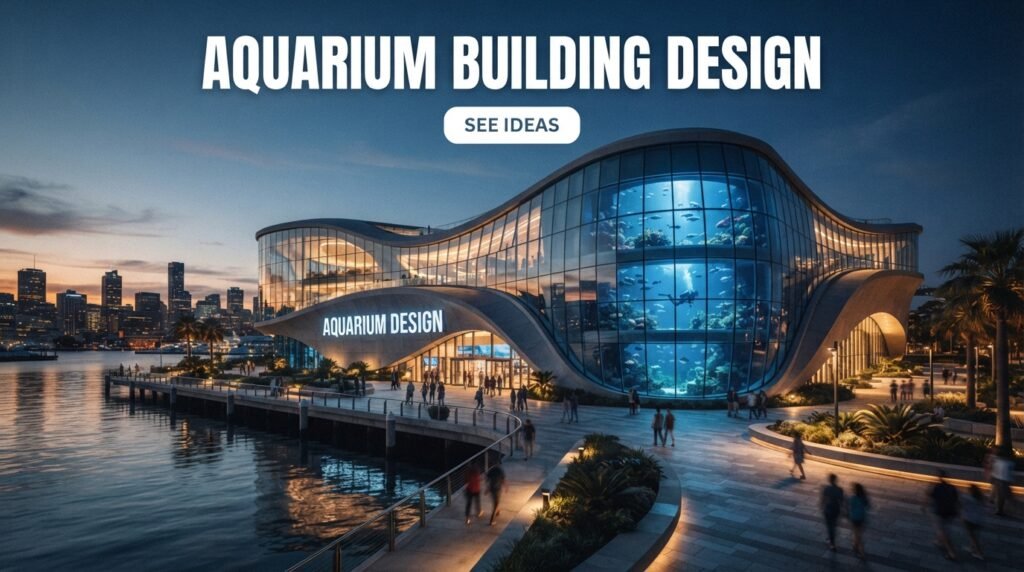
A floor-to-ceiling aquarium can create an impressive architectural statement.
Tall aquariums draw attention vertically and can make a room feel more dramatic. They can be used as a feature wall or placed between architectural columns.
Because the water volume can become very large, structural planning is especially important.
The floor must be capable of supporting the aquarium and its filled weight. Professional structural assessment is essential for large installations.
Double-Sided Aquarium Design
A double-sided aquarium can be viewed from two separate rooms.
For example, an aquarium can be positioned between a living room and dining room. Both spaces receive the visual benefit of the aquatic display while the tank becomes part of the architectural connection between them.
Double-sided aquariums can also work between:
- Lobby and waiting area
- Restaurant and lounge
- Bedroom and bathroom
- Living room and hallway
- Office reception and workspace
The filtration and maintenance system should be hidden within an accessible service area.
Aquarium Room Divider
An aquarium room divider is both functional and decorative.
Traditional room dividers can make a space feel smaller. A transparent aquarium can provide separation while preserving visual openness.
A long aquarium placed between a dining room and living room can create two distinct areas without completely blocking light or sightlines.
This is particularly effective in open-plan homes.
Aquarium in a Staircase Design
Staircases provide unusual opportunities for aquarium integration.
An aquarium can be placed beside a staircase, beneath a staircase, or incorporated into a custom staircase wall.
Under-stair aquariums are especially useful because the area beneath stairs is often difficult to use for conventional furniture.
The design should provide sufficient access for maintenance and avoid creating a dangerous obstruction around the staircase.
Under-Stair Aquarium
An under-stair aquarium can turn an unused architectural area into a feature.
A custom tank can follow the available space, although irregularly shaped aquariums can be more complicated to construct and maintain.
A rectangular aquarium is often easier to service and equip.
If the area is dark, appropriate aquarium lighting can make the tank stand out.
Aquarium in a TV Wall
Aquariums can be incorporated into modern TV wall designs.
The tank can be placed beside the television, underneath it, or as part of a larger media wall.
One important consideration is equipment separation. Water, electrical equipment, and media electronics need careful planning.
The aquarium should also remain accessible for maintenance without requiring major disassembly of the TV wall.
Aquarium and Kitchen Building Design
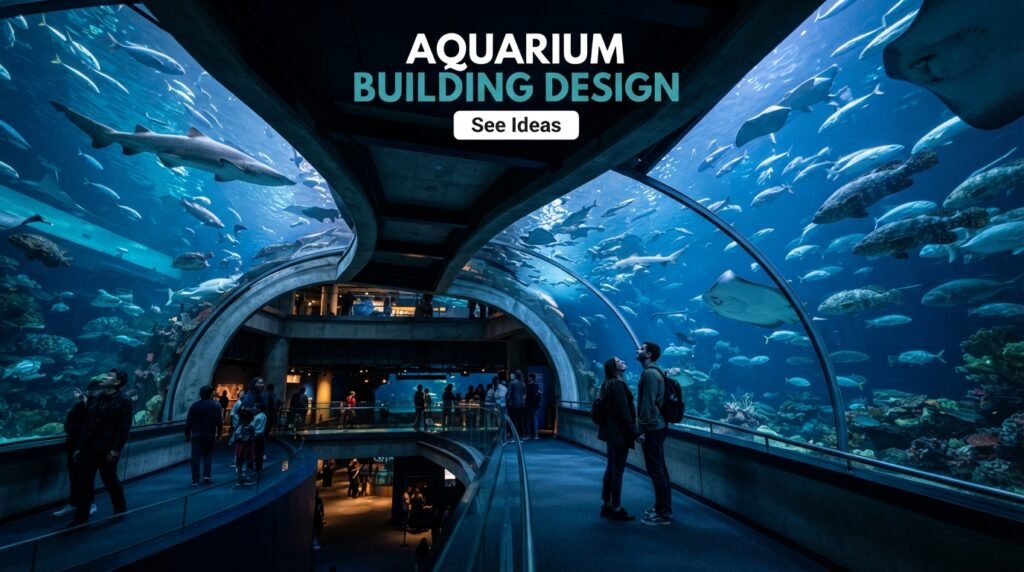
A kitchen-adjacent aquarium can provide an attractive transition between the kitchen and another living area.
For example, a small built-in aquarium can be installed in a partition between the kitchen and dining room.
However, aquarium placement should avoid direct exposure to excessive heat, cooking fumes, grease, and frequent splashes.
A well-separated partition is generally more practical than placing an aquarium directly above or beside cooking equipment.
Aquarium in a Bedroom Wall
A bedroom aquarium can create a calm visual feature.
A built-in wall aquarium can be viewed from the bed without taking up floor space.
Minimalist planted aquariums can work particularly well in bedrooms.
Lighting should be carefully scheduled so that it does not interfere with the room’s nighttime environment.
Equipment noise should also be considered when choosing filtration systems.
Aquarium Building Design for Offices
An aquarium can be incorporated into an office reception area, meeting room, hallway, or employee lounge.
A large reception aquarium can create a distinctive first impression for visitors.
In professional spaces, minimalist aquarium designs often work well because they provide visual interest without excessive decoration.
Built-in aquariums can also save floor space.
Aquarium Design for Restaurants
Restaurants can use large aquariums as feature walls, room dividers, reception displays, or bar backgrounds.
A reef aquarium can complement a seafood restaurant, while a natural planted aquarium can suit a contemporary or nature-inspired dining environment.
The tank should be positioned where guests can enjoy it without interfering with tables, staff movement, or restaurant operations.
Maintenance access is particularly important because commercial aquariums may require regular professional servicing.
Aquarium Building Design for Hotels
Hotels often have large open spaces that can accommodate architectural aquariums.
A dramatic aquarium in a lobby can become a central feature that guests immediately notice.
Other possibilities include:
- Aquarium reception walls
- Lobby feature tanks
- Restaurant aquariums
- Lounge aquariums
- Corridor displays
- Spa aquariums
- Executive lounge aquariums
The aquarium design should match the hotel’s overall interior architecture.
Aquarium as a Feature Wall
A feature aquarium can replace traditional decorative walls.
Instead of artwork, shelving, or decorative panels, the aquarium becomes the main visual element.
The wall surrounding the aquarium should be relatively simple so that the aquatic display remains prominent.
Stone, wood, concrete-look finishes, and dark architectural panels can all complement an aquarium.
Aquarium Built Into Furniture
Not every aquarium needs to be built directly into a structural wall.
Custom furniture can integrate the tank into cabinets, shelving systems, room dividers, and entertainment units.
This approach can provide easier access to equipment while maintaining a built-in appearance.
The furniture must be specifically engineered to support the aquarium’s filled weight.
Aquarium Ceiling and Suspended Designs
Some architectural concepts use aquariums as dramatic suspended or elevated features.
These designs can create a unique visual effect, but they require highly specialized structural engineering.
The supporting structure must safely handle the full aquarium load, including water, glass or acrylic, substrate, rocks, equipment, and decorations.
For large installations, professional structural and aquarium specialists should be involved from the planning stage.
Choosing Aquarium Materials
Aquarium construction commonly involves glass or acrylic, depending on the size and design.
Glass provides excellent clarity and is widely used for many aquarium applications.
Acrylic can be useful for certain large or custom-shaped installations because of its lower weight compared with glass of similar dimensions and its ability to be fabricated into specialized forms.
The appropriate material depends on the aquarium size, structural requirements, shape, budget, and installation environment.
Structural Support for Built-In Aquariums
Structural planning is one of the most important parts of aquarium building design.
Water is heavy, and large aquariums can place substantial loads on floors and supporting structures.
The building must be evaluated for:
- Floor load
- Wall construction
- Tank support
- Stand or frame
- Seismic considerations where relevant
- Access for installation
- Long-term structural stability
A large aquarium should never be supported by ordinary cabinetry or a wall without appropriate engineering.
Plumbing and Filtration Design
A built-in aquarium should have its equipment planned before the surrounding architecture is finished.
Filtration, pumps, drains, return lines, water-change systems, and other equipment can often be hidden inside a cabinet or dedicated service room.
For large commercial aquariums, a dedicated mechanical area can make maintenance significantly easier.
Planning plumbing early also reduces the need to modify finished walls later.
Hidden Aquarium Equipment
One advantage of architectural aquarium design is the ability to hide equipment.
Filters, pumps, air lines, electrical connections, and maintenance supplies can be positioned behind the aquarium.
However, equipment should not be hidden so completely that technicians cannot access it.
The best design hides equipment visually while keeping it physically accessible.
Aquarium Lighting in Building Design
Lighting should be integrated into the architectural concept.
Recessed lighting, concealed LED fixtures, aquarium-specific lights, and indirect illumination can highlight the tank.
The surrounding room should not produce excessive reflections on the aquarium glass.
Lighting can also help establish a focal point by making the aquarium visually brighter than nearby walls.
Natural Aquarium Building Design
Natural aquariums can complement architecture that uses wood, stone, plants, and earthy colors.
A planted aquarium with driftwood and rocks can appear like a miniature natural landscape inside a modern building.
This approach is particularly suitable for homes, offices, wellness spaces, cafés, and restaurants.
Minimalist Aquarium Architecture
Minimalist aquarium design focuses on clean geometry.
A frameless tank integrated into a plain wall can create a sophisticated appearance without requiring excessive decoration.
Neutral colors, simple cabinetry, and controlled lighting can make the aquarium look like a piece of living architecture.
Luxury Aquarium Architecture
Luxury aquarium installations often use custom dimensions and premium surrounding materials.
Possible features include:
- Floor-to-ceiling glass
- Large reef displays
- Custom stone walls
- Premium wood cabinetry
- Integrated lighting
- Double-sided viewing
- Dedicated service rooms
- Large planted aquascapes
- Custom architectural framing
The quality of construction and maintenance is particularly important for high-end installations.
Small Building Aquarium Design
Small homes and apartments can also incorporate architectural aquariums.
A compact built-in tank can fit into a wall niche or furniture unit.
A small aquarium can also be used as a room divider between a kitchen and dining area.
When space is limited, avoid complicated designs that reduce maintenance access.
Simple rectangular tanks are often easier to integrate into small spaces.
Maintenance Access
One of the biggest differences between a normal aquarium and a built-in aquarium is maintenance access.
The design should provide sufficient room to:
- Clean the glass
- Trim plants
- Feed fish
- Remove equipment
- Clean filters
- Perform water changes
- Inspect plumbing
- Service lighting
- Respond to leaks
A beautiful aquarium that cannot be conveniently maintained will eventually become difficult to manage.
Waterproofing and Leak Protection
Aquarium construction should account for the possibility of water spills or leaks.
Surrounding materials should be selected carefully, particularly around the base of the tank.
Water-resistant surfaces, appropriate drainage, and access for inspection can reduce potential damage.
For large architectural aquariums, professional waterproofing and mechanical planning are particularly important.
Common Aquarium Building Design Mistakes
Poor planning can create significant problems.
Common mistakes include:
- Installing an aquarium without checking structural capacity
- Hiding equipment without providing access
- Ignoring plumbing requirements
- Creating insufficient maintenance space
- Placing aquariums near excessive heat
- Poor lighting placement
- Excessive reflections
- Inadequate ventilation
- Using unsuitable furniture as structural support
- Forgetting electrical safety
- Making the aquarium too difficult to clean
The aquarium should be designed together with the building rather than treated as a decorative addition at the end of construction.
How to Plan an Aquarium Building Design
Start by identifying the aquarium’s purpose.
Decide whether it will be a decorative feature, room divider, architectural centerpiece, commercial display, or living artwork.
Next, determine the tank dimensions and location.
Then plan structural support, plumbing, filtration, electrical connections, lighting, ventilation, and maintenance access.
After the technical planning is complete, select the surrounding materials and interior finishes.
Finally, choose the fish, plants, and aquascape according to the aquarium’s size and environmental conditions.
Final Thoughts
Aquarium building design can turn a standard interior into a distinctive architectural environment. A built-in wall aquarium, double-sided tank, room divider, staircase aquarium, or large lobby display can combine architecture and aquatic life in a way that traditional furniture aquariums cannot.
The most important part of the process is planning. Structural support, plumbing, filtration, electrical safety, lighting, ventilation, waterproofing, and maintenance access should all be considered before construction begins.
For smaller homes, a simple built-in aquarium can provide an elegant feature without overwhelming the room. For commercial buildings, a large architectural aquarium can become a central part of the interior identity.
The most successful aquarium building designs balance visual impact with practical maintenance and the long-term needs of the aquatic environment. When those elements are planned together, an aquarium can become a true part of the building rather than simply a tank placed inside it.
Frequently Asked Questions
What is an aquarium building design?
Aquarium building design involves integrating an aquarium into the architecture of a building rather than simply placing a tank on a separate stand. It can include wall aquariums, room dividers, staircase tanks, and large architectural displays.
Can an aquarium be built into a wall?
Yes. A custom aquarium can be incorporated into a specially designed wall opening. The wall and supporting structure must be planned to safely accommodate the aquarium.
Can an aquarium be used as a room divider?
Yes. Double-sided and long aquarium designs can separate rooms while maintaining visual openness between the spaces.
Is a built-in aquarium difficult to maintain?
It can be more complicated than a standard aquarium if maintenance access is poorly planned. A good design should provide easy access to filtration, plumbing, lighting, and the tank itself.
Can I put an aquarium under the stairs?
Yes. Under-stair aquariums can make use of otherwise unused space. The available dimensions, structural support, ventilation, and maintenance access should be considered.
What is the best location for a built-in aquarium?
Common locations include living room walls, reception areas, dining rooms, room partitions, hallways, and commercial lobbies. The best location provides good visibility and convenient maintenance access.
Does a built-in aquarium need special structural support?
Large aquariums generally require careful structural assessment because the filled tank can be extremely heavy. Professional structural planning is recommended for substantial installations.
Can an aquarium be incorporated into a TV wall?
Yes. An aquarium can be positioned beside, below, or as part of a custom TV wall. Electrical and aquarium equipment should be carefully separated and kept accessible.
What materials are best around a built-in aquarium?
Water-resistant and durable materials are generally preferable. Wood, stone, tile, glass, and suitable architectural panels can all be used depending on the design.
Can an aquarium be installed in a restaurant?
Yes. Restaurants can use aquariums as feature walls, room dividers, reception displays, and bar backgrounds. Commercial maintenance and safety requirements should be considered during planning.
How do you hide aquarium equipment in a built-in design?
Equipment can be placed inside cabinets, behind the aquarium, or in a dedicated service room. It should be visually hidden while remaining accessible for maintenance.
How much space should be left behind a built-in aquarium?
The required service space depends on the tank and equipment. There should be enough room for routine maintenance, filter servicing, plumbing access, and emergency repairs.
Can a small house have an architectural aquarium?
Yes. Compact wall-mounted or built-in aquariums can work well in small homes. Simpler designs are often easier to maintain and integrate into limited spaces.