
 By admin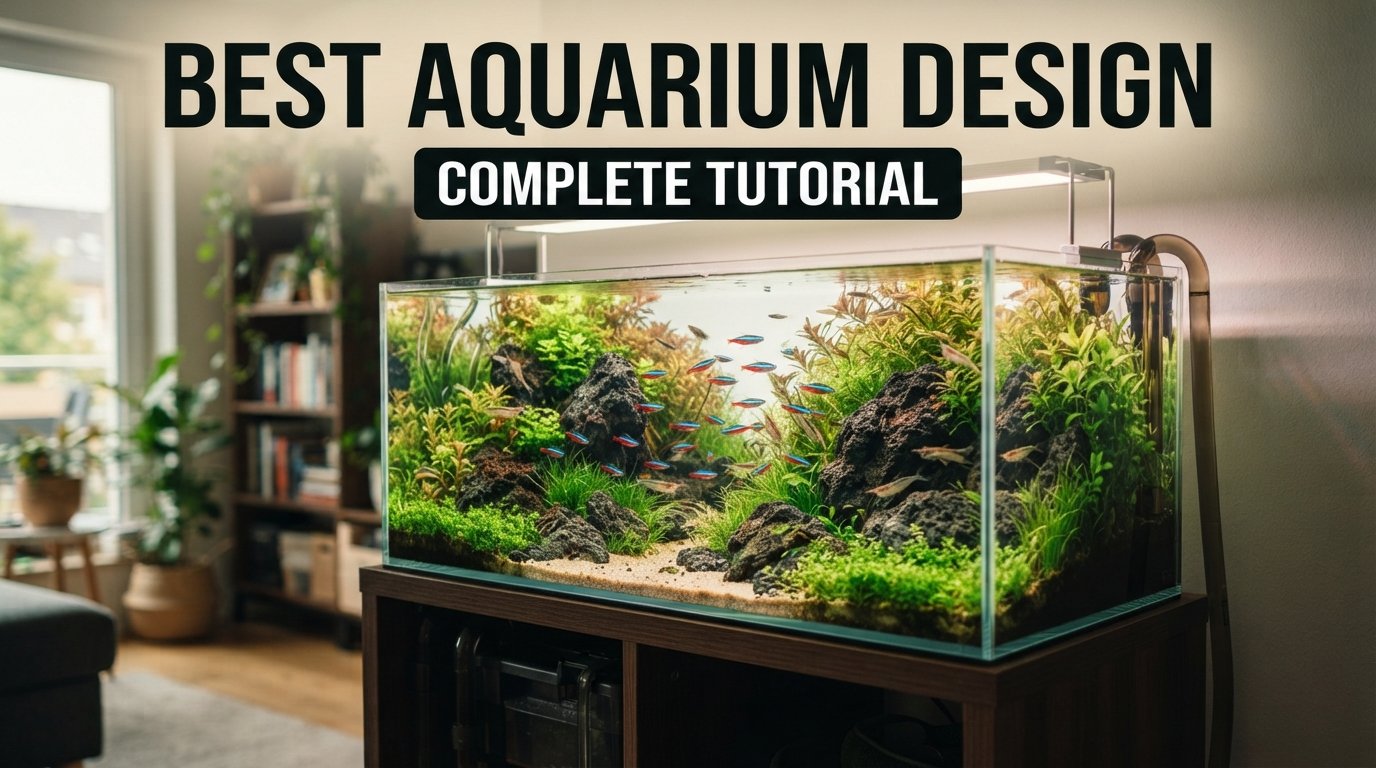
The best aquarium design is not simply about choosing a beautiful fish tank. It is about creating a balanced underwater environment that looks attractive, supports healthy aquatic life, and fits naturally into your home or office. From minimalist planted aquariums and natural aquascapes to modern wall-mounted tanks and dramatic reef displays, there are many ways to create a stunning aquarium.
A well-designed aquarium can become a focal point in a living room, bedroom, office, entryway, or even a kitchen. The right combination of aquarium size, plants, rocks, driftwood, substrate, fish, lighting, and furniture can completely change the appearance of a space. Whether you are a beginner or an experienced aquarist, choosing the right design starts with understanding the available space and deciding what type of underwater environment you want to create.
What Makes the Best Aquarium Design?
The best aquarium design combines appearance with practicality. A tank may look impressive, but if the layout is difficult to maintain or unsuitable for its inhabitants, it will not remain beautiful for long.
A successful aquarium design should consider:
- Aquarium size
- Fish compatibility
- Aquatic plants
- Hardscape materials
- Substrate
- Lighting
- Filtration
- Water flow
- Maintenance
- Available space
- Overall room style
The most attractive aquariums usually have a clear visual structure rather than random decorations.
Popular Best Aquarium Design Ideas
| Aquarium Design | Main Features | Ideal For |
|---|---|---|
| Natural Planted Aquarium | Plants, rocks, driftwood | Freshwater enthusiasts |
| Minimalist Aquarium | Open space and simple layout | Modern homes |
| Iwagumi Aquarium | Rocks and low plants | Aquascaping lovers |
| Jungle Aquarium | Dense plants and natural textures | Nature-inspired rooms |
| Reef Aquarium | Coral, marine life, dramatic lighting | Advanced aquarists |
| Nano Aquarium | Compact and detailed layout | Small spaces |
| Blackwater Aquarium | Dark water, wood, leaves | Natural biotopes |
| Wall-Mounted Aquarium | Integrated architectural display | Modern interiors |
| Room Divider Aquarium | Tank separates spaces | Open-plan homes |
| Bonsai Aquarium | Bonsai-style driftwood and moss | Artistic displays |
Natural Planted Aquarium Design
A natural planted aquarium is one of the most versatile aquarium designs.
The goal is to create an underwater landscape that resembles a natural environment. Rocks, driftwood, aquatic plants, and substrate are arranged to create depth and visual balance.
Foreground plants can create a carpet-like appearance, while taller plants in the background provide height.
This design can work with many different freshwater fish and shrimp species.
Minimalist Aquarium Design
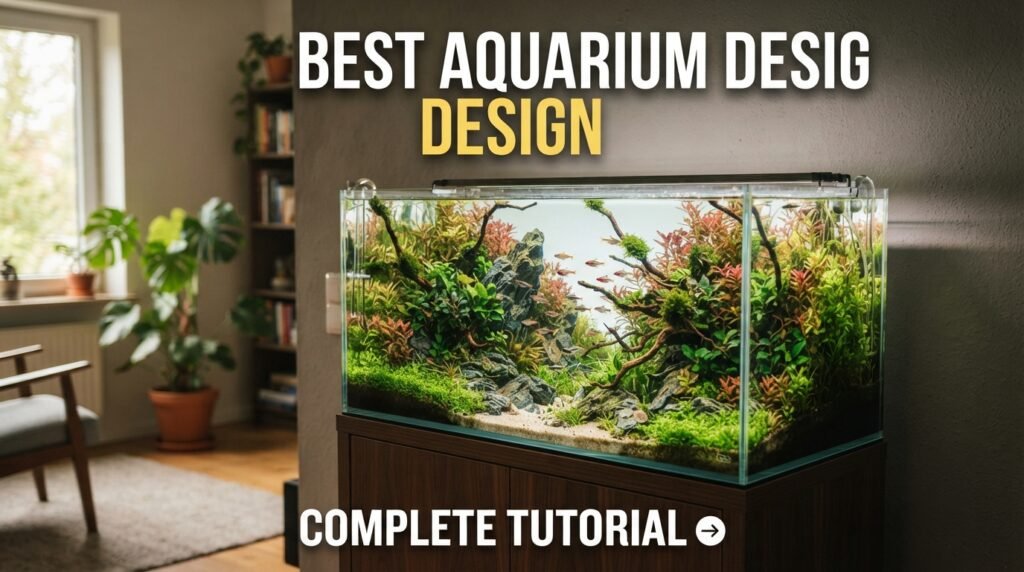
A minimalist aquarium focuses on simplicity.
Instead of filling the tank with numerous decorations, use a limited number of carefully selected elements. A few rocks, one piece of driftwood, or a small group of plants can create an elegant composition.
Negative space is particularly important in minimalist aquariums.
Leaving open swimming areas can make the tank appear larger while giving fish room to move.
This style works especially well in modern homes with simple furniture and neutral colors.
Iwagumi Aquarium Design
Iwagumi is a Japanese-inspired aquascaping style based primarily on carefully positioned rocks and aquatic plants.
The hardscape usually becomes the main visual feature.
Different rock sizes can be arranged to create a sense of scale and depth. Low-growing plants are often used to maintain an open landscape.
The design may look simple, but creating a balanced rock composition can require considerable planning.
Jungle Aquarium Design
A jungle aquarium provides a much denser and more natural appearance.
Plants of different shapes and heights are combined to create layers. Driftwood and rocks can be partially hidden among the vegetation.
This style can create an underwater forest effect.
A jungle aquarium is particularly suitable for people who enjoy lush greenery and want their aquarium to have a wild natural appearance.
Reef Aquarium Design
A reef aquarium can be one of the most visually impressive aquarium styles.
Instead of freshwater plants, the display may feature live rock, corals, marine fish, invertebrates, and specialized lighting.
Reef aquariums require more advanced equipment and careful water management than many beginner freshwater setups.
The layout should provide sufficient space for coral growth and allow good water circulation.
Nano Aquarium Design
A nano aquarium is a small aquarium that can still have a highly detailed aquascape.
Because the tank is compact, every element becomes visually important.
A simple composition using a few rocks, small plants, and appropriately sized livestock can create an attractive miniature landscape.
Nano aquariums are particularly useful for desks, shelves, offices, bedrooms, and small apartments.
However, smaller tanks can experience faster changes in water conditions, so regular maintenance is important.
Wall-Mounted Aquarium Design
A wall-mounted aquarium can turn an ordinary wall into a living feature.
This design is particularly effective in modern interiors where floor space is limited.
A wall aquarium can be installed in a living room, hallway, office, or reception area.
Structural support is extremely important because a filled aquarium can be very heavy. The installation should be professionally planned rather than simply attaching a tank to a normal wall.
Built-In Aquarium Design
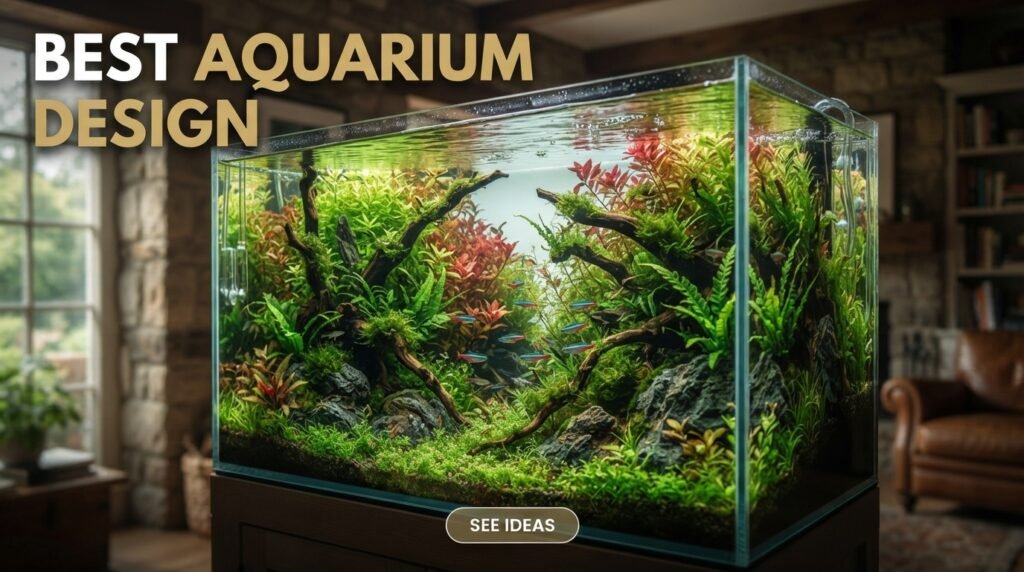
A built-in aquarium can become part of the architecture of a room.
The tank can be incorporated into a wall, cabinet, media unit, partition, or custom furniture.
Built-in designs provide a clean appearance because equipment and storage can often be hidden around the aquarium.
This style works especially well in contemporary homes.
Room Divider Aquarium
A room divider aquarium provides both decoration and functionality.
Instead of using a solid wall to separate two areas, a large aquarium can provide visual separation while allowing light to pass through.
For example, it can divide:
- Living room and dining room
- Bedroom and office
- Kitchen and dining area
- Reception and waiting area
The aquarium becomes part of the architecture while also serving as a beautiful focal point.
Aquarium With Driftwood
Driftwood can add strong natural character to an aquarium.
Large branches can be positioned to create the appearance of underwater trees, roots, or forests.
Driftwood can also provide hiding places for fish and attachment surfaces for aquatic plants such as Java fern and moss.
The shape of the wood should complement the tank rather than block the entire view.
Aquarium With Rocks
Rocks are essential in many aquascaping styles.
They can create mountains, cliffs, pathways, valleys, and natural-looking underwater landscapes.
Use rocks with different sizes while maintaining a consistent visual style.
Avoid placing too many unrelated rock types together because the result can look artificial.
Aquarium With a Sand Path
A sand path can create depth and guide the viewer’s eye through the aquarium.
The path can start near the front of the tank and gradually become narrower toward the background.
This creates the visual impression of distance.
A sand path works particularly well with rocks, driftwood, and planted aquascapes.
Best Aquarium Design for a Living Room
The living room is one of the most popular places for a feature aquarium.
A large aquarium can be positioned against a feature wall, inside a media unit, or between the living and dining areas.
For a modern living room, consider a minimalist planted aquarium with clean furniture.
For a traditional room, natural wood and warm colors can complement a planted aquarium.
The aquarium should be positioned where it can be enjoyed from multiple seating areas.
Best Aquarium Design for a Bedroom
A bedroom aquarium should generally have a calm and uncluttered design.
A small planted aquarium with soft lighting can create a peaceful visual feature.
Avoid excessively bright lighting or noisy equipment near the bed.
A wall-mounted or built-in aquarium can save floor space while providing an attractive focal point.
Best Aquarium Design for an Office
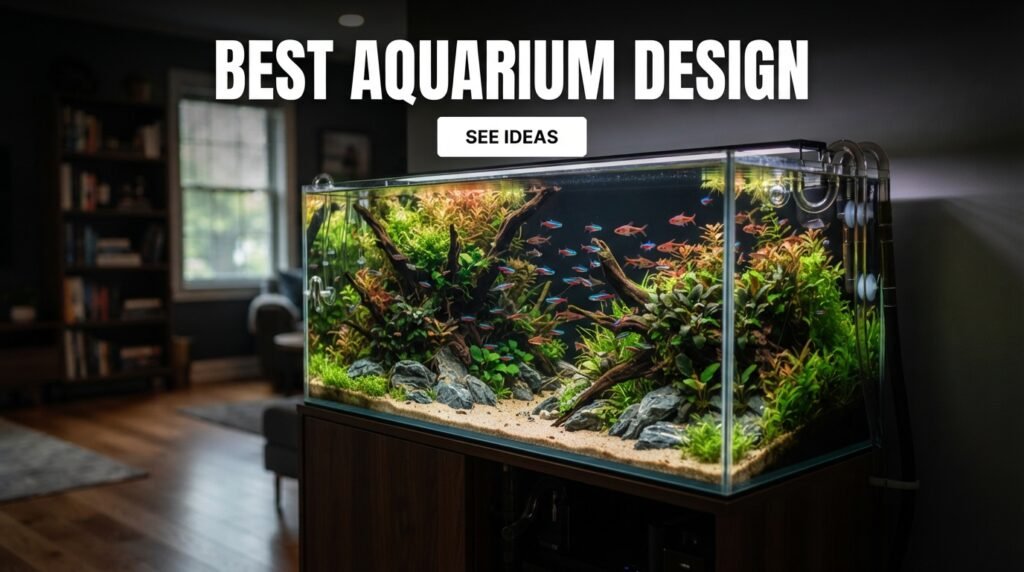
An aquarium can add visual interest to an office without taking up much space.
A small planted aquarium on a sturdy desk or cabinet can work well.
For larger offices, a built-in aquarium in the reception area can create a memorable first impression.
Minimalist designs are particularly suitable for professional environments.
Best Aquarium Design for Beginners
Beginners should prioritize simple designs that are easy to maintain.
A basic planted freshwater aquarium with hardy plants and compatible fish is often easier to manage than a highly specialized reef aquarium.
Good beginner designs can include:
- Simple planted aquarium
- Low-tech planted tank
- Minimalist aquarium
- Natural community aquarium
- Basic shrimp aquarium
Avoid choosing a design solely because it looks impressive online. Consider the maintenance requirements first.
Choosing the Right Aquarium Size
Tank size has a major influence on design.
Small aquariums can create beautiful miniature landscapes, while larger tanks provide more room for detailed aquascaping and larger fish.
Consider both the available space and the livestock you want to keep.
The aquarium should also have enough surrounding space for maintenance.
Do not place a tank where opening the lid, cleaning the glass, or accessing equipment becomes difficult.
Aquarium Lighting Design
Lighting can dramatically change the appearance of an aquarium.
Different lighting levels can highlight plants, rocks, driftwood, and fish.
Planted aquariums often require appropriate plant lighting, while reef aquariums have specialized lighting requirements.
Avoid excessive brightness that causes algae problems or creates uncomfortable glare.
The light should enhance the aquarium while supporting the needs of its inhabitants.
Choosing Aquarium Plants
Plants provide structure, color, and natural texture.
Foreground plants remain short and can create a carpet.
Midground plants add volume around rocks and driftwood.
Background plants create height and help frame the aquarium.
Popular freshwater options include:
- Anubias
- Java fern
- Cryptocoryne
- Amazon sword
- Vallisneria
- Java moss
- Bucephalandra
- Dwarf hairgrass
Plant selection should be based on lighting, substrate, growth rate, aquarium size, and maintenance preferences.
Creating Depth in an Aquarium
One of the secrets behind beautiful aquarium design is creating the illusion of depth.
Avoid placing everything in a straight line across the front of the tank.
Instead, create layers.
A taller background, medium-height middle section, and open foreground can make the aquarium look deeper.
Sloping substrate from the front toward the back can also enhance perspective.
Negative Space in Aquarium Design
Negative space is the open area around the main elements.
It is particularly important in minimalist aquascaping.
If every part of the aquarium is filled with plants, rocks, and decorations, the layout can become visually confusing.
Open areas allow the eye to rest and make the main features more noticeable.
Choosing Fish for the Design
Fish should complement the aquascape while remaining appropriate for the aquarium environment.
Schooling fish can create movement through open areas.
Bottom-dwelling species can occupy lower sections of the aquarium.
Shrimp can add activity to planted nano aquariums.
Always consider adult size, temperament, water requirements, and compatibility before selecting fish.
Aquarium Furniture and Stand Design
The aquarium stand is part of the overall design.
A mismatched stand can make an otherwise beautiful aquarium look unfinished.
Modern aquariums can use simple black or white cabinetry.
Natural aquariums can pair well with wooden stands.
Storage inside the stand is useful for filters, food, water treatments, nets, and maintenance equipment.
The stand must be specifically designed to support the aquarium’s weight.
Modern Aquarium Design
Modern aquarium designs often use clean lines, frameless tanks, simple cabinetry, neutral colors, and carefully controlled lighting.
A modern aquarium can be integrated into a TV unit, wall cabinet, kitchen partition, or living room feature wall.
The fewer unnecessary decorations used, the more important the composition becomes.
Luxury Aquarium Design
Luxury aquariums are often characterized by large dimensions, custom construction, premium cabinetry, sophisticated lighting, and carefully planned aquascaping.
A floor-to-ceiling aquarium can become an architectural feature.
Custom aquariums can also be integrated into walls, staircases, bars, or room partitions.
The design should remain elegant rather than excessively decorated.
Best Aquarium Design Mistakes to Avoid
Even a beautiful concept can fail because of poor planning.
Common mistakes include:
- Overcrowding the tank
- Choosing incompatible fish
- Ignoring adult fish size
- Using too many decoration styles
- Poor equipment placement
- Insufficient filtration
- Incorrect lighting
- Lack of maintenance access
- Using unstable rocks
- Ignoring structural support
- Choosing plants unsuitable for the aquarium
- Copying a design without considering its maintenance requirements
A good aquarium design should remain beautiful after months and years of maintenance.
How to Create the Best Aquarium Design
Start by deciding what style you want.
Next, choose the aquarium size and location.
Then select the hardscape materials, substrate, plants, and livestock.
Arrange the major rocks or driftwood first. Establish the main focal point and create depth with different heights.
Add plants according to their mature size.
Finally, introduce fish only after the aquarium has been properly established and the water conditions are suitable.
Final Thoughts
The best aquarium design is one that combines beauty, balance, practicality, and healthy aquatic living conditions. There is no single design that is perfect for every home. A minimalist planted tank may be ideal for a modern apartment, while a large reef aquarium may suit someone looking for a dramatic centerpiece.
Natural planted aquariums, Iwagumi layouts, jungle aquascapes, nano tanks, reef aquariums, wall-mounted displays, and room-divider aquariums all offer different possibilities.
The most important thing is to design the aquarium around the needs of the fish and plants while making sure it complements the room. With careful planning, even a simple aquarium can become a beautiful living piece of art.
Frequently Asked Questions
What is the best aquarium design for a home?
Natural planted, minimalist, and modern aquariums are versatile choices for homes. The best design depends on the room, available space, maintenance preferences, and aquatic life you want to keep.
What is the most beautiful aquarium style?
Beauty is subjective, but natural planted aquariums, Iwagumi layouts, jungle aquascapes, and reef aquariums are popular because they create detailed underwater landscapes.
What is the best aquarium design for beginners?
A simple freshwater planted aquarium with hardy plants and compatible fish is generally easier to maintain than highly specialized aquarium systems.
How can I make my aquarium look better?
Improve the composition by creating depth, reducing clutter, choosing complementary hardscape materials, adding suitable plants, and using appropriate lighting.
Is a planted aquarium better than a decorated aquarium?
Both can look attractive. Planted aquariums create a more natural appearance, while decorative aquariums can use ornaments and themed objects. The choice depends on your preferred style and maintenance requirements.
What aquarium design is best for a small room?
Nano aquariums, minimalist tanks, and wall-mounted aquariums can work well in small rooms because they provide visual interest without requiring excessive floor space.
How do I create depth in an aquarium?
Use a sloping substrate, place taller elements toward the back, position smaller rocks toward the foreground, and leave open areas to create visual distance.
What plants are good for aquarium design?
Anubias, Java fern, Cryptocoryne, Java moss, Amazon sword, Vallisneria, and Bucephalandra are popular choices, although plant suitability depends on aquarium conditions.
Can an aquarium be used as a room divider?
Yes. A large aquarium can separate two areas while maintaining an open visual connection between them.
What makes a modern aquarium design?
Modern aquariums typically use clean lines, simple layouts, frameless glass, neutral colors, minimalist cabinetry, and carefully controlled lighting.
How do I choose the right aquarium size?
Consider the available space, the species you want to keep, equipment requirements, maintenance access, and the overall visual proportion of the room.
Should aquarium design come before choosing fish?
It is better to plan both together. The aquarium design must accommodate the environmental and space requirements