
 By admin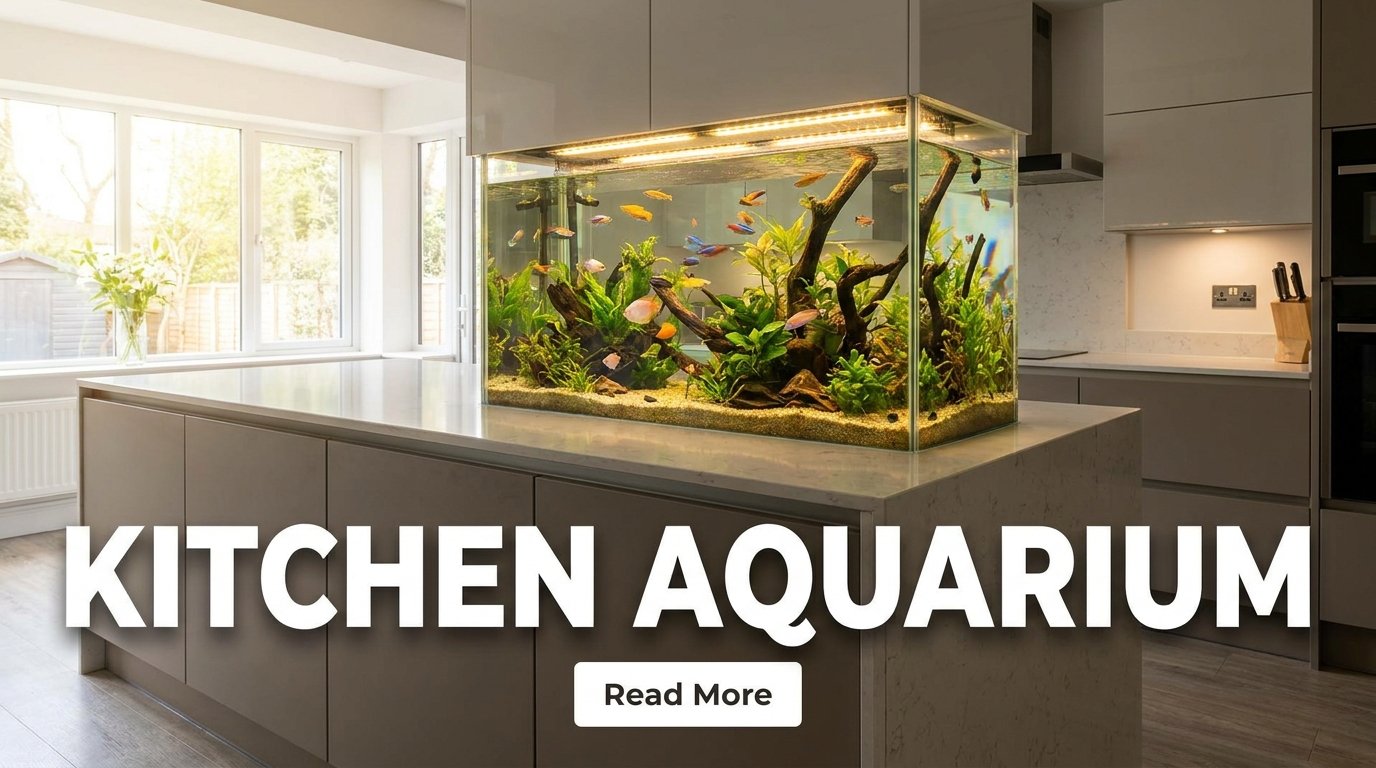
An aquarium in kitchen can be a beautiful way to bring life, color, and a relaxing natural element into one of the busiest rooms in your home. While kitchens are usually designed around cabinets, countertops, appliances, and storage, adding a carefully planned aquarium can create an attractive focal point and make the space feel more interesting.
A kitchen aquarium does not have to be large or complicated. A small desktop fish tank, a built-in aquarium between cabinets, or a modern wall-mounted design can all work depending on the available space. However, because kitchens contain heat, cooking fumes, water, grease, and electrical appliances, aquarium placement requires more planning than placing a tank in a bedroom or living room.
With the right location, equipment, fish, lighting, and maintenance routine, an aquarium can become a stylish part of your kitchen design while providing a comfortable environment for aquatic life.
Why Put an Aquarium in the Kitchen?
The kitchen is often one of the most frequently used rooms in a home. Adding an aquarium gives you an opportunity to enjoy fish while cooking, preparing meals, or spending time with family.
Fish movement can also provide a calming visual element. Watching fish swim through plants, rocks, and open water can make an otherwise busy kitchen feel more relaxing.
An aquarium can also serve as a decorative feature. Instead of relying entirely on artwork, shelves, or decorative objects, you can use a living underwater environment as the main focal point.
For modern homes, a carefully integrated aquarium can even become part of the architecture.
Best Places for an Aquarium in Kitchen
The location of your aquarium is one of the most important decisions. Not every kitchen area is suitable for a fish tank.
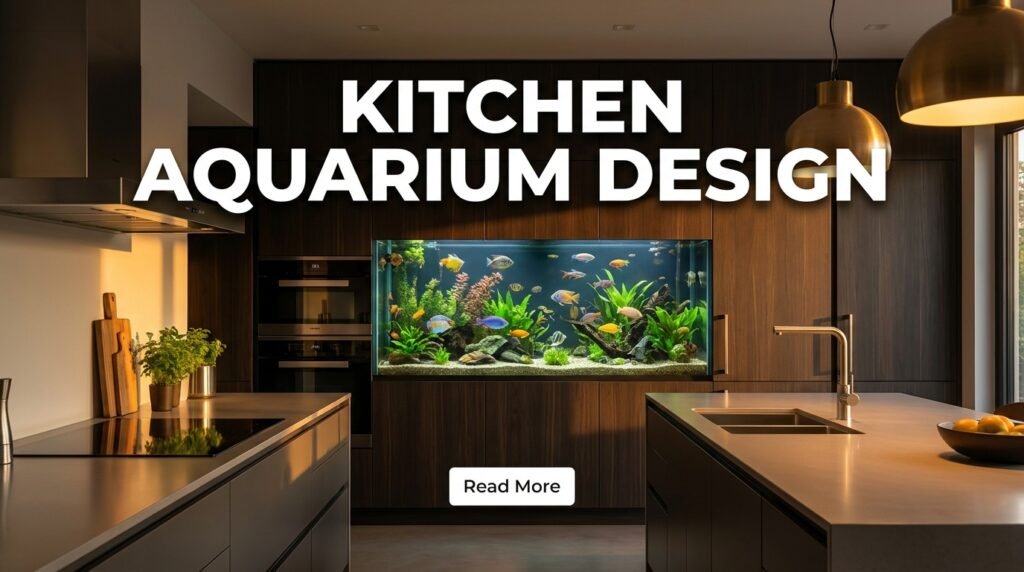
Between Kitchen Cabinets
A built-in aquarium between cabinets can create a sophisticated appearance. The tank can be installed into an opening between upper and lower cabinets or incorporated into a custom kitchen design.
This style works particularly well in modern kitchens where clean lines and integrated features are important.
Make sure the aquarium remains accessible for maintenance. A beautiful built-in tank becomes difficult to manage if the filter, heater, lighting, or water-changing equipment cannot be reached easily.
On a Kitchen Counter
A small aquarium can be placed on a sturdy countertop if there is sufficient space.
This is one of the easiest options because the tank does not require major construction. A nano aquarium containing shrimp, small fish, or aquatic plants can work well.
However, keep the aquarium away from areas where food preparation regularly takes place.
On a Kitchen Island
A fish tank can become a striking feature on or beside a kitchen island. This is especially effective in large open-plan kitchens.
A small aquarium can sit on the island, while a larger custom tank can sometimes be incorporated into the island structure.
The island must be structurally capable of supporting the aquarium. Water is heavy, and a large aquarium should never be placed on furniture or structures that are not designed to support its weight.
Beside the Dining Area
If your kitchen connects directly to a dining room, placing an aquarium near the transition between the two spaces can be an excellent choice.
This allows the aquarium to serve both areas without taking up valuable cooking space.
On an Empty Wall
A wall-mounted or wall-integrated aquarium can work when countertop space is limited.
This type of installation requires more planning, particularly for larger tanks. The wall and supporting structure must be capable of carrying the weight of the aquarium.
Best Aquarium Sizes for Kitchens
The ideal aquarium size depends on the available space, the fish you want to keep, and how much maintenance you are willing to perform.
| Aquarium Size | Best Use | Main Advantage |
|---|---|---|
| 2–5 gallons | Plants, small setups | Very compact |
| 5–10 gallons | Nano fish or shrimp | Easy to fit |
| 10–20 gallons | Small community setup | Good balance |
| 20–40 gallons | Larger fish communities | More swimming space |
| 40+ gallons | Custom installations | Strong visual impact |
A larger aquarium is not automatically harder to maintain. In many cases, larger water volumes can be more stable than extremely small tanks. However, larger tanks require stronger support and more careful planning.
Small Aquarium in Kitchen
A small aquarium can be a great solution for apartments and compact kitchens.
A 5- or 10-gallon aquarium can fit on a suitable countertop, shelf, or dedicated stand. You can create an attractive planted setup with gravel, rocks, driftwood, and aquatic plants.
Shrimp aquariums are another option for small spaces. Their small size and interesting behavior can make them excellent inhabitants for carefully maintained nano aquariums.
Before choosing a small aquarium, remember that smaller tanks can experience changes in temperature and water chemistry more quickly. Regular maintenance is essential.
Built-In Aquarium in Kitchen
A built-in aquarium can create one of the most impressive kitchen designs.
Imagine a long aquarium integrated beneath a row of cabinets or positioned inside a partition wall. The glass can become a decorative window into an underwater environment.
Built-in tanks are best planned during kitchen renovation or construction because plumbing, electrical connections, structural support, and maintenance access can be incorporated from the beginning.
The most important consideration is accessibility. Equipment should be easy to inspect, clean, repair, and replace.
Modern Aquarium in Kitchen
A modern kitchen aquarium usually focuses on simplicity.
A rimless glass aquarium with a clean aquascape can complement minimalist cabinets and countertops. Instead of filling the tank with numerous decorations, use a limited number of carefully selected materials.
For example, a simple arrangement of rocks, sand, aquatic plants, and a few colorful fish can create an elegant appearance.
Neutral kitchen colors can also make the colors of the fish and plants stand out.
Aquarium Under Kitchen Cabinets
An aquarium positioned below kitchen cabinets can make excellent use of unused wall space.
A horizontal tank can be particularly attractive because it resembles a living underwater window.
However, avoid placing the tank directly beneath cabinets where doors or drawers could hit the aquarium. You also need enough space above the aquarium to remove the lid, feed fish, and maintain equipment.
Aquarium Between Cabinets
Installing an aquarium between cabinets can make it appear as though the aquarium was part of the kitchen from the beginning.
This approach is especially attractive in contemporary kitchen designs.
The opening should be large enough to provide ventilation and maintenance access. Do not completely seal the aquarium into a cabinet structure without considering heat buildup and equipment access.
Aquarium as a Kitchen Divider
An aquarium can also be used as a room divider.
In an open-plan home, a large aquarium can separate the kitchen from a living or dining area while still allowing light and visibility between the spaces.
A see-through aquarium can be especially impressive because it can be viewed from both sides.
This type of installation requires professional structural planning because a large aquarium can weigh hundreds of kilograms once filled with water, substrate, rocks, and equipment.
Best Fish for a Kitchen Aquarium
The best fish depend on aquarium size and water conditions rather than simply appearance.
Possible choices for appropriately sized freshwater aquariums include:
- Guppies
- Tetras
- Rasboras
- Corydoras
- Small livebearers
- Betta fish in suitable individual setups
- Small peaceful community fish
Guppies can be particularly attractive because their colorful tails add movement to the kitchen environment.
However, fish should never be selected simply because they look good in a particular kitchen. Research their adult size, temperament, water requirements, diet, and compatibility before purchasing them.
Planted Aquarium in Kitchen
A planted aquarium can make a kitchen feel more natural.
Live aquatic plants provide texture and movement while creating a miniature underwater garden.
Beginner-friendly aquarium plants can include Java fern, Anubias, Amazon sword, Cryptocoryne, and certain mosses, depending on aquarium conditions.
Plants also provide hiding areas for some fish and shrimp.
A planted aquarium requires appropriate lighting, nutrients, and maintenance. Avoid placing extremely high-light aquariums in direct sunlight because excessive light can contribute to algae problems.
Aquarium Lighting in the Kitchen
Lighting can dramatically change the appearance of an aquarium.
LED aquarium lights are popular because they are energy efficient and available in different sizes and intensities.
If your aquarium contains live plants, select lighting based on the plants’ requirements.
For a decorative kitchen aquarium, moderate lighting can create a beautiful focal point without making the tank appear overly bright.
Consider using a timer so the aquarium follows a consistent lighting schedule.
Keep the Aquarium Away From Heat
Kitchen environments can become warmer than other rooms, especially when cooking.
Do not place the aquarium directly beside an oven, stove, air fryer, or other appliance that produces substantial heat.
Rapid temperature changes can stress fish and affect water conditions.
Try to position the aquarium in a relatively stable part of the kitchen where temperature fluctuations are minimal.
Avoid Grease and Cooking Fumes
One of the biggest concerns with an aquarium in kitchen is exposure to cooking fumes and grease.
Oil particles can settle on surfaces around the aquarium and potentially enter the water.
Keep the aquarium away from the stove and frying area whenever possible. A covered aquarium can provide additional protection, but it should still be positioned away from heavy cooking fumes.
Regularly clean the outside glass and surrounding surfaces to prevent buildup.
Aquarium Safety in the Kitchen
Safety should always come before appearance.
Water and electricity need to be carefully managed. Aquarium equipment should be installed properly, and electrical connections should be positioned to reduce the risk of water reaching outlets or plugs.
Use equipment appropriate for aquarium environments and follow manufacturer instructions.
Avoid placing an aquarium where children could easily knock equipment into the water or where objects can fall into the tank.
Kitchen Aquarium Maintenance
A kitchen aquarium needs the same regular maintenance as an aquarium in any other room.
A basic routine can include:
- Checking water temperature
- Monitoring fish behavior
- Checking filtration
- Removing visible debris
- Cleaning aquarium glass
- Testing water parameters when necessary
- Performing partial water changes
- Trimming aquatic plants
- Cleaning equipment when needed
- Feeding fish appropriately
Avoid overfeeding. Uneaten food can break down and negatively affect water quality.
A simple maintenance schedule makes it much easier to keep the aquarium healthy.
Aquarium in a Small Kitchen
A small kitchen does not automatically mean you have to give up the idea of an aquarium.
A compact nano aquarium can fit on an appropriate surface without overwhelming the room.
Choose a simple design with a small number of decorative elements. Light-colored substrate and carefully positioned plants can help the tank feel open.
Avoid oversized decorations that make a small aquarium appear crowded.
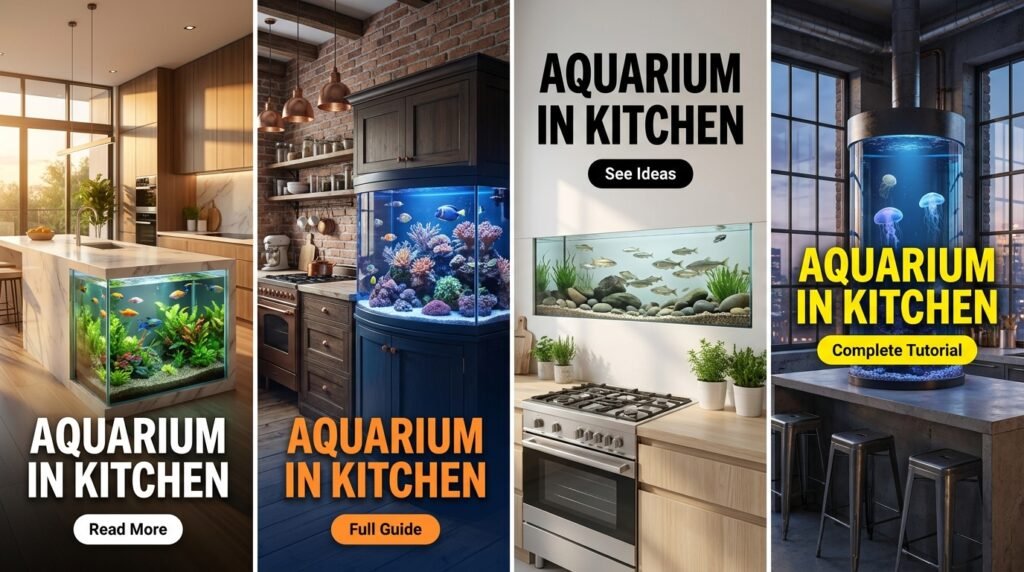
Luxury Kitchen Aquarium Ideas
Large luxury kitchens can accommodate more ambitious aquarium designs.
A custom reef aquarium can become a major architectural feature. A long wall aquarium can provide a dramatic underwater view, while a double-sided aquarium can separate the kitchen from another room.
Other luxury concepts include:
- Floor-to-ceiling aquarium walls
- Built-in reef tanks
- Large tropical freshwater displays
- Double-sided aquariums
- Aquarium kitchen islands
- Long horizontal aquariums
- Custom illuminated aquascapes
These projects should be designed with professional structural and aquarium expertise.
Aquarium and Kitchen Interior Design
The aquarium should complement the kitchen rather than look like an unrelated object.
For a modern kitchen, consider a minimalist aquarium.
For a farmhouse-style kitchen, a natural freshwater aquascape may work better.
For a luxury kitchen, a large built-in aquarium can create a dramatic centerpiece.
Think about the colors already present in the kitchen. Fish, plants, substrate, and lighting can be selected to complement those colors.
Common Mistakes With an Aquarium in Kitchen
One common mistake is placing the aquarium too close to the stove.
Another is choosing a location that looks attractive but makes maintenance difficult.
Overcrowding the aquarium is also a problem. Fish need adequate space and compatible tank mates.
Some people also forget about the weight of a filled aquarium. A large tank should never be placed on a countertop, cabinet, island, or wall without confirming that the structure can safely support it.
Finally, avoid sacrificing fish welfare for interior design. The aquarium should always provide an appropriate environment for its inhabitants.
Final Thoughts
An aquarium in kitchen can transform an ordinary cooking space into a more relaxing and visually interesting environment. Whether you choose a small planted nano tank, a countertop aquarium, a built-in cabinet design, or a large custom installation, there are many ways to integrate aquatic life into kitchen décor.
The most important factors are proper placement, structural support, temperature stability, protection from cooking fumes, safe electrical installation, and easy maintenance access.
With thoughtful planning, an aquarium can become more than a decoration. It can serve as a living focal point that brings movement, color, and a small piece of nature into the heart of your home.
FAQs About Aquarium in Kitchen
Is it a good idea to have an aquarium in the kitchen?
Yes, provided the aquarium is placed away from heat, cooking fumes, grease, and areas where water and electricity could create safety problems.
Where should I place an aquarium in my kitchen?
Good options include a suitable countertop, a dedicated stand, between cabinets, beside a dining area, or as part of a professionally designed built-in installation.
Can I put an aquarium near the stove?
It is best to avoid placing an aquarium near the stove because heat, grease, steam, and cooking fumes can create problems for the aquarium and its inhabitants.
What size aquarium is best for a kitchen?
Small 5- to 20-gallon aquariums are practical for many kitchens, while larger aquariums can work in spacious kitchens when the structure and installation are properly planned.
Can I build an aquarium between kitchen cabinets?
Yes. A built-in aquarium between cabinets can create an attractive design, but you need adequate structural support, ventilation, electrical planning, and access for maintenance.
Are guppies good for a kitchen aquarium?
Guppies can be suitable for appropriately sized freshwater aquariums because they are colorful and active. However, their water conditions, tank size, stocking, and compatibility should be considered before adding them.
Can I keep plants in a kitchen aquarium?
Yes. Aquatic plants can create a natural appearance and provide additional structure for fish. Choose plants according to the aquarium’s lighting and water conditions.
Does a kitchen aquarium require more maintenance?
It can require additional attention if it is exposed to grease, cooking fumes, or temperature fluctuations. Proper placement can significantly reduce these problems.
Can an aquarium be used as a kitchen room divider?
Yes. A properly engineered aquarium can separate a kitchen from a dining or living area while providing an attractive view from both sides.
What is the most important thing to consider when installing a kitchen aquarium?
Fish welfare and structural safety should come first. Make sure the aquarium has appropriate water conditions, filtration, temperature, and swimming space while ensuring that the supporting structure can safely carry the filled tank.