
 By admin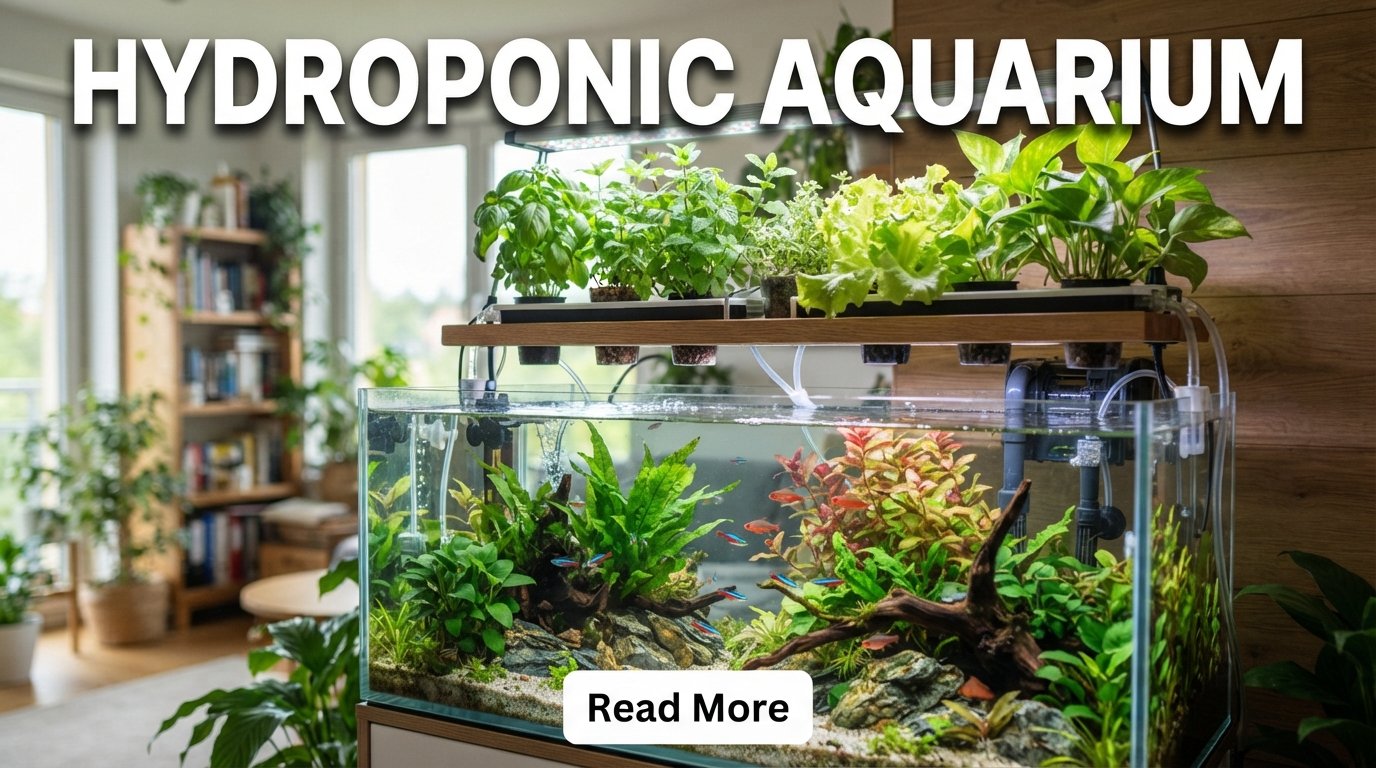
A hydroponic aquarium combines fishkeeping with plant cultivation by growing plants with their roots exposed to aquarium water. Instead of growing plants entirely in traditional soil, the plants absorb nutrients from the water while the aquarium’s fish and beneficial bacteria help create a nutrient-rich environment.
This type of setup can create a beautiful living ecosystem where fish and plants work together. It is closely related to aquaponics, although the exact setup can vary depending on how the plants receive nutrients and how the system is filtered.
What Is a Hydroponic Aquarium?
A hydroponic aquarium is essentially an aquarium connected to or combined with a plant-growing system.
Fish produce waste that is broken down by beneficial bacteria. The resulting nutrients can become available to plants, while the plants absorb some of those nutrients as they grow.
A basic system may contain:
- Aquarium
- Fish
- Water pump
- Plant growing area
- Plant containers
- Growing medium
- Aquarium filtration
- Tubing
- Lighting
The plants can grow above the aquarium while their roots remain in contact with circulating water.
How Does a Hydroponic Aquarium Work?
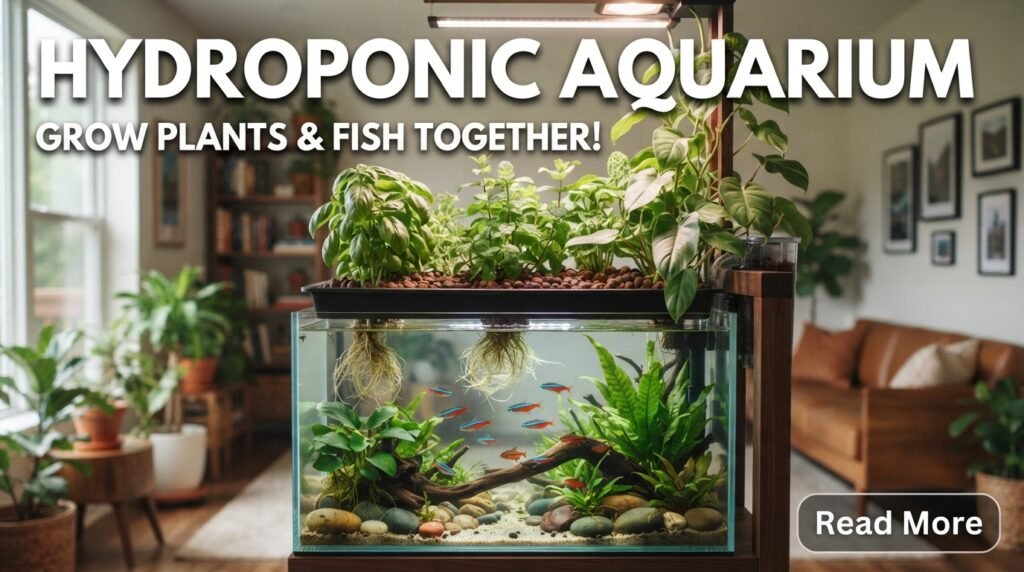
The basic process is relatively simple.
Fish waste → beneficial bacteria → nutrients → plant roots → cleaner water
Fish produce ammonia through waste and respiration. Beneficial bacteria convert ammonia into nitrite and then nitrate.
Plants can absorb nitrate and other nutrients from the water.
The plants therefore become an additional component of the nutrient-management system.
However, plants do not replace proper aquarium filtration or water changes in every setup.
Hydroponic Aquarium vs Aquaponics
The terms are sometimes used interchangeably, but there can be differences.
| Feature | Hydroponic Aquarium | Aquaponics |
|---|---|---|
| Fish | Usually included | Included |
| Plants | Grown with water-based roots | Grown using nutrient-rich fish water |
| Soil | Usually absent from root zone | Usually absent from root zone |
| Fish waste | Nutrient source | Major nutrient source |
| Main Goal | Aquarium + plant growing | Integrated food-production ecosystem |
| Filtration | Depends on setup | Usually integrated into system |
A hydroponic aquarium can therefore be thought of as a broader aquarium-and-plant concept, while aquaponics specifically emphasizes the relationship between aquaculture and plant production.
Best Plants for a Hydroponic Aquarium
Not every houseplant is suitable for growing with aquarium water.
Popular choices for an aquarium plant-growing system include:
- Pothos
- Lucky Bamboo
- Peace Lily
- Spider Plant
- Philodendron
- Mint
- Basil
- Various herbs
Always check the requirements of a specific plant before placing it in an aquarium system.
Pothos Hydroponic Aquarium
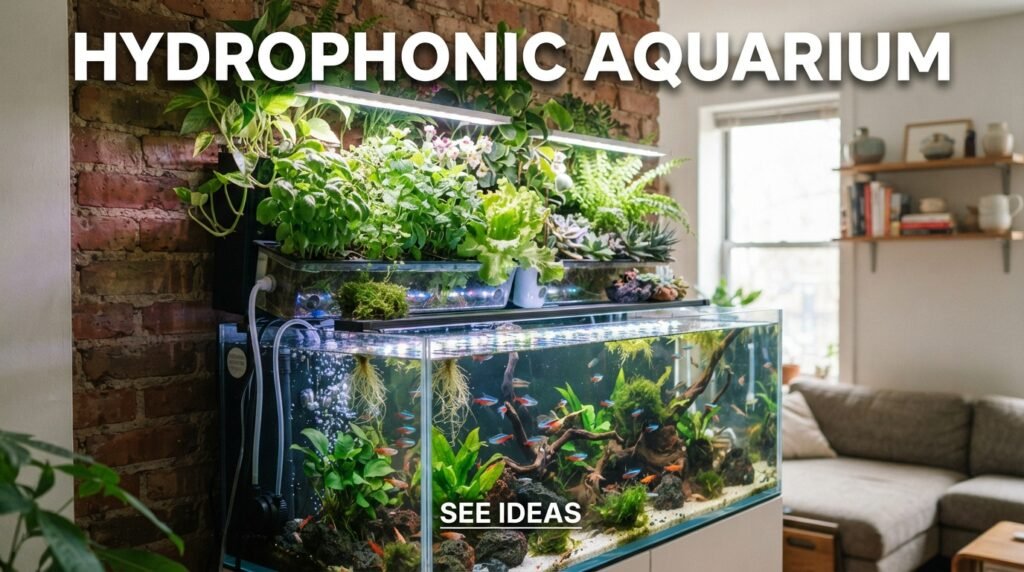
Pothos is one of the most popular plants used around aquariums.
Its roots can grow directly into the aquarium water while the leaves remain above the surface.
A simple arrangement can place the pothos in a holder attached to the aquarium rim.
Important: keep the leaves and stems above the water and allow only appropriate portions of the root system to remain submerged.
Lucky Bamboo Aquarium
Lucky bamboo can create a striking vertical appearance.
Place the plant so its roots are submerged while the majority of the foliage remains above the water.
It can be combined with rocks and other plants to create a natural-looking aquarium display.
Hydroponic Aquarium With Herbs
An aquarium can potentially support certain herbs when the system provides adequate nutrients and appropriate growing conditions.
Examples include:
- Basil
- Mint
- Some leafy greens
For edible plants, use a clean system and avoid medications, chemicals, or aquarium treatments that are not appropriate for plants intended for consumption.
Hydroponic Aquarium Setup
A simple setup can be created using an aquarium, a plant holder, and a water circulation system.
Step 1: Choose the Aquarium
Select a tank large enough for the fish you intend to keep.
Do not choose fish simply because they are small when purchased. Consider their adult size and environmental requirements.
Step 2: Establish the Aquarium
Cycle the aquarium before adding fish.
A stable biological filter is essential for processing fish waste.
Step 3: Install Filtration
Use an appropriately sized filter for the aquarium and its livestock.
The filter should maintain good water quality and adequate circulation.
Step 4: Create the Plant Area
Plants can be positioned using:
- Net pots
- Aquarium plant holders
- Hanging baskets
- Grow trays
- Custom hydroponic channels
Keep the plant roots accessible to flowing water.
Step 5: Add a Water Pump
A pump can circulate aquarium water through the plant area and back into the tank.
Ensure the pump provides appropriate flow without creating excessive current for the fish.
Step 6: Add Plants
Introduce healthy plants with clean roots.
Remove soil and other materials from roots when transitioning suitable plants into a water-based system.
Step 7: Monitor the System
Regularly test:
- Ammonia
- Nitrite
- Nitrate
- pH
- Temperature
Also monitor plant growth and fish behavior.
Hydroponic Aquarium Design Ideas
1. Hanging Pothos Aquarium
Place several pothos plants around the rear edge of the aquarium.
Their roots grow into the water while their leaves create a green canopy above the tank.
2. Vertical Plant Wall
Create a plant wall behind the aquarium using several small growing containers.
This can turn the aquarium into a living feature wall.
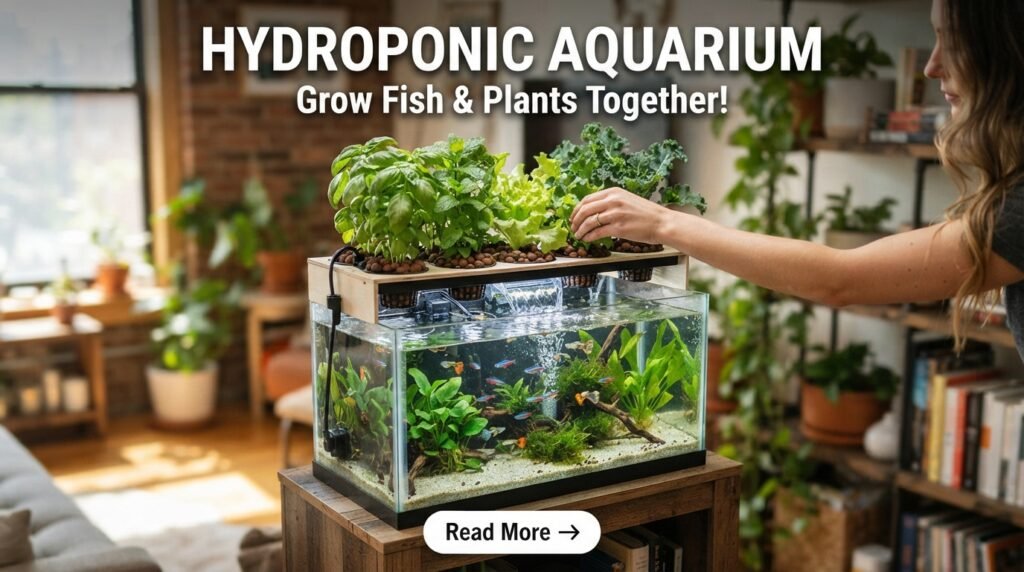
3. Aquaponic Shelf
Place the aquarium on a lower level and a plant-growing tray above it.
A pump sends water upward, and gravity returns it to the aquarium.
4. Indoor Herb Aquarium
Create a compact fish-and-herb system for an indoor kitchen or growing area.
Use only appropriate, clean, food-safe materials.
5. Jungle Aquarium
Combine submerged aquatic plants with emersed plants growing above the water.
This creates the appearance of an underwater jungle extending into the room.
Hydroponic Aquarium Lighting
Lighting depends on the plants being grown.
Aquatic plants may require underwater lighting, while houseplants growing above the aquarium can receive light from a separate grow light.
A dedicated grow light may be useful when natural sunlight is insufficient.
Avoid excessive direct sunlight because it can cause algae growth and temperature fluctuations.
Do Plants Clean Aquarium Water?
Plants can absorb nutrients from aquarium water, particularly nitrogen compounds such as nitrate.
However, plants should not be treated as a complete replacement for filtration and maintenance.
A healthy aquarium still requires appropriate:
- Biological filtration
- Water circulation
- Water changes
- Stocking levels
- Feeding practices
The plants are an additional component of the system.
Benefits of a Hydroponic Aquarium
Attractive Appearance
Plants growing above the aquarium create a natural indoor display.
Nutrient Absorption
Growing plants can consume nutrients from the water.
Space Efficiency
One system can combine fishkeeping and plant cultivation.
Natural Aesthetic
Roots, leaves, and flowing water create an ecosystem-like appearance.
Educational Value
A hydroponic aquarium can demonstrate the relationship between fish, bacteria, water, and plants.
Potential Problems
Root Blockage
Large root systems can interfere with pumps or filter intakes.
Nutrient Imbalance
Plants require more than just nitrate. Nutrient deficiencies can occur if the system does not provide everything plants need.
Algae
Excess nutrients and excessive light can encourage algae.
Plant Rot
Plants that are not suited to submerged conditions can develop rot if too much of the stem or foliage remains underwater.
Water Temperature
Some plants prefer temperatures different from those required by tropical fish.
How to Keep Roots Healthy
Healthy roots should generally be:
- Firm
- Light-colored or naturally colored for the species
- Free of excessive slime
- Able to receive water flow
Trim dead or decaying roots carefully.
Prevent roots from becoming tangled around pump intakes.
Can You Use Soil?
A hydroponic aquarium generally does not require traditional soil in the plant root zone.
Instead, plants can be supported using:
- Clay pebbles
- Net pots
- Rockwool
- Inert growing media
- Plant holders
The specific medium depends on the plant and system design.
Fish for Hydroponic Aquariums
Choose fish based on the aquarium itself rather than simply selecting fish that produce lots of waste.
Suitable species depend on:
- Tank size
- Temperature
- Water chemistry
- Compatibility
- Filtration
- Plant requirements
Common freshwater aquarium fish such as guppies, tetras, mollies, and some other peaceful species may work well in appropriately designed systems.
Avoid overstocking to increase plant nutrients.
More fish waste does not automatically mean healthier plant growth.
Hydroponic Aquarium for Beginners
A simple beginner system can use:
- Small freshwater aquarium
- Hardy fish
- Pothos
- Basic aquarium filter
- Simple plant holder
- Aquarium light
Start with a small number of plants and monitor the aquarium before expanding the system.
Maintenance
A hydroponic aquarium still needs regular maintenance.
Tasks include:
- Water testing
- Partial water changes
- Filter maintenance
- Plant trimming
- Removing dead leaves
- Cleaning algae
- Checking pump flow
- Inspecting roots
- Monitoring fish health
Plant growth can be fast in nutrient-rich water, so regular trimming may be necessary.
Common Hydroponic Aquarium Mistakes
Overstocking Fish
Adding more fish to produce more nutrients can quickly create water-quality problems.
Submerging Houseplant Foliage
Many houseplants should have their roots in water while their leaves remain above the surface.
Blocking the Filter
Large root systems can obstruct intake pipes.
Ignoring Plant Nutrition
Fish waste does not necessarily provide every nutrient required by plants.
Using Unsafe Materials
Avoid materials, glues, paints, metals, or containers that can release harmful substances into aquarium water.
Skipping Water Changes
Even a heavily planted aquarium may still require regular water changes.
Hydroponic Aquarium Ideas for Small Spaces
A compact aquarium can be combined with a small plant tray or a few hanging plants.
Good space-saving options include:
- Pothos roots over the back of the tank
- Small vertical herb garden
- Wall-mounted plant holders
- Nano aquarium with emersed plants
- Compact aquaponic shelf
These designs work particularly well in apartments, offices, and small indoor gardens.
Conclusion
A hydroponic aquarium combines the beauty of fishkeeping with the benefits of growing plants in water. By allowing suitable plants to absorb nutrients from aquarium water, you can create a living display that connects aquatic life with indoor gardening.
Pothos, lucky bamboo, herbs, and other suitable plants can be incorporated into different designs, from a simple beginner aquarium to a large vertical plant wall.
The most important principle is balance. Fish should be stocked according to the aquarium’s capacity, plants should be selected according to their growing requirements, and filtration and water changes should remain part of the maintenance routine.
With proper planning, a hydroponic aquarium can become a beautiful, educational, and space-efficient indoor ecosystem.
Frequently Asked Questions
What is a hydroponic aquarium?
A hydroponic aquarium combines fishkeeping with plants grown using water rather than traditional soil. In many setups, plant roots receive nutrients from aquarium water.
Can pothos grow in an aquarium?
Yes. Pothos is commonly grown with its roots in aquarium water while its leaves remain above the surface.
Do hydroponic aquariums need filters?
A filter is generally recommended for maintaining water quality and biological filtration, although the exact equipment depends on the system design.
Can plants replace an aquarium filter?
Plants can help absorb nutrients, but they should not automatically be considered a complete replacement for appropriate filtration.
Can I grow vegetables with aquarium water?
Some vegetables and herbs can be grown in aquaponic-style systems. For edible crops, use clean, food-safe equipment and avoid aquarium medications or chemicals that are unsuitable for food production.
Is a hydroponic aquarium the same as aquaponics?
They are closely related. Aquaponics specifically combines aquaculture and plant production, while “hydroponic aquarium” can describe a broader range of aquarium-and-plant systems.
Do hydroponic aquariums need fertilizer?
It depends on the plants and nutrient levels. Fish waste supplies some nutrients, but plants may still require additional nutrients in certain systems.
Are hydroponic aquariums good for beginners?
A simple aquarium with a few hardy emersed plants can be beginner-friendly. More complex systems involving pumps, grow trays, herbs, and automated water circulation require additional planning and maintenance.