
 By admin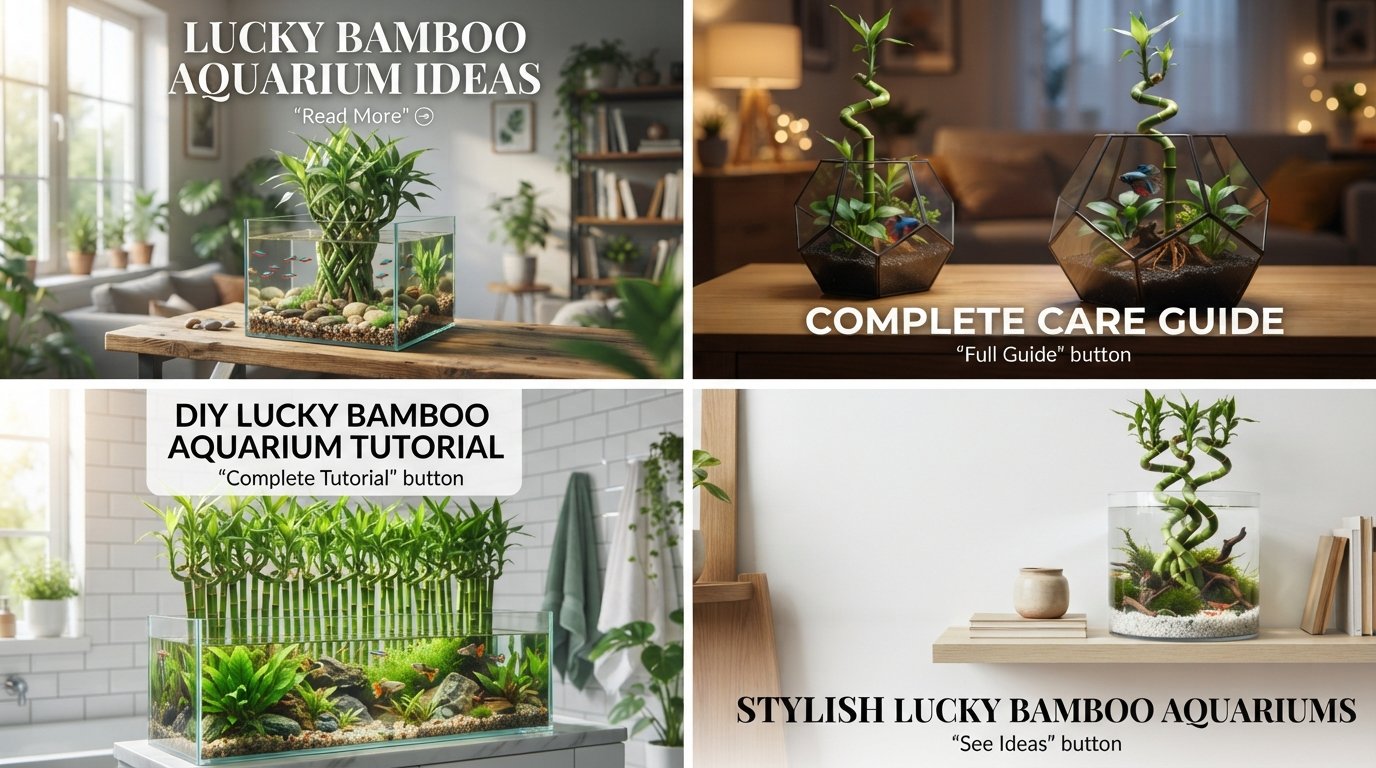
A lucky bamboo aquarium combines the beauty of aquatic plants with the elegance of lucky bamboo, creating a peaceful and natural display. Although lucky bamboo isn’t a true bamboo plant, it adapts well to growing with its roots in aquarium water while its leaves remain above the surface. When used correctly, lucky bamboo can enhance your aquarium’s appearance, absorb excess nutrients, and provide a natural environment for fish.
This guide explains how to grow lucky bamboo in an aquarium, the best setup, suitable fish, and essential care tips.
What Is a Lucky Bamboo Aquarium?
A lucky bamboo aquarium features one or more lucky bamboo stalks growing with their roots submerged in aquarium water. The leafy stems remain above the waterline, allowing the plant to thrive while benefiting from the nutrients produced by fish.
This setup is popular in:
- Freshwater aquariums
- Betta aquariums
- Shrimp tanks
- Planted aquariums
- Desktop aquariums
- Minimalist aquarium designs
The combination of green bamboo and colorful fish creates a clean, relaxing aesthetic.
Benefits of Growing Lucky Bamboo in an Aquarium
Lucky bamboo offers several advantages.
Benefits include:
- Natural and elegant appearance
- Helps absorb nitrates
- Can improve water quality
- Provides shelter for fish and shrimp
- Requires minimal maintenance
- Complements modern and Zen-inspired aquariums
- Suitable for beginners
Although lucky bamboo helps use nutrients from the water, it should not replace regular filtration and water changes.
Can Lucky Bamboo Grow Underwater?
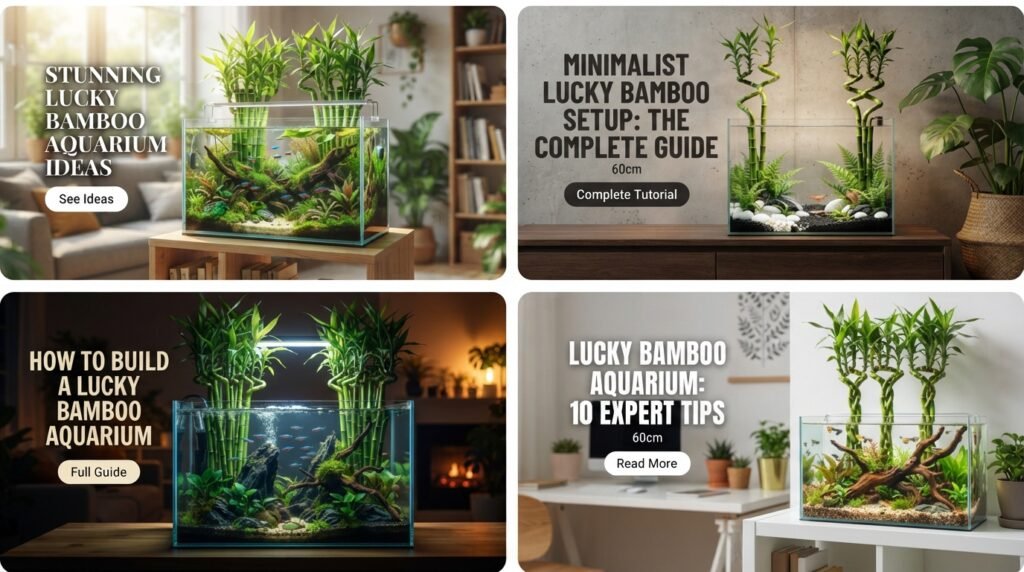
The roots of lucky bamboo can remain underwater, but the stalks and leaves should stay above the waterline.
Submerging the entire plant for long periods usually causes the stalks to rot and eventually die.
For the healthiest growth:
- Keep only the roots underwater.
- Ensure the leaves receive fresh air and light.
- Support the stems so they remain upright.
Choosing the Right Aquarium
Lucky bamboo works well in many freshwater aquariums.
Popular sizes include:
- 10-gallon aquariums
- 20-gallon planted tanks
- 30-gallon community aquariums
- Betta aquariums
- Shrimp aquariums
Larger aquariums provide more stable water conditions and additional design options.
How to Add Lucky Bamboo
Step 1: Select Healthy Plants
Choose lucky bamboo with:
- Bright green leaves
- Firm green stalks
- Healthy white roots
- No yellow leaves
- No soft or damaged stems
Step 2: Position the Plant
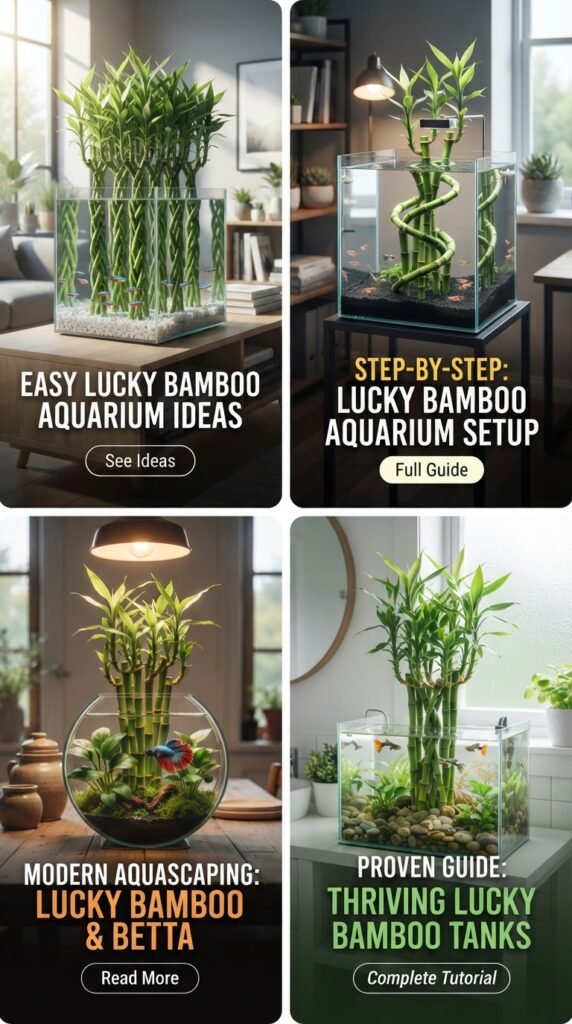
Place the roots in the aquarium while keeping the stems above the water.
You can secure the plant using:
- Aquarium plant holders
- Suction cup clips
- Decorative rocks
- Driftwood supports
Avoid burying the stalk too deeply in the substrate.
Step 3: Provide Suitable Lighting
Lucky bamboo grows best under:
- Bright indirect sunlight
- Full-spectrum LED aquarium lights
- Moderate indoor lighting
Avoid intense direct sunlight, which can scorch the leaves.
Best Fish for a Lucky Bamboo Aquarium
Lucky bamboo pairs well with peaceful freshwater species.
Good choices include:
- Bettas
- Guppies
- Neon Tetras
- Ember Tetras
- Harlequin Rasboras
- Corydoras Catfish
- Cherry Shrimp
- Amano Shrimp
- Mystery Snails
These animals generally coexist well with lucky bamboo.
Aquascaping Ideas
Zen Aquarium
Combine lucky bamboo with smooth river stones, sand, and driftwood for a calm, minimalist design.
Nature Aquarium
Use driftwood, aquatic plants, and lucky bamboo to create a lush riverside appearance.
Modern Minimalist
Pair black substrate with a few bamboo stalks and open swimming space.
Shrimp Paradise
Add moss, rocks, and lucky bamboo to provide natural shelter for shrimp.
Water Parameters
Lucky bamboo grows well in typical tropical freshwater conditions.
| Parameter | Recommended Range |
|---|---|
| Temperature | 70–82°F (21–28°C) |
| pH | 6.0–7.8 |
| Ammonia | 0 ppm |
| Nitrite | 0 ppm |
| Nitrate | Below 20–40 ppm |
Stable water conditions benefit both the bamboo and the aquarium’s inhabitants.
Maintenance Tips

Trim Yellow Leaves
Remove damaged or yellowing leaves to encourage healthy growth.
Clean the Roots
During water changes, gently rinse the roots in removed aquarium water if debris accumulates.
Perform Regular Water Changes
Replace 20–30% of the water weekly to maintain good water quality.
Inspect the Stalks
If a stalk becomes soft, yellow, or mushy, remove it promptly to prevent further decay.
Monitor Lighting
Provide moderate light for 8–10 hours per day using a timer if necessary.
Common Mistakes to Avoid
Fully Submerging the Plant
Lucky bamboo is not a true aquatic plant. Keep the stems and leaves above the water.
Placing It in Direct Sunlight
Strong sunlight can overheat the aquarium and damage the leaves.
Ignoring Rot
Soft or yellow stalks should be removed before the problem spreads.
Using Poor Water Quality
Regular maintenance is still essential even if the plant helps absorb nutrients.
Overcrowding the Aquarium
Leave enough swimming space for fish while positioning the bamboo.
Decorating Ideas
Enhance your lucky bamboo aquarium with:
- Smooth river stones
- Natural driftwood
- Fine aquarium sand
- Java Moss
- Anubias
- Floating plants
- Minimalist black backgrounds
Keep the design uncluttered so the bamboo remains the focal point.
Benefits of a Lucky Bamboo Aquarium
A lucky bamboo aquarium provides:
- Elegant natural beauty
- Improved nutrient uptake
- A relaxing atmosphere
- Shelter for fish and shrimp
- Easy maintenance
- Endless design possibilities
It is an excellent choice for hobbyists seeking a simple yet attractive freshwater display.
Conclusion
A lucky bamboo aquarium is a beautiful way to blend houseplants with aquatic life. By keeping the roots submerged and the stalks above the waterline, you can enjoy healthy plant growth while creating a striking aquarium display. Combined with peaceful fish, natural décor, and regular maintenance, lucky bamboo can become a standout feature in almost any freshwater aquarium.
Frequently Asked Questions
Can lucky bamboo live in an aquarium?
Yes. Lucky bamboo grows well with its roots submerged in aquarium water, provided the stalks and leaves remain above the waterline.
Is lucky bamboo safe for fish?
Yes. Healthy lucky bamboo is generally safe for freshwater aquariums when grown correctly and is not treated with harmful chemicals.
Can I completely submerge lucky bamboo?
No. Fully submerging the stalks and leaves usually leads to rot. Only the roots should remain underwater.
Does lucky bamboo improve water quality?
It can absorb some nitrates and other nutrients from the water, but it should be considered a supplement to—not a replacement for—proper filtration and regular water changes.
What fish are best with lucky bamboo?
Bettas, guppies, neon tetras, rasboras, corydoras, shrimp, and snails are all excellent companions.
How do I keep lucky bamboo healthy?
Provide moderate light, keep the roots submerged, maintain clean aquarium water, trim damaged leaves, and ensure the stems remain above the water surface.