
 By admin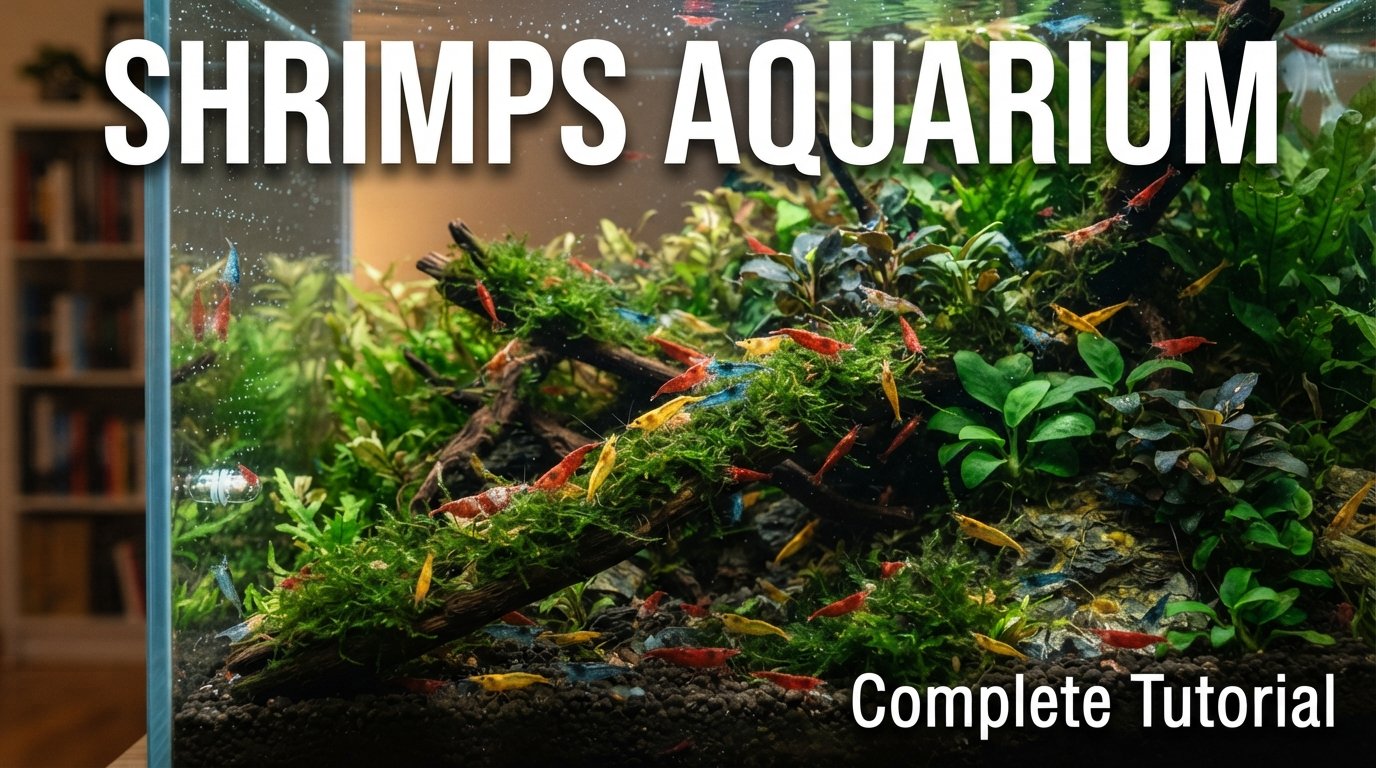
A shrimp aquarium is a small aquatic ecosystem designed specifically for freshwater shrimp. Shrimp tanks are popular because they can be colorful, peaceful, and fascinating to watch. With plants, moss, driftwood, rocks, and a suitable filtration system, even a relatively small aquarium can become a beautiful underwater habitat.
Whether you want a cherry shrimp aquarium, a planted shrimp tank, a minimalist setup, or a breeding colony, careful planning makes a big difference.
What Is a Shrimp Aquarium?
A shrimp aquarium is an aquarium designed to meet the environmental needs of freshwater shrimp.
A typical shrimp tank can contain:
- Freshwater shrimp
- Live aquatic plants
- Moss
- Driftwood
- Rocks
- Substrate
- Sponge filtration
- Aquarium lighting
Shrimp spend much of their time grazing on biofilm, exploring plants and hardscape, and searching for food.
Shrimp Aquarium Ideas
1. Planted Shrimp Aquarium
A heavily planted aquarium provides an attractive natural environment.
Use:
- Java Moss
- Anubias
- Java Fern
- Cryptocoryne
- Bucephalandra
- Floating plants
Plants also create surfaces where biofilm can develop.
2. Shrimp Jungle Aquarium
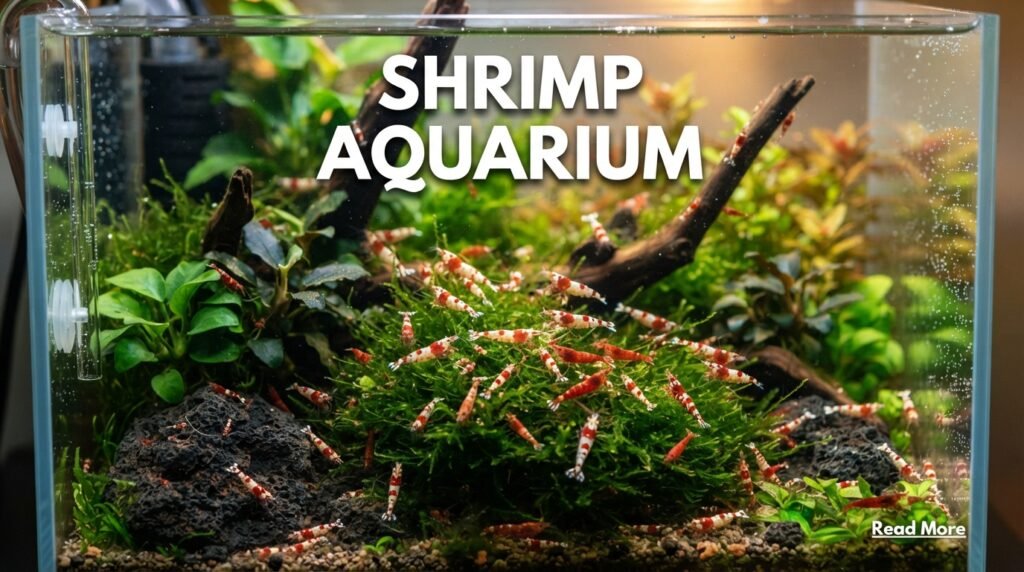
Create a dense underwater jungle using moss and small-leaved plants.
Place taller plants toward the back and leave an open foreground where shrimp can easily be observed.
3. Minimalist Shrimp Aquarium
A minimalist design can use:
- Fine substrate
- One piece of driftwood
- A few rocks
- Moss
- A small shrimp colony
Keep the layout uncluttered to make the shrimp easier to see.
4. Shrimp Cube Aquarium
Cube aquariums are popular for shrimp because they provide a compact but visually deep aquascape.
Create a central piece of wood or stone and surround it with moss and small plants.
5. Shrimp Moss Aquarium
Moss is particularly useful in shrimp tanks.
It creates:
- Grazing surfaces
- Hiding places
- Baby shrimp shelter
- Natural texture
Java Moss, Christmas Moss, and other suitable aquarium mosses can be used.
Best Shrimp for an Aquarium
Several freshwater shrimp are commonly kept in aquariums.
Cherry Shrimp
Cherry shrimp are among the most popular beginner shrimp.
They are available in different shades of red and can reproduce readily under suitable conditions.
Blue Dream Shrimp
Blue-colored Neocaridina varieties can create striking contrast against green plants.
Yellow Shrimp
Yellow Neocaridina varieties look particularly attractive against dark substrate and green plants.
Amano Shrimp
Amano shrimp are valued for their algae-grazing abilities and larger size compared with many dwarf shrimp.
They generally do not reproduce through the complete freshwater life cycle in a typical aquarium.
Crystal Red Shrimp
Crystal Red Shrimp are attractive but generally more demanding than Neocaridina varieties because they require more carefully controlled water conditions.
Shrimp Aquarium Size
Shrimp can be kept in relatively small aquariums, but larger tanks are often easier to keep stable.
A small aquarium can work for a shrimp colony when properly maintained, while a larger aquarium provides:
- Greater water stability
- More grazing area
- More room for plants
- Easier parameter management
Avoid choosing a tank solely because it is small enough to fit somewhere. The goal should be a stable environment.
Shrimp Aquarium Setup
Step 1: Choose the Aquarium
Select an aquarium appropriate for the shrimp species and colony size.
Step 2: Add Substrate
Use an aquarium-safe substrate suitable for your chosen shrimp and plants.
Step 3: Add Hardscape
Place rocks and driftwood securely.
Step 4: Add Plants
Moss, epiphytes, and other suitable plants can provide valuable grazing and shelter.
Step 5: Install Filtration
A sponge filter is a popular choice because it provides biological filtration while producing gentle water movement.
Step 6: Cycle the Aquarium
Establish beneficial biological filtration before adding shrimp.
Step 7: Acclimate the Shrimp
Gradual acclimation helps reduce stress when introducing shrimp to their new water conditions.
Shrimp Aquarium Plants
Plants are extremely useful in shrimp aquariums.
Java Moss
One of the classic choices for shrimp tanks.
Anubias
Slow-growing and easy to attach to hardscape.
Bucephalandra
Small leaves and compact growth make it excellent for nano aquascapes.
Java Fern
Hardy and suitable for low-tech setups.
Cryptocoryne
Provides attractive midground growth.
Floating Plants
Floating plants can create shade and provide additional surfaces for microorganisms.
Shrimp Aquarium Substrate
Substrate choice depends on the shrimp species and desired water chemistry.
Inert Gravel
Does not intentionally alter water chemistry and is easy to maintain.
Aquarium Sand
Creates a clean, natural appearance.
Active Soil
Can influence water chemistry and is commonly used in some setups for more sensitive shrimp.
Choose the substrate based on the specific requirements of the shrimp rather than appearance alone.
Shrimp Aquarium Water Parameters
Stable water quality is more important than chasing a particular number.
Monitor:
- Temperature
- pH
- GH
- KH
- Ammonia
- Nitrite
- Nitrate
- TDS when appropriate
Ammonia and nitrite should be maintained at 0 ppm in an established aquarium.
Different shrimp species have different preferences, so research the specific species or variety before setting target parameters.
Shrimp Aquarium Temperature
Many commonly kept freshwater dwarf shrimp do well at moderate tropical temperatures.
Avoid unnecessary temperature fluctuations.
An aquarium heater may be useful when the room temperature is too cool or unstable.
Shrimp Aquarium Filter
A sponge filter is one of the most popular options for shrimp aquariums.
Advantages include:
- Gentle flow
- Large biological surface area
- Low risk of sucking up baby shrimp
- Simple maintenance
If using another filter type, protect the intake with an appropriate pre-filter sponge.
Shrimp Aquarium Feeding
Shrimp naturally graze on:
- Biofilm
- Algae
- Microorganisms
- Decaying plant material
They can also receive supplemental shrimp food.
Suitable foods may include:
- Shrimp pellets
- Algae-based foods
- Blanched vegetables
- Specialized mineral foods
Feed small amounts and remove uneaten food when necessary.
Overfeeding is one of the easiest ways to cause water-quality problems.
Shrimp Aquarium With Fish
Some fish can live with shrimp, but compatibility is important.
Small peaceful fish may still eat baby shrimp.
If your primary goal is to establish a large shrimp colony, a species-only shrimp aquarium is usually the safest approach.
Dense plants and moss can provide baby shrimp with additional hiding places.
Shrimp Aquarium With Snails
Some freshwater snails can coexist well with shrimp.
Snails can help consume leftover food and algae, although they should not be treated as a replacement for regular maintenance.
Choose species appropriate for your aquarium and avoid excessive feeding, which can lead to population explosions.
Shrimp Breeding Aquarium
A dedicated breeding aquarium should provide plenty of cover.
Use:
- Moss
- Dense plants
- Sponge filtration
- Stable water conditions
- Appropriate food
Baby shrimp are extremely small, so avoid filters with exposed intakes.
Shrimp Aquarium Rockscape
A rock-based aquascape can create a dramatic background for colorful shrimp.
Dark stones can make red, yellow, or blue shrimp stand out.
Always verify that rocks are aquarium-safe and will not introduce unwanted substances or dramatically alter water chemistry.
Shrimp Aquarium Driftwood
Driftwood provides grazing surfaces and creates natural hiding places.
Over time, microorganisms and biofilm can develop on its surface, giving shrimp additional food sources.
Some driftwood can release tannins and slightly darken the water, which is generally harmless but should be considered when planning the aquascape.
Shrimp Aquarium Lighting
Shrimp do not require intense lighting themselves.
Lighting is mainly determined by the plants in the aquarium.
Moderate lighting can support a planted shrimp tank while helping you observe the colony.
Avoid leaving the lights on continuously because excessive lighting can encourage algae.
Shrimp Aquarium Algae
A small amount of algae is not necessarily a problem in a shrimp aquarium.
Shrimp often graze on algae and biofilm.
However, excessive algae can indicate an imbalance involving:
- Light
- Nutrients
- Feeding
- Maintenance
Reduce the underlying cause rather than simply trying to eliminate every trace of algae.
Shrimp Molting
Shrimp periodically shed their exoskeleton as they grow.
You may find what looks like a dead shrimp in the aquarium, but it may simply be an empty molt.
Do not automatically remove it. Shrimp may consume the discarded shell and recover valuable minerals from it.
Shrimp Aquarium Minerals
Shrimp require appropriate minerals for healthy exoskeleton development.
GH is particularly important for many freshwater shrimp because it reflects the concentration of minerals such as calcium and magnesium.
If your water is naturally very soft, mineral supplementation may be necessary depending on the shrimp species.
Do not add minerals blindly. Test the water and follow the requirements of your specific shrimp.
Shrimp Aquarium Maintenance
Regular maintenance can include:
- Checking water parameters
- Partial water changes
- Cleaning the glass
- Removing dead leaves
- Trimming plants
- Checking filter flow
- Removing excess food
- Monitoring shrimp behavior
When changing water, avoid sudden changes in temperature and chemistry.
Common Shrimp Aquarium Problems
Shrimp Dying After Introduction
Possible causes include:
- Poor acclimation
- Uncycled aquarium
- Ammonia or nitrite
- Sudden parameter changes
- Unsuitable water chemistry
- Contaminants
Shrimp Not Breeding
Possible causes include:
- Immature colony
- Unsuitable parameters
- Stress
- Inadequate food
- Poor shelter
- Inappropriate temperature
Baby Shrimp Disappearing
Fish predation, insufficient hiding places, or filtration intake can contribute.
Failed Molting
Problems with water chemistry or mineral availability can contribute to molting difficulties.
Shrimp Aquarium Design Ideas
| Design | Main Features | Best For |
|---|---|---|
| Moss Jungle | Dense moss and plants | Breeding colonies |
| Minimalist | Few plants and rocks | Easy viewing |
| Rockscape | Stone-focused layout | Color contrast |
| Forest | Driftwood and moss | Natural look |
| Planted Cube | Compact plants | Nano aquariums |
| Blackwater | Wood and botanicals | Natural appearance |
How to Make Shrimp Stand Out
Use visual contrast.
For example:
- Red shrimp + green plants
- Yellow shrimp + dark substrate
- Blue shrimp + green plants
- Crystal shrimp + dark background
A simple aquascape often makes colorful shrimp more noticeable than a heavily decorated aquarium.
Best Beginner Shrimp Aquarium
For beginners, a simple Neocaridina shrimp aquarium can be a good starting point.
A practical setup might include:
- Aquarium of around 5–10 gallons or larger
- Sponge filter
- Gentle lighting
- Inert substrate
- Java Moss
- Anubias
- Driftwood
- Stable water parameters
- A small starter colony
Once the aquarium matures and develops biofilm, shrimp can have a more natural grazing environment.
Conclusion
A shrimp aquarium can be one of the most fascinating small aquarium setups. Shrimp are constantly grazing, exploring plants, climbing over driftwood, and interacting with the environment.
The key to success is stability. Rather than focusing only on colorful decorations, create a mature aquarium with established biological filtration, suitable plants, gentle water movement, appropriate minerals, and consistent water conditions.
A planted shrimp tank with moss, driftwood, and colorful Neocaridina shrimp can be both beautiful and relatively simple to maintain when properly established.
Frequently Asked Questions
What is the best shrimp for beginners?
Neocaridina varieties, such as Cherry Shrimp, are commonly considered easier for beginners than more sensitive shrimp varieties.
How big should a shrimp aquarium be?
Shrimp can live in smaller aquariums, but larger tanks generally provide greater water stability. A 5-gallon or larger aquarium is a practical starting point for many keepers.
Do shrimp need a filter?
Yes. Filtration helps maintain water quality and provides biological filtration. Sponge filters are especially popular for shrimp tanks.
What plants are best for shrimp?
Java Moss, Anubias, Java Fern, Bucephalandra, Cryptocoryne, and suitable floating plants are all useful choices.
Can shrimp live with fish?
Yes, but many fish will eat baby shrimp. A species-only aquarium is usually best if breeding and colony growth are the main goals.
How often should I feed shrimp?
Shrimp naturally graze throughout the day. Supplemental food should be offered in small quantities, with feeding adjusted according to the size of the colony and available natural food.
Why are my shrimp dying after a water change?
Sudden changes in temperature, pH, GH, TDS, or other water parameters can stress shrimp. Match new water carefully and make gradual changes.
Do shrimp need special soil?
Not always. Neocaridina shrimp can often be kept successfully on inert substrate, while active soils are commonly used in some setups for more sensitive Caridina varieties.