
 By admin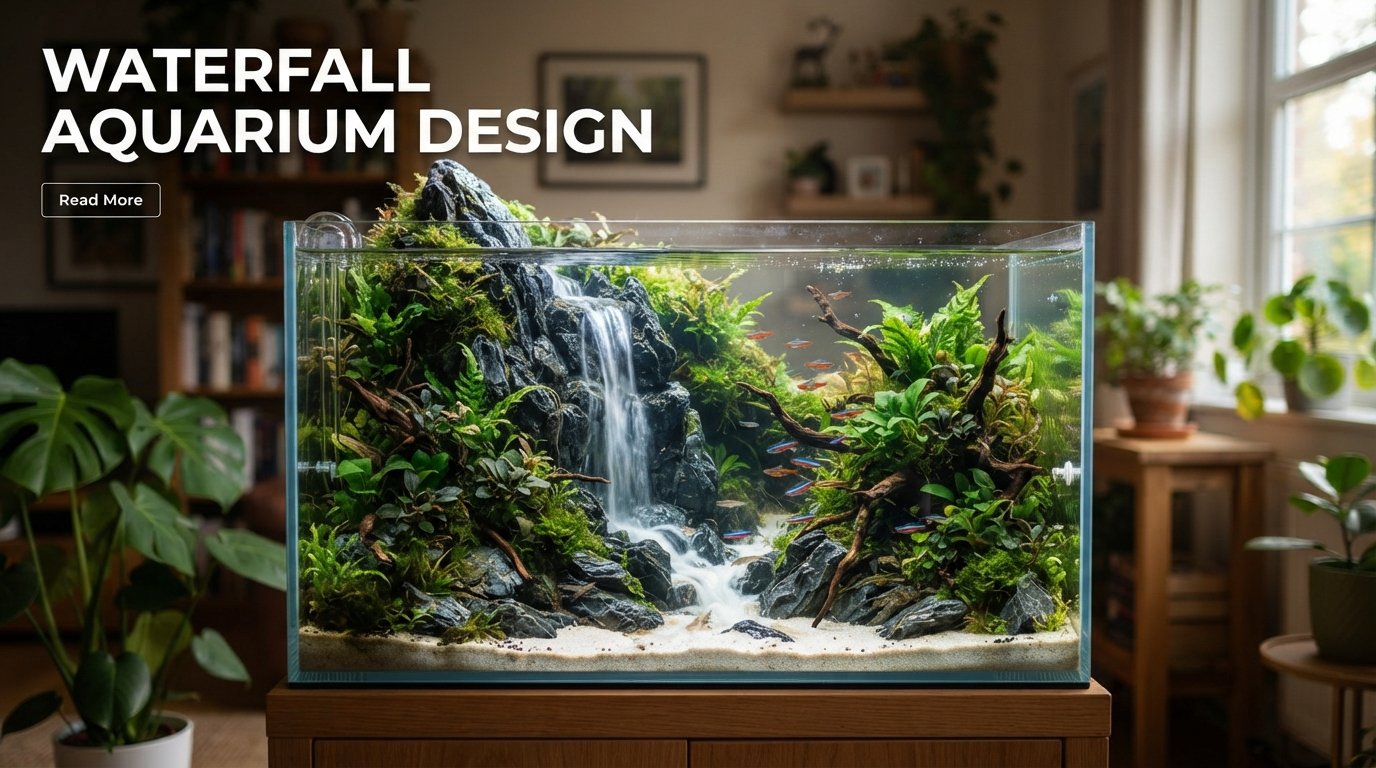
Waterfall aquarium design combines the beauty of an aquarium with the movement and sound of flowing water. Instead of having a traditional fish tank with a flat water surface, a waterfall aquarium adds a vertical water feature that creates a more dynamic and relaxing display. The combination of colorful fish, aquatic plants, rocks, flowing water, and attractive lighting can turn an ordinary aquarium into a stunning focal point.
A waterfall aquarium can be designed in many different ways. Some designs use a small waterfall inside a desktop aquarium, while others combine a large aquarium with a dramatic rock waterfall. Modern homes can use sleek glass and stone designs, while natural-style aquariums can recreate the appearance of a small stream flowing into a pond.
The most important part of waterfall aquarium design is balancing appearance with functionality. The waterfall should look attractive while providing safe water movement and allowing the aquarium filtration system to operate properly.
What Is a Waterfall Aquarium Design?
A waterfall aquarium is an aquarium that incorporates a flowing-water feature into or around the tank. Water is usually pumped from the aquarium or a separate reservoir to a higher point and allowed to flow downward.
The waterfall can flow over rocks, driftwood, glass, stone surfaces, or specially designed channels before returning to the aquarium.
Unlike a conventional aquarium, this type of design adds vertical movement and creates a stronger connection between the aquarium and surrounding décor.
Popular Waterfall Aquarium Design Ideas
| Design Style | Main Feature | Best For |
|---|---|---|
| Natural Rock Waterfall | Rocks and flowing water | Living rooms |
| Driftwood Waterfall | Water flowing over wood | Nature-themed tanks |
| Glass Waterfall | Clean glass construction | Modern interiors |
| Wall Waterfall Aquarium | Aquarium integrated into wall | Feature walls |
| Paludarium Waterfall | Land, plants, and water | Nature enthusiasts |
| Corner Waterfall | Compact vertical design | Small rooms |
| Desktop Waterfall | Small decorative feature | Offices |
| Large Feature Waterfall | Dramatic centerpiece | Large homes |
| Tropical Waterfall | Plants and lush greenery | Tropical themes |
| Minimalist Waterfall | Simple lines and materials | Modern homes |
1. Natural Rock Waterfall Aquarium
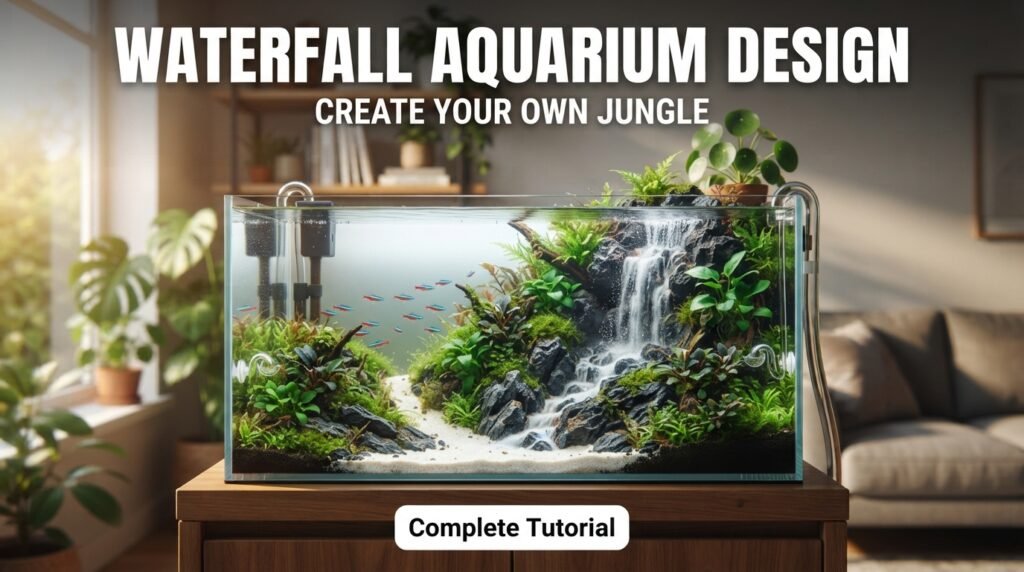
A natural rock waterfall is one of the most attractive approaches to waterfall aquarium design.
Use carefully arranged rocks to create a raised area above the aquarium. Water can be pumped to the top and allowed to flow over the rocks before returning to the tank.
Different rock sizes can create a more natural appearance. Larger rocks should provide the main structure while smaller stones can fill visual gaps.
Avoid creating an unstable pile of rocks. Every structural element should be secure and appropriate for aquarium use.
2. Driftwood Waterfall Aquarium
Driftwood can give a waterfall aquarium a natural forest-stream appearance.
Position a suitable piece of aquarium-safe driftwood so that water flows around or over it. Combine the wood with moss, aquatic plants, rocks, and substrate to create a miniature stream environment.
The irregular shape of driftwood makes every installation unique.
This style works especially well for aquascaping enthusiasts who want their aquarium to resemble a forest creek.
3. Wall Waterfall Aquarium Design
A wall-mounted waterfall aquarium can become a major feature of a room.
The aquarium can be installed beneath or beside a vertical waterfall. Water flows down a decorative wall surface before entering the aquarium.
Stone, slate, textured panels, or glass can be used to create the waterfall wall.
This design is particularly effective in modern living rooms, entrances, offices, hotels, and commercial interiors.
4. Glass Waterfall Aquarium
For a contemporary appearance, use glass as the primary waterfall material.
A thin layer of water can flow down a glass panel, producing a clean and elegant visual effect.
LED lighting behind or around the glass can emphasize the movement of the water.
Because this design is relatively minimal, the surrounding aquarium should also have a clean layout rather than excessive decoration.
5. Paludarium Waterfall Design
A paludarium combines aquatic and terrestrial environments, making it particularly suitable for waterfall designs.
Create a raised land area with rocks, wood, moss, and suitable plants. Water can flow from the elevated section into the aquarium below.
This creates the appearance of a miniature rainforest or stream.
A paludarium waterfall can be especially attractive because viewers can see both underwater and above-water environments.
6. Tropical Waterfall Aquarium
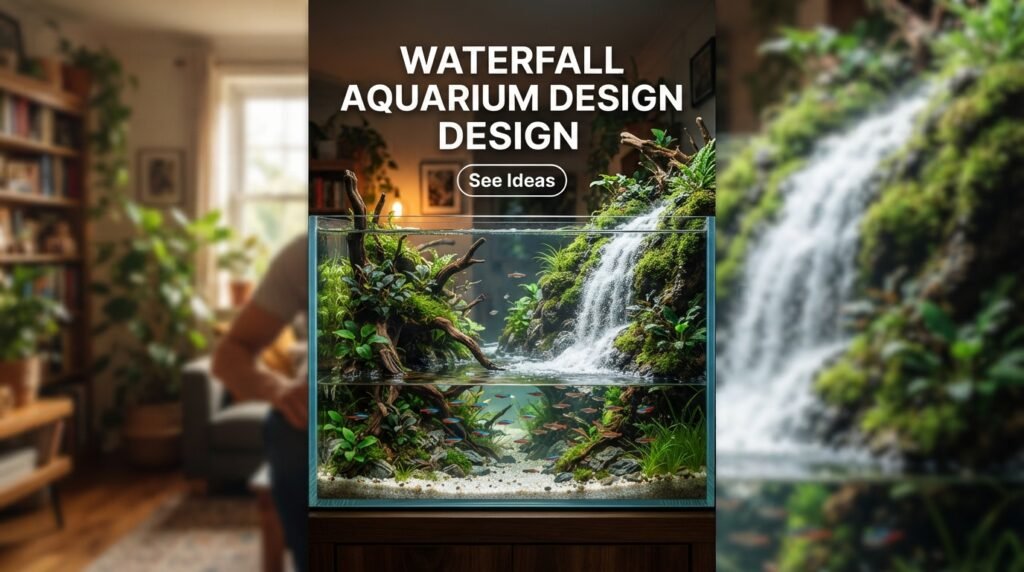
A tropical waterfall design can recreate the appearance of a lush jungle stream.
Use dense greenery, rocks, driftwood, moss, and flowing water. The waterfall can emerge from a raised planted area and flow into the aquarium.
Choose plants according to the conditions they require and make sure they can tolerate the humidity and lighting available in the setup.
7. Corner Waterfall Aquarium
A corner waterfall aquarium makes efficient use of otherwise unused space.
The aquarium can occupy the lower section while a narrow waterfall rises vertically along the corner.
Use a tall rock arrangement or vertical wall to guide the water downward.
This can work well in apartments, bedrooms, offices, and small living rooms.
8. Desktop Waterfall Aquarium
A small waterfall aquarium can be used as a decorative desktop feature.
These compact designs typically use a small water reservoir, miniature rocks, plants, and a small pump.
The waterfall should remain proportionate to the aquarium. A large waterfall in a tiny tank can create excessive water movement and splashing.
Desktop designs should also be placed on a stable, water-resistant surface.
9. Large Feature Waterfall Aquarium
If you have a large room, a dramatic waterfall aquarium can become its main attraction.
Build a large aquarium beneath a tall waterfall structure. The waterfall can be several levels high, with water cascading over rocks before entering the main tank.
This type of installation requires careful planning for water volume, pump capacity, structural support, splash control, filtration, and maintenance.
10. Minimalist Waterfall Aquarium
A minimalist design focuses on a small number of materials and clean lines.
For example, a rectangular glass aquarium can be paired with a narrow stone waterfall.
Use a limited color palette and avoid excessive decorations.
The flowing water becomes the primary decorative feature while fish and plants provide subtle movement.
How Does a Waterfall Aquarium Work?
Most waterfall aquariums use a pump to move water from a lower reservoir to a higher point.
The basic process is:
- Water collects in the aquarium or reservoir.
- A pump moves the water upward.
- Water reaches the top of the waterfall.
- Gravity causes it to flow downward.
- The water returns to the aquarium.
- The cycle repeats.
The waterfall pump should be selected according to the height and flow requirements of the design.
A waterfall does not automatically replace aquarium filtration. The aquarium still needs appropriate filtration and water-quality management for its inhabitants.
Designing the Waterfall Structure
The structure is the visual foundation of the waterfall.
You can use rocks, slate, driftwood, glass, ceramic structures, or aquarium-safe manufactured materials.
Create a clear path for water. If the water has nowhere controlled to flow, it may splash outside the aquarium.
A stepped design can create several small cascades. A smooth vertical surface can produce a thin sheet of water.
Think about the viewing angle before constructing the waterfall. The most attractive side should face the main viewing area.
Waterfall Flow Rate
Water flow is an important consideration.
A powerful waterfall may look impressive but can create excessive turbulence, noise, splashing, and evaporation.
A gentle waterfall can provide movement without overwhelming the aquarium.
The ideal flow depends on the aquarium inhabitants and the purpose of the waterfall. Some fish prefer calmer environments, while others tolerate or benefit from stronger water movement.
Preventing Water Splashes
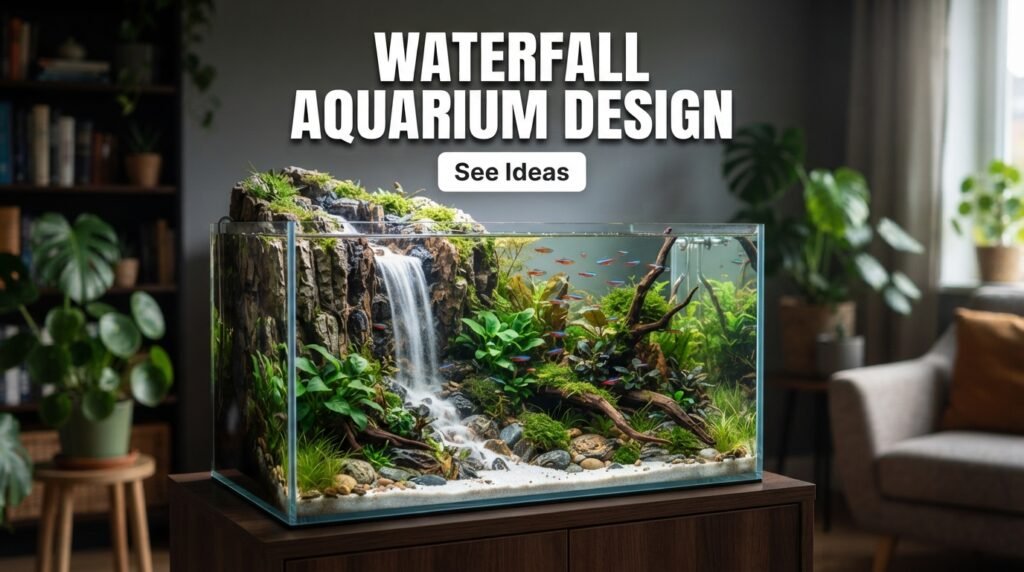
Splash control is essential.
Keep the waterfall inside the aquarium’s boundaries whenever possible. Use rocks or barriers to guide water back toward the tank.
If water is falling from a significant height, test the system before introducing livestock.
Observe where water lands and adjust the rocks, pump flow, or waterfall height as necessary.
Waterfall Aquarium Lighting Ideas
Lighting can make flowing water much more noticeable.
LED aquarium lighting can illuminate fish, plants, rocks, and the waterfall. A light placed near the waterfall can highlight the movement of individual streams.
For a natural design, use subtle lighting rather than making the waterfall extremely bright.
For modern designs, concealed lighting can create a glowing effect behind glass or stone.
Plants for Waterfall Aquarium Designs
Plants can make a waterfall look more natural.
Depending on the setup, you can use aquatic plants underwater and suitable moisture-loving plants above the waterline.
Moss can soften hard rock surfaces and create a natural appearance.
Plants should be selected according to their lighting, humidity, water, and growth requirements.
Avoid allowing roots or leaves to interfere with pumps and plumbing.
Fish Selection
Fish should be selected based on the aquarium’s size and environmental conditions rather than appearance alone.
Small community fish may work well in suitable freshwater waterfall aquariums. Some species may prefer calmer water and should not be placed directly beneath strong waterfall flow.
Consider swimming space, adult size, compatibility, temperature, and water conditions before adding fish.
A waterfall should be designed around the fish rather than forcing fish to adapt to an unsuitable environment.
Waterfall Aquarium for a Living Room
A living room waterfall aquarium can serve as a natural focal point.
A large rectangular aquarium with a stone waterfall can create a dramatic feature wall. For a more modern appearance, combine glass, dark stone, and concealed lighting.
Place the aquarium where it can be viewed comfortably without creating a hazard around furniture or walking areas.
Bedroom Waterfall Aquarium
A smaller waterfall aquarium can add a relaxing natural element to a bedroom.
However, consider sound before choosing a waterfall design. Continuous water movement can be soothing to some people but distracting to others.
A gentle, low-flow waterfall is usually more appropriate than a loud cascading feature for a sleeping area.
Office Waterfall Aquarium
A desktop or wall-mounted waterfall aquarium can provide an attractive feature in an office.
Modern designs with clean glass, stone, and subtle lighting can complement professional interiors.
Make sure maintenance access remains convenient and that water cannot splash onto computers, electrical equipment, documents, or furniture.
Outdoor Waterfall Aquarium
A waterfall aquarium can also be incorporated into an outdoor aquatic display.
An outdoor design could combine a fish pond with a waterfall, rocks, plants, and natural landscaping.
Outdoor systems require additional planning for temperature changes, sunlight, evaporation, debris, and weather.
Waterfall Aquarium Maintenance
A waterfall aquarium requires regular maintenance.
Clean the pump and inspect tubing regularly. Remove debris before it blocks the water flow.
Check the waterfall structure for algae buildup and make sure rocks or decorative elements remain stable.
Monitor water evaporation because flowing water can increase evaporation compared with a traditional aquarium.
If the aquarium contains fish or other aquatic animals, continue regular water testing and maintenance.
Common Waterfall Aquarium Design Mistakes
One mistake is using a pump that is too powerful. Excessive flow can cause splashing and unnecessary turbulence.
Another mistake is building an unstable rock structure. Rocks should be positioned securely and should not be able to fall onto fish or damage the aquarium.
Poor drainage and splash control can also create water damage around the aquarium.
Some designs hide the pump and tubing so effectively that maintenance becomes difficult. Equipment should be concealed without making it inaccessible.
Finally, avoid designing the waterfall without considering the livestock. Water movement, temperature, and habitat requirements should always be part of the planning process.
How to Create a Simple Waterfall Aquarium
For a beginner-friendly design, start with a small freshwater aquarium.
Build a stable raised section using aquarium-safe materials. Position a small pump so that water can reach the top of the structure.
Create a short waterfall using rocks or another suitable surface.
Test the system with no fish inside the aquarium. Check for leaks, splashing, excessive flow, and water loss.
Once the design is working correctly, establish the aquarium environment and allow it to become stable before adding livestock.
Waterfall Aquarium Design for Small Spaces
You do not need a large room to enjoy this style.
A vertical waterfall can use height instead of width. A narrow aquarium combined with a tall rock or glass structure can create a strong visual effect while taking up relatively little floor space.
Wall-integrated designs can save additional space.
For small aquariums, keep the waterfall proportionate and use a modest pump.
Modern Waterfall Aquarium Design
Modern waterfall aquariums often use straight lines, glass, stone, concrete-style finishes, and concealed equipment.
A large aquarium beneath a narrow vertical waterfall can create a striking architectural feature.
Another option is a glass panel with water flowing smoothly down its surface.
Use simple aquascaping inside the aquarium so the design does not become visually overwhelming.
Natural Waterfall Aquarium Design
A natural waterfall aquarium should resemble a stream, pond, or small forest waterfall.
Use irregular rocks, driftwood, moss, plants, gravel, and natural-looking substrate.
Avoid making the waterfall perfectly symmetrical. Natural water features typically have irregular shapes and multiple flow paths.
Different rock sizes can help create depth and realism.
Final Thoughts
Waterfall aquarium design offers a creative alternative to the traditional fish tank by combining aquatic life with the beauty and movement of flowing water. From a small desktop waterfall to a large living-room feature wall, the concept can be adapted to many spaces and design styles.
The most important considerations are water flow, structural stability, splash control, filtration, maintenance access, and the needs of the aquarium inhabitants. Once these practical elements are addressed, you can experiment with rocks, driftwood, glass, plants, lighting, and different waterfall shapes.
A thoughtfully designed waterfall aquarium can become more than a place to keep fish. It can function as a living piece of décor that brings movement, natural textures, and a peaceful atmosphere into your space.
FAQs About Waterfall Aquarium Design
What is a waterfall aquarium?
A waterfall aquarium combines a fish tank with a flowing-water feature. A pump moves water to an elevated point, allowing it to flow downward and return to the aquarium.
Can I put a waterfall in a fish tank?
Yes, provided the design is appropriate for the aquarium and its inhabitants. Water flow should not create excessive turbulence or unsafe conditions.
Does a waterfall aquarium need a pump?
Most waterfall aquariums require a pump to move water from the lower area to the top of the waterfall.
Can a waterfall replace aquarium filtration?
No. A waterfall can provide water movement, but it should not automatically be considered a complete filtration system. Appropriate filtration is still necessary.
Are waterfall aquariums noisy?
They can be. The noise depends on waterfall height, water flow, pump type, and how the water lands. A low-flow design can be considerably quieter.
How do I stop a waterfall aquarium from splashing?
Reduce excessive flow, lower the waterfall height, and use rocks or surfaces that guide the water back into the aquarium. Always test the design before adding livestock.
Can I build a waterfall aquarium in a small tank?
Yes. A compact waterfall can work in a small aquarium if the flow rate and structure are appropriately scaled.
What materials can I use for an aquarium waterfall?
Aquarium-safe rocks, suitable driftwood, glass, slate, and other materials specifically appropriate for aquatic environments can be used.
Can plants grow around a waterfall aquarium?
Yes. Moisture-loving plants can be used around or above the waterline when their environmental requirements are suitable for the setup.
Is a waterfall aquarium good for beginners?
A simple low-flow design can be approachable for beginners, but the addition of pumps, plumbing, and elevated structures makes it more complex than a basic aquarium.
Can I make a waterfall aquarium without fish?
Yes. A waterfall can be combined with aquatic plants, moss, rocks, and other elements to create a decorative water feature without keeping fish.
Where should I place a waterfall aquarium?
Suitable locations include living rooms, offices, entrances, bedrooms, and other areas where the structure can be safely supported and maintained. Keep electrical equipment protected from splashing water.
How do I make a waterfall aquarium look natural?
Use irregular rocks, driftwood, plants, moss, gravel, different elevations, and an uneven water path. Avoid excessive symmetry and artificial-looking arrangements.