
 By admin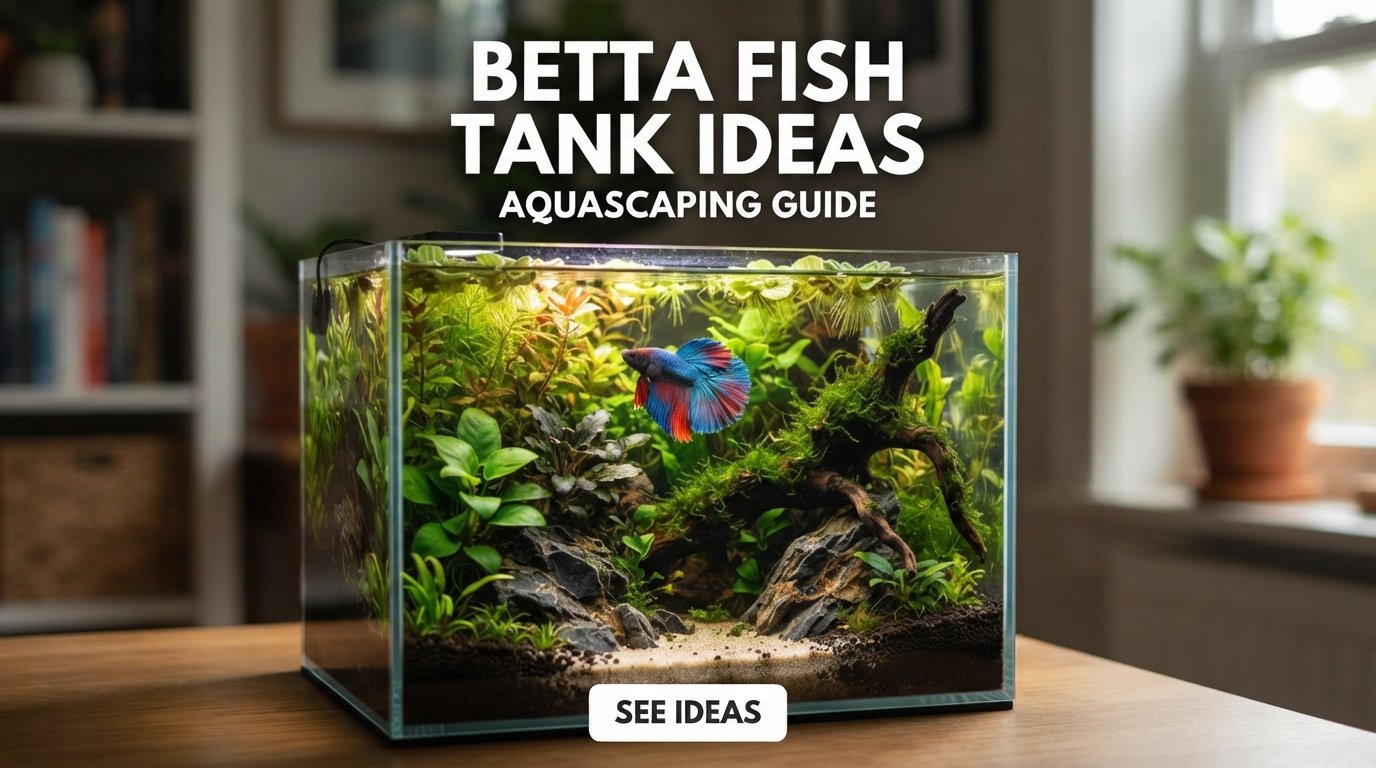
Betta fish tank ideas aquascaping can help you create a beautiful underwater environment that combines attractive design with a comfortable habitat for your betta. With the right plants, substrate, driftwood, rocks, lighting, and open swimming space, even a simple betta aquarium can become a peaceful miniature landscape.
Betta fish are known for their colorful fins and interesting personalities, making them excellent focal fish for thoughtfully designed aquariums. Unlike a heavily decorated tank, a well-planned aquascape gives the betta enough room to swim while providing plants, shaded areas, and resting places.
Whether you prefer a minimalist aquarium, jungle-style planted tank, natural river layout, or small nano aquascape, there are many ways to design a betta tank around both aesthetics and fish welfare.
What Is Betta Fish Tank Aquascaping?
Betta fish tank aquascaping is the process of arranging aquatic plants, rocks, driftwood, substrate, and other aquarium-safe materials to create an attractive underwater environment for a betta.
The goal should not be to fill every part of the aquarium with decorations. Instead, create a balanced environment with open swimming space, plants, hiding areas, and visually appealing hardscape.
A betta tank can be both functional and beautiful when every element is chosen carefully.
Best Tank Size for Betta Aquascaping
A larger aquarium generally provides more room for creating a stable environment and an attractive aquascape.
A tank around 5 gallons or larger is commonly chosen for a single betta, while larger tanks provide more opportunities for planting and hardscape design.
A 10-gallon aquarium can be especially useful for aquascaping because it provides enough room for a more developed landscape without becoming difficult to manage.
The exact setup should always take into account the individual fish, equipment, water quality, and maintenance routine.
Basic Elements for a Betta Aquascape
| Element | Purpose |
|---|---|
| Aquarium | Provides the living environment |
| Substrate | Supports plants and creates the foundation |
| Plants | Provide cover and natural structure |
| Driftwood | Adds organic shapes and hiding areas |
| Rocks | Creates structure and visual interest |
| Filter | Supports water quality |
| Heater | Maintains appropriate temperature |
| Lighting | Supports plants and enhances appearance |
| Lid | Helps prevent jumping and excessive evaporation |
A successful betta aquascape does not require every possible decoration. A few carefully selected elements can create a much stronger design.
1. Minimalist Betta Aquascape
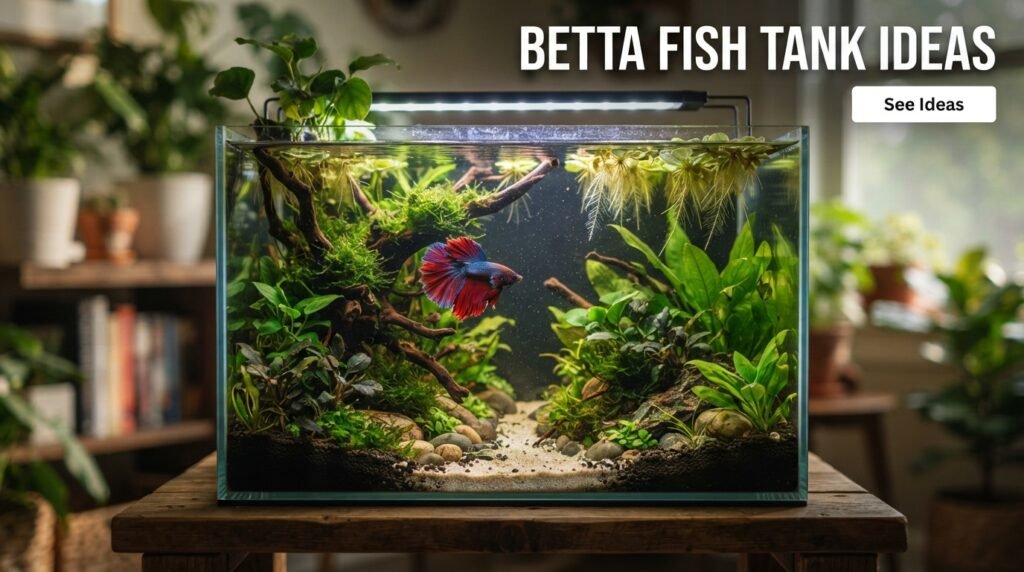
A minimalist betta tank can be one of the most attractive designs.
Use a neutral substrate, one piece of driftwood, a few plants, and plenty of open swimming space.
Place the main decoration slightly to one side instead of directly in the center.
This creates an asymmetrical composition while leaving the betta a clear area to explore.
2. Betta Jungle Aquascape
A jungle-style aquarium uses abundant plants to create a lush underwater environment.
Use plants with different heights and textures.
Tall plants can be placed toward the back, medium plants around the middle, and shorter plants toward the foreground.
However, do not allow dense vegetation to occupy the entire tank. Bettas still need accessible swimming areas.
3. Betta Aquarium With Driftwood
Driftwood can create a natural focal point.
Choose a piece with curves or branches and position it so that it forms a natural-looking structure.
Attach aquarium moss to parts of the wood if appropriate.
The wood can also create shaded areas where the betta can rest.
Make sure all wood is aquarium-safe and securely positioned.
4. Betta Aquarium With Rocks
Rocks can create a clean and natural aquascape.
Choose smooth aquarium-safe rocks without sharp edges.
One larger rock can act as the main focal point while several smaller rocks provide supporting structure.
Avoid unstable rock piles that could collapse.
5. Betta Planted Aquarium
Live plants can make a betta aquarium look much more natural.
Popular options include:
- Anubias
- Java fern
- Java moss
- Cryptocoryne
- Bucephalandra
- Amazon sword
- Vallisneria
- Water sprite
- Hornwort
Plant selection should be based on the aquarium’s lighting and available growing conditions.
6. Anubias Betta Aquascape
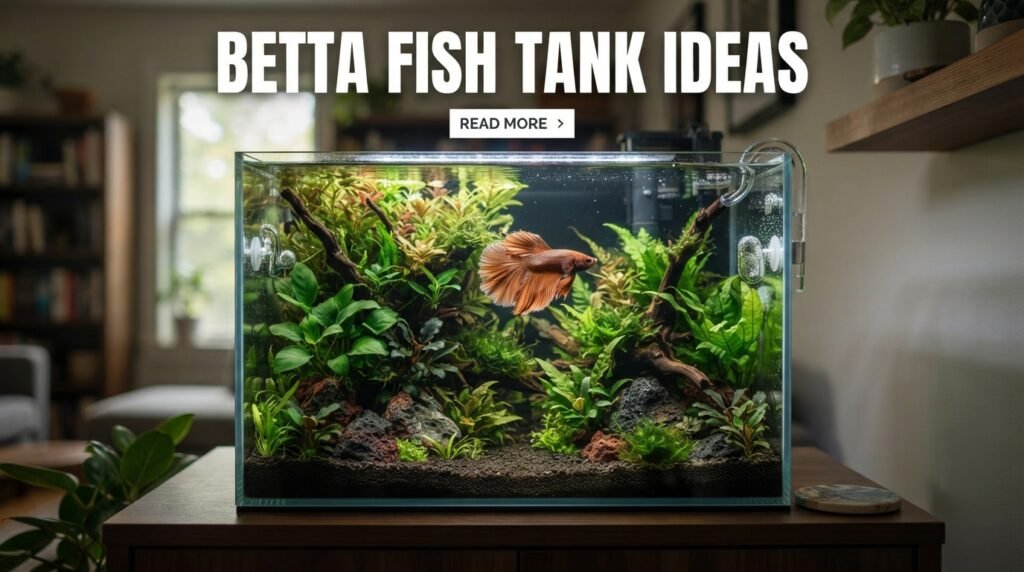
Anubias is popular for betta tanks because it can be used in relatively simple planted setups.
Its broad leaves can provide natural resting surfaces.
Attach the plant to driftwood or rocks rather than burying its rhizome deeply in the substrate.
Several Anubias plants arranged around a piece of wood can create a simple and elegant design.
7. Java Fern Betta Tank
Java fern is another useful plant for a low-maintenance betta aquascape.
Its long leaves create texture without requiring a complicated planting arrangement.
Java fern can be attached to rocks or driftwood.
Use it toward the middle or rear of the aquarium while leaving open water toward the front.
8. Betta Moss Aquascape
Aquarium moss can soften the appearance of rocks and driftwood.
Java moss can be attached to hardscape to create a natural aged appearance.
Moss can also provide additional surfaces for microorganisms and small aquatic organisms, although it should still be maintained regularly.
9. Betta Fish Tank With Floating Plants
Floating plants can create shaded areas at the surface.
This can make the aquarium feel more natural and provide cover for a betta.
However, avoid allowing floating plants to completely cover the water surface. Maintain sufficient open surface area and make sure the filter and gas exchange are not compromised.
10. Betta Fish Tank With Sand
Sand can create a bright, natural foundation for a betta aquascape.
Light-colored sand contrasts nicely with green plants and dark driftwood.
A sandy foreground can also create the appearance of an open riverbed.
Choose aquarium-safe substrate and avoid sharp materials.
11. Black Sand Betta Aquascape
Black sand provides strong contrast with colorful bettas and green plants.
A dark substrate can make red, blue, yellow, and multicolored bettas stand out visually.
Combine black sand with natural wood and green plants for a modern appearance.
12. White Sand Betta Tank
White sand creates a clean and bright aesthetic.
Pair it with darker rocks and green plants for contrast.
Because light substrate makes waste easier to see, regular maintenance is important.
13. Betta Iwagumi-Inspired Aquascape
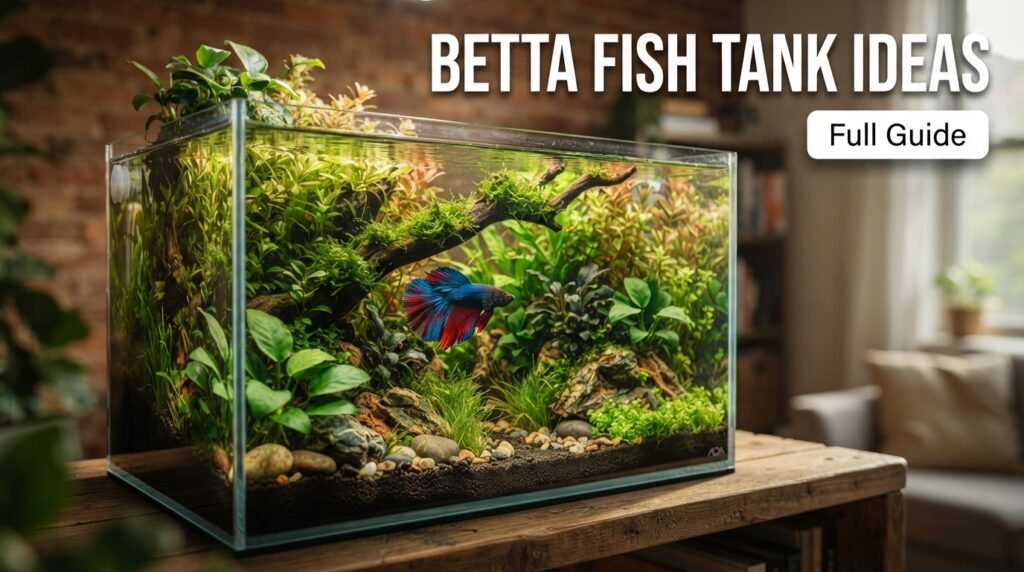
An Iwagumi-inspired betta tank focuses primarily on rocks.
Use one larger stone as the focal point and several smaller stones to create supporting structure.
Low-growing plants can be used around the rocks.
Keep the layout relatively open so the betta has enough room to swim.
14. Betta River-Style Aquascape
A river-inspired aquarium can use sand, smooth stones, driftwood, and flowing plants.
Create an open path through the aquarium to represent a small river channel.
Place rocks along the edges and plants toward the background.
This gives the tank a natural landscape appearance without filling every area with decorations.
15. Betta Forest Aquascape
A forest-inspired betta tank uses branching driftwood and plants to create the appearance of submerged trees.
Position several branches so they point upward and outward.
Attach moss to some branches to create a more established appearance.
Leave open space around the front of the aquarium for swimming.
16. Betta Cave Aquascape
Bettas can appreciate places where they can rest and seek cover.
A natural-looking cave can be created with aquarium-safe rocks, driftwood, or commercially made aquarium structures.
Make sure the entrance is large enough for the fish and that there are no sharp edges.
The cave should be stable and should not be at risk of collapsing.
17. Betta Bedroom Aquarium Ideas
A small planted betta aquarium can make an attractive bedroom feature.
Choose a quiet filter and avoid excessive lighting.
A simple arrangement of Anubias, Java fern, driftwood, and natural substrate can create a relaxing appearance.
Always place the aquarium on a stable surface capable of supporting its full weight.
18. Betta Desk Aquarium
A compact betta aquarium can work well on a suitable desk or workspace.
Keep the layout simple and make sure there is enough room for the necessary equipment.
A small piece of driftwood surrounded by plants can provide a natural focal point without taking up too much space.
19. Modern Betta Aquascape
A modern design can use simple geometric hardscape, neutral colors, and carefully trimmed plants.
Black substrate, dark rocks, green plants, and a simple background can produce a clean contemporary appearance.
Avoid mixing too many decorative themes.
20. Natural Betta Aquarium
A natural betta aquarium focuses on recreating elements of a freshwater environment.
Use natural-looking wood, smooth stones, plants, and subdued colors.
Rather than trying to create a perfect landscape, allow the materials to look slightly irregular.
This can produce a more authentic appearance.
Choosing the Right Substrate
The substrate should support the plants and complement the design.
Common options include:
- Aquarium soil
- Sand
- Fine gravel
- Plant substrates
- Neutral gravel
If you plan to grow rooted plants, choose a substrate suitable for their root systems.
For a simple low-tech aquarium, sand or fine gravel combined with suitable plants can work well.
Creating Open Swimming Space
One of the most important betta fish tank ideas aquascaping principles is leaving enough open water.
Bettas have flowing fins and should not have to constantly navigate through dense decorations.
Place plants and hardscape toward the sides and rear where possible.
A clear foreground can make the aquarium look larger while giving the fish room to move.
Creating Betta Resting Areas
Bettas often appreciate places where they can rest.
Broad plant leaves can provide useful resting surfaces.
Plants positioned near the upper portion of the aquarium can be particularly helpful because bettas frequently visit the surface.
You can also use aquarium-safe resting structures designed specifically for bettas.
Lighting for a Betta Aquascape
Lighting should be appropriate for the plants you choose.
Low-light plants can work well with simple aquarium lighting.
Avoid leaving the light on continuously. A consistent lighting schedule helps establish a predictable day and night cycle and can help manage algae.
If the aquarium contains floating plants, make sure they do not block all light from reaching submerged plants.
Filtration for a Betta Aquascape
Bettas generally do not need extremely powerful water flow.
Choose a filter that provides adequate biological filtration while allowing the betta to swim comfortably.
If the current is too strong, use an adjustable flow setting, pre-filter, baffle, or other appropriate method to reduce excessive turbulence.
The water should remain clean without creating a constant strong current.
Heating a Betta Aquarium
Bettas are tropical fish and generally require stable warm water.
Use an appropriately sized aquarium heater and monitor the temperature with a reliable thermometer.
Avoid sudden temperature changes.
Stable conditions are more important than constantly changing the temperature based on room conditions.
Choosing a Betta for an Aquascape
The aquarium should be prepared before bringing the fish home.
When selecting a betta, consider the fish’s appearance, behavior, and overall condition.
Different varieties may have different fin shapes and colors, but the aquarium requirements should remain the priority.
A healthy fish should have appropriate swimming ability and show normal behavior.
Betta Tank Mates and Aquascaping
A betta does not automatically need tank mates.
A single-betta aquarium can be a complete and beautiful ecosystem when properly maintained.
If you consider adding other livestock, compatibility should be researched carefully. Individual bettas can vary considerably in temperament.
Do not add tank mates simply because the aquarium has extra space.
Common Betta Aquascaping Mistakes
One common mistake is overcrowding the aquarium with plants and decorations.
Another is choosing sharp rocks or decorations that can damage delicate fins.
Strong water flow is another problem in many betta setups.
Some aquarists also use excessive lighting, which can encourage algae without necessarily improving plant growth.
Finally, buying a very small aquarium simply because the betta itself is small can make maintaining stable conditions more difficult.
Step-by-Step Betta Aquascape Setup
Start by cleaning the aquarium and preparing the equipment.
Add the chosen substrate and create a slight slope from front to back.
Place the largest piece of driftwood or rock first.
Add smaller hardscape elements around it.
Plant taller plants toward the rear and shorter plants toward the front.
Create at least one open swimming area.
Fill the aquarium slowly so the substrate remains in place.
Install the filter and heater.
Set up the lighting on a consistent schedule.
Allow the aquarium to properly cycle before introducing the betta.
Once the aquarium is established, monitor water quality and fish behavior regularly.
Betta Aquascape Maintenance
A beautiful aquascape needs ongoing care.
Remove dead plant leaves and trim overgrown plants.
Clean algae when necessary.
Perform appropriate water changes.
Monitor water parameters.
Maintain the filter without unnecessarily removing beneficial biological media.
Check the heater and other equipment regularly.
Observe the betta every day. Changes in appetite, swimming behavior, coloration, or appearance can indicate that something needs attention.
Final Thoughts
The best betta fish tank ideas aquascaping designs combine beauty with a comfortable and practical environment for the fish. You do not need a huge aquarium or dozens of decorations to create an impressive setup.
A few carefully selected plants, natural substrate, driftwood, rocks, and open swimming areas can create a beautiful underwater landscape.
Minimalist, jungle, forest, river, moss, and modern aquascapes can all work well for betta aquariums when the design is adapted to the fish’s needs.
Focus on stable water conditions, gentle filtration, appropriate temperature, safe decorations, and sufficient swimming and resting areas. Once those fundamentals are established, you can experiment with different layouts and create an aquarium that is both visually appealing and comfortable for your betta.
Frequently Asked Questions About Betta Fish Tank Ideas Aquascaping
What is the best aquascape for a betta fish?
A simple planted aquascape with open swimming space, broad-leaved plants, gentle water movement, and a few natural decorations can work well for a betta.
How big should a betta aquascaping tank be?
A tank around 5 gallons or larger is commonly used for a single betta, while a 10-gallon aquarium provides considerably more room for aquascaping and stable water conditions.
What plants are best for a betta aquascape?
Anubias, Java fern, Java moss, Cryptocoryne, Bucephalandra, and other suitable aquatic plants can work well. Choose plants according to your lighting and maintenance setup.
Can bettas live in a planted aquarium?
Yes. A planted aquarium can provide natural cover, resting areas, and visual enrichment while also creating an attractive environment.
Do betta fish need a lot of decorations?
No. Too many decorations can reduce swimming space. A few carefully selected natural elements are often enough.
Is sand good for a betta tank?
Yes. Aquarium-safe sand can create an attractive natural substrate. Make sure it is appropriate for the plants and livestock you keep.
Can I use driftwood in a betta aquarium?
Yes, provided the driftwood is aquarium-safe, properly prepared, and securely positioned. Driftwood can provide structure and shaded resting areas.
Do betta fish need hiding places?
Providing suitable cover and resting areas can help create a more comfortable environment. Plants, driftwood, and safe caves can provide useful shelter.
Does a betta need a filter?
A filter helps maintain water quality and supports beneficial biological filtration. Choose one that provides adequate filtration without creating excessive current.
Do betta tanks need a heater?
Bettas are tropical fish and generally require stable warm water. A suitable aquarium heater may be necessary depending on the ambient temperature.
Can I use live plants in a small betta tank?
Yes. Hardy plants such as Anubias and Java fern can work particularly well in smaller aquariums because they can thrive under relatively simple conditions.
How do I make a betta tank look natural?
Use natural substrate, driftwood, smooth rocks, live plants, and a simple color palette. Leave open swimming space and avoid excessive artificial decorations.
What is the best lighting for a betta aquascape?
Use lighting appropriate for the plants in the aquarium. A consistent day and night schedule is more important than using extremely bright light.
Can a betta live in a 10-gallon aquascaped tank?
Yes. A 10-gallon tank can provide excellent space for a single betta and allows considerably more flexibility for plants, hardscape, and open swimming areas.