
 By admin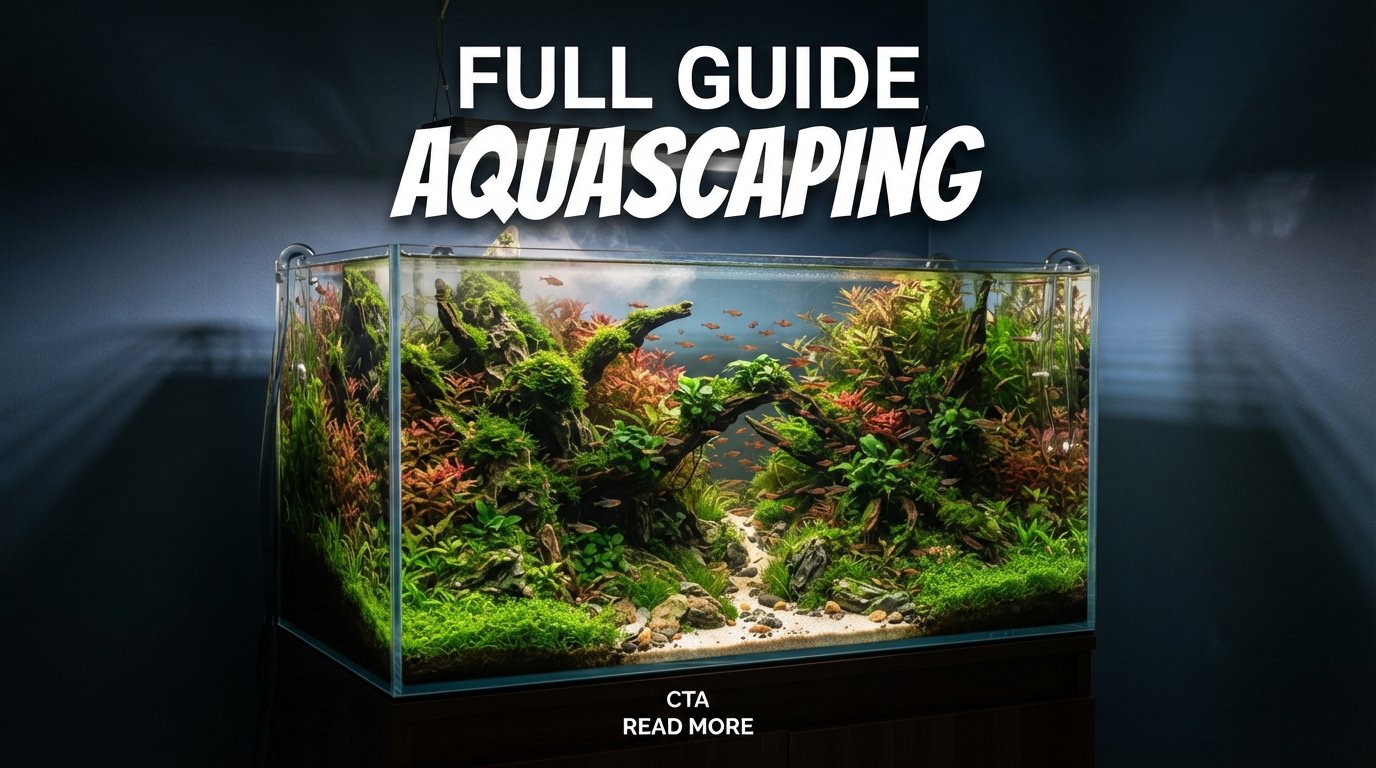
Aquarium design aquascaping combines creativity, natural materials, aquatic plants, rocks, driftwood, substrate, and careful composition to create a beautiful underwater landscape. A well-designed aquascape can transform an ordinary fish tank into a miniature natural environment that looks balanced, peaceful, and visually interesting.
Aquascaping is more than simply adding plants and decorations to an aquarium. It involves planning the position, size, color, texture, and visual relationship between every major element. From simple minimalist layouts to detailed underwater forests, there are many aquarium design aquascaping styles that can be adapted to different tank sizes and skill levels.
Whether you have a small nano aquarium or a large planted tank, thoughtful design can make the entire aquarium look more natural and attractive.
What Is Aquarium Design Aquascaping?
Aquascaping is the art of arranging aquatic plants and hardscape materials inside an aquarium to create an underwater landscape.
Hardscape usually includes materials such as rocks, driftwood, stones, and other aquarium-safe natural structures. Plants are then arranged around these elements to create depth, contrast, and visual balance.
A successful aquascape considers more than appearance. The design should also provide suitable conditions for aquatic plants and enough space for fish and other livestock.
The best aquarium designs combine aesthetics with functionality.
Basic Elements of Aquascaping
Before creating an aquascape, it helps to understand the main components.
| Element | Purpose in Aquascaping |
|---|---|
| Substrate | Supports plants and creates the foundation |
| Rocks | Create structure and focal points |
| Driftwood | Adds natural shapes and height |
| Aquatic Plants | Provide color, texture, and depth |
| Lighting | Supports plants and highlights the layout |
| Background | Enhances the overall composition |
| Fish | Add movement and life |
| Open Space | Creates balance and visual breathing room |
These elements do not need to be used in equal amounts. A minimalist aquascape may use only a few rocks and plants, while a jungle-style aquarium may contain many different plant species.
Popular Aquarium Design Aquascaping Styles
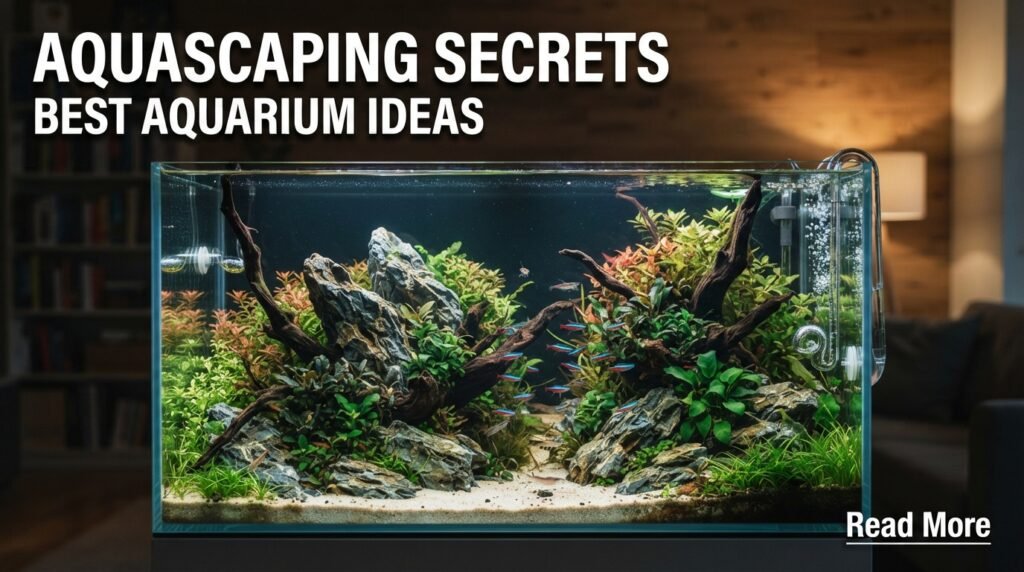
There are many aquascaping styles, and each has a different visual character.
Nature Aquarium Style
The nature aquarium style focuses on creating an underwater landscape inspired by forests, mountains, valleys, rivers, and other natural environments.
It commonly combines rocks, driftwood, aquatic plants, and open space.
The goal is to make the aquarium appear like a miniature natural scene rather than an artificial decoration.
Iwagumi Aquascaping
Iwagumi is a rock-focused aquascaping style that emphasizes simplicity and carefully arranged stones.
One larger stone often serves as the primary focal point, while smaller stones provide supporting structure.
Low-growing carpeting plants are commonly used to create a clean appearance.
Because the number of elements is limited, every rock becomes important to the overall composition.
Jungle Aquascape
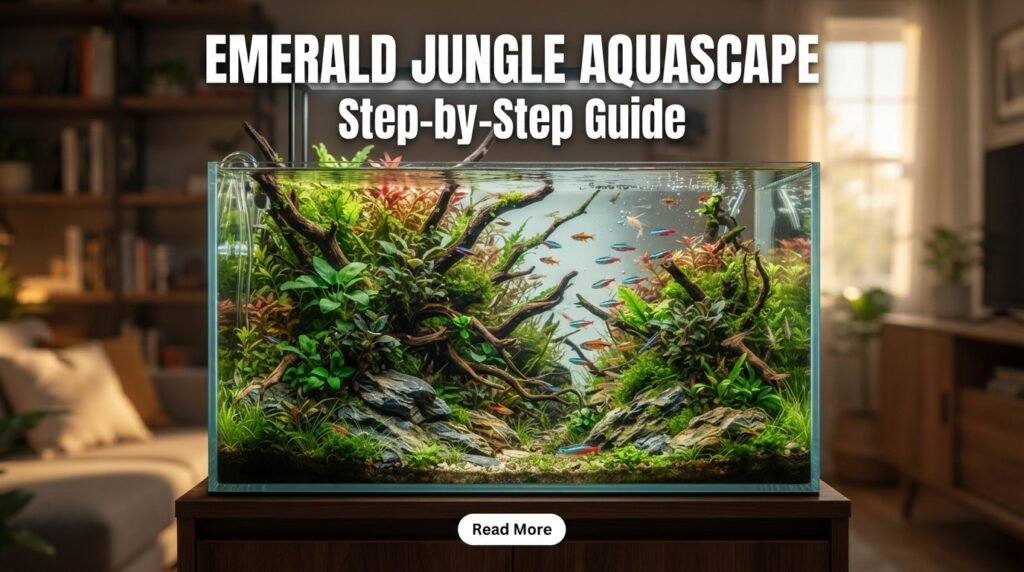
A jungle aquascape uses abundant plants to create a dense, natural underwater environment.
Different plant heights and leaf shapes can produce depth and complexity.
Taller plants are generally positioned toward the back, medium-sized plants in the middle, and shorter plants toward the foreground.
This style is ideal for aquarists who enjoy a lush, heavily planted appearance.
Dutch Aquascape
Dutch-style aquascaping places strong emphasis on aquatic plants rather than large rocks or driftwood.
Plants are arranged in groups, with different colors, heights, leaf shapes, and textures creating visual contrast.
Careful trimming is an important part of maintaining the design.
Minimalist Aquascape
Minimalist aquascaping uses a small number of elements.
A simple combination of one main rock, a few supporting stones, a limited number of plants, and open substrate can create an elegant aquarium.
This style is especially suitable for beginners because the composition is relatively easy to understand.
Aquarium Design Aquascaping for Small Tanks
Small aquariums can be excellent for aquascaping.
However, small spaces require careful planning because large decorations can quickly make the tank appear crowded.
Choose smaller rocks, delicate driftwood, and appropriately sized plants.
A useful approach is to create one clear focal point while keeping part of the foreground open.
Nano aquascapes can look particularly attractive when a small landscape is designed with a strong sense of depth.
Large Aquarium Aquascaping
Large aquariums provide more room for creative designs.
You can use larger rocks, longer pieces of driftwood, taller plants, and multiple visual zones.
Large tanks can support layouts inspired by forests, mountain valleys, rivers, or underwater gardens.
The additional space also allows fish to swim naturally without making the aquascape feel overcrowded.
Choosing Aquarium Rocks
Rocks are one of the most important hardscape elements.
Natural aquarium-safe stones can create mountains, cliffs, valleys, and other landscape features.
When selecting rocks, consider:
- Shape
- Size
- Texture
- Color
- Weight
- Compatibility with aquarium water
- Relationship to the tank size
Avoid using rocks that may contain unsafe materials or dramatically alter water chemistry unless you specifically understand their effects.
Try to use similar rock types throughout a single layout. Mixing unrelated stones can make the aquascape look less cohesive.
Aquarium Driftwood Design
Driftwood introduces curved and organic shapes that contrast beautifully with rocks.
A large branch can create the impression of a submerged tree, while smaller branches can form a miniature forest.
When choosing driftwood, consider the direction of the branches and how they interact with the plants.
Do not simply place wood in the center of the tank. Experiment with different angles and positions before finalizing the layout.
Creating Depth in Aquascaping
Depth is one of the most important aspects of aquarium design.
A flat aquarium can look less natural, even when it contains beautiful plants and decorations.
You can create depth by:
- Sloping substrate upward toward the back
- Using larger objects in the foreground
- Using smaller objects farther away
- Planting taller plants behind shorter plants
- Leaving open foreground space
- Creating pathways between rocks
- Using branches that point toward the background
These techniques can make a relatively shallow aquarium appear much deeper.
The Rule of Thirds in Aquarium Design
The rule of thirds is a useful composition technique.
Instead of placing the main focal point directly in the center, position it approximately one-third from the left or right side.
This creates a more natural visual balance.
The focal point could be a large rock, a piece of driftwood, or a group of plants.
The rule does not have to be followed perfectly. It is simply a useful starting point when planning your layout.
Creating a Focal Point
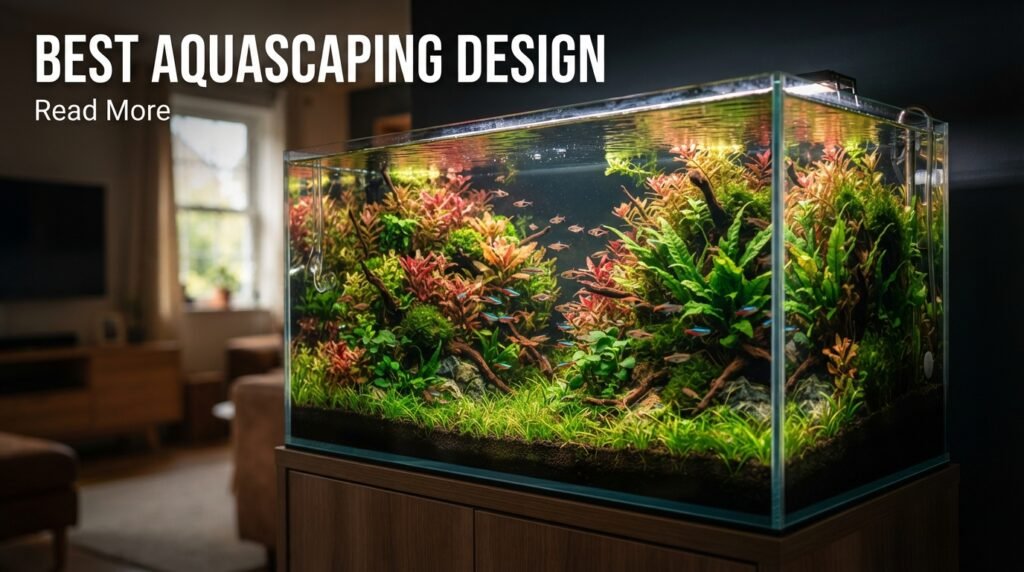
Every strong aquascape benefits from having an area that naturally attracts attention.
This could be:
- A large stone
- A dramatic piece of driftwood
- A colorful plant group
- A mountain-like rock formation
- An open pathway
- A distinctive tree-style arrangement
Avoid creating several equally strong focal points because they can compete with each other.
Choose one primary feature and use smaller elements to support it.
Choosing Aquarium Plants
Plant selection should be based on both appearance and growing requirements.
Popular aquarium plants include:
- Anubias
- Java fern
- Cryptocoryne
- Bucephalandra
- Java moss
- Amazon sword
- Vallisneria
- Dwarf sagittaria
- Rotala
- Ludwigia
- Monte Carlo
- Dwarf hairgrass
Some plants require stronger lighting and additional nutrients, while others can grow under relatively simple conditions.
Always select plants according to the actual conditions you can provide.
Foreground Plants
Foreground plants are usually short and create a carpet-like appearance.
Examples include dwarf hairgrass and Monte Carlo.
Foreground plants can make rocks and driftwood appear more integrated into the landscape.
However, carpeting plants can require more attention than hardy plants, particularly when strong growth and dense coverage are desired.
Midground Plants
Midground plants fill the space between foreground plants and taller background vegetation.
Cryptocoryne, smaller Anubias, and certain Bucephalandra varieties can work well in this area.
Midground plants can also be positioned around rocks and driftwood to soften hardscape edges.
Background Plants
Tall plants help create depth and hide equipment.
Vallisneria and various stem plants can create vertical movement toward the back of the aquarium.
Keep taller plants toward the rear so they do not block the view of smaller plants and hardscape.
Aquarium Substrate Design
Substrate is both functional and decorative.
Aquarium soil can support many planted aquarium designs, while sand can create a clean natural foreground.
A sloped substrate is particularly useful for creating depth.
Build the rear portion higher than the front and use hardscape materials to prevent excessive movement.
Avoid creating extremely steep slopes unless the layout is properly supported.
Aquarium Design With Sand
Sand can create beautiful paths and open areas.
A common design technique is to create a sandy pathway that curves between rocks and plants.
This can give the impression of a riverbed or trail disappearing into the background.
Use the sand intentionally rather than spreading it evenly across every area of the aquarium.
Aquarium Design With Rocks and Wood
Combining rocks and driftwood can create strong visual contrast.
Rocks provide solid geometric forms, while wood introduces curves and organic lines.
Try to make the two materials appear connected.
For example, plants and moss can be positioned around the base of driftwood so it appears naturally embedded in the landscape.
Black and Green Aquascape
A dark background combined with green plants can create a dramatic aquarium.
Dark rocks, black substrate, and green vegetation can produce strong contrast.
This design can be especially attractive with schooling fish that move through open areas.
White Sand Aquascape
White or light-colored sand creates a bright and clean appearance.
Pairing it with dark rocks and green plants produces strong visual contrast.
Light substrate does require regular maintenance because debris and algae may be easier to see.
Forest Aquarium Aquascape
A forest-inspired design uses driftwood branches, moss, and plants to create the appearance of submerged trees.
Arrange branches vertically and diagonally to create the impression of a miniature forest.
Small plants around the base can represent ground vegetation.
Leave some open areas so the design does not become visually overwhelming.
Mountain Aquarium Aquascape
A mountain-inspired aquascape focuses on rocks.
Large stones can form a mountain range, while smaller stones create supporting slopes.
Low-growing plants can represent vegetation around the base.
A sloped substrate can strengthen the mountain effect by making the background appear higher.
River-Inspired Aquarium Design
A river-style aquarium can use sand, smooth rocks, driftwood, and flowing plants.
Create a visible open area through the center of the tank to represent the river channel.
Place larger rocks along the sides and use plants toward the rear.
This design can look especially natural with fish species that naturally inhabit flowing freshwater environments.
Aquarium Design Aquascaping for Fish
The needs of fish should always be considered during aquascaping.
Do not fill the aquarium so densely that fish have no swimming room.
Provide hiding spaces where appropriate, but also maintain open areas.
Avoid sharp rocks and unstable decorations.
The aquascape should support natural fish behavior rather than simply acting as a visual display.
Lighting for Aquascaping
Lighting is important for both plants and appearance.
The appropriate intensity depends on the plant species.
Low-light plants can work well with simpler lighting, while demanding carpeting and stem plants may require stronger light and additional care.
Too much light without adequate plant growth and nutrient management can contribute to algae problems.
A consistent lighting schedule is generally more useful than simply increasing brightness.
Filtration for a Planted Aquarium
A good filter maintains water movement and supports biological filtration.
Choose filtration according to the aquarium’s volume and livestock.
The filter should provide adequate circulation without creating excessive current for species that prefer calmer water.
Position equipment thoughtfully so that it remains functional without becoming the visual focus of the aquascape.
Common Aquascaping Mistakes
Beginners often add too many decorations at once.
Another common mistake is making the aquarium perfectly symmetrical. Natural landscapes usually contain irregular shapes and asymmetry.
Using too many plant species can also make the aquarium appear chaotic.
Poor scale is another problem. Oversized rocks can make a small aquarium look cramped, while tiny rocks can disappear in a large tank.
Finally, avoid designing an aquarium solely around appearance. The fish, plants, and biological system must remain healthy.
Step-by-Step Aquarium Design Aquascaping Process
Start by cleaning the aquarium and planning the overall concept.
Choose a style before buying materials.
Place the substrate and create a gentle slope.
Next, position the largest rocks or driftwood.
Add smaller supporting hardscape pieces.
Check the composition from the front and several angles.
Plant the foreground, midground, and background areas.
Fill the aquarium slowly to avoid disturbing the substrate.
Install the filter and lighting.
Allow the aquarium to establish properly before adding livestock.
Observe how the plants grow and adjust the design through trimming and maintenance.
Aquarium Aquascaping Maintenance
A beautiful aquascape needs regular maintenance.
Trim plants before they become overgrown and block other elements.
Remove dead leaves and algae.
Perform appropriate water changes and monitor water parameters.
Clean filter components without unnecessarily destroying beneficial biological media.
As plants grow, reshape them to preserve the original composition.
Remember that aquascaping is not a one-time project. The aquarium changes continuously as plants grow and fish interact with the environment.
Final Thoughts
Aquarium design aquascaping provides almost unlimited opportunities to create beautiful underwater landscapes. Whether you prefer a minimalist rock arrangement, a dense jungle aquarium, a Japanese-inspired layout, a river scene, or a forest-style aquascape, careful planning can turn a simple aquarium into a living work of art.
Start with a clear concept, choose materials that work together, create a strong focal point, and use plants to establish depth. Most importantly, design the aquarium around the needs of its inhabitants.
A successful aquascape should look beautiful while also providing a stable, healthy, and comfortable environment for fish, shrimp, snails, and aquatic plants.
Frequently Asked Questions About Aquarium Design Aquascaping
What is aquarium design aquascaping?
Aquarium design aquascaping is the practice of arranging aquatic plants, rocks, driftwood, substrate, and other aquarium-safe elements to create an attractive underwater landscape.
What is the easiest aquascaping style for beginners?
A minimalist aquascape is often a good starting point because it uses fewer elements and makes it easier to understand composition, planting, and maintenance.
What rocks are best for aquascaping?
Aquarium-safe natural rocks with interesting shapes and textures are commonly used. Choose stones that are compatible with your aquarium’s water conditions and livestock.
What plants are best for aquascaping?
Anubias, Java fern, Cryptocoryne, Bucephalandra, Java moss, Vallisneria, and other suitable aquatic plants can be used. The best plant depends on lighting, nutrients, substrate, and maintenance ability.
How do I make my aquarium look deeper?
Use a sloping substrate, larger hardscape in the foreground, smaller elements toward the back, taller plants behind shorter plants, and an open pathway through the layout.
Should aquarium rocks be placed in the center?
Not necessarily. Positioning the main rock slightly off-center can create a more natural composition. The rule of thirds can be a useful starting point.
Do I need CO2 for aquascaping?
Not every aquascape requires CO2. Many hardy plants can grow without injected CO2, while more demanding plants and certain carpeting layouts may benefit from additional carbon availability.
How many plants should I put in an aquascape?
There is no fixed number. Choose plants based on the tank size, design style, lighting, and desired density. Too many different plant species can make a small aquascape look cluttered.
Can I aquascape a small aquarium?
Yes. Nano aquariums can produce beautiful aquascapes. Use appropriately sized rocks, wood, and plants and avoid overcrowding the limited space.
How do I keep an aquascape clean?
Regular maintenance includes trimming plants, removing algae, removing dead leaves, maintaining filtration, performing appropriate water changes, and monitoring water parameters.
Can fish live in an aquascaped aquarium?
Yes. Aquascaped aquariums can provide excellent environments for fish when the layout is designed around their swimming space, behavior, water requirements, and safety.
What makes a good aquascape?
A good aquascape combines visual balance, appropriate scale, depth, natural-looking hardscape, healthy plants, open space, and suitable conditions for the aquarium’s inhabitants.