
 By admin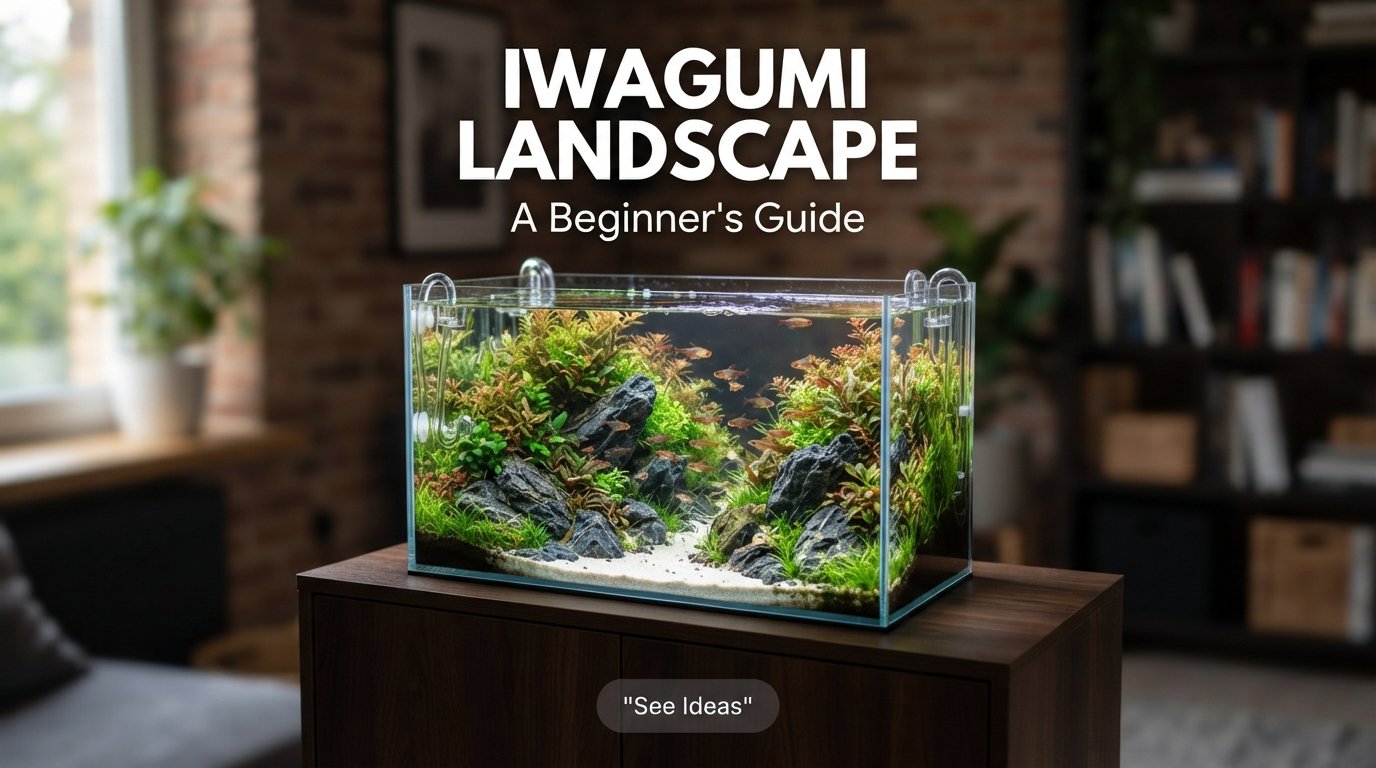
Aquascaping ideas can transform an ordinary aquarium into a beautiful underwater landscape filled with plants, rocks, driftwood, sand, and natural-looking details. Aquascaping is not simply about decorating a fish tank. It is about arranging every element carefully to create balance, depth, movement, and a natural appearance.
Whether you have a small nano aquarium, a 10-gallon tank, or a large planted aquarium, you can create an attractive aquascape with the right planning. Some designs are simple enough for beginners, while others require advanced lighting, plant care, CO2 injection, and regular trimming.
The best aquascaping ideas combine visual beauty with the needs of fish, shrimp, snails, and aquatic plants. A successful aquarium should look attractive while providing a safe and stable environment for its inhabitants.
What Is Aquascaping?
Aquascaping is the art of designing and arranging an underwater landscape inside an aquarium.
It typically combines aquatic plants with hardscape materials such as rocks, driftwood, sand, and gravel.
Aquascaping can be inspired by natural environments including forests, mountains, rivers, valleys, and underwater gardens.
The design process involves choosing a focal point, creating depth, balancing empty and planted areas, and selecting materials that work well together.
Basic Aquascaping Elements
Before choosing a particular style, understand the main elements used in aquarium design.
| Element | Purpose |
|---|---|
| Substrate | Creates the foundation and supports plants |
| Rocks | Provide structure and focal points |
| Driftwood | Adds organic shapes and height |
| Plants | Create color, texture, and depth |
| Sand | Creates open areas and pathways |
| Lighting | Supports plants and highlights the layout |
| Background | Adds contrast and visual depth |
| Fish | Add movement and life |
You do not need every element in every aquarium. A minimalist design may use only rocks, plants, and substrate, while a forest aquascape may use extensive driftwood and vegetation.
1. Minimalist Aquascaping Ideas
Minimalist aquascaping is an excellent choice for beginners.
Use a simple substrate, one primary piece of hardscape, a few plants, and plenty of open space.
The goal is to make every element meaningful.
Instead of filling the aquarium with decorations, allow the empty areas to become part of the composition.
A single large rock surrounded by low-growing plants can create a surprisingly impressive aquarium.
2. Nature Aquarium Ideas
Nature-style aquascaping attempts to recreate the feeling of a natural landscape.
The design may resemble a mountain valley, forest floor, riverbank, or underwater meadow.
Use rocks, driftwood, plants, and substrate to create a miniature landscape.
Different plant heights can create the illusion of distance, while carefully placed hardscape gives the aquarium structure.
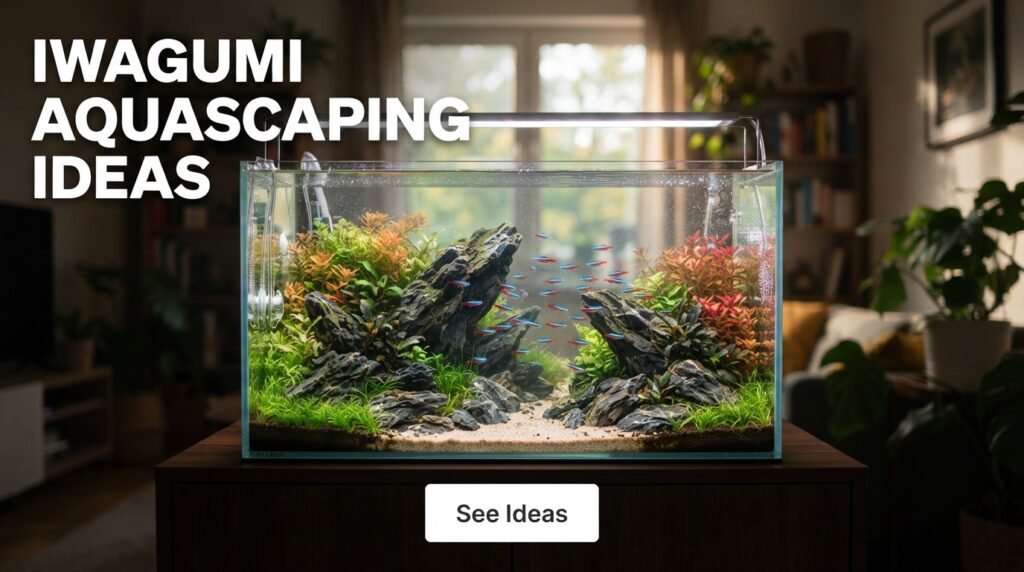
3. Iwagumi Aquascaping Ideas
Iwagumi is a rock-focused style that uses carefully arranged stones as the primary design feature.
A dominant stone usually acts as the focal point, with smaller stones supporting the overall composition.
Low-growing plants are commonly used to create a clean appearance.
Because the design is relatively simple, the size, shape, angle, and placement of each rock become particularly important.
4. Jungle Aquascaping Ideas
A jungle aquascape is ideal for people who love lush, heavily planted aquariums.
Use plants with different leaf shapes, heights, and textures.
Tall plants can occupy the background, medium plants the middle, and carpeting or low plants the foreground.
Allowing some plants to grow naturally rather than trimming everything perfectly can create a wild underwater forest appearance.
5. Dutch Aquascaping Ideas
Dutch aquascaping focuses strongly on plants.
Instead of relying heavily on rocks and driftwood, the design uses groups of plants with contrasting colors, shapes, and heights.
Plant groups should be arranged carefully so each species remains visually distinct.
Regular trimming is important because uncontrolled growth can quickly destroy the original composition.
6. Forest Aquascape
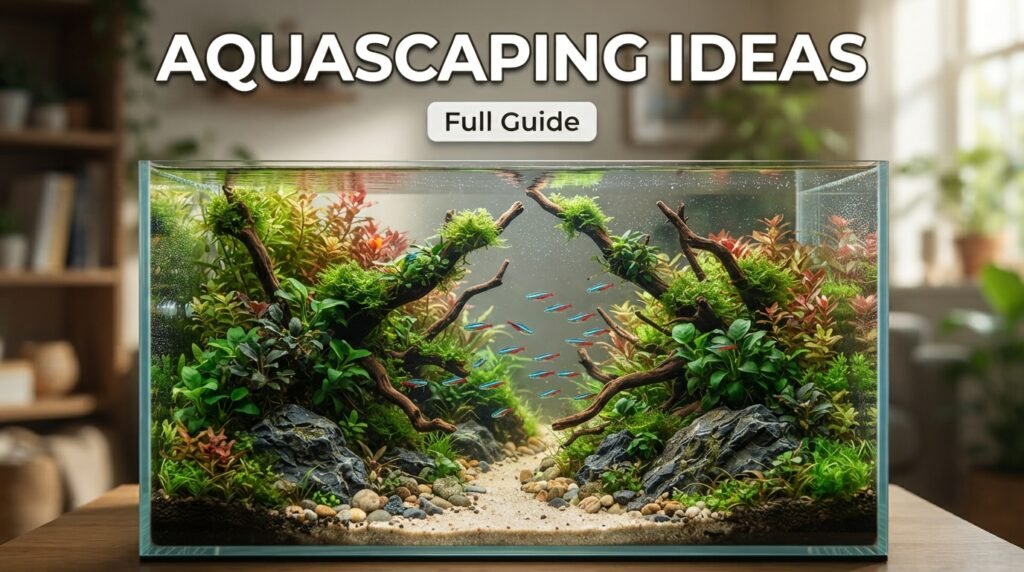
A forest-style aquarium uses driftwood branches to imitate submerged trees.
Choose branching wood and arrange it so that several pieces point upward and outward.
Attach moss to some branches to create a mature forest appearance.
Use smaller plants around the base and leave open areas between groups.
This design works particularly well in medium and large aquariums.
7. Mountain Aquascape
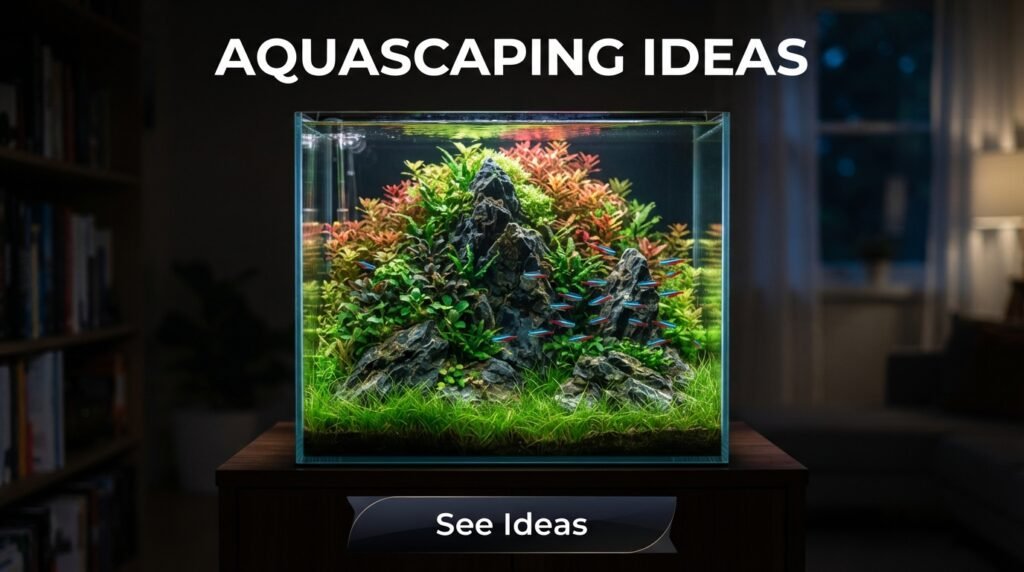
Mountain-inspired aquascapes are dominated by rocks.
Use several stones to create the appearance of mountains, cliffs, or rocky valleys.
Larger stones should establish the main structure while smaller stones help transition into the substrate.
Low-growing plants can represent vegetation around the mountain landscape.
A sloped substrate can make the design appear deeper.
8. River Aquascaping Ideas
A river-style aquascape can use sand, smooth stones, driftwood, and flowing aquatic plants.
Create an open path through the aquarium to represent the river channel.
Place rocks along the edges and plants toward the rear.
A curved sand pathway can create the illusion that the river continues into the distance.
9. Island Aquascape
An island aquascape places the primary hardscape or plant group toward the center or slightly off-center.
The surrounding substrate creates the appearance of water around an island.
This design can be especially attractive in shallow aquariums.
Use a small group of rocks and plants rather than creating a huge structure.
10. Valley Aquascape
A valley-style aquascape creates a pathway between two groups of rocks or plants.
Place taller structures toward both sides while keeping the center relatively open.
The open area draws the viewer’s eye into the aquarium and creates a strong sense of depth.
Sand or fine gravel can be used to create the central valley.
11. Aquascaping Ideas With Driftwood
Driftwood is one of the most versatile aquascaping materials.
A curved piece can resemble a fallen tree, while branching pieces can create a forest effect.
Try different positions before permanently placing the wood.
The direction of branches can guide the viewer’s eye through the aquarium.
Adding moss or small plants around the wood can make it appear more naturally integrated.
12. Aquascaping Ideas With Rocks
Rocks can be used as the foundation of almost any aquascape.
Choose stones with compatible colors and textures.
Avoid mixing too many unrelated rock types because the layout can look chaotic.
Use large rocks as focal points and smaller stones to create transitions.
Always ensure heavy rocks are stable and cannot fall against the aquarium glass.
13. Sand Pathway Aquascape
A sand pathway is an easy way to create depth.
Leave a narrow area of light-colored sand running from the foreground toward the background.
Curve the path slightly rather than making it completely straight.
Place plants and rocks along both sides.
The pathway can create the illusion of a small trail, river, or valley disappearing into the distance.
14. Nano Aquascaping Ideas
Small aquariums require careful scale.
Use small rocks, thin pieces of driftwood, and appropriately sized plants.
Avoid oversized decorations that make the aquarium look crowded.
A simple layout with one focal point can be more attractive than a complicated design.
Nano aquascapes are also useful for practicing composition before moving to a larger aquarium.
15. 5-Gallon Aquascaping Ideas
A 5-gallon aquarium has limited space, so simplicity is especially important.
Try a small rock garden with moss and low-growing plants.
Another option is a single curved piece of driftwood surrounded by small plants.
Keep the foreground relatively open to make the aquarium feel larger.
16. 10-Gallon Aquascaping Ideas
A 10-gallon aquarium provides more flexibility.
You can create a small forest, river valley, minimalist rock garden, or planted landscape.
Use the extra height and length to establish three distinct areas: foreground, midground, and background.
17. 20-Gallon Aquascaping Ideas
A 20-gallon tank gives you enough room for more complex compositions.
You can combine rocks and driftwood or create a larger planted landscape.
A central valley, mountain arrangement, or jungle aquascape can work particularly well.
18. Large Aquarium Aquascaping
Large tanks provide an opportunity to create highly detailed landscapes.
Use appropriately scaled rocks and driftwood.
Large aquariums can accommodate tall plants, substantial wood structures, and multiple areas of visual interest.
However, avoid creating too many focal points. Even a large aquascape benefits from a clear primary composition.
19. Black Sand Aquascape
Black sand can create a dramatic background for green plants and colorful fish.
It works particularly well with bright green vegetation and lighter rocks.
A black substrate can also make certain fish colors appear more prominent.
Regular maintenance may be necessary because debris can still become visible depending on the lighting and substrate texture.
20. White Sand Aquascape
White sand creates a bright and clean appearance.
Combine it with darker rocks and green plants for contrast.
A white sand foreground can also represent a beach, riverbank, or open clearing.
Because waste and algae may be easier to see on light substrate, consistent maintenance is important.
21. Low-Tech Aquascaping Ideas
You do not need expensive equipment to create a beautiful planted aquarium.
A low-tech aquascape can use hardy plants, moderate lighting, basic filtration, and no injected CO2.
Plants such as Anubias, Java fern, Cryptocoryne, and Java moss can be suitable choices depending on the specific aquarium conditions.
Low-tech setups can be particularly useful for beginners.
22. High-Tech Aquascaping Ideas
Advanced aquascapes may use stronger lighting, nutrient-rich substrates, injected CO2, specialized fertilizers, and demanding plants.
These systems can support dense carpets and fast-growing colorful plants.
However, more equipment also means more variables to manage.
Before choosing a high-tech design, understand the maintenance requirements.
23. Shrimp Aquascaping Ideas
Shrimp aquariums can be designed around moss, small plants, rocks, and driftwood.
Shrimp spend much of their time exploring surfaces, so hardscape with plenty of texture can be useful.
A natural planted environment can also provide grazing surfaces.
Keep the layout safe and avoid sharp materials.
24. Betta Aquascaping Ideas
A betta aquarium can use broad-leaved plants, driftwood, moss, and gentle hardscape.
Leave enough open water for swimming.
Plants near the surface can provide useful resting areas.
Avoid sharp decorations and excessively strong water flow.
25. Guppy Aquascaping Ideas
Guppies look particularly attractive in planted aquariums.
Use green plants as a natural background for their colorful bodies and tails.
Provide open swimming areas as well as planted sections.
A jungle-style layout can work well, but avoid overcrowding the tank.
26. Blackwater Aquascape
A blackwater-inspired aquarium uses natural wood, leaves, subdued colors, and darker water.
The design can create an intimate forest-stream appearance.
Blackwater systems require careful attention to water chemistry and should be planned around species that naturally tolerate those conditions.
27. Biotope Aquascaping
A biotope aquarium attempts to recreate a particular natural habitat.
Instead of choosing plants and decorations only for appearance, the aquarist researches the natural environment of the selected fish or aquatic species.
This can include matching substrate, plants, wood, rocks, water conditions, and livestock.
Biotope aquascaping is an excellent option for aquarists who enjoy research and natural history.
Choosing Aquascaping Plants
Plant selection should always match your aquarium conditions.
Popular choices include:
- Anubias
- Java fern
- Java moss
- Bucephalandra
- Cryptocoryne
- Vallisneria
- Amazon sword
- Dwarf sagittaria
- Rotala
- Ludwigia
- Monte Carlo
- Dwarf hairgrass
Some plants are suitable for low-light aquariums, while others require stronger lighting, nutrients, and additional carbon availability.
Do not choose plants based only on appearance.
Creating Depth in an Aquascape
Depth makes an aquarium appear larger and more natural.
Several techniques can help:
- Create a substrate slope
- Use larger objects in front
- Use smaller objects toward the back
- Place tall plants behind shorter plants
- Leave open foreground space
- Create pathways
- Use perspective with driftwood branches
These techniques can make a relatively small aquarium appear much deeper.
Creating a Focal Point
Choose one main feature for the viewer to notice first.
This could be a large stone, a dramatic piece of wood, a plant group, or an open pathway.
Place it slightly off-center for a more natural composition.
Supporting elements should guide attention toward the focal point instead of competing with it.
Using Negative Space
Negative space means deliberately leaving parts of the aquarium open.
It is one of the most useful but frequently overlooked aquascaping techniques.
Empty areas give fish room to swim and allow the main hardscape and plants to stand out.
A tank does not need to be completely filled to look complete.
Choosing Aquarium Lighting
Lighting should be selected according to the plants.
Low-light plants generally require less intense lighting, while demanding carpeting plants may need stronger illumination.
Excessive lighting without adequate plant growth and nutrient management can encourage algae.
A consistent lighting schedule can help keep the aquarium stable.
Filtration for Aquascaping
Filtration keeps the aquarium biologically stable and removes suspended waste.
Choose a filter appropriate for the tank volume and livestock.
Avoid creating excessive water flow for fish that prefer calm environments.
Aquascaping should hide equipment where possible without preventing proper operation.
Common Aquascaping Mistakes
One of the most common mistakes is overcrowding.
Adding too many rocks, plants, colors, and decorations can make the aquarium look chaotic.
Another mistake is ignoring scale. A large rock can overwhelm a small aquarium, while tiny decorations may disappear in a large tank.
Perfect symmetry can also make an aquarium appear artificial.
Poor plant selection, insufficient maintenance, excessive lighting, and unstable hardscape are other common problems.
Step-by-Step Aquascaping Setup
Start by choosing a specific design style.
Prepare the aquarium and equipment.
Add the substrate and create a gradual slope toward the rear.
Place the largest rocks and driftwood first.
Add smaller supporting pieces.
Check the composition from the front.
Plant the aquarium from background to foreground.
Leave open swimming and viewing areas.
Fill the tank slowly to avoid disturbing the layout.
Install the filter and lighting.
Allow the aquarium to properly establish before introducing livestock.
Trim and reshape plants as they grow.
Aquascaping Maintenance
Aquascaping requires regular attention.
Trim fast-growing plants before they block other plants.
Remove dead leaves and algae.
Perform appropriate water changes.
Clean mechanical filtration regularly.
Monitor water parameters.
Check that rocks and driftwood remain stable.
As the plants grow, maintain the original design by selectively trimming and replanting when necessary.
Final Thoughts
There are countless aquascaping ideas to explore, from simple minimalist layouts to detailed forests, mountains, rivers, and underwater gardens. The most important part is not how many decorations you use but how effectively you arrange them.
Start with a clear concept and choose a small number of materials that complement one another. Create a focal point, establish depth, use plants at different heights, and leave enough negative space.
Most importantly, remember that an aquascape is a living environment. The needs of fish, shrimp, snails, and plants should always come before appearance.
With patience and regular maintenance, even a simple aquarium can develop into a beautiful underwater landscape.
Frequently Asked Questions About Aquascaping Ideas
What is the easiest aquascaping style for beginners?
A minimalist or low-tech planted aquascape is often a practical starting point. These designs can use hardy plants and a limited amount of hardscape.
What are the most popular aquascaping styles?
Popular styles include Nature Aquarium, Iwagumi, Dutch, jungle, minimalist, forest, river, blackwater, and biotope-inspired aquascapes.
What plants are best for aquascaping?
Anubias, Java fern, Java moss, Cryptocoryne, Bucephalandra, Vallisneria, and other suitable aquatic plants can be used depending on aquarium conditions.
Can I aquascape a 5-gallon tank?
Yes. A 5-gallon tank can support a simple nano aquascape. Use appropriately scaled materials and avoid overcrowding.
Do I need CO2 for aquascaping?
No. Many beautiful aquascapes can be created without injected CO2. CO2 can be useful for demanding plants and certain high-growth layouts.
What substrate is best for aquascaping?
The best substrate depends on the plants and design. Aquarium soil, sand, and fine gravel can all be useful in different types of aquascapes.
How do I make my aquarium look bigger?
Use a sloped substrate, smaller objects toward the back, appropriately scaled plants, an open foreground, and a pathway that leads toward the background.
How many plants should an aquascape have?
There is no fixed number. Choose plants based on tank size, design style, lighting, and maintenance ability. A smaller number of carefully selected plants can often look better than too many unrelated species.
How do I choose rocks for an aquascape?
Choose aquarium-safe rocks with compatible colors, textures, and shapes. Use larger rocks as focal points and smaller rocks to support the composition.
Can driftwood be used in every aquascape?
Driftwood can work in many styles, but it is not required. Iwagumi-style aquascapes, for example, primarily emphasize rocks.
What is negative space in aquascaping?
Negative space is an intentionally open area within the aquarium. It creates visual balance, gives fish swimming room, and prevents the layout from looking overcrowded.
How often should an aquascape be maintained?
Maintenance depends on plant growth, lighting, livestock, and filtration. Regular trimming, algae removal, water changes, and equipment maintenance are important.
Can beginners create a professional-looking aquascape?
Yes. Beginners can create attractive results by starting with a simple design, using a limited number of materials, studying composition, and maintaining the aquarium consistently.