
 By admin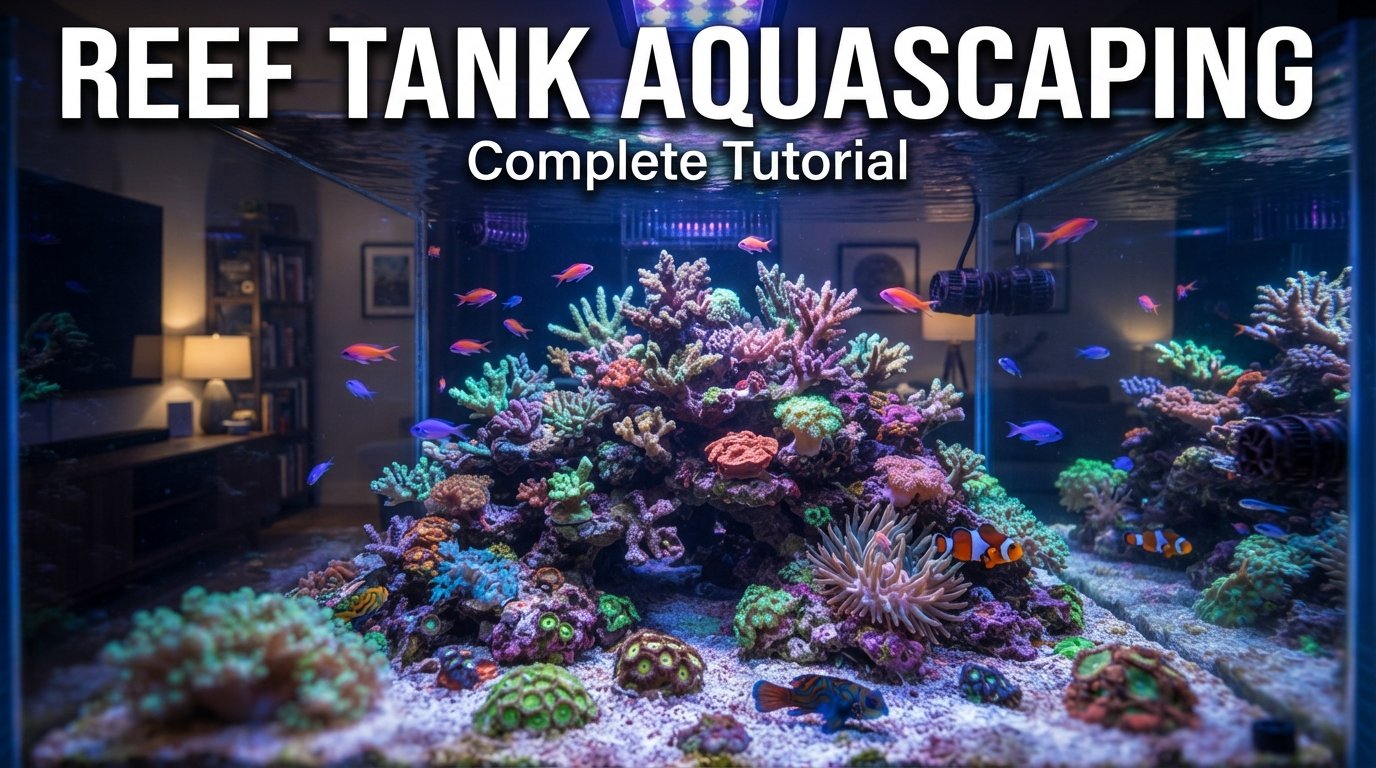
Reef tank aquascaping is the art of arranging live rock, artificial reef structures, corals, sand, and other aquarium elements to create a beautiful and functional saltwater environment. Unlike freshwater aquascaping, reef tank aquascaping must consider not only appearance but also coral growth, water movement, lighting, fish behavior, and long-term stability.
A well-designed reef aquarium can look like a miniature underwater reef, with colorful corals growing around carefully positioned rocks and open spaces providing swimming areas for fish. Whether you are setting up a small nano reef or a large saltwater aquarium, thoughtful aquascaping can make the tank more attractive while creating a healthier environment for its inhabitants.
What Is Reef Tank Aquascaping?
Reef tank aquascaping involves designing the physical layout of a reef aquarium. The main structure is usually created with reef rock, which provides surfaces for beneficial microorganisms and corals to grow.
The goal is not simply to stack rocks inside the aquarium. Good reef aquascaping creates height, depth, caves, overhangs, swimming lanes, coral mounting locations, and areas with different levels of water flow.
A successful layout should also leave enough open space for maintenance. As corals grow, a reef that initially looks spacious can become crowded, so planning for future growth is extremely important.
Why Reef Aquascaping Matters
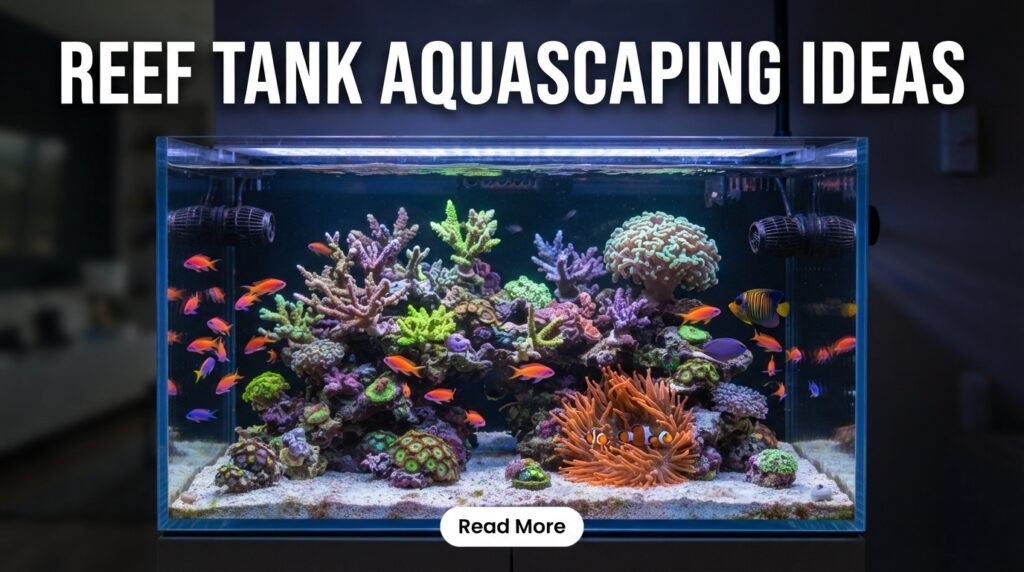
Aquascaping has both visual and practical benefits. A carefully designed reef tank can provide hiding places for fish, surfaces for coral placement, and pathways for water circulation.
Rock arrangement also affects how easily waste can be removed. If rocks are packed tightly against the substrate, debris may accumulate in areas where water movement is weak.
Open aquascaping generally makes it easier for water to circulate around the entire structure. This can help prevent dead spots and make cleaning easier.
The visual structure is equally important. Using different heights, shapes, textures, and open spaces creates a more natural-looking reef instead of a simple pile of rocks.
Basic Elements of Reef Tank Aquascaping
| Element | Purpose |
|---|---|
| Reef rock | Creates the main structure and coral mounting surfaces |
| Sand | Provides a natural-looking substrate |
| Corals | Add color, texture, and biological diversity |
| Open space | Creates swimming areas and visual depth |
| Caves | Provide shelter for fish and invertebrates |
| Overhangs | Add depth and coral placement opportunities |
| Water flow | Helps transport nutrients and oxygen |
| Lighting | Supports photosynthetic corals and highlights the aquascape |
Popular Reef Tank Aquascaping Styles
There are many ways to design a reef aquarium. Your choice can depend on tank dimensions, coral types, fish species, and personal preference.
Island Aquascaping
Island-style reef aquascaping uses one primary rock structure positioned toward the center or slightly off-center of the aquarium.
This design leaves open water around the structure and creates excellent swimming space. It is particularly attractive in tanks that can be viewed from multiple sides.
An island can also be shaped into a small mountain, reef plateau, or branching structure.
Two-Island Aquascaping
Two-island aquascaping divides the reef structure into two separate formations.
One island can be taller while the other remains lower, creating visual contrast. The open channel between the structures becomes an important feature of the design.
This style works especially well in rectangular aquariums because it creates depth while maintaining plenty of swimming space.
Arch Reef Aquascaping
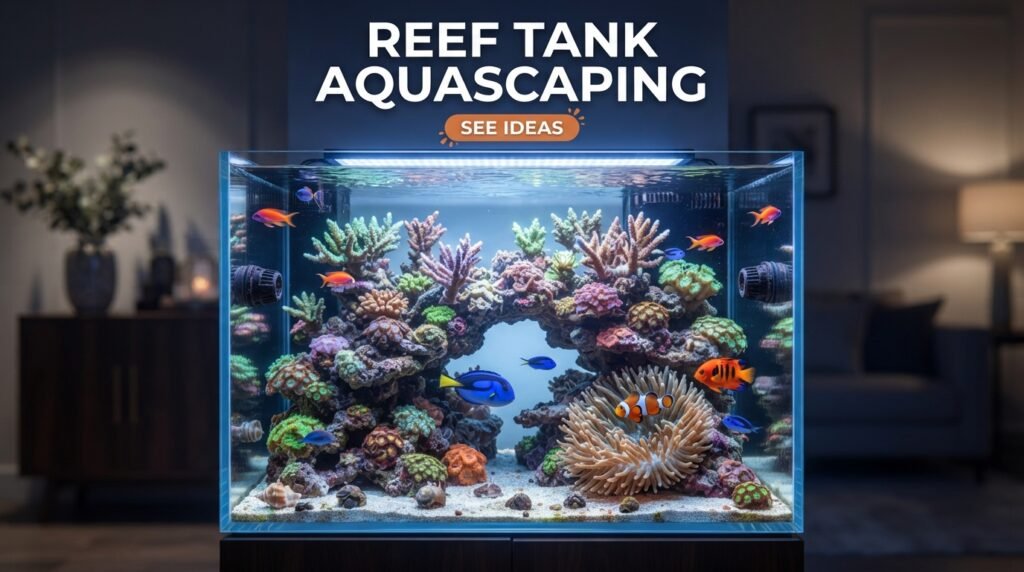
Arch-style layouts use rocks to create one or more natural-looking arches.
Arches are excellent for adding height without completely blocking the aquarium. Fish can swim underneath them, while corals can be attached to the upper surfaces.
Make sure the structure is stable before adding corals or livestock. Rocks should never be positioned in a way that could collapse and injure fish or damage the aquarium.
Cave Aquascaping
Cave-focused reef aquascaping creates shaded areas beneath and between rocks.
These spaces can become important shelters for fish, shrimp, crabs, and other reef inhabitants. Caves also create different lighting environments for corals with different preferences.
Avoid creating caves that are completely inaccessible for cleaning. A beautiful cave can become a problem if accumulated debris cannot be removed.
Minimalist Reef Aquascaping
Minimalist reef tanks use fewer rocks and more open space.
Instead of filling the entire aquarium, the design focuses on one strong focal structure. Corals eventually become the main visual feature as they grow.
This style is particularly useful for modern reef tanks where the goal is a clean and spacious appearance.
Bonsai Reef Aquascaping
Bonsai-style reef aquascaping uses branching rock structures that resemble miniature trees.
The main trunk rises from the substrate while smaller branches extend outward. Corals can be placed along the branches to create a miniature reef tree.
This design works particularly well with branching SPS corals and other corals that develop interesting shapes.
Wall-Style Aquascaping
A traditional wall-style reef fills much of the back area of the aquarium with rock.
Although this provides many coral mounting surfaces, it can restrict water movement if the rocks are packed too tightly.
If you prefer a wall-style design, create channels and gaps throughout the structure rather than making one solid wall.
Creating Depth in a Reef Aquarium
Depth is one of the most important principles of reef tank aquascaping.
Instead of arranging every rock at the same height, use different levels. Place taller structures toward the back and lower structures toward the front.
You can also create depth by positioning rocks at different distances from the front glass.
Leaving open areas between structures makes the aquarium appear larger. Sand pathways can further emphasize depth and guide the viewer’s eye through the aquascape.
Choosing Reef Rock
The rock is the foundation of your reef aquascape. Modern reef aquariums commonly use natural or manufactured reef-safe rock.
When choosing rock, look for pieces with interesting shapes, holes, branches, shelves, and natural textures.
Avoid choosing rocks solely by weight. A lightweight piece with plenty of holes and useful shapes may provide more aquascaping possibilities than a dense, heavy piece.
The rock should also be suitable for marine aquarium use and free from harmful contaminants.
How Much Rock Should You Use?
There is no single perfect amount of rock for every reef tank.
Older reef designs often used large quantities of rock, but modern aquascaping frequently favors more open structures.
Rather than trying to fill a certain percentage of the aquarium, focus on creating enough biological surface area while maintaining good water circulation and swimming space.
Your filtration system, livestock, rock type, and aquarium design should all be considered when deciding how much rock is appropriate.
Creating Open Space
Open space is one of the secrets of attractive reef aquascaping.
It may seem natural to fill every empty area with rocks, but doing so can make a reef aquarium look crowded.
Open sand areas provide visual contrast against the rockwork. Open water also gives fish room to swim.
Negative space can make the main reef structure look larger and more dramatic. It also provides space for future coral growth.
Coral Placement in Reef Aquascaping
Coral placement should be considered before the aquascape is finalized.
Different corals have different requirements for light, flow, and space. Some corals spread quickly, while others grow slowly.
Place fast-growing or aggressive corals where they will have enough room to expand without contacting neighboring corals.
Hard corals can be positioned on higher rock shelves, while corals that prefer lower light can be placed closer to the bottom or in shaded areas, depending on their specific requirements.
Creating Coral Zones
A reef aquarium can be divided into several visual zones.
The highest areas can become locations for corals that require stronger lighting. Middle areas can contain a mixture of coral types, while lower areas can be reserved for species that prefer lower light.
This zoning approach makes the aquarium easier to manage and helps prevent coral competition.
Water Flow and Rock Placement
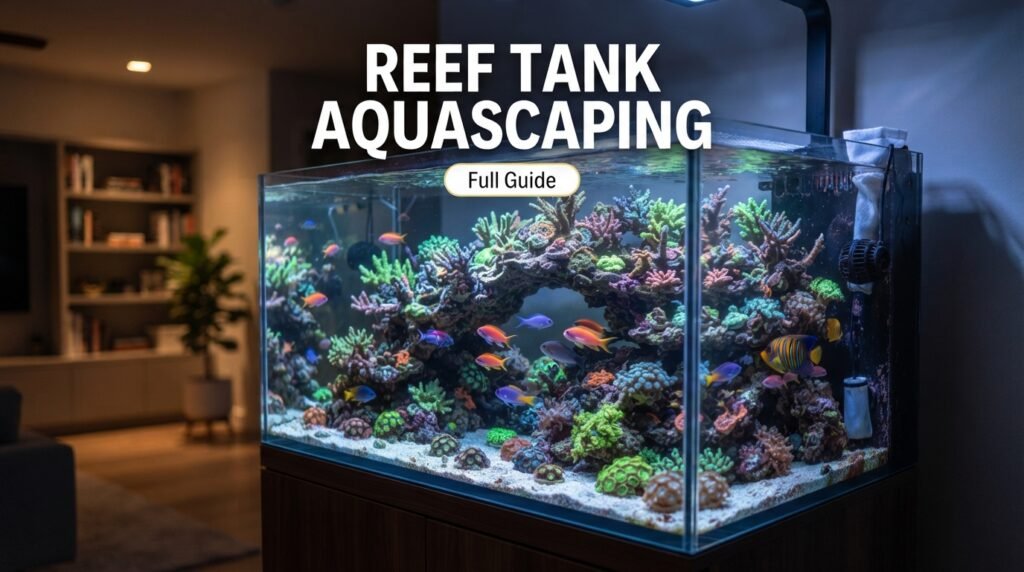
Water flow should influence every part of your aquascaping design.
Avoid creating a solid mass of rock that blocks circulation. Instead, leave gaps between structures so water can move through and around the reef.
Powerheads and circulation pumps should be positioned according to the needs of your aquarium and livestock. The objective is generally to create varied movement rather than a single powerful stream hitting one location.
Different coral types can benefit from different flow patterns, so aquascaping should leave room for adjustments as the aquarium matures.
Lighting and Aquascaping
Lighting is closely connected to reef tank aquascaping.
Tall structures can receive stronger light, while areas underneath arches and overhangs may receive less.
Before permanently attaching corals, observe how light reaches different parts of the aquascape.
Creating several lighting zones gives you more flexibility when choosing coral placement.
Reef Tank Aquascaping for Beginners
Beginners do not need an extremely complicated rock structure.
A simple design with one or two stable structures is often easier to maintain than a complicated arrangement.
Start by deciding where you want your main focal point. Then create supporting rockwork around it while maintaining open swimming space.
Before adding livestock, check that the rocks are stable and that water can circulate around the structure.
Step-by-Step Reef Aquascaping Process
Step 1: Plan the Layout
Start by looking at your aquarium dimensions.
Consider the viewing angle, equipment placement, coral types, and swimming requirements of your fish.
Sketching the basic layout before placing rocks can save time.
Step 2: Select the Rock
Choose several pieces with different shapes and sizes.
Look for large foundation pieces, medium supporting pieces, and smaller pieces that can fill visual gaps.
Step 3: Create the Foundation
Place your largest and most stable pieces first.
The foundation should be secure and should not depend on unstable pieces balancing on top of one another.
Step 4: Build Height
Add smaller pieces to create shelves, arches, branches, and other structures.
Avoid making the entire reef the same height.
Step 5: Add Open Areas
Step back and evaluate the design.
Remove unnecessary rocks if the aquarium looks too crowded.
Step 6: Check Stability
Gently test the structures to ensure they are stable.
A reef aquascape should not shift easily when water movement or livestock activity occurs.
Step 7: Consider Coral Placement
Before finalizing the design, imagine where different coral colonies will eventually grow.
Leave sufficient space around corals that may expand.
Step 8: Test Water Flow
Once equipment is running, observe whether water moves around the rockwork.
Adjust pumps or rock placement if large areas experience poor circulation.
Reef Tank Aquascaping Ideas for Small Tanks
Small reef aquariums benefit from simple layouts.
A single island, small arch, bonsai structure, or two-rock composition can make a nano reef appear spacious.
Avoid using oversized rocks that occupy most of the aquarium.
In a small tank, negative space is particularly valuable because it prevents the aquarium from appearing crowded.
Reef Tank Aquascaping Ideas for Large Tanks
Large aquariums provide more opportunities for dramatic structures.
You can create multiple islands, valleys, arches, caves, reef walls, and large branching formations.
A large reef can also use several focal points connected by lower rockwork.
However, a larger tank does not mean every area needs to be filled. Open spaces can make large aquariums look even more impressive.
Common Reef Aquascaping Mistakes
Using Too Much Rock
Too much rock can restrict swimming space and water circulation.
Building Unstable Structures
Unstable rockwork can collapse and damage livestock or equipment.
Ignoring Coral Growth
A structure that looks perfect on day one may become overcrowded as corals grow.
Blocking Water Flow
Large solid structures can create areas where debris accumulates.
Placing Rock Against the Glass
Leaving appropriate access around the rockwork makes cleaning and maintenance easier.
Making Everything the Same Height
Uniform rockwork can make the aquarium look flat.
Forgetting the Viewing Angle
A reef designed from the front may look very different from the side. Consider how the aquarium will actually be viewed.
How to Make Reef Tank Aquascaping Look Natural
Natural reefs are rarely perfectly symmetrical.
Use irregular shapes, varying heights, and different textures. Avoid making both sides of the aquarium identical.
Create small imperfections in the structure while maintaining stability.
You can also use coral growth to enhance the natural appearance. Over time, colonies can cover portions of the rock and create a mature reef appearance.
Reef Aquascaping and Fish Behavior
Fish behavior should be considered during aquascaping.
Some species prefer open swimming areas, while others spend much of their time around rocks.
Creating caves and hiding places can provide shelter for shy species.
Territorial fish may also benefit from separate structures that allow them to establish individual areas.
Maintenance-Friendly Reef Aquascaping
A beautiful aquascape should also be practical.
Leave enough space to clean the glass. Make sure equipment can be accessed without dismantling the entire reef.
Avoid creating tiny gaps where food and waste can become trapped.
As corals grow, regularly evaluate whether branches or colonies are blocking circulation or contacting neighboring corals.
Reef Tank Aquascaping Color Ideas
Color contrast can make a reef aquarium visually appealing.
Green, blue, purple, orange, red, pink, and yellow coral colors can create dramatic combinations.
However, color should not be the only consideration. Coral compatibility, placement requirements, growth rate, and lighting needs are equally important.
A carefully planned reef can develop increasingly impressive colors as it matures.
Designing a Focal Point
Every reef aquarium can benefit from a primary focal point.
This might be a large arch, branching coral colony, elevated reef structure, or unique rock formation.
Place the focal point slightly off-center rather than directly in the middle if you want a more natural composition.
Supporting structures should guide attention toward the main feature without competing with it.
Reef Tank Aquascaping With Sand
Sand provides contrast against darker reef rock and helps create a natural marine appearance.
You can use open sand areas to create pathways between reef structures.
The sand bed should also be selected according to the needs of your livestock and maintenance preferences.
Avoid allowing excessive debris to accumulate in stagnant areas around the rockwork.
Final Thoughts
Reef tank aquascaping is a combination of creativity, planning, and practical aquarium design. The best aquascape is not necessarily the one with the most rocks or the largest number of corals. A successful reef layout provides stability, water movement, swimming space, coral placement opportunities, and an attractive overall composition.
Start with a simple structure, create different heights, leave plenty of open space, and plan for future coral growth. As the reef matures, corals will gradually transform the original rockwork into a living underwater landscape.
Whether you prefer a minimalist island, dramatic arch, bonsai reef, two-island layout, or large multi-level structure, thoughtful planning can help you create a reef aquarium that remains attractive and functional for years.
Frequently Asked Questions
What is the best aquascape for a reef tank?
There is no single best design for every reef tank. Island, two-island, arch, bonsai, and minimalist layouts are all popular options. The best choice depends on aquarium dimensions, livestock, coral requirements, and personal preference.
How much rock should I use for reef tank aquascaping?
The amount depends on your filtration system, rock type, livestock, and aquarium design. Focus on creating enough biological surface area while maintaining open space and good water circulation rather than simply filling the tank with rock.
Should reef rocks touch the aquarium glass?
It is generally useful to leave accessible space around rockwork so you can clean the glass and maintain the aquarium more easily.
How do I create more depth in a reef tank?
Use different rock heights, place structures at different distances from the front glass, and leave open sand or water channels between major structures.
Should I glue reef rocks together?
Rock structures should be stable. Reef-safe adhesives, putties, or other appropriate securing methods can be used when necessary, particularly for elevated or complex structures.
How high should reef rock be?
There is no universal height. Consider your aquarium’s dimensions, lighting, coral growth, and swimming space. Leaving some open water above the rockwork can create a more spacious appearance.
How do I prevent dead spots in a reef tank?
Avoid tightly packing rocks together. Create gaps and channels that allow water to move through and around the structure, then adjust circulation equipment as needed.
Can I change my reef aquascape later?
Yes, but major changes after livestock and corals are established can be disruptive. It is better to create a stable long-term design before adding sensitive livestock.
What corals are best for reef aquascaping?
The appropriate coral depends on your lighting, flow, experience level, and aquarium conditions. Consider each coral’s growth pattern and space requirements before placing it.
Should I leave open space in a reef tank?
Yes. Open space provides swimming areas, improves visual depth, allows room for coral growth, and can make maintenance easier.
How do I make a reef tank look natural?
Use irregular rock shapes, different elevations, caves, arches, open areas, and varied textures. Avoid excessive symmetry and plan for coral growth to gradually transform the structure.
What is the most important part of reef tank aquascaping?
Stability, appropriate water circulation, and planning for future growth are among the most important considerations. A beautiful aquascape should also remain practical to maintain.