
 By admin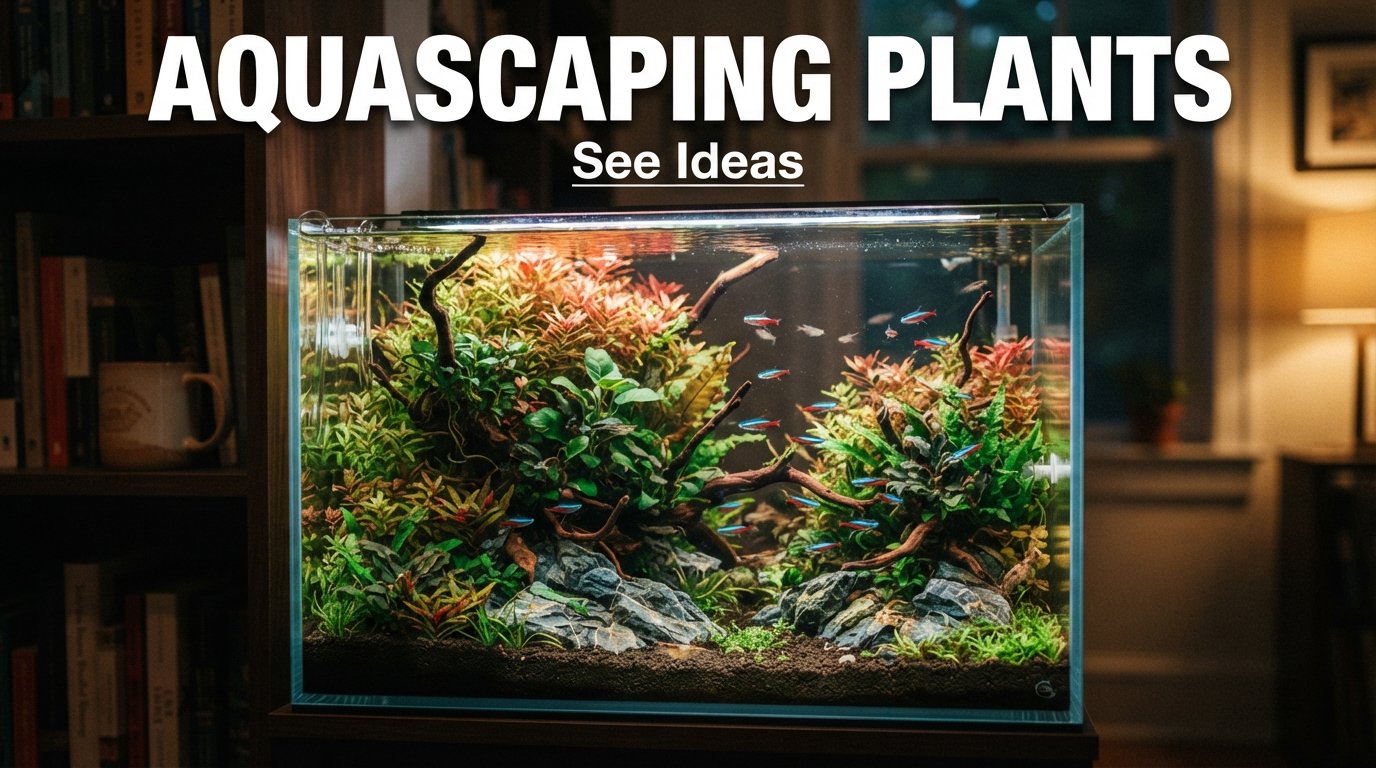
Aquascaping plants are one of the most important elements of a beautiful planted aquarium. They add color, texture, depth, movement, and a natural appearance while helping transform a simple fish tank into an underwater landscape. Whether you are creating a small nano aquarium or a large planted tank, choosing the right aquascaping plants can make a major difference in the final design.
Aquascaping is not simply about adding as many plants as possible. Different plants have different growth patterns, colors, sizes, lighting requirements, and maintenance needs. By combining foreground plants, midground plants, background plants, mosses, and floating plants, you can create a balanced aquarium that looks natural and continues to improve as it grows.
What Are Aquascaping Plants?
Aquascaping plants are aquatic plants used to design and decorate freshwater aquariums. They can be arranged around rocks, driftwood, substrate, and other hardscape materials to create underwater landscapes.
Some plants form dense carpets across the bottom of the aquarium, while others grow tall toward the surface. Mosses can cover rocks and driftwood, and floating plants can create a soft surface layer.
The best aquascaping plants are selected according to the aquarium’s size, lighting, substrate, CO2 availability, water conditions, and desired visual style.
Why Plants Are Important in Aquascaping
Plants do more than make an aquarium attractive. They can contribute to the overall biological environment of a planted tank.
Healthy aquatic plants use nutrients and carbon dioxide while producing oxygen through photosynthesis when adequate light is available. Dense planting can also provide shelter and cover for fish, shrimp, and other aquarium inhabitants.
From a design perspective, plants help create depth and make hardscape structures look more natural. A small group of plants growing around a rock can make the rock appear like part of a natural underwater landscape.
Main Types of Aquascaping Plants
| Plant Type | Typical Placement | Main Purpose |
|---|---|---|
| Foreground plants | Front of aquarium | Create carpets and low growth |
| Midground plants | Around rocks and wood | Add texture and transition |
| Background plants | Back of aquarium | Create height and dense vegetation |
| Mosses | Rocks and driftwood | Add natural texture |
| Epiphytes | Attached to hardscape | Easy natural decoration |
| Floating plants | Water surface | Create shade and surface interest |
| Stem plants | Middle or background | Add height and color |
| Rhizome plants | Hardscape areas | Create broad-leaf accents |
Best Foreground Aquascaping Plants
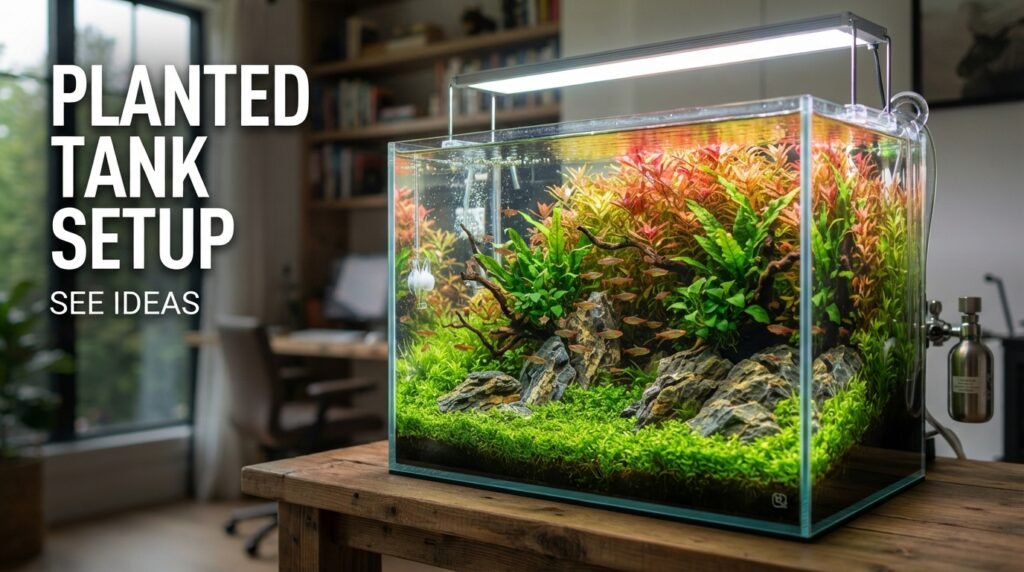
Foreground plants are generally shorter and are used near the front of an aquarium.
Dwarf Hairgrass
Dwarf hairgrass is a popular choice for creating a grass-like carpet.
When supplied with appropriate conditions, it can spread across the substrate and produce a soft green foreground. It works particularly well in nature-style and minimalist aquascapes.
A dense carpet may require suitable lighting, nutrients, and carbon availability.
Monte Carlo
Monte Carlo is another popular carpeting plant.
Its small rounded leaves can create a lush green carpet when growth conditions are suitable. It can also be planted in small groups between rocks to create a natural transition.
Dwarf Baby Tears
Dwarf baby tears can create an extremely small-leaved carpet with a delicate appearance.
It is often associated with high-tech planted aquariums and may require stronger lighting, nutrient management, and carbon supplementation for dense growth.
Glossostigma
Glossostigma is a low-growing plant that can spread across the substrate under favorable conditions.
It is particularly suitable for aquascapes where a short, bright-green foreground is desired.
Best Midground Aquascaping Plants
Midground plants provide a transition between foreground carpets and taller background vegetation.
Anubias
Anubias is a popular aquarium plant with broad leaves and a relatively slow growth habit.
It can be attached to rocks and driftwood, making it particularly useful in aquascaping layouts.
The rhizome should not be buried deeply in the substrate because this can cause problems with plant health.
Java Fern
Java fern is another versatile plant for aquascaping.
It can be attached to rocks and driftwood and is useful for adding texture to hardscape structures.
Its larger leaves create contrast against smaller foreground plants and delicate mosses.
Cryptocoryne
Cryptocoryne species are widely used in planted aquariums because they come in different sizes, shapes, and colors.
They can create attractive midground groups around rocks and wood.
Cryptocoryne plants may experience a period of leaf loss when introduced into a new environment before producing new growth adapted to their conditions.
Best Background Aquascaping Plants
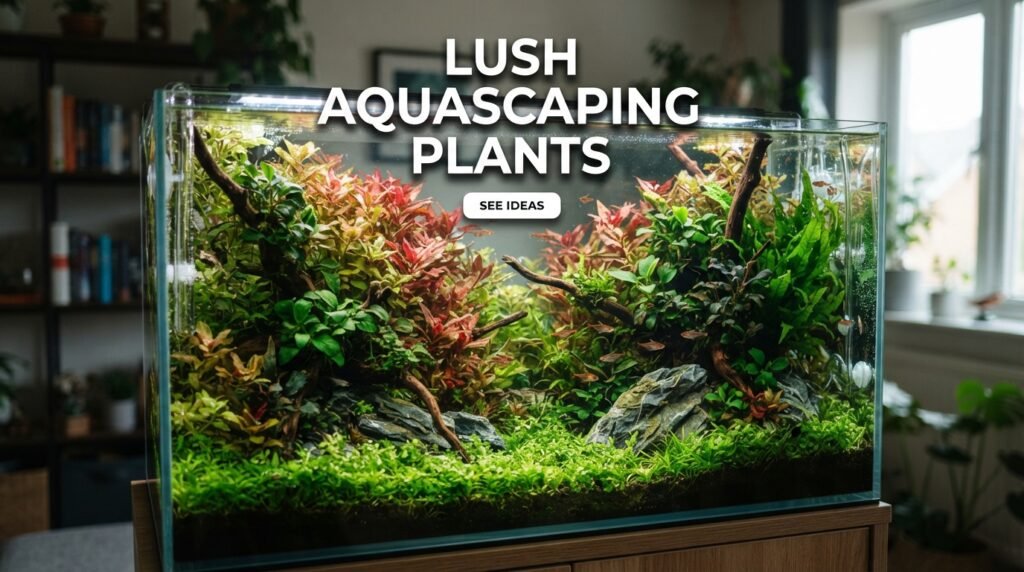
Background plants are generally taller and help create a sense of depth.
Vallisneria
Vallisneria produces long, ribbon-like leaves that can create a tall grassy background.
It is particularly useful for larger aquariums where taller vegetation is needed.
Amazon Sword
Amazon sword plants can become large focal plants in freshwater aquariums.
Their broad leaves provide strong visual contrast and can fill the rear or side portions of a tank.
Because they can grow large, they are often more suitable for medium or large aquariums.
Rotala
Rotala is a popular group of stem plants used in many aquascaping styles.
Depending on the species and growing conditions, different varieties can produce green, orange, pink, or reddish tones.
Planting several stems together can create dense background groups.
Ludwigia
Ludwigia species can provide attractive color variation in planted aquariums.
Some varieties develop stronger red coloration under suitable conditions, creating an eye-catching focal area.
Aquascaping Plants for Low-Tech Tanks
Not every aquascape needs sophisticated equipment.
Low-tech aquariums generally avoid injected CO2 and may use lower-intensity lighting. In these tanks, choosing plants with suitable growth requirements is important.
Anubias, Java fern, many Cryptocoryne species, mosses, and some Vallisneria can be considered for lower-tech setups depending on the specific aquarium conditions.
Low-tech does not mean no maintenance. Plants still require appropriate lighting, nutrients, water quality, and trimming.
Aquascaping Plants for High-Tech Tanks
High-tech planted aquariums typically use stronger lighting, injected CO2, and more deliberate nutrient management.
These conditions can support a wider range of demanding plants and faster growth.
Carpeting plants such as Monte Carlo and dwarf baby tears can be particularly attractive in high-tech layouts. Colorful stem plants can also develop stronger growth and coloration under suitable conditions.
However, higher-tech equipment also requires greater attention to balance. Excessive light without sufficient carbon and nutrient management can contribute to algae problems.
Aquascaping Mosses
Mosses are extremely useful for creating natural-looking aquascapes.
Java Moss
Java moss can grow on rocks, driftwood, and other aquarium surfaces.
It is especially useful for creating an aged, natural appearance.
Christmas Moss
Christmas moss has a branching growth pattern that can create an attractive textured appearance.
It can be attached to driftwood or rocks to create miniature forest-like structures.
Flame Moss
Flame moss grows upward in a distinctive form and can add vertical texture to an aquascape.
Mosses are particularly useful when creating forest, jungle, and nature-style layouts.
Epiphyte Aquascaping Plants
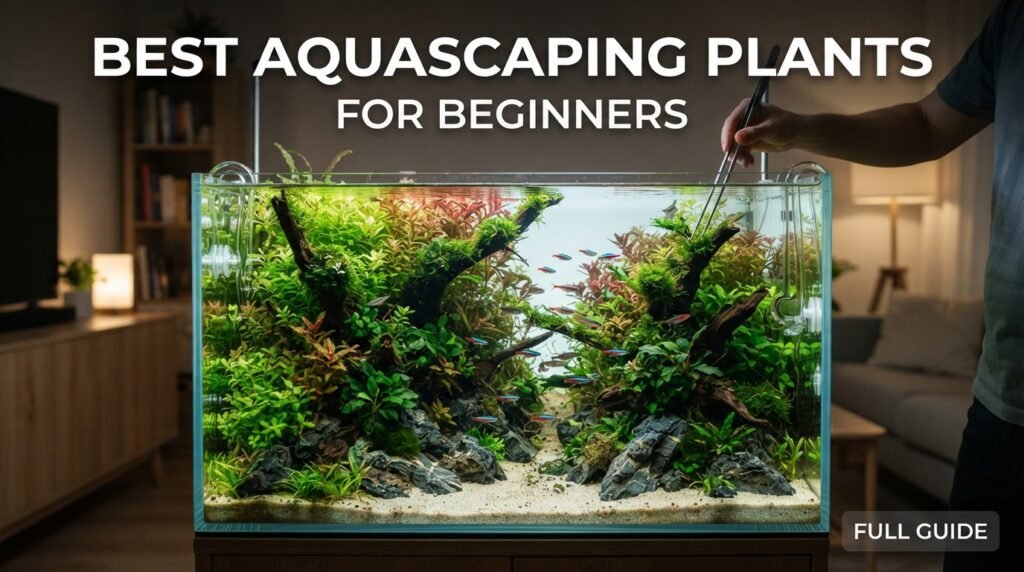
Epiphytes are plants that can grow attached to surfaces rather than requiring their roots to be buried in substrate.
Anubias and Java fern are common examples used in aquarium aquascaping.
These plants are excellent for hardscape-focused designs because they can be positioned directly onto rocks and driftwood.
Their placement can also be changed more easily than deeply rooted plants.
Floating Aquascaping Plants
Floating plants remain on the water surface and create a completely different visual effect.
Popular choices can include Amazon frogbit, Salvinia, and other suitable freshwater floating species.
Floating plants can provide shade and create hiding areas for some fish.
However, they can also block light from reaching submerged plants if allowed to cover too much of the surface. Regular thinning may therefore be necessary.
Red Aquascaping Plants
Green plants form the foundation of many aquascapes, but red plants can provide important color contrast.
Plants such as certain Rotala and Ludwigia varieties can create red, orange, or pink accents under appropriate conditions.
Rather than filling the entire aquarium with red plants, many aquascapers use them as focal points.
A small red plant group surrounded by green vegetation can draw attention to a specific area of the aquarium.
Aquascaping Plants for Nano Tanks
Small aquariums require plants that match their limited space.
Small Anubias varieties, mosses, Cryptocoryne species, Monte Carlo, and other compact plants can work well depending on the tank conditions.
Avoid selecting plants solely because they look attractive in photographs. A plant that becomes very large can quickly overwhelm a small aquarium.
Scale is one of the most important design considerations in nano aquascaping.
Aquascaping Plants for Shrimp Tanks
Plants are particularly useful in shrimp aquariums because they create surfaces for biofilm and provide hiding places.
Mosses are especially popular in shrimp tanks because their fine structure creates additional grazing surfaces.
Anubias, Java fern, Cryptocoryne, and other suitable plants can also be incorporated into shrimp-focused aquascapes.
The aquarium should still be maintained properly even when it contains dense vegetation.
Aquascaping Plants for Betta Tanks
Plants can make a betta aquarium feel more natural and provide areas for exploration and cover.
Broad-leaved plants can also create resting areas near the surface.
However, avoid allowing vegetation to completely cover the aquarium. Bettas need access to the surface for breathing.
A balanced arrangement of foreground, midground, and background plants can create a beautiful betta aquascape while preserving swimming space.
How to Arrange Aquascaping Plants
Plant placement is just as important as plant selection.
Start with the largest plants and determine where your main visual focus will be.
Then add midground plants around rocks and driftwood before filling the foreground.
Avoid planting every species in perfectly straight rows. Groups of plants usually look more natural when arranged in irregular clusters.
Use Plant Groups
Planting one species in a group often creates a stronger visual impact than scattering individual plants throughout the aquarium.
For example, a dense group of Rotala in the background can create a stronger focal area than individual stems spread across the tank.
Similarly, a small group of Cryptocoryne can provide a natural transition around a rock.
Create Different Heights
A successful planted aquarium usually contains multiple levels.
Short carpeting plants occupy the foreground, medium plants fill the center, and taller plants create a background.
This layered approach creates depth and prevents the aquarium from appearing flat.
Create Negative Space
Not every part of the aquarium needs to contain plants.
Open sand or substrate can create contrast against dense vegetation.
Negative space gives the viewer’s eye somewhere to rest and can make the planted areas appear more dramatic.
Aquascaping Plants and Driftwood
Plants and driftwood work extremely well together.
Moss can be attached to branches to create a miniature tree effect. Anubias and Java fern can also be attached to driftwood.
Tall background plants can be positioned behind the wood while smaller plants grow around its base.
The combination of natural wood and plants can make an aquarium resemble a flooded forest or riverbank.
Aquascaping Plants and Rocks
Plants can soften the appearance of hardscape materials.
Small plants growing around rocks can make them look naturally integrated into the environment.
Mosses can be used to cover portions of rock, while carpeting plants can create a green base around larger structures.
The contrast between stone texture and soft plant leaves is an important part of many aquascaping styles.
Choosing Plants Based on Aquarium Size
Before buying plants, consider their mature size.
A plant that is ideal for a large aquarium may quickly overwhelm a small tank.
| Aquarium Size | Suitable Plant Approach |
|---|---|
| Nano aquarium | Mosses, compact Anubias, small Cryptocoryne, carpeting plants |
| 10 gallon | Small foreground and midground combinations |
| 20 gallon | Mixed foreground, midground, and background planting |
| 30–40 gallon | Larger plant groups and taller background species |
| Large aquarium | Tall plants, large focal plants, and layered compositions |
Lighting for Aquascaping Plants
Lighting affects plant growth and overall aquarium appearance.
Different plants have different lighting requirements. Before purchasing a plant, check whether your aquarium lighting can support it.
Too much light without adequate carbon and nutrient management can encourage algae growth.
The goal is to establish a balanced environment where plant growth and algae control can coexist.
CO2 and Aquascaping Plants
Carbon dioxide can significantly improve the growth of many aquatic plants, particularly demanding carpeting and colorful stem plants.
However, not every aquascape requires injected CO2.
Low-tech aquariums can still be attractive when planted with species appropriate for lower-carbon environments.
The important point is to match plant selection with the equipment and maintenance routine you are prepared to provide.
Aquarium Substrate for Plants
Rooted plants benefit from an appropriate substrate that supports root development and nutrient availability.
Some aquarists use nutrient-rich planted aquarium substrates, while others use different substrate combinations depending on their setup.
Root-feeding plants may benefit from additional nutrients in the root zone, while epiphytes obtain nutrients primarily from the water column.
Fertilizing Aquascaping Plants
Plants require nutrients for healthy growth.
Important nutrients include nitrogen, phosphorus, potassium, iron, and various trace elements.
The appropriate fertilization routine depends on plant density, lighting, fish load, substrate, water parameters, and CO2 availability.
Avoid assuming that more fertilizer automatically means better growth. Excessive nutrients combined with poor balance can contribute to algae problems.
Trimming Aquascaping Plants
Regular trimming helps maintain the shape of an aquascape.
Stem plants can be trimmed and replanted to create dense groups. Carpeting plants can be trimmed when they become excessively tall.
Remove damaged or decaying leaves when appropriate.
Regular maintenance also prevents fast-growing plants from covering slower-growing species.
Common Aquascaping Plant Mistakes
Choosing Plants Without Checking Their Size
Always consider the mature size of a plant before adding it to your aquarium.
Using Too Many Species
A huge number of plant varieties can make an aquascape look chaotic.
A smaller selection of carefully chosen plants often creates a stronger design.
Ignoring Growth Rates
Fast-growing and slow-growing plants require different maintenance schedules.
Overcrowding the Aquarium
Dense planting can be attractive, but leaving some open areas creates visual balance.
Neglecting Nutrients
Plants need access to appropriate nutrients for healthy growth.
Using Excessive Light
More light is not automatically better. Lighting should match the plants and overall aquarium system.
How to Start an Aquascaping Plant Layout
Start by choosing a theme.
You might create a forest-style aquascape, minimalist layout, jungle aquarium, mountain scene, or simple planted community tank.
Choose one or two dominant plant types and then add supporting species.
Build your hardscape first, then position plants around it.
Start with larger plants in the background, medium plants around the hardscape, and smaller plants toward the foreground.
As the aquarium grows, trim and reposition plants to maintain the intended composition.
Best Plant Combination for a Natural Aquascape
A simple combination can include a low foreground carpet, a group of Cryptocoryne or similar midground plants, tall stem plants in the background, and moss attached to driftwood.
This creates several layers without making the aquarium unnecessarily complicated.
The exact species should be selected according to the aquarium’s lighting, CO2, substrate, and water conditions.
Final Thoughts
Aquascaping plants are the living foundation of a planted aquarium. They can transform rocks, driftwood, and substrate into a natural-looking underwater landscape while providing useful habitat for fish and invertebrates.
The best aquascape does not necessarily contain the largest number of plants. Instead, successful designs use plants according to their size, shape, color, growth pattern, and position within the aquarium.
Start with a clear layout, select plants that match your aquarium conditions, create different levels, leave some negative space, and plan for future growth. With regular trimming and balanced maintenance, your aquascaping plants can gradually turn a simple aquarium into a beautiful living underwater garden.
Frequently Asked Questions
What are the best plants for aquascaping?
Popular aquascaping plants include Anubias, Java fern, Cryptocoryne, Monte Carlo, dwarf hairgrass, Rotala, Ludwigia, Vallisneria, Amazon sword, and different aquarium mosses.
Which aquascaping plants are easiest for beginners?
Anubias, Java fern, many mosses, and several Cryptocoryne species are commonly considered beginner-friendly choices when their basic requirements are met.
Do aquascaping plants need CO2?
Not all aquarium plants require injected CO2. Some species can grow successfully in low-tech aquariums, while demanding carpeting and certain colorful plants may benefit greatly from additional CO2.
How many plants should I put in an aquascape?
There is no fixed number. Choose plants according to the aquarium’s size and desired design. Focus on creating balanced foreground, midground, and background areas rather than filling every available space.
What plants are best for a nano aquascape?
Compact Anubias, mosses, small Cryptocoryne varieties, and suitable carpeting plants can work well in nano aquariums.
What plants can grow on aquarium rocks?
Epiphytic plants such as Anubias and Java fern can be attached to rocks. Mosses can also be secured to suitable hardscape surfaces.
What plants can grow on driftwood?
Java moss, Christmas moss, flame moss, Anubias, and Java fern are commonly used on aquarium driftwood.
How do I make aquarium plants grow faster?
Growth depends on species and conditions. Appropriate lighting, carbon availability, nutrients, water quality, and stable aquarium conditions can support healthy growth.
Why are my aquascaping plants turning yellow?
Yellow leaves can have several causes, including nutrient deficiencies, unsuitable lighting, poor plant adaptation, or other water and environmental issues. The specific plant and aquarium conditions should be considered before changing fertilizer or equipment.
Can aquascaping plants grow without soil?
Some plants can grow without being rooted in soil or substrate. Epiphytes such as Anubias and Java fern can attach to rocks and driftwood, while floating plants remain on the water surface.
How often should aquascaping plants be trimmed?
Trimming frequency depends on the plant’s growth rate. Fast-growing stem plants may need frequent trimming, while slow-growing plants such as Anubias may require much less maintenance.
Can I use red plants in a beginner aquascape?
Yes, but some red plants can have more demanding requirements than common green plants. Choose species that match your lighting, CO2, and nutrient-management capabilities.
Are floating plants good for aquascaping?
Floating plants can add texture and shade to an aquarium. However, they should be managed so they do not completely block light from reaching submerged plants.
What is the best way to arrange aquascaping plants?
Use shorter plants in the foreground, medium plants around the hardscape, and taller plants toward the background. Planting species in groups and leaving some open space usually creates a more balanced composition.