
 By admin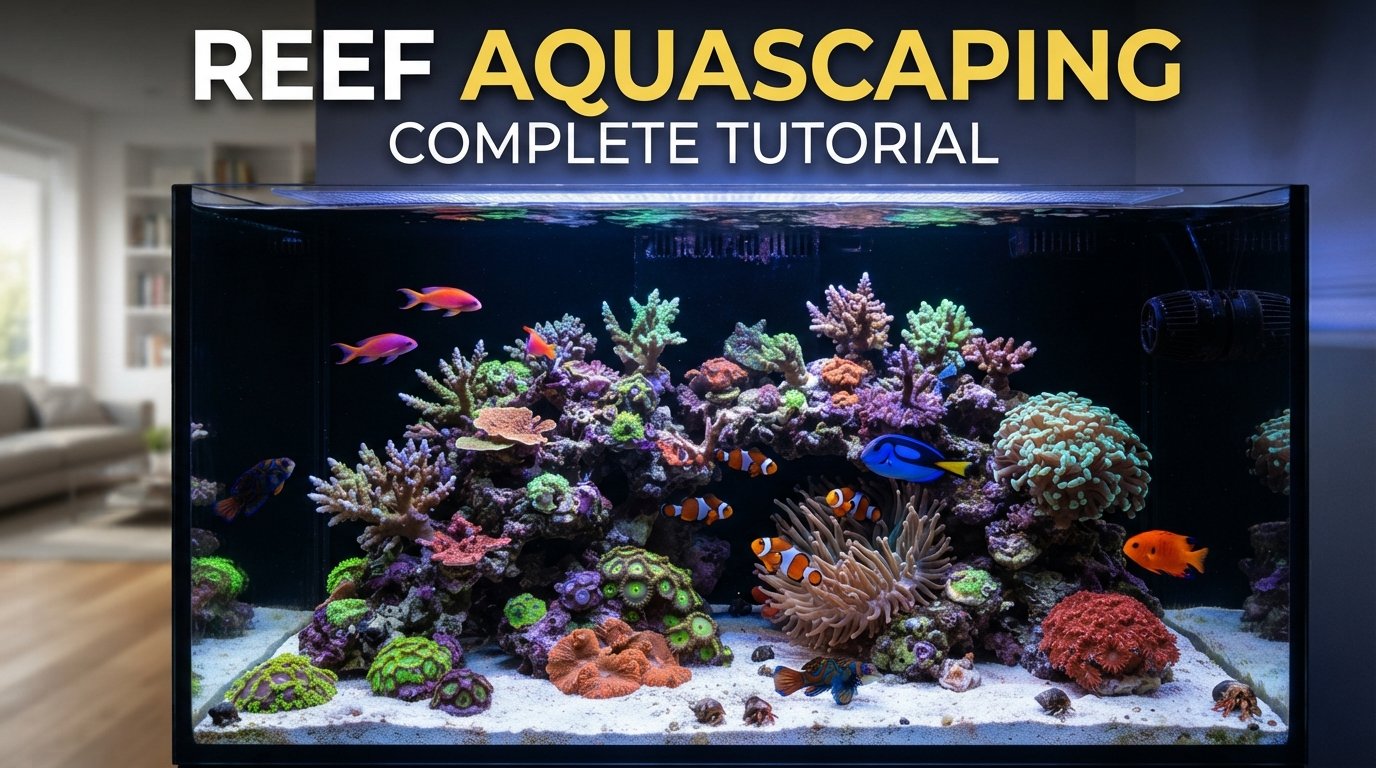
Reef aquascaping is the process of arranging live rock, reef-safe artificial rock, coral structures, sand, and other aquarium elements to create an attractive and functional saltwater aquarium. A well-planned reef aquascape does more than decorate a tank. It creates hiding places for fish, surfaces for coral growth, open swimming areas, and pathways for water movement.
Unlike ordinary aquarium decoration, reef aquascaping requires careful planning because corals are living organisms with different lighting, flow, spacing, and growth requirements. The structure must be stable, easy to maintain, and designed to support the aquarium as it matures.
Whether you are building a small nano reef or a large marine aquarium, the right aquascaping approach can turn your tank into a beautiful underwater reef landscape.
What Is Reef Aquascaping?
Reef aquascaping is the art and science of designing the rockwork and living elements inside a reef aquarium. The main structure is usually created with reef rock, which provides surfaces for beneficial bacteria, algae, corals, and other organisms.
Aquascapers arrange rocks into islands, arches, caves, shelves, branches, and valleys. Corals are then placed according to their growth patterns and environmental requirements.
The aim is to create a natural-looking reef while maintaining suitable water circulation, lighting, stability, and access for maintenance.
Why Reef Aquascaping Is Important
The structure of a reef aquarium affects nearly every part of its operation.
A well-designed aquascape can improve the appearance of the tank and provide useful habitat for fish and invertebrates. It can also create different areas of light and water movement for different coral species.
Good rock placement helps prevent debris from collecting in unreachable areas. It also makes it easier to clean the glass, inspect corals, and maintain aquarium equipment.
A poorly designed reef can become crowded, unstable, or difficult to clean. For this reason, aquascaping should be planned before livestock and corals are introduced.
Main Elements of Reef Aquascaping
| Element | Purpose |
|---|---|
| Reef rock | Creates the foundation and coral mounting surfaces |
| Sand | Adds contrast and a natural marine appearance |
| Corals | Provide color, movement, and living structure |
| Caves | Offer shelter for fish and invertebrates |
| Arches | Add height and swimming routes |
| Shelves | Provide coral placement areas |
| Open water | Creates swimming space and visual balance |
| Water flow | Delivers oxygen and helps remove waste |
| Lighting | Supports photosynthetic corals and highlights the reef |
Popular Reef Aquascaping Styles
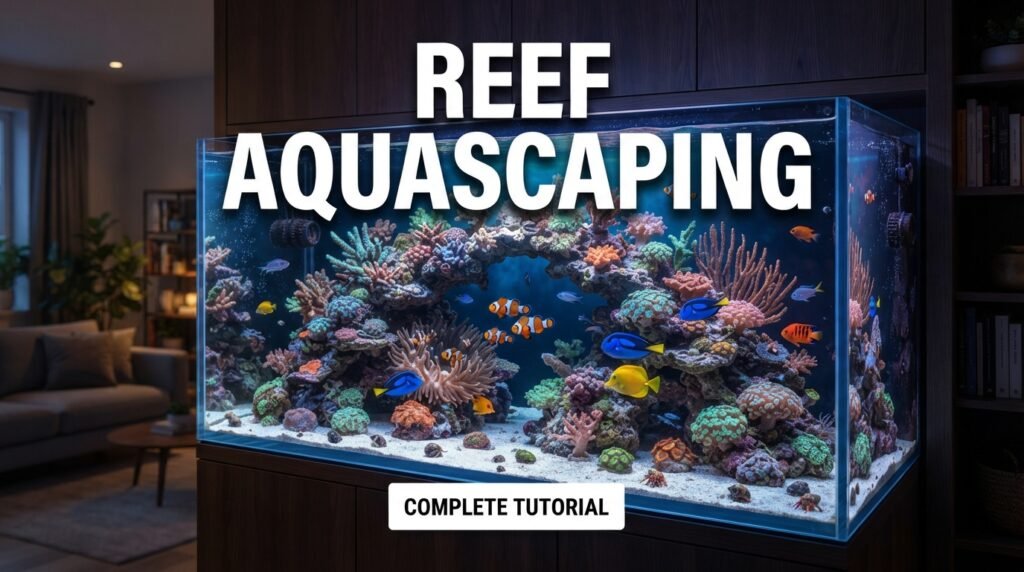
There are many reef aquascaping styles, and each creates a different visual effect.
Single Island Reef Aquascaping
A single island design uses one primary rock formation surrounded by open water or sand.
The island may be placed in the center or slightly to one side of the aquarium. An off-center position often creates a more natural composition.
This design provides plenty of open swimming space and allows the main structure to become the focal point.
Two-Island Reef Aquascaping
Two-island aquascaping divides the rockwork into two separate formations.
One island can be taller and more prominent, while the other remains shorter. The space between them creates a natural channel for fish and water movement.
This style is useful for rectangular aquariums because it creates depth and visual separation.
Arch Reef Aquascaping
Arch aquascaping uses rocks to form one or more openings beneath the structure.
Arches add height without filling the entire tank with solid rock. Fish can swim underneath them, while corals can be attached to the upper surfaces.
The arches must be firmly secured because unstable structures can collapse and damage livestock or aquarium equipment.
Bonsai Reef Aquascaping
Bonsai reef aquascaping resembles a miniature underwater tree.
A central rock or branch-like structure forms the trunk, while smaller pieces extend outward like branches.
This style is particularly attractive with branching corals. It also creates a strong sense of height while preserving open space around the structure.
Minimalist Reef Aquascaping
Minimalist reef aquascaping uses a limited amount of rock and focuses on clean lines, open water, and one strong focal structure.
The rockwork may be simple at first, but corals gradually become the main visual feature.
This style is often easier to maintain because there are fewer tightly packed areas where waste can accumulate.
Cave Reef Aquascaping
Cave-style aquascaping creates shaded spaces and enclosed areas within the rockwork.
These areas can provide shelter for shy fish, shrimp, crabs, and other invertebrates.
Caves should be designed carefully. They need to remain stable and accessible enough for cleaning and water circulation.
Reef Wall Aquascaping
A reef wall fills much of the back of the aquarium with rock.
This design provides many surfaces for coral placement, but it can restrict water movement if the rocks are packed tightly together.
To improve circulation, create gaps, channels, and openings throughout the structure.
Choosing the Right Reef Rock
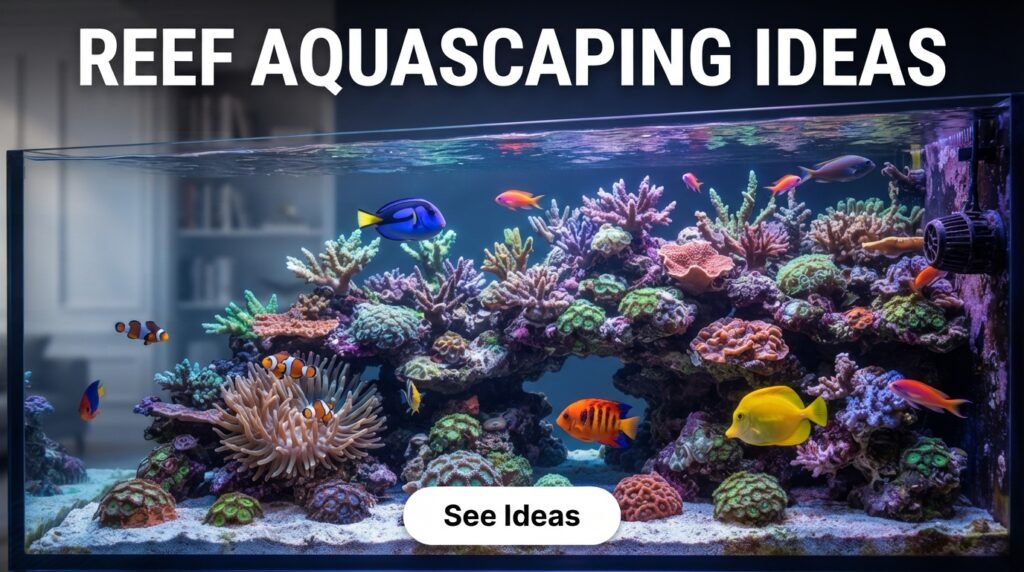
Reef rock is the foundation of your aquascape, so selecting suitable pieces is important.
Look for rocks with interesting shapes, holes, shelves, branches, and natural textures. Pieces with openings can help create caves and water pathways.
Lightweight rock can be useful because it often provides more surface area and is easier to arrange. However, all rock used in the aquarium should be suitable for marine systems and free from harmful contaminants.
Try to select several sizes:
- Large pieces for the foundation
- Medium pieces for height and support
- Smaller pieces for detail and transitions
Avoid choosing only large, heavy rocks because they may make the aquarium look crowded and limit design flexibility.
How Much Rock Should a Reef Tank Have?
There is no universal amount of rock that is perfect for every reef aquarium.
The amount depends on the rock type, filtration system, livestock, aquarium size, and desired layout.
Modern reef aquascaping often emphasizes open structures rather than filling the entire aquarium with rock. The goal is to provide adequate biological surface area while preserving swimming space and water circulation.
Your filtration system should also be considered when deciding how much rock is appropriate.
Creating Depth in Reef Aquascaping
Depth makes a reef aquarium look larger and more natural.
Use different rock heights instead of creating one flat formation. Taller structures can be positioned toward the back, while lower rocks can be placed closer to the front.
You can also create depth by placing some rocks farther away from the front glass and leaving open channels between formations.
Sand pathways, valleys, and negative space can help guide the viewer’s eye through the aquarium.
The Importance of Negative Space
Negative space is the open water or sand area surrounding the rockwork.
Many beginners try to fill every empty area, but an aquarium often looks more attractive when some space is left open.
Negative space provides swimming room for fish and allows the rockwork and corals to stand out.
It also gives corals room to grow. A reef that looks spacious during the initial setup may become crowded after several months of coral growth.
Coral Placement in Reef Aquascaping
Coral placement should be planned before the rockwork is finalized.
Different corals require different levels of light, flow, and space. Some grow slowly and remain compact, while others spread quickly or develop aggressive growth patterns.
Place corals with strong growth potential where they have enough room to expand. Avoid positioning neighboring colonies so close together that they will eventually come into contact.
Coral placement should also consider future growth, not only the appearance of the aquarium on its first day.
Creating Coral Zones
You can divide the reef into different coral zones based on lighting and water movement.
Higher rock shelves may be suitable for corals that require stronger light, depending on the aquarium’s lighting system. Lower areas and shaded sections may be appropriate for species that prefer less intense light.
Areas with stronger water movement can be used for corals that need higher flow, while calmer areas can be reserved for species that prefer gentler movement.
Always check the requirements of each coral species before placing it.
Reef Aquascaping and Water Flow
Water movement is one of the most important practical considerations in reef aquascaping.
Avoid creating a solid mass of rock that blocks circulation. Leave gaps between pieces so water can move around and through the structure.
Water flow helps transport oxygen and nutrients and can carry waste away from corals and rock surfaces.
The goal is usually to create varied movement rather than one powerful stream directed at a single location.
Observe the aquarium after pumps are installed. If debris consistently collects in one area, the rock arrangement or circulation pattern may need to be adjusted.
Lighting and Reef Aquascaping
Lighting influences both coral health and aquascape appearance.
Tall rock structures may receive stronger light, while caves and overhangs create shaded areas.
Before attaching corals permanently, observe how light reaches different parts of the aquarium.
A well-designed aquascape can provide several lighting zones, allowing you to position different corals according to their needs.
Step-by-Step Reef Aquascaping Process
Step 1: Study the Aquarium Dimensions
Consider the tank’s length, width, height, and viewing angles.
A reef aquarium viewed from three sides may require a different design from one viewed only from the front.
Step 2: Choose an Aquascaping Style
Decide whether you prefer a single island, two islands, arch, bonsai, minimalist, or cave-style reef.
Having a clear design direction makes rock selection easier.
Step 3: Select and Clean the Rock
Choose reef-safe rock with a variety of shapes and sizes.
Prepare the rock according to the requirements of your aquarium system before arranging it.
Step 4: Build the Foundation
Place the largest and most stable pieces first.
The foundation should support the upper structure without depending on unstable balancing points.
Step 5: Add Height and Detail
Use medium and smaller pieces to create shelves, arches, branches, and caves.
Avoid making the entire structure symmetrical.
Step 6: Leave Open Swimming Areas
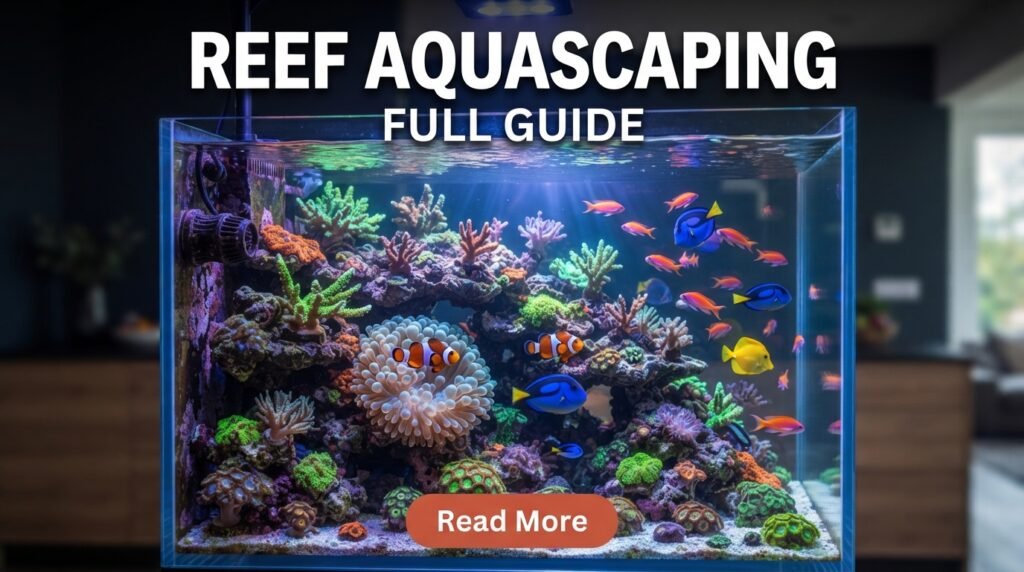
Step back and examine the aquarium.
Remove unnecessary rocks if the layout appears too crowded.
Step 7: Check Stability
Make sure the structure cannot easily shift or collapse.
Secure elevated sections with suitable reef-safe materials when necessary.
Step 8: Plan Coral Locations
Consider where different coral colonies will grow.
Leave enough space between corals and avoid placing aggressive species too close to sensitive ones.
Step 9: Test Water Movement
Run the circulation equipment and observe the flow.
Look for dead spots, debris accumulation, and areas where water movement is too strong.
Reef Aquascaping for Nano Tanks
Nano reef aquariums require careful attention to scale.
A single small island, bonsai structure, or compact arch can create an attractive layout without overwhelming the tank.
Choose smaller rock pieces and avoid large structures that block most of the swimming area.
Compact corals and carefully selected invertebrates can complement the design, but the aquarium should not become overcrowded as the animals grow.
Reef Aquascaping for Large Tanks
Large aquariums offer more space for dramatic layouts.
You can create multiple islands, long arches, valleys, caves, shelves, and branching structures.
A large reef can include several focal points connected by lower rockwork.
Even in a large aquarium, open space remains important. Leaving sand channels and open water can make the layout appear more impressive and natural.
Reef Aquascaping With Sand
Sand creates contrast against darker rock and colorful corals.
It can be used to form open areas, pathways, and valleys between reef structures.
The depth and type of sand should be selected according to the needs of your livestock and maintenance routine.
Avoid creating areas where debris can accumulate and remain difficult to remove.
Reef Aquascaping With Driftwood
Natural driftwood is generally associated with freshwater aquariums and is not automatically suitable for reef systems.
For a saltwater reef tank, use only materials specifically confirmed to be safe for marine aquariums. Reef-safe artificial structures can provide a wood-like appearance without introducing unsuitable materials.
Always verify the safety of any decorative material before placing it in a reef aquarium.
Reef Aquascaping With Artificial Rock
Artificial reef rock can be useful for creating customized shapes.
It may be available in branching, porous, shelf-like, or modular forms.
Artificial rock can help aquarists design specific structures without relying entirely on naturally shaped pieces.
The material must be suitable for marine aquariums and properly prepared according to the manufacturer’s instructions.
Common Reef Aquascaping Mistakes
Using Too Much Rock
Excessive rock can reduce swimming space and restrict circulation.
Building Unstable Structures
Unstable rocks may collapse and injure fish, damage corals, or harm aquarium equipment.
Ignoring Coral Growth
Corals can spread and compete for space, so future growth must be considered.
Blocking Water Flow
Tightly packed rockwork can create stagnant areas where debris accumulates.
Placing Rock Against the Glass
Leaving access around the rockwork makes glass cleaning and maintenance easier.
Making the Layout Too Symmetrical
Perfectly balanced structures may look artificial. Natural reefs usually contain irregular shapes and varied heights.
Forgetting the Viewing Angle
A design that looks attractive from the front may appear unbalanced from the side.
Adding Corals Too Close Together
Corals need space according to their growth habits and compatibility.
How to Make Reef Aquascaping Look Natural
Natural-looking reef aquascaping usually combines irregular rock shapes, different elevations, open spaces, and varied textures.
Avoid making every rock the same size or arranging the entire structure in a straight line.
Create a clear focal point, then use smaller structures to support it.
Allow corals to gradually cover portions of the rockwork. Over time, their growth will make the reef look more established and organic.
Reef Aquascaping for Fish and Invertebrates
Fish behavior should influence the design.
Some fish need open swimming lanes, while others prefer caves, crevices, or rock surfaces.
Shrimp, crabs, snails, and other invertebrates may benefit from hiding places and textured surfaces.
If your aquarium contains territorial fish, separate rock structures can create visual boundaries and reduce constant interaction between individuals.
Maintenance-Friendly Reef Aquascaping
A reef aquarium should be attractive but also easy to maintain.
Leave enough room to clean the front and side glass. Make sure pumps, heaters, filters, and other equipment can be accessed without dismantling the aquascape.
Avoid narrow spaces where food and waste may become trapped.
As corals grow, inspect the layout regularly. You may need to trim corals, move colonies, or adjust water flow to preserve space and circulation.
Reef Aquascaping Color Planning
Rockwork usually provides neutral colors, while corals add much of the visual interest.
A balanced reef can combine green, purple, orange, red, pink, blue, and yellow coral tones.
Avoid placing every colorful coral in one area. Distributing colors throughout the aquarium can create a more balanced appearance.
Color should always be considered alongside coral compatibility, lighting, growth rate, and maintenance needs.
Designing a Reef Tank Focal Point
A focal point is the main feature that attracts attention.
It could be a tall arch, bonsai-style rock, large coral colony, branching structure, or elevated reef shelf.
Placing the focal point slightly off-center can create a more natural composition.
Supporting rocks and coral groups should complement the main feature rather than compete with it.
Final Thoughts
Reef aquascaping combines creativity, planning, and marine aquarium knowledge. A successful reef layout should provide stable rockwork, open swimming areas, suitable coral placement locations, effective water circulation, and easy access for maintenance.
The most attractive aquascape is not necessarily the one with the most rocks or corals. A simple, well-planned structure can become more impressive as corals grow and establish themselves.
Start with a stable foundation, create different heights, leave negative space, consider future coral growth, and design the rockwork around water movement. With careful planning and regular maintenance, reef aquascaping can transform a saltwater aquarium into a living underwater landscape.
Frequently Asked Questions
What is reef aquascaping?
Reef aquascaping is the process of arranging reef rock, sand, coral structures, and other marine-safe materials to create a functional and attractive saltwater aquarium.
What is the best reef aquascaping style?
Popular styles include single islands, two islands, arches, bonsai structures, minimalist layouts, caves, and reef walls. The best design depends on the aquarium size, livestock, coral types, and personal preference.
How much rock should I use in a reef tank?
The appropriate amount depends on the rock type, filtration system, livestock, and aquarium dimensions. Use enough rock for biological support while preserving swimming space and water circulation.
Should reef rocks be glued together?
If the structure is unstable or contains elevated sections, suitable reef-safe adhesives, putties, or securing methods may be helpful. Stability is especially important in layouts with arches and tall structures.
How do I create more depth in a reef aquascape?
Use different rock heights, place structures at different distances from the front glass, and create open channels, valleys, and sand pathways.
Should reef rock touch the aquarium glass?
Leaving some accessible space around the rockwork can make cleaning and maintenance easier. It also helps prevent difficult-to-reach areas from becoming crowded.
How can I prevent dead spots in a reef tank?
Avoid tightly packing rocks together. Create gaps and channels, then adjust circulation equipment to improve water movement around the structure.
How should I place corals in a reef aquascape?
Place corals according to their lighting, flow, spacing, and growth requirements. Leave enough room for colonies to expand and avoid positioning aggressive corals too close to sensitive species.
Can I change my reef aquascape after adding corals?
You can make changes, but major rearrangements may disturb livestock and established corals. It is better to create a stable long-term design before introducing sensitive animals.
Is artificial rock suitable for reef aquascaping?
Artificial rock can be suitable if it is specifically designed and confirmed safe for marine aquariums. Follow the preparation instructions provided for the material.
Can I use freshwater driftwood in a reef tank?
Freshwater driftwood should not automatically be considered safe for saltwater aquariums. Use only materials confirmed to be suitable for reef systems.
How high should reef rock be?
The height depends on the aquarium’s dimensions, lighting, coral requirements, and desired design. Leave enough open water above the structure and avoid blocking circulation.
What is negative space in reef aquascaping?
Negative space is the open water or sand surrounding the rockwork. It improves visual balance, creates swimming areas, and allows room for coral growth.
How do I make reef aquascaping look natural?
Use irregular rock shapes, varied heights, caves, arches, open spaces, and different textures. Avoid excessive symmetry and plan for coral growth to develop the reef over time.