
 By admin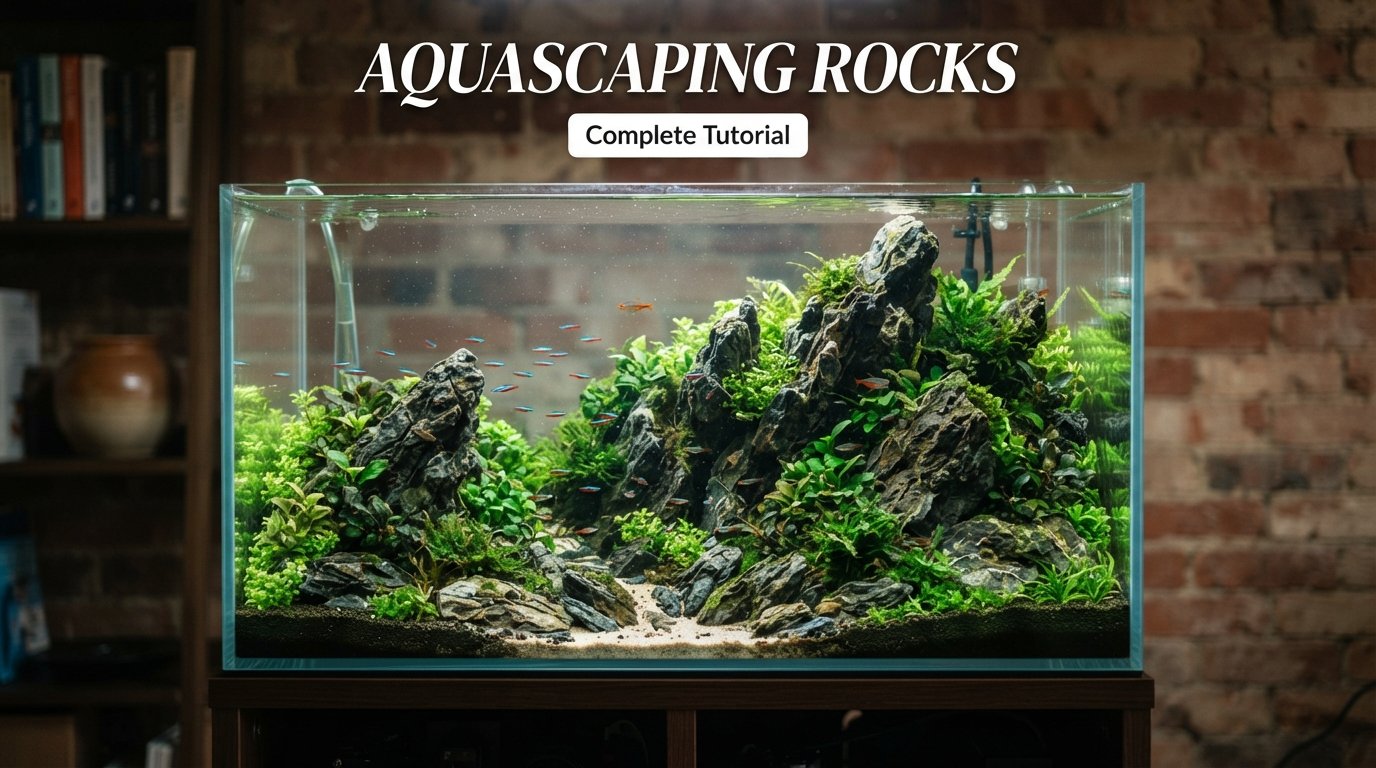
Aquascaping rocks are one of the most important hardscape elements in a planted aquarium. They create the foundation of an underwater landscape and can be used to build mountains, cliffs, valleys, caves, islands, pathways, and other natural-looking formations. The right rocks can make aquarium plants look more attractive while giving the entire aquascape structure, depth, and character.
Choosing aquascaping rocks is not simply about finding the most attractive stones. Different rocks have different colors, textures, shapes, weights, and effects on aquarium water chemistry. Some are ideal for planted freshwater aquariums, while others may influence pH or hardness and therefore require more careful consideration.
Whether you are creating a small nano aquascape, a large planted aquarium, an Iwagumi layout, or a nature-style tank, understanding how to select and arrange aquascaping rocks can help you build a stable and visually balanced aquarium.
What Are Aquascaping Rocks?
Aquascaping rocks are stones selected specifically for use in aquarium hardscape designs. They form the structural foundation around which aquatic plants, substrate, driftwood, and other elements are arranged.
Unlike ordinary decorative stones, aquarium rocks should be safe for the intended aquarium environment. They should not contain harmful substances, sharp contaminants, or coatings that could negatively affect fish and invertebrates.
Aquascaping rocks are available in many colors and textures. Some have dramatic cracks and sharp edges, while others have smooth surfaces and rounded shapes.
The appearance of the rock should complement the overall aquascaping style.
Why Aquascaping Rocks Matter
Rocks provide much more than decoration.
They create visual height and depth, divide different areas of an aquarium, provide surfaces for plants such as mosses and epiphytes, and create hiding places for fish and shrimp.
Rocks can also influence the way water moves through the aquarium. Carefully positioned gaps and channels allow water to circulate around the hardscape.
From a design perspective, rocks help create a focal point. A large stone can become the main feature of an aquascape, while smaller stones can support the composition.
Popular Types of Aquascaping Rocks
Several rock types are commonly used in aquarium aquascaping.
| Rock Type | Appearance | Common Aquascaping Use |
|---|---|---|
| Seiryu stone | Gray with dramatic white veins | Iwagumi and mountain layouts |
| Dragon stone | Brown, porous, textured | Nature and jungle aquascapes |
| Lava rock | Dark, rough, porous | Natural and volcanic layouts |
| Slate | Flat and layered | Cliffs, terraces, and structures |
| Ohko stone | Earthy and highly textured | Natural planted aquariums |
| Ryuoh stone | Dark, rugged, irregular | Mountain-style layouts |
| River stones | Smooth and rounded | River and natural layouts |
| Granite | Hard and varied | Large structural layouts |
| Basalt | Dark and dense | Minimalist and volcanic designs |
The suitability of a particular rock depends on your aquarium inhabitants and water chemistry requirements.
Seiryu Stone
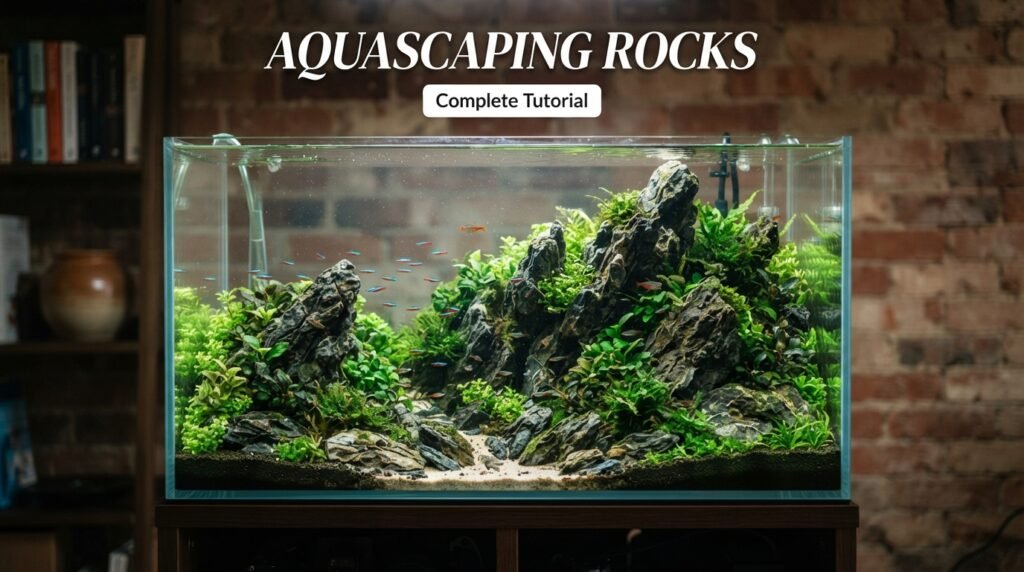
Seiryu stone is one of the most recognizable aquascaping rocks.
It typically has a gray or blue-gray appearance with striking white veins and angular surfaces.
The dramatic texture makes it particularly popular for mountain-style aquascapes and Iwagumi designs.
Seiryu stone can affect water hardness and pH because of its mineral composition. Aquarists should therefore consider their water parameters and livestock before using large amounts of it.
Dragon Stone
Dragon stone, often recognized by its highly textured and hole-filled surface, is popular for natural-looking aquascapes.
Its earthy brown color works especially well with green aquarium plants.
The numerous holes and irregular surfaces provide opportunities for attaching mosses and epiphytic plants.
Because of its texture, dragon stone can collect substrate and debris in its holes, so it may require thorough cleaning before use.
Lava Rock
Lava rock is formed from volcanic material and usually has a dark, porous appearance.
Its rough texture can create an interesting contrast with soft aquatic plants.
Lava rock is also useful as a structural material because its irregular surface can provide good grip between pieces.
It can be used in mountain, volcanic, jungle, and minimalist aquascapes.
Slate
Slate has a layered, flat appearance that makes it useful for creating cliffs, terraces, shelves, and stacked structures.
Its relatively flat surfaces can produce strong horizontal lines.
When using slate, inspect each piece carefully for sharp edges and ensure that the material is suitable for aquarium use.
Ohko Stone
Ohko stone is known for its earthy appearance and heavily textured surface.
Its natural brown tones work particularly well with green plants and driftwood.
The rock’s irregular holes can help create a weathered landscape.
As with any porous rock, cleaning can take time because substrate and debris can become trapped in the surface.
Ryuoh Stone
Ryuoh stone has a rugged appearance with dramatic ridges, cracks, and irregular shapes.
It can be used to create strong mountain formations.
Because individual pieces can have very different shapes, it is useful to purchase several pieces and arrange them together before deciding on the final composition.
River Stones
Smooth river stones can create a softer and more peaceful aquascape.
They work particularly well for river-style layouts and natural aquarium designs.
Their rounded shapes contrast with the sharp textures of rocks such as Seiryu or lava rock.
Always make sure collected stones are properly identified and cleaned before considering them for aquarium use.
Granite
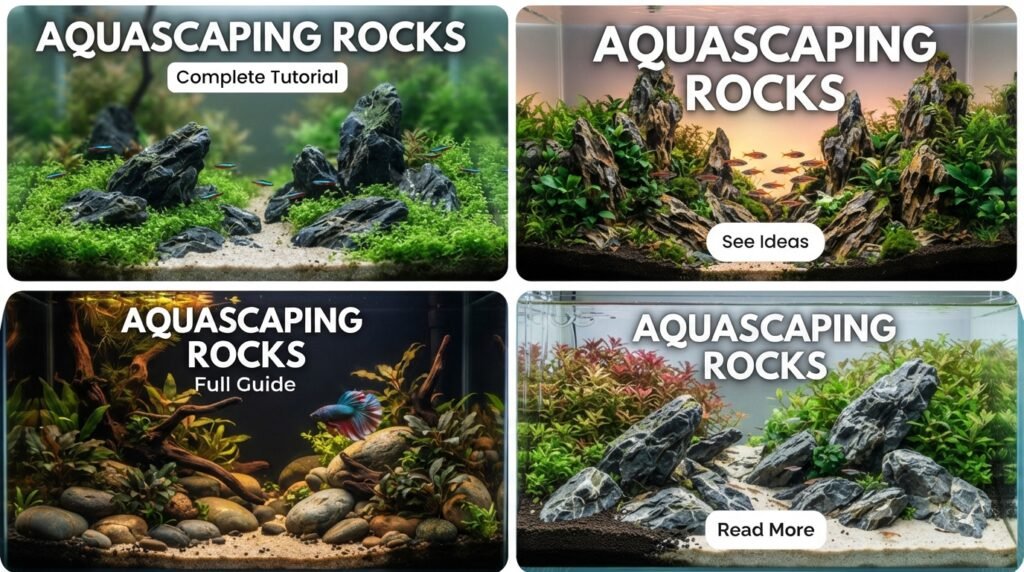
Granite is a dense and durable rock that can be used for larger aquarium structures.
It comes in different colors and patterns depending on its mineral composition.
Because granite is heavy, ensure that the aquarium and substrate can safely support the planned arrangement.
Basalt
Basalt is generally dark and dense and can create a strong contrast against bright green plants.
Its darker appearance works well in minimalist aquascapes and volcanic-themed layouts.
As with all rocks, test or verify the material before placing it into an established aquarium.
Choosing Aquascaping Rocks
The first step is to determine what style of aquascape you want to create.
If you want a dramatic mountain layout, angular rocks with strong ridges may be appropriate.
For a peaceful river scene, smooth rounded stones may be better.
For a minimalist Iwagumi design, a small collection of carefully selected rocks can create the entire composition.
Think about the aquarium’s size as well. Large rocks can overwhelm a nano aquarium, while very small rocks may look insignificant in a large tank.
Consider Rock Color
Rock color should complement the plants and substrate.
Dark rocks can create a strong contrast against bright green plants.
Gray stones can produce a clean, modern appearance.
Brown and earthy rocks can create a warm, natural appearance.
Try to avoid using too many unrelated rock colors in the same aquascape unless you are intentionally creating a mixed-rock design.
Consider Rock Texture
Texture is just as important as color.
A heavily textured rock creates shadows and visual interest.
Smooth rocks provide a softer appearance.
Combining dramatically textured rocks with delicate plants can create a strong contrast.
The texture can also influence how easily plants and moss attach to the rock.
Consider Rock Shape
Shape determines how the rock contributes to the overall composition.
Tall rocks can create height.
Flat rocks can create shelves.
Long rocks can direct the viewer’s eye.
Small irregular stones can fill gaps and create transitions.
Before adding substrate or plants, place the rocks inside the empty aquarium and experiment with different arrangements.
The Rule of Three in Rock Arrangement
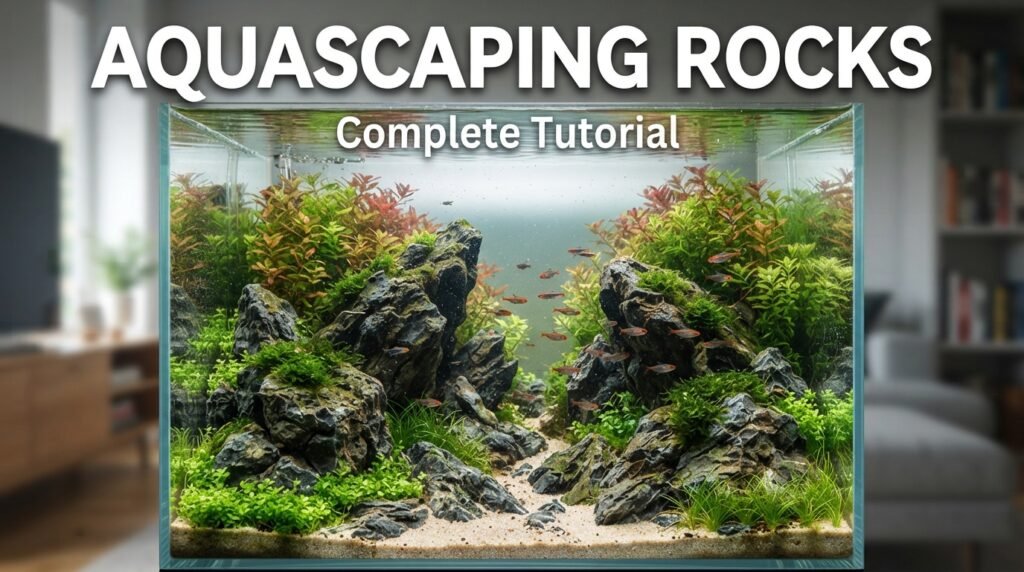
Many aquascapers use an odd-number principle when arranging rocks.
Instead of using identical pairs, try working with three, five, or another uneven number of major stones.
One large stone can serve as the primary focal point while smaller stones support it.
This can help prevent the composition from looking too symmetrical.
Creating a Focal Rock
A focal rock is usually the largest or most visually interesting stone in the aquarium.
It should attract attention without making the entire composition feel unbalanced.
Positioning the main rock slightly away from the center can create a more natural composition.
Supporting rocks should generally complement its direction, texture, and visual weight.
Creating Mountains With Aquascaping Rocks
Mountain-style aquascapes use rocks of different sizes and heights to create an elevated landscape.
Start with the largest foundation rocks.
Add smaller pieces around them to create slopes and transitions.
Avoid making every rock face point in a different direction. Repeating similar angles can make the formation look more cohesive.
Plants can then be used to soften the edges and create the impression of a natural landscape.
Iwagumi Aquascaping Rocks
Iwagumi is a minimalist aquascaping style that relies heavily on stone arrangement.
A primary stone, often called the main stone, establishes the visual direction of the layout. Supporting stones create balance and reinforce the composition.
Because there are relatively few decorative elements, the shape and position of each rock become extremely important.
Low-growing carpeting plants are commonly used to keep attention on the rock formations.
Rock and Driftwood Combinations
Rocks and driftwood can work together to create complex natural landscapes.
A large rock can anchor a piece of driftwood and make it appear more integrated into the environment.
Smaller stones can surround the base of the wood.
Moss can be attached to the wood while carpeting plants grow around the rocks.
The contrast between hard stone and organic wood creates visual variety.
Aquascaping Rocks for Nano Tanks
Nano aquariums require careful scale.
A single large stone may become the dominant feature, so select rocks according to the aquarium’s dimensions.
Small dragon stone pieces, lava rock, slate fragments, and appropriately sized natural stones can be useful depending on the desired design.
Avoid filling the entire aquarium with rock. Open space is especially valuable in a small tank.
Aquascaping Rocks for Large Aquariums
Large tanks allow you to create more dramatic rock formations.
You can use multiple focal structures, large mountain formations, long valleys, arches, and extensive rock pathways.
Large aquariums can also accommodate several types of rockwork if they are carefully coordinated.
However, avoid creating too many unrelated focal points. A clear visual hierarchy helps the aquascape remain organized.
How to Arrange Aquascaping Rocks
Start with the largest rocks.
Place them inside the empty aquarium and view the layout from the front, sides, and above.
Rotate individual pieces until their shapes work together.
Once the main composition is established, add supporting rocks.
Finally, use smaller stones to create transitions between the major formations.
Creating Depth With Rocks
Depth can make a small aquarium appear larger.
Place larger structures toward the back and smaller rocks toward the front.
Create pathways that narrow toward the rear of the aquarium to produce a perspective effect.
Another technique is to use similarly shaped rocks at decreasing sizes as they move toward the background.
Creating Valleys
A valley can be formed by leaving an open channel between two rock formations.
The channel can contain sand or low-growing plants.
This creates a visual path through the aquarium and can make the layout feel deeper.
Valleys are particularly effective in mountain-style and nature-style aquascapes.
Creating Caves and Overhangs
Caves provide hiding spaces for fish and shrimp while adding depth to the hardscape.
When creating caves, make sure the rocks are stable.
Avoid balancing heavy rocks precariously on small pieces.
If necessary, use appropriate aquarium-safe methods to secure the structure.
How to Make Rocks Look Natural
Avoid arranging every rock so that it looks perfectly placed.
Natural landscapes contain irregular shapes and different elevations.
Try to create a dominant direction. For example, if the main rock slopes toward the right, supporting rocks can follow a similar visual direction.
Plants can be used to soften unnatural edges and connect separate rock formations.
Preparing Aquascaping Rocks
Rocks should be cleaned before they are placed in an aquarium.
Remove loose dirt and debris with appropriate cleaning methods.
For porous rocks, inspect holes and crevices carefully because dust and sediment may remain trapped inside.
Never use household cleaning chemicals or substances that could leave harmful residues.
The preparation method should also depend on the source and type of rock.
Testing Rocks Before Aquarium Use
If you are unsure about a rock’s composition, research or test it before adding it to the aquarium.
Some mineral-rich rocks can increase water hardness or alter pH.
This may be beneficial or undesirable depending on the aquarium inhabitants.
Testing is particularly important when using rocks collected outdoors rather than commercially prepared aquarium materials.
Aquascaping Rocks and Water Chemistry
Some rocks are relatively inert, while others contain minerals that can influence water parameters.
If you maintain fish or shrimp that require specific water conditions, consider this before choosing your hardscape.
A rock that is perfectly suitable for one aquarium may not be appropriate for another.
The effect can also depend on the quantity of rock used and the starting chemistry of the aquarium water.
Aquascaping Rocks and Aquarium Plants
Rocks provide excellent surfaces for certain plants.
Mosses can be attached to textured surfaces.
Anubias and Java fern can be positioned around or attached to suitable rocks.
Carpeting plants can grow around the base of the hardscape.
The contrast between green plants and stone is one of the defining visual features of planted aquariums.
Common Aquascaping Rock Mistakes
Using Too Many Different Rock Types
Combining many unrelated rock styles can make an aquascape look chaotic.
Ignoring Scale
A huge rock can overwhelm a small aquarium.
Building Unstable Structures
Loose rocks can collapse and damage the aquarium or livestock.
Blocking Water Flow
A solid wall of rocks can create areas with poor circulation.
Ignoring Water Chemistry
Some rocks can affect pH or hardness.
Choosing Rocks Only by Color
Shape and texture are often more important than color when creating a natural composition.
Filling Every Empty Area
Open space is an important part of aquascaping.
How to Secure Aquascaping Rocks
Large or elevated structures should be stable before fish are introduced.
Depending on the design, aquascapers may use aquarium-safe adhesives, epoxy putty, or other suitable securing methods.
The safest approach is to create a stable foundation first rather than relying entirely on adhesive.
Make sure rocks cannot easily shift when touched or when aquarium inhabitants move around them.
Aquascaping Rocks and Substrate
The relationship between rock and substrate is important.
Large foundation rocks can be positioned before adding substrate so that they sit securely.
Smaller stones can then be partially surrounded by substrate to create a more natural transition.
Avoid creating unstable piles where rocks are resting only on loose substrate.
Maintaining Aquascaping Rocks
Over time, algae, biofilm, and debris may accumulate on rock surfaces.
Some algae growth is normal in an established aquarium, but excessive buildup may affect the appearance.
Maintenance should focus on keeping the aquarium balanced rather than attempting to make every rock completely clean.
Aquarium inhabitants such as certain snails and shrimp may also help consume some types of algae.
Final Thoughts
Aquascaping rocks form the structural foundation of many beautiful planted aquariums. From dramatic Seiryu stone mountains to soft river-stone landscapes, the right hardscape can completely change the appearance of an aquarium.
When choosing aquascaping rocks, consider their shape, size, texture, color, weight, and potential effect on water chemistry. Think about the aquarium’s dimensions and choose a rock style that supports your intended aquascaping theme.
Start with a strong focal stone, add supporting pieces, create different heights, leave negative space, and make sure every structure is stable. Once plants grow around the rocks, the hardscape will become part of a living underwater landscape.
With thoughtful planning, even a small collection of carefully selected rocks can create an impressive aquascape.
Frequently Asked Questions
What are the best rocks for aquascaping?
Popular choices include Seiryu stone, dragon stone, lava rock, slate, Ohko stone, Ryuoh stone, river stones, granite, and basalt. The appropriate choice depends on your aquarium’s water chemistry and desired design.
What is the most popular aquascaping rock?
Seiryu stone and dragon stone are among the most recognizable choices for freshwater aquascaping because of their distinctive textures and shapes.
Do aquascaping rocks affect pH?
Some rocks can influence pH and water hardness depending on their mineral composition. Always consider this when selecting hardscape for fish or shrimp with specific water requirements.
How do I clean aquascaping rocks?
Remove loose dirt and debris using aquarium-appropriate cleaning methods. Porous rocks should be inspected carefully because dirt can remain inside their holes and crevices.
Can I use rocks from outside in my aquarium?
Outdoor rocks should not be added automatically. They should first be identified, cleaned, and assessed for potential contaminants and effects on water chemistry.
How do I know if a rock is aquarium safe?
Use materials specifically sold or confirmed for aquarium use when possible. If collecting rocks yourself, identify their composition and assess whether they could contain contaminants or alter water chemistry.
How many rocks should I use in an aquascape?
There is no fixed number. A small aquarium may need only a few carefully selected pieces, while a large aquarium can require many rocks to create a proportionate structure.
How do I arrange aquascaping rocks?
Start with the largest focal rock, add supporting rocks, and then use smaller pieces to create transitions. Vary the heights and leave open areas for depth and balance.
Should rocks be placed before substrate?
Large foundation rocks are often positioned securely before or during substrate installation so they do not shift easily. Smaller decorative stones can then be integrated into the substrate.
Can I glue aquascaping rocks together?
Aquarium-safe adhesives and epoxy products can be used for certain structures. However, the foundation should be stable on its own whenever possible.
Which rocks are best for Iwagumi?
Iwagumi layouts commonly use angular, textured stones such as Seiryu-type rocks. The exact rock choice depends on availability and the desired composition.
What rocks are best for planted aquariums?
Many aquarium-safe rocks can work in planted tanks. Seiryu, dragon stone, lava rock, slate, and other suitable stones are popular choices, but water chemistry should always be considered.
Can aquascaping rocks be used with shrimp?
Yes, provided the rocks are aquarium safe and compatible with the shrimp’s required water parameters. Be especially careful with rocks that can significantly alter hardness or pH.
How do I make aquascaping rocks look natural?
Use different sizes and heights, maintain a consistent visual direction, avoid excessive symmetry, and surround the rocks with appropriately scaled plants and substrate.
Should aquascaping rocks touch the aquarium glass?
It is generally useful to leave some access around the rockwork so the glass can be cleaned and the aquarium can be maintained more easily.