
 By admin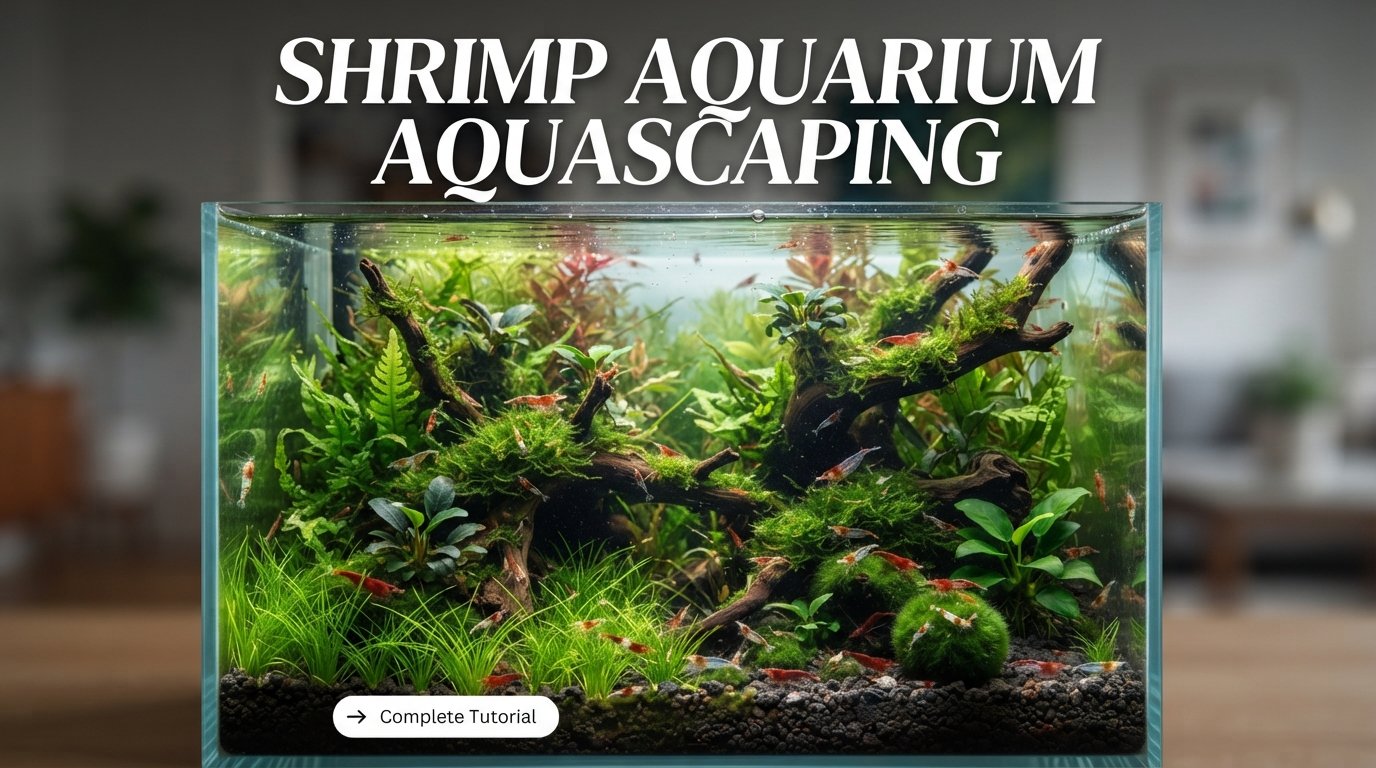
Shrimp aquarium aquascaping is the art of designing a freshwater aquarium specifically around the needs and natural behavior of ornamental shrimp. A well-planned shrimp tank combines aquatic plants, mosses, rocks, driftwood, substrate, open areas, and hiding places to create a healthy and attractive miniature environment.
Shrimp are small, but they can make an aquarium incredibly interesting to watch. They spend much of their time grazing on surfaces, exploring plants, climbing across driftwood, and hiding among rocks and moss. Because of this behavior, good shrimp aquarium aquascaping should focus on creating plenty of usable surfaces rather than simply filling the aquarium with decorations.
Whether you keep colorful Neocaridina shrimp, delicate Caridina shrimp, or another suitable freshwater species, a thoughtfully designed aquascape can make the aquarium more natural while giving the shrimp plenty of places to explore.
What Is Shrimp Aquarium Aquascaping?
Shrimp aquarium aquascaping is the process of creating a planted and structured aquarium that provides both visual appeal and suitable habitat for freshwater shrimp.
Unlike a display aquarium designed mainly for fish, a shrimp aquarium benefits from small details. Moss-covered rocks, fine-leaved plants, driftwood, caves, and textured surfaces can all become important areas for shrimp to graze and hide.
The goal is to create a balanced environment with good water circulation, stable conditions, plant growth, and plenty of natural surfaces.
Why Is Aquascaping Important for Shrimp?
Shrimp are natural grazers. They constantly investigate surfaces for algae, biofilm, microorganisms, and other edible material.
A bare aquarium may provide fewer surfaces for this behavior.
A planted aquascape can create a much more complex environment. Plants, wood, rocks, and substrate provide different textures that shrimp can explore.
Aquascaping also provides hiding areas, which can be particularly useful for young shrimp and shrimp that are vulnerable during molting.
Best Shrimp Aquarium Aquascaping Styles
There are many ways to design a shrimp aquarium.
| Aquascaping Style | Main Feature | Best For |
|---|---|---|
| Moss Garden | Dense moss growth | Shrimp colonies |
| Jungle Style | Heavy plant growth | Natural appearance |
| Rock Garden | Small stones and plants | Minimalist tanks |
| Driftwood Style | Wood and moss | Natural habitat |
| Island Style | Central structure | Open layouts |
| Carpet Style | Low-growing plants | Modern designs |
| Forest Style | Branching wood | Detailed aquascapes |
| Minimalist Style | Few elements | Easy maintenance |
Moss Garden Shrimp Aquascape
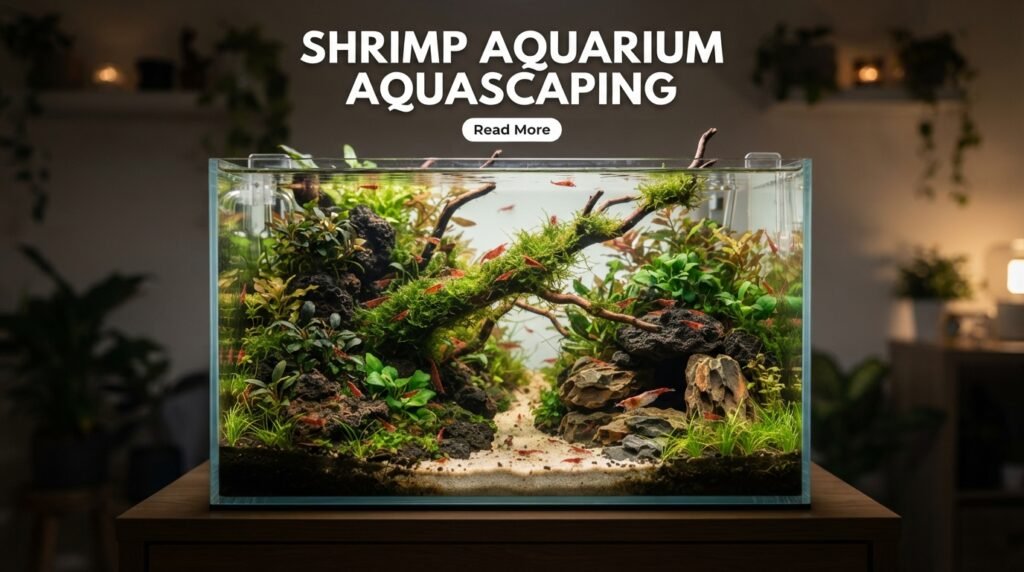
A moss garden is one of the most popular ideas for a shrimp aquarium.
Moss provides a complex network of tiny branches and leaves that shrimp can explore.
Java moss, Christmas moss, and other suitable aquarium mosses can be attached to rocks or driftwood.
As the moss grows, it creates a dense natural environment with many small surfaces.
A moss garden can be particularly useful in breeding aquariums because young shrimp can move through the dense growth.
Jungle-Style Shrimp Aquarium
A jungle aquascape focuses on dense plant growth.
Use several plant types with different textures and heights.
Tall plants can occupy the background, while mosses and smaller plants cover the foreground and hardscape.
The aquarium should still have open areas where you can observe the shrimp.
A jungle tank can look especially attractive as plants mature and begin to overlap naturally.
Rock Garden Shrimp Aquascaping
Small rocks can create an attractive minimalist shrimp tank.
Instead of using one huge rock formation, arrange several stones of different sizes.
Add moss or small plants around them.
The gaps between the rocks create small exploration areas for shrimp.
Make sure the rocks are aquarium-safe and stable before introducing livestock.
Driftwood Shrimp Aquascape
Driftwood is excellent for creating a natural shrimp habitat.
Its irregular surface provides plenty of places for biofilm to develop.
Attach mosses or suitable epiphytic plants to the wood to increase surface area.
Branching driftwood can also create a miniature forest appearance.
Choose a piece that fits the aquarium without occupying all of the available swimming and grazing space.
Island-Style Shrimp Aquarium
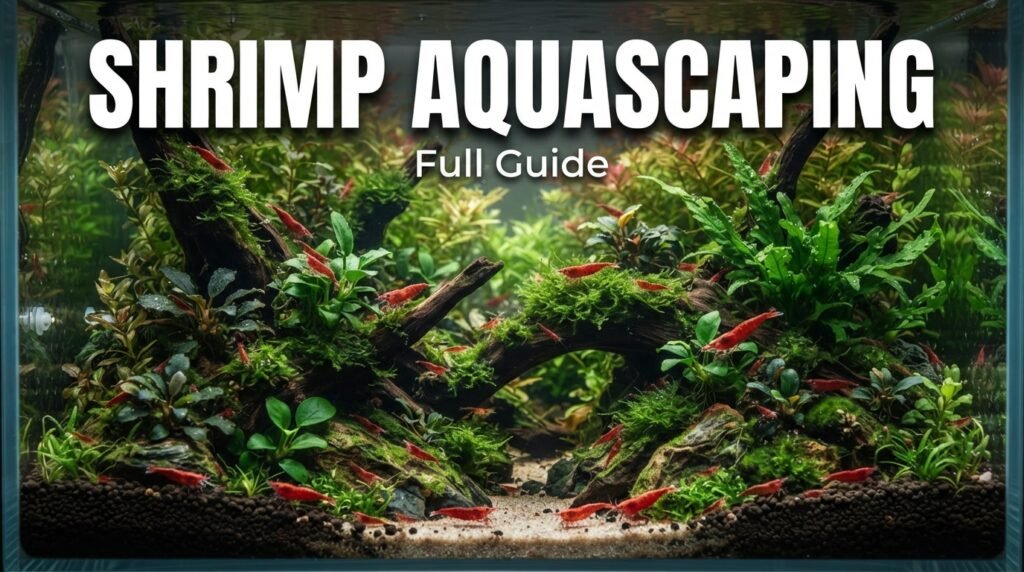
An island layout places a central rock and wood structure in the aquarium while leaving open substrate around it.
This design creates a strong focal point while maintaining plenty of negative space.
Shrimp can move around the island and explore its different surfaces.
A slightly off-center island often creates a more natural composition than placing it directly in the middle.
Minimalist Shrimp Aquarium
A minimalist shrimp aquarium uses only a few carefully selected elements.
You might combine a small piece of driftwood, several stones, moss, and one or two plant species.
The simplicity makes shrimp easier to observe.
It can also make maintenance more straightforward.
The challenge is that every element becomes visually important, so hardscape placement should be carefully planned.
Choosing the Right Substrate
Substrate plays an important role in shrimp aquarium aquascaping.
The best choice depends on the shrimp species and the water chemistry you want to maintain.
Some aquarists use inert gravel or sand, while others choose active aquasoils.
Neocaridina and Caridina shrimp can have different water chemistry preferences, so substrate should be selected according to the requirements of the shrimp being kept.
A dark substrate can also make brightly colored shrimp stand out visually.
Best Plants for Shrimp Aquariums
Plants are one of the most valuable components of a shrimp aquascape.
Java Moss
Java moss is a classic shrimp aquarium plant.
Its dense growth provides numerous surfaces for grazing and hiding.
Christmas Moss
Christmas moss can create a fuller, branching appearance on rocks and driftwood.
Anubias
Anubias is hardy and slow-growing.
Its broad leaves provide surfaces where shrimp can graze.
Java Fern
Java fern can create larger leaf surfaces and vertical structure.
It can also be attached to driftwood or rocks.
Bucephalandra
Bucephalandra is excellent for nano shrimp aquariums because many varieties remain relatively compact.
Its textured leaves can provide additional grazing surfaces.
Cryptocoryne
Cryptocoryne plants can create attractive midground areas.
They provide larger leaf shapes while remaining suitable for many freshwater aquascapes.
Floating Plants
Floating plants can create shade and additional root surfaces.
However, avoid allowing them to completely cover the aquarium surface because adequate gas exchange and light penetration are important.
Why Moss Is So Useful for Shrimp
Moss is especially valuable because its fine structure creates a large surface area.
Shrimp can climb through the branches and search for food.
Biofilm can develop across the surfaces, providing a natural grazing environment.
Young shrimp can also use dense moss as protection.
For this reason, even a small amount of moss can have a significant role in a shrimp aquarium.
Creating Hiding Places
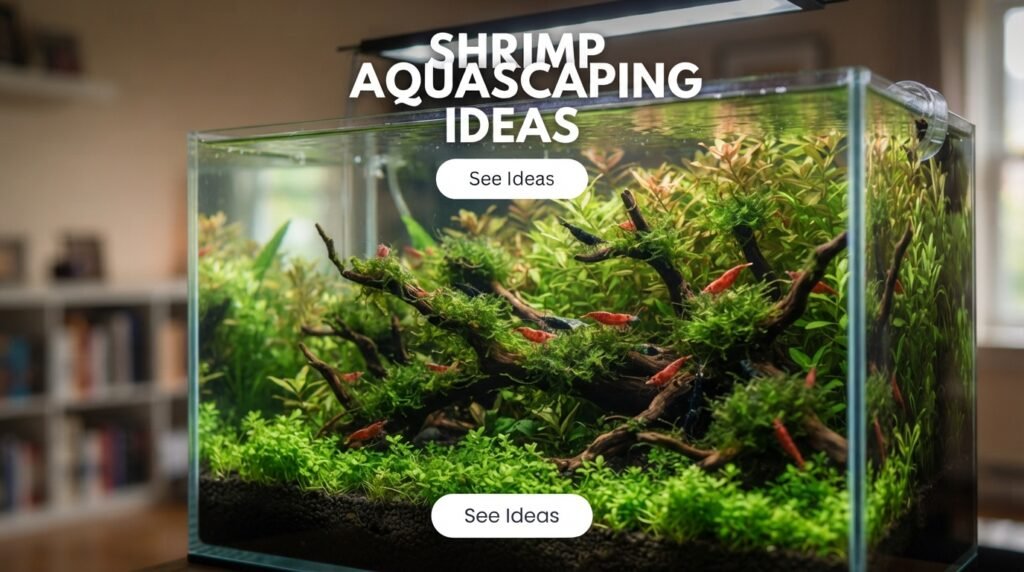
Shrimp need places where they can retreat.
Small caves, gaps between rocks, dense moss, driftwood branches, and thick plant growth can all provide cover.
Hiding places become particularly important during molting because shrimp may be vulnerable while their new exoskeleton hardens.
However, avoid creating inaccessible spaces where debris can accumulate excessively.
Creating a Shrimp-Friendly Hardscape
Hardscape should be stable and carefully positioned.
Place larger rocks or driftwood pieces on a secure base so they cannot collapse.
Create small gaps and overhangs without making the structure unstable.
The best shrimp hardscape often has multiple levels.
Shrimp can move across the substrate, climb rocks, explore wood, and graze through plants.
Shrimp Aquarium With Sand
Sand can create a clean and attractive foreground.
A dark sand can provide strong contrast against colorful shrimp, while lighter sand can produce a bright natural appearance.
You can combine an open sand area with planted sections.
A sand path between two planted areas can also create depth.
Shrimp Aquarium With Gravel
Fine or appropriately sized aquarium gravel can provide a traditional planted-tank appearance.
Gravel is available in many colors and textures.
Natural-looking neutral colors often allow the shrimp and plants to become the main visual focus.
Avoid choosing substrate solely for color if it does not suit the requirements of your shrimp and plants.
Creating Depth in a Shrimp Aquarium
Even a small shrimp tank can have impressive depth.
Create a substrate slope with the highest point toward the back.
Use larger hardscape pieces toward the front and smaller details farther away.
Place larger-leaved plants closer to the viewer and smaller-leaved plants toward the back.
An open path through the center can also make the aquarium appear deeper.
Nano Shrimp Aquarium Ideas
Nano aquariums are popular for shrimp because their small size makes them suitable for compact spaces.
A simple nano aquascape might contain:
- A small piece of driftwood
- Several small rocks
- Java moss
- Bucephalandra
- A dark substrate
- A small open foreground
Avoid using oversized decorations because they can quickly make a nano aquarium look crowded.
Shrimp Breeding Aquascape
If your main goal is breeding shrimp, prioritize habitat over decoration.
Dense moss, fine-leaved plants, and small hiding spaces can create useful areas for young shrimp.
A mature aquarium can also provide natural grazing opportunities.
Keep the layout easy to observe and maintain.
A heavily decorated tank can be beautiful, but you should still be able to monitor the shrimp population and aquarium conditions.
Shrimp Aquarium With Driftwood and Moss
Driftwood covered with moss is one of the most natural-looking combinations.
The wood provides structure while the moss creates a soft green texture.
As the moss grows, it can gradually make the wood appear like a miniature underwater tree.
This combination works in both nano and larger shrimp aquariums.
Color Planning for Shrimp Aquascaping
Shrimp are often available in striking colors.
Red, yellow, orange, blue, black, and other varieties can become the main focal point of the aquarium.
A neutral aquascape can help these colors stand out.
Dark substrates and green plants often create strong visual contrast with brightly colored shrimp.
Avoid making the background, substrate, rocks, and decorations too colorful at the same time.
Lighting for Shrimp Aquariums
Shrimp themselves do not require extremely intense lighting, but plants need appropriate light for healthy growth.
The ideal lighting depends on the plant species.
If you keep mosses and low-light plants, a relatively simple lighting setup may be sufficient.
If you want demanding carpeting plants, stronger lighting and additional equipment may be necessary.
Avoid excessive lighting that encourages algae growth without providing a corresponding benefit to the plants.
Do Shrimp Aquariums Need CO2?
Shrimp do not require injected CO2.
Some planted shrimp aquariums can be maintained without CO2 by choosing hardy plants.
If you use CO2 for demanding plants, the system needs to be carefully managed so that aquarium conditions remain appropriate for the shrimp.
Stable conditions are particularly important in a shrimp aquarium.
Water Flow in Shrimp Aquascaping
Water flow should be gentle to moderate depending on the shrimp species and aquarium design.
Strong currents can make it difficult for shrimp to move comfortably.
At the same time, stagnant areas should be avoided.
Arrange rocks and driftwood so water can circulate around the aquarium.
A sponge filter can also be a useful option for many shrimp-focused aquariums because it provides filtration and biological surface area while generally producing gentle flow.
Shrimp Aquarium Filtration
Filtration is essential for maintaining water quality.
Sponge filters are commonly used in shrimp aquariums because they provide biological filtration and are generally gentle.
If using another type of filter, protect the intake with an appropriate pre-filter or sponge to reduce the risk of small shrimp being drawn into the intake.
A clean, mature biological filter can help maintain stable aquarium conditions.
Common Shrimp Aquascaping Mistakes
One mistake is filling the aquarium with too many decorations.
Shrimp need usable surfaces and open areas, not simply a large quantity of objects.
Another mistake is introducing shrimp into an immature aquarium.
A newly established tank may not have developed enough biofilm and biological stability.
Using unsuitable substrate or water chemistry can also create problems.
Finally, avoid constantly rearranging the aquarium. Shrimp generally benefit from a stable environment.
How to Build a Shrimp Aquarium Aquascape
Start by selecting an aquarium appropriate for the shrimp species.
Add your chosen substrate and create a gentle slope if you want additional depth.
Place larger rocks and driftwood first.
Make sure everything is stable.
Add mosses and plants around the hardscape.
Leave some open areas for grazing and observation.
Install filtration and lighting.
Allow the aquarium to mature and establish before introducing shrimp.
Once shrimp are added, avoid making unnecessary changes to the environment.
Maintaining a Shrimp Aquascape
Regular maintenance keeps the aquarium healthy.
Remove dead plant leaves and excess debris.
Trim moss when it becomes too dense.
Clean the glass while avoiding unnecessary disturbance to the shrimp.
Perform appropriate water changes while maintaining stable water parameters.
Clean filtration equipment when necessary, but avoid destroying beneficial biological media.
Observe the shrimp regularly.
Changes in behavior can sometimes provide early clues that aquarium conditions need attention.
Planning for Shrimp Population Growth
Shrimp colonies can grow quickly under suitable conditions.
When planning your aquascape, consider how much habitat will be available if the population increases.
Dense plants and moss provide additional usable surfaces.
However, do not make the aquarium so dense that maintenance and observation become difficult.
A balanced layout should provide both habitat and open areas.
Final Thoughts
Shrimp aquarium aquascaping is about much more than making a tank look attractive. The best shrimp aquascapes combine natural beauty with useful habitat.
Moss, plants, driftwood, rocks, substrate, caves, and open areas can work together to create a miniature environment where shrimp can graze, explore, hide, and reproduce.
A simple design can be extremely effective. You do not need a large aquarium or an expensive collection of decorations.
Start with stable hardscape, suitable plants, gentle filtration, and a mature biological environment. Give the shrimp plenty of surfaces to explore and avoid overcrowding the tank.
As plants grow and the shrimp colony develops, the aquarium will gradually become more natural and interesting.
FAQs About Shrimp Aquarium Aquascaping
What is shrimp aquarium aquascaping?
Shrimp aquarium aquascaping is the process of designing a freshwater aquarium with plants, moss, rocks, driftwood, substrate, and hiding areas that support shrimp while creating an attractive natural landscape.
What is the best plant for a shrimp aquarium?
Java moss is one of the most popular choices because its dense structure provides grazing surfaces and hiding areas. Anubias, Bucephalandra, Java fern, and suitable Cryptocoryne species can also work well.
Do shrimp need plants?
Shrimp can survive without live plants, but plants can provide valuable surfaces for grazing, shelter, and environmental complexity.
Is moss good for shrimp?
Yes. Moss provides a large surface area for biofilm and gives shrimp and young shrimp places to explore and hide.
What substrate is best for shrimp?
The best substrate depends on the shrimp species and desired water chemistry. Inert gravel or sand can work well for some setups, while active aquasoils may be appropriate for others.
Do shrimp need CO2?
No. Shrimp do not require injected CO2. Many shrimp aquariums use hardy plants that grow without additional CO2.
Can shrimp live in a planted aquarium?
Yes. Shrimp can thrive in suitable planted aquariums when water parameters, temperature, filtration, and habitat are appropriate.
How much space do shrimp need?
Requirements vary by species, but the aquarium should provide enough room for the colony to graze, move, and reproduce without excessive crowding.
Is a sponge filter good for shrimp?
A sponge filter can be an excellent choice for many shrimp aquariums because it provides biological filtration and generally produces gentle water movement.
How do I protect baby shrimp from a filter?
Use a suitable sponge or pre-filter on filter intakes to reduce the risk of young shrimp being pulled into the filtration system.
Do shrimp need hiding places?
Yes. Plants, moss, driftwood, rocks, and small caves can provide useful shelter, particularly during molting and for young shrimp.
How do I make a shrimp aquarium look natural?
Use natural-colored substrate, irregular rocks, driftwood, moss, aquatic plants, and open spaces. Avoid making the layout overly symmetrical.
Can I keep colorful shrimp together?
Different shrimp varieties may be compatible from a care perspective, but mixing certain varieties can affect the appearance of future generations. Research the specific varieties before combining them.
How often should I clean a shrimp aquarium?
Maintenance depends on the aquarium size, stocking, plants, filtration, and water conditions. Regular observation and small, appropriate maintenance tasks are generally preferable to major disturbances.
How long should a shrimp aquarium mature before adding shrimp?
A shrimp aquarium should be properly cycled and stable before shrimp are introduced. A mature tank can also provide established biofilm and microorganisms that support natural grazing.