
 By admin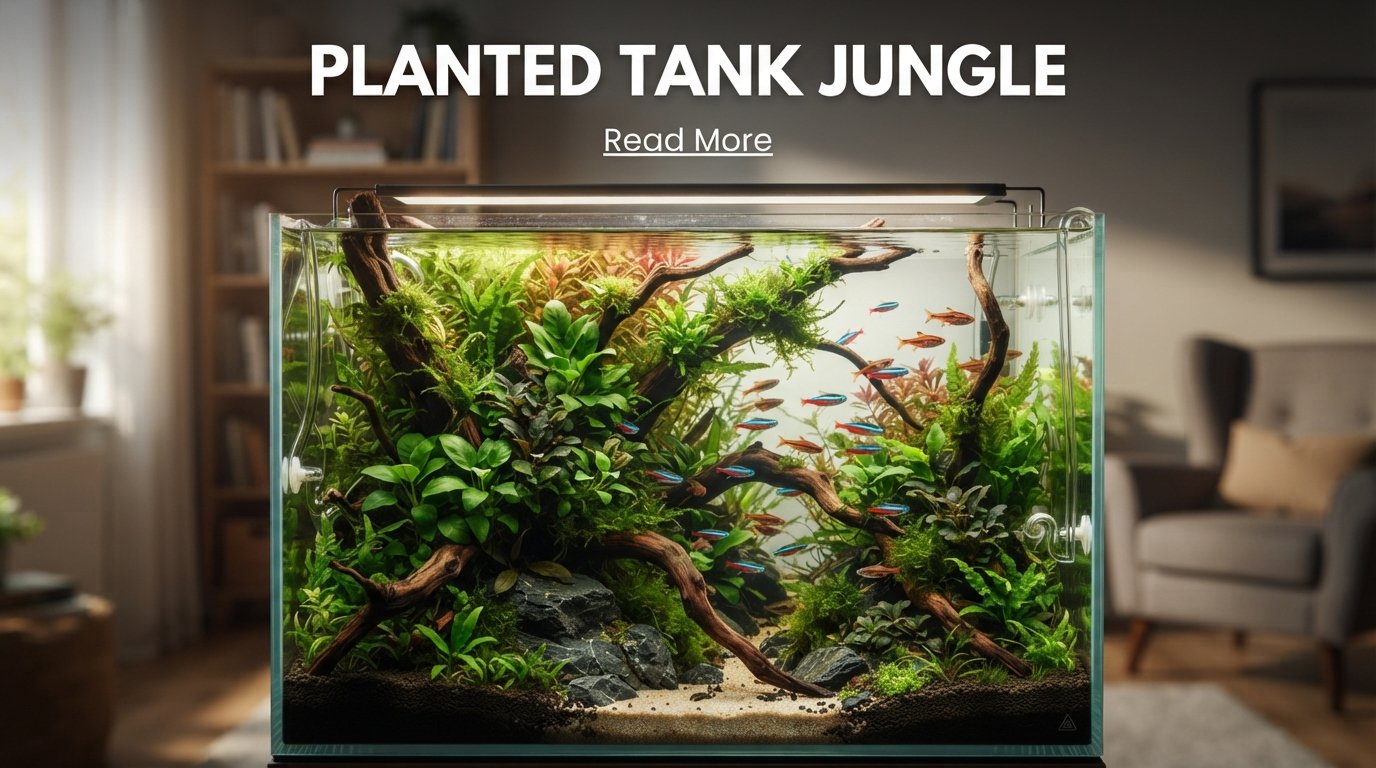
Aquarium design ideas can completely transform a fish tank from a simple glass container into a beautiful underwater landscape. Whether you have a small desktop aquarium, a large living room tank, a planted freshwater aquarium, or a modern built-in design, the right combination of plants, rocks, driftwood, lighting, substrate, and fish can create an impressive focal point.
A good aquarium design is about more than decoration. The layout should provide suitable spaces for fish to swim, hide, explore, and rest while also creating a visually balanced environment. With thoughtful planning, even a small aquarium can look attractive and professionally designed.
There are countless ways to design an aquarium. Some people prefer minimalist layouts with plenty of open space, while others enjoy dense jungle-style aquascapes filled with plants. Modern homes may benefit from wall-mounted or built-in aquariums, while bedrooms and offices often look better with compact and peaceful designs.
What Makes a Good Aquarium Design?
A good aquarium design combines beauty, functionality, and balance.
The first consideration should always be the needs of the fish and plants. After that, you can build the visual design around those requirements.
A well-designed aquarium usually has a clear focal point, different levels of height, appropriate swimming space, suitable hiding areas, and a consistent combination of colors and textures.
Avoid placing every decoration in the center or filling every available area. Empty space can be just as important as plants and hardscape.
Popular Aquarium Design Ideas
| Aquarium Design | Main Features | Best For |
|---|---|---|
| Planted Aquarium | Live plants and natural substrate | Freshwater tanks |
| Minimalist Aquarium | Few decorations and open space | Modern homes |
| Jungle Aquarium | Dense plants and wood | Natural appearance |
| Iwagumi Aquarium | Rocks and carpeting plants | Simple landscapes |
| Bonsai Aquarium | Tree-shaped driftwood and moss | Artistic layouts |
| Blackwater Aquarium | Wood, leaves, and subdued colors | Natural-inspired setups |
| Nano Aquarium | Compact plants and hardscape | Small spaces |
| Island Aquarium | Central focal point surrounded by plants | Decorative displays |
| Wall Aquarium | Built into or mounted on a wall | Modern interiors |
| Reef Aquarium | Coral, rocks, and marine life | Saltwater enthusiasts |
1. Planted Aquarium Design
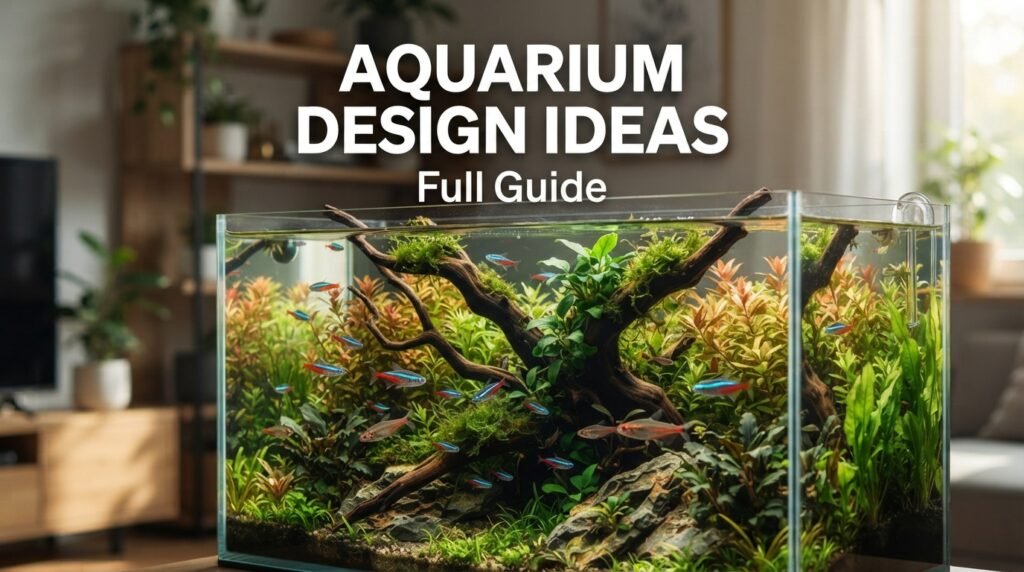
A planted aquarium is one of the most popular design choices.
Live plants can create a natural underwater landscape while providing cover and structure for fish.
Use taller plants in the background, medium-sized plants in the middle, and shorter plants toward the front.
Plants such as Anubias, Java fern, Cryptocoryne, Amazon sword, mosses, and suitable carpeting plants can all contribute to different visual effects.
The key is to avoid randomly placing plants. Group similar plants together to create a more organized composition.
2. Minimalist Aquarium Design
Minimalist aquarium design focuses on simplicity.
Instead of filling the aquarium with decorations, choose one main piece of driftwood or a small group of rocks and leave plenty of open space.
A minimalist design can look especially attractive in modern interiors because it does not create visual clutter.
Black or neutral substrate, simple green plants, and carefully positioned hardscape can create an elegant appearance.
3. Jungle-Style Aquarium
A jungle aquarium design creates the appearance of a dense underwater forest.
Use several layers of plants with different heights and textures.
Tall plants can fill the background, while moss, ferns, and smaller plants occupy the middle and foreground.
Driftwood can be placed among the vegetation to create branches and pathways.
Although jungle aquariums are intentionally dense, leave enough open areas for fish to swim comfortably.
4. Aquarium Bonsai Design
An aquarium bonsai is an artistic way to create a miniature underwater tree.
Aquarium-safe driftwood is arranged into a trunk and branching structure. Moss is then attached to the branches to create the appearance of leaves.
The tree can be surrounded by rocks, carpeting plants, or open sand.
This design works particularly well as a focal point in a planted aquarium.
5. Iwagumi Aquarium Design
Iwagumi is a stone-focused aquascaping style.
The rocks become the main visual elements while plants are usually kept relatively low so that they do not hide the hardscape.
A large primary stone can serve as the focal point, with smaller stones arranged around it.
The layout should look natural rather than perfectly symmetrical.
A carpet of low-growing plants can create the appearance of grass surrounding a miniature rocky landscape.
6. Aquarium With a Sand Path
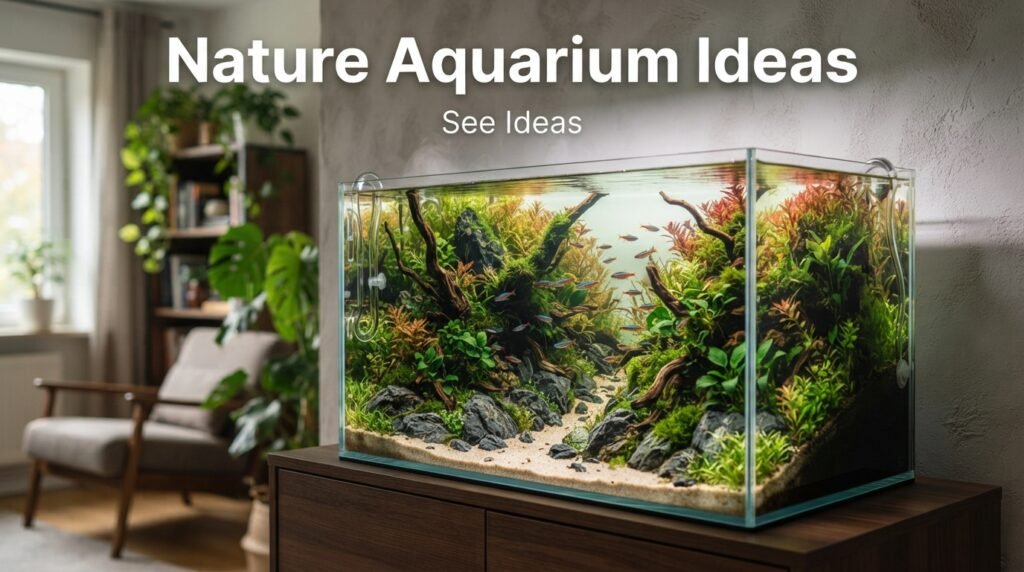
A sand path can create an impressive sense of depth.
Start with a wider sandy area in the foreground and gradually narrow the path as it moves toward the background.
Surround the path with plants, rocks, or driftwood.
A curved path can create a more natural appearance and guide the viewer’s eyes through the aquarium.
This idea works especially well in nature-style aquascapes.
7. Forest Aquarium Design
A forest-inspired aquarium uses vertical driftwood and plants to create the impression of an underwater woodland.
Choose branching wood that resembles tree trunks and roots.
Attach moss to selected branches and place taller plants behind the wood.
You can create additional depth by using smaller branches toward the background.
Leave some open spaces between the branches so the design does not become a solid mass.
8. Island Aquarium Design
An island design places the main hardscape toward the center or slightly to one side of the aquarium.
The island can be made from rocks, driftwood, or a combination of both.
Surround the central feature with plants and leave open substrate around it.
This design works particularly well when viewed from the front because the central structure immediately becomes the focal point.
9. Nano Aquarium Design
Small aquariums require careful proportion.
Large decorations can quickly overwhelm a nano tank, so choose smaller rocks, thin branches, and compact plants.
A single piece of driftwood with moss and a few small plants can be enough.
Leave some open space to prevent the aquarium from appearing crowded.
Nano aquariums are particularly suitable for desks, shelves, bedside tables, and small offices.
10. Blackwater Aquarium Design
A blackwater-inspired aquarium uses driftwood, natural-looking leaves, subdued lighting, and darker water tones to create a forest-stream atmosphere.
The wood can become the main structural element.
Plants can be used selectively rather than covering every surface.
The darker environment can create a peaceful appearance and make colorful fish stand out.
Water chemistry and livestock requirements should always be considered when creating this type of aquarium.
11. River-Inspired Aquarium Design
A river-style aquarium can be designed around an open sand channel.
Use rocks along the sides of the channel and plants toward the background.
The sand can create the appearance of a flowing riverbed moving through a miniature landscape.
Smooth stones and driftwood can make the design feel more natural.
12. Aquarium With Driftwood
Driftwood can be used in almost any aquarium design.
A large piece can become the main focal point, while smaller pieces can create supporting structures.
Branching driftwood works particularly well for forest and bonsai layouts.
Before using wood, make sure it is suitable for aquarium use and properly prepared.
13. Aquarium With Rocks
Rocks can create mountains, cliffs, valleys, islands, and other natural landscapes.
Choose a consistent rock type instead of combining many unrelated stones.
Place the largest rocks first and then use smaller stones to create transitions.
Avoid placing all rocks at the same height because this can make the layout look artificial.
14. Living Room Aquarium Design
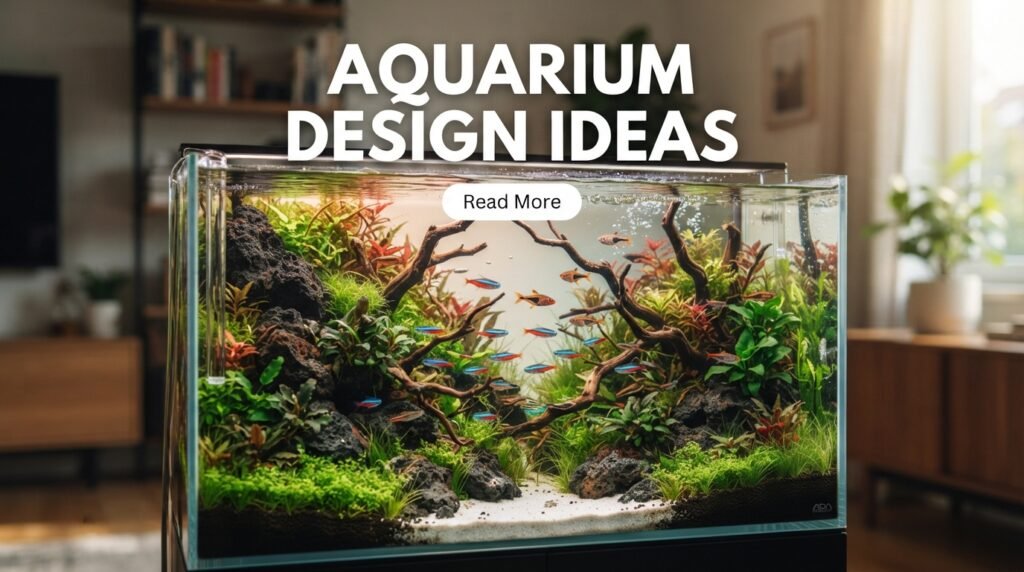
A living room aquarium can become a major interior design feature.
Large aquariums can be positioned against a wall, behind a sofa, or as a room divider.
For a modern living room, a clean planted design with neutral colors can complement contemporary furniture.
For a warmer interior, driftwood, natural rocks, and dense plants can create a more organic appearance.
The aquarium should be positioned where it can be safely maintained and where equipment can be accessed easily.
15. Bedroom Aquarium Design
A bedroom aquarium should generally have a calm and uncluttered appearance.
A small planted tank with soft visual textures can work well.
Avoid creating a design that is excessively bright or visually busy.
A simple combination of green plants, dark substrate, and natural driftwood can create a peaceful focal point.
16. Office Aquarium Design
An aquarium can add visual interest to an office or workspace.
For a desk aquarium, keep the design compact and easy to maintain.
A nano planted aquarium with moss, Anubias, and a small piece of driftwood can provide a natural accent without taking up too much space.
Larger office aquariums can use minimalist designs to create a professional appearance.
17. Wall-Mounted Aquarium Design
A wall-mounted aquarium can create a dramatic modern look.
The aquarium can be designed like a living picture frame, with a carefully composed underwater landscape visible from the front.
Keep the interior layout relatively simple so the tank does not look overcrowded.
Wall-mounted designs require particularly careful planning for structural support, maintenance access, plumbing, and equipment.
18. Built-In Aquarium Design
A built-in aquarium can become part of the architecture of a home.
It can be installed into a wall, cabinetry, or custom furniture.
The biggest advantage is that the aquarium becomes part of the room rather than looking like a separate object.
However, access for cleaning and equipment maintenance should be considered before installation.
19. Aquarium Room Divider
A large aquarium can function as a room divider.
This design allows the aquarium to be viewed from multiple sides.
When creating a room-divider aquarium, use hardscape and plants that look attractive from different viewing angles.
A central island or layered arrangement can work better than a layout designed exclusively for front viewing.
20. White Aquarium Design
A white aquarium design can create a clean and modern appearance.
White substrate, pale rocks, light-colored furniture, and green plants can create strong contrast.
Because bright backgrounds can make algae and debris more noticeable, regular maintenance becomes particularly important.
21. Dark Aquarium Design
Dark aquariums use black substrate, dark backgrounds, driftwood, and green plants to create a dramatic appearance.
Brightly colored fish can stand out against the darker surroundings.
A dark background can also make the aquarium appear deeper.
22. Aquarium With Floating Plants
Floating plants can add another visual layer to the aquarium.
They create shade near the surface and can make the tank look more natural.
However, do not allow floating plants to cover the entire surface. Fish that need direct access to atmospheric air should have clear areas at the surface.
23. Aquarium With Moss
Moss is useful for creating a soft, natural appearance.
It can be attached to driftwood, rocks, and other aquarium-safe hardscape.
Moss-covered wood can resemble old tree branches, while moss-covered rocks can create the appearance of an established natural landscape.
Regular trimming helps prevent moss from hiding the underlying hardscape.
24. Aquarium With a Carpet
Carpeting plants can create the appearance of an underwater lawn.
A carpet works especially well with rocks, driftwood, and open areas of substrate.
Depending on the plant species, carpeting may require stronger lighting, nutrients, and sometimes CO2.
If you are a beginner, choose carpeting plants according to the equipment and maintenance level you can realistically provide.
25. Mountain Aquarium Design
A mountain-inspired aquarium uses rocks as the primary hardscape.
Create a large mountain structure toward one side or the center and use progressively smaller rocks toward the background.
Low-growing plants can represent grass or vegetation.
An open sandy area can become a valley or pathway through the landscape.
Choosing Colors for an Aquarium Design
Color harmony is often overlooked.
Natural aquascapes usually rely on a limited palette of greens, browns, grays, and earthy colors.
Fish can provide additional color.
If your fish are already very colorful, a simple green and natural background can prevent the aquarium from looking too busy.
If your fish have subtle colors, plants and hardscape can provide stronger visual contrast.
Creating Depth in an Aquarium
Depth can make a relatively small aquarium look much larger.
Use larger elements toward the front and smaller elements toward the background.
Create substrate slopes that rise slightly toward the back.
Use a sand path that becomes narrower as it moves into the distance.
Plants should also decrease in apparent size toward the background.
These techniques help create a three-dimensional appearance.
Using Negative Space
Negative space is one of the most useful aquarium design tools.
Instead of filling every part of the aquarium, intentionally leave some areas open.
Open substrate can create contrast around a large rock or tree.
It can also provide swimming space for fish.
A design with negative space often looks more balanced than one where plants cover every surface.
Lighting Ideas for Aquarium Design
Lighting should support the needs of the plants and livestock while also highlighting the composition.
A planted aquarium may require stronger lighting than a simple fish-only aquarium.
Use lighting appropriate for your plants rather than choosing a fixture solely because it is bright.
A consistent schedule can help maintain stable plant growth and reduce excessive algae.
Aquarium Design Ideas for Beginners
Beginners do not need to create an elaborate aquascape.
Start with one focal point, such as a piece of driftwood or a large rock.
Add a few easy plants around it and leave open space in the foreground.
Anubias, Java fern, Cryptocoryne, and moss can be useful choices for relatively simple planted layouts.
As you gain experience, you can experiment with carpeting plants, more complex hardscape, and advanced planting techniques.
Common Aquarium Design Mistakes
One of the biggest mistakes is overcrowding.
Adding too many decorations can make the aquarium look chaotic.
Another mistake is using several unrelated rock types or decoration styles.
Poor proportion can also make an aquascape look unnatural. Large decorations in a tiny aquarium can overwhelm the available space.
Ignoring plant growth is another common problem. Plants that look appropriately sized when first planted may become much larger later.
Finally, do not sacrifice fish comfort simply to achieve a particular visual style.
How to Plan an Aquarium Design
Before adding anything to the aquarium, sketch your idea or arrange the hardscape outside the tank.
Choose the focal point first.
Then decide where the open space will be.
Place the largest hardscape elements before the smaller ones.
Add substrate slopes and then position plants according to their mature size.
Think about how the aquarium will look from the normal viewing position.
Most importantly, plan for the future. A good aquascape should become more attractive as the plants mature.
Final Thoughts
There are endless aquarium design ideas to explore, from minimalist planted tanks and Iwagumi landscapes to bonsai trees, underwater forests, river valleys, blackwater environments, and modern built-in aquariums.
The best design is not necessarily the most complicated one. A successful aquarium combines appropriate livestock, healthy plants, stable hardscape, good proportions, open space, and a clear visual concept.
Start with one main idea and build the aquarium around it. Choose materials that complement each other, create depth with different plant heights, and leave enough open space for your fish.
With patience and regular maintenance, your aquarium can develop into a beautiful living landscape that becomes more impressive as it matures.
Frequently Asked Questions
What is the best aquarium design for beginners?
A simple planted aquarium with one piece of driftwood, a few easy plants, natural substrate, and open swimming space is a good starting point.
What makes an aquarium look beautiful?
Good proportions, a clear focal point, healthy plants, appropriate hardscape, depth, and intentional negative space can make an aquarium visually attractive.
How do I make my aquarium look bigger?
Use smaller hardscape toward the background, substrate slopes, narrowing paths, and appropriately sized plants. Leaving some open space can also make the tank feel larger.
What plants are best for aquarium design?
Anubias, Java fern, Cryptocoryne, mosses, Bucephalandra, Amazon sword, and suitable stem or carpeting plants can all be used depending on aquarium conditions.
Is driftwood good for aquarium design?
Yes. Aquarium-safe driftwood can create focal points, natural shelters, branches, forests, and bonsai-style structures.
How many decorations should I put in an aquarium?
There is no fixed number. Use enough hardscape to create a clear composition without overcrowding the aquarium or restricting swimming space.
What is a minimalist aquarium design?
A minimalist aquarium uses a limited number of plants and hardscape elements while intentionally leaving significant open space.
How do I design a planted aquarium?
Start with the hardscape, establish foreground, midground, and background areas, then select plants according to their mature size and requirements.
Can a small aquarium have a good design?
Yes. Small aquariums can look excellent when the scale of the plants and decorations matches the tank size.
What is the best substrate for an aquascape?
The best substrate depends on your plants and design. Aquarium soil, sand, and gravel can all be useful in different setups.
How can I create a natural-looking aquarium?
Use natural materials, avoid excessive symmetry, group plants, choose compatible colors and textures, and create open areas that resemble natural landscapes.
Should an aquarium have a background?
A background is optional. Dark backgrounds can increase contrast and make plants and fish stand out, while a clear background can create a more open appearance.
How do I create depth in an aquarium?
Use substrate slopes, large foreground elements, smaller background elements, layered plants, and paths that become narrower toward the back.
What is negative space in aquarium design?
Negative space is intentionally open area within an aquascape. It creates visual balance, improves contrast, and can provide additional swimming space.
Can aquarium design affect fish health?
Yes. A design should provide adequate swimming space, hiding areas, appropriate water movement, safe materials, and access to the surface when required by the species.