
 By admin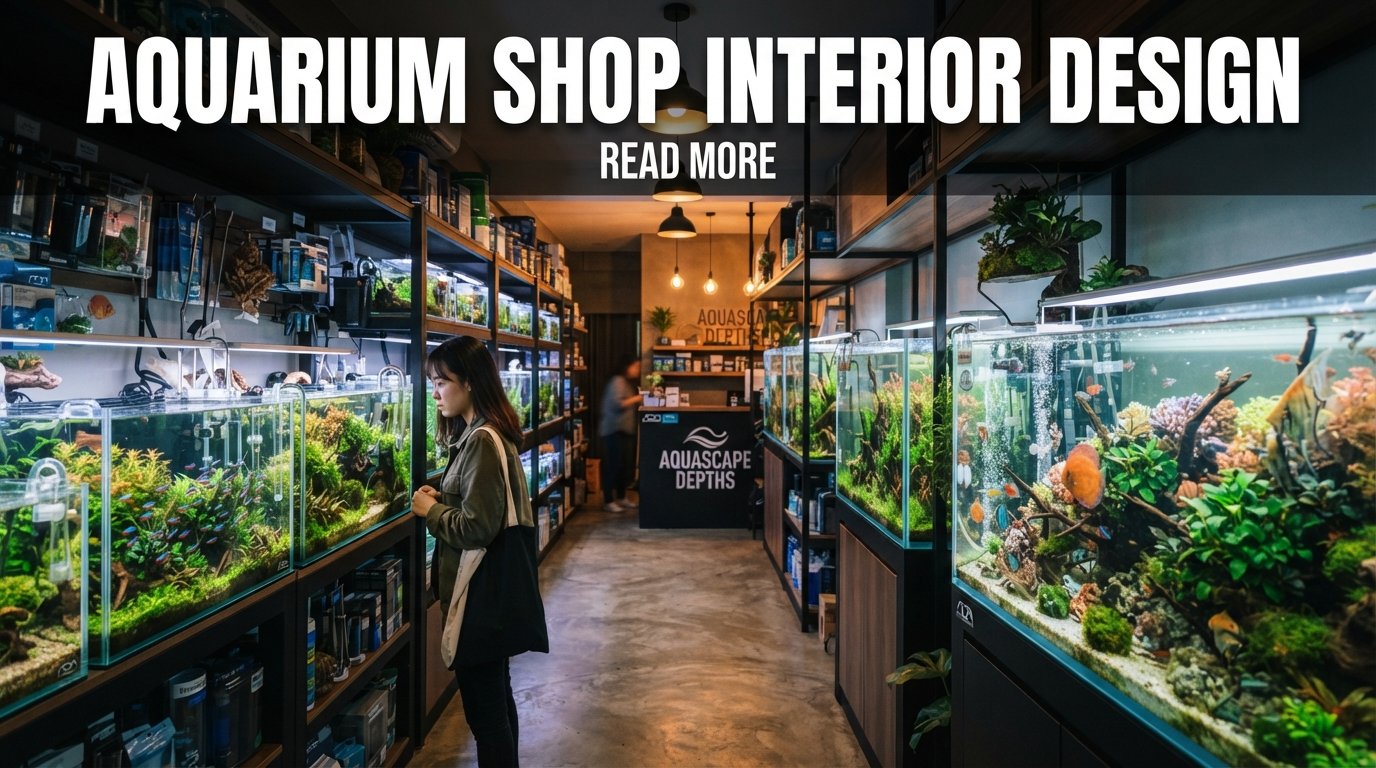
Aquarium shop interior design plays an important role in creating an attractive, organized, and welcoming environment for customers who love fish and aquatic life. A well-designed aquarium shop is more than a place to buy fish, tanks, plants, and equipment. It can become an inspiring destination where customers enjoy exploring beautiful aquariums, discovering new species, and finding ideas for their own homes. The right layout, lighting, display arrangement, colors, shelving, and aquarium placement can make a small shop feel larger while helping products stand out.
Whether you are planning a compact local fish store, a modern aquarium showroom, or a large specialty aquatic shop, thoughtful interior design can improve the customer experience and make daily operations easier. The goal is to combine visual beauty with practical features such as easy maintenance, proper circulation, organized storage, and safe aquarium displays.
What Is Aquarium Shop Interior Design?
Aquarium shop interior design refers to the planning and decoration of a retail space specifically for selling aquatic products and displaying fish, aquariums, aquatic plants, decorations, and related supplies.
Unlike an ordinary retail store, an aquarium shop has unique requirements. Tanks need water, filtration, lighting, electrical connections, maintenance access, and appropriate spacing. Fish also need suitable environmental conditions, while customers need clear pathways and attractive displays.
A successful design balances three important areas: appearance, functionality, and animal care.
Why Good Aquarium Shop Design Matters
The interior of a fish store creates the customer’s first impression. When visitors enter a clean and attractive aquarium shop, rows of healthy fish and beautifully arranged aquariums can immediately capture their attention.
Good design can also encourage customers to spend more time in the store. Instead of seeing shelves filled with random products, they can move through organized sections and understand what is available.
A well-planned interior can provide several advantages:
- Creates a professional appearance
- Makes fish and aquariums easier to view
- Improves customer movement
- Makes products easier to find
- Provides better aquarium maintenance access
- Creates opportunities for attractive displays
- Makes small stores feel more spacious
- Helps build customer trust
- Provides inspiration for home aquarium projects
- Improves the overall shopping experience
Popular Aquarium Shop Interior Design Styles
Different aquarium stores can use different interior themes depending on their target customers, available space, and product range.
| Design Style | Main Features | Best For |
|---|---|---|
| Modern Aquarium Store | Clean lines, glass, simple colors | Contemporary shops |
| Natural Fish Store | Wood, plants, natural textures | Planted aquarium stores |
| Luxury Aquarium Showroom | Premium materials, large displays | High-end stores |
| Minimalist Fish Shop | Open space and simple displays | Small stores |
| Tropical Aquarium Store | Greenery and colorful displays | Tropical fish shops |
| Industrial Aquarium Shop | Metal, concrete, dark finishes | Urban stores |
| Jungle Theme | Dense plants and natural decorations | Aquascaping stores |
| Family-Friendly Store | Bright, open, interactive displays | General fish stores |
Modern Aquarium Shop Interior
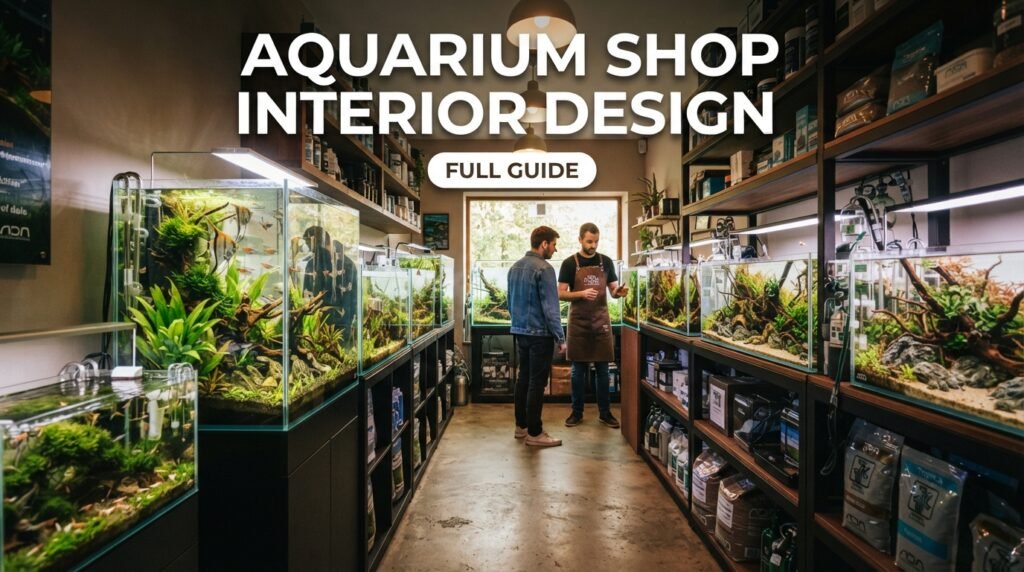
A modern aquarium shop interior design usually focuses on clean lines, organized displays, neutral colors, and attractive aquarium lighting.
White, gray, black, natural wood, and glass can create a contemporary appearance. Aquariums can be arranged in neat rows or displayed as feature installations.
Instead of overcrowding every wall with tanks, leave some open space between displays. This creates a cleaner appearance and allows customers to focus on individual aquariums.
Modern stores can also use illuminated signs, simple shelving, floating cabinets, and carefully positioned display tanks to create a professional atmosphere.
Natural Aquarium Store Design
A natural interior can work especially well for stores specializing in aquascaping, aquatic plants, shrimp, and freshwater fish.
Wooden shelves, natural stone textures, live plants, driftwood displays, and earthy colors can make the shop feel connected to nature.
You can also create a large planted aquarium as the main feature near the entrance. This immediately demonstrates the type of aquarium designs the store can create.
Natural materials should still be easy to clean because aquarium shops regularly deal with water, humidity, and spills.
Aquarium Display Wall
An aquarium display wall is one of the most effective design ideas for a fish store.
Instead of placing tanks randomly throughout the shop, create a dedicated wall containing aquariums of different sizes. Small aquariums can be positioned above larger displays, provided the structure is professionally designed to safely support the weight.
Uniform tank placement creates a visually organized appearance.
You can also divide the wall into categories such as:
- Betta aquariums
- Nano aquariums
- Planted tanks
- Community aquariums
- Shrimp tanks
- Reef aquariums
- Breeding tanks
- Beginner aquariums
Clear labeling makes the display more useful for customers.
Feature Aquarium at the Entrance
A large feature aquarium can become the focal point of the entire store.
Positioning an impressive aquarium near the entrance allows customers to see it as soon as they walk inside. A large planted aquarium with colorful fish, dramatic driftwood, rocks, and carefully arranged plants can make the store memorable.
The entrance aquarium does not necessarily need to be the largest tank in the store. Even a medium-sized aquarium can become a feature display if it has excellent aquascaping and lighting.
Aquarium Shop Lighting Ideas
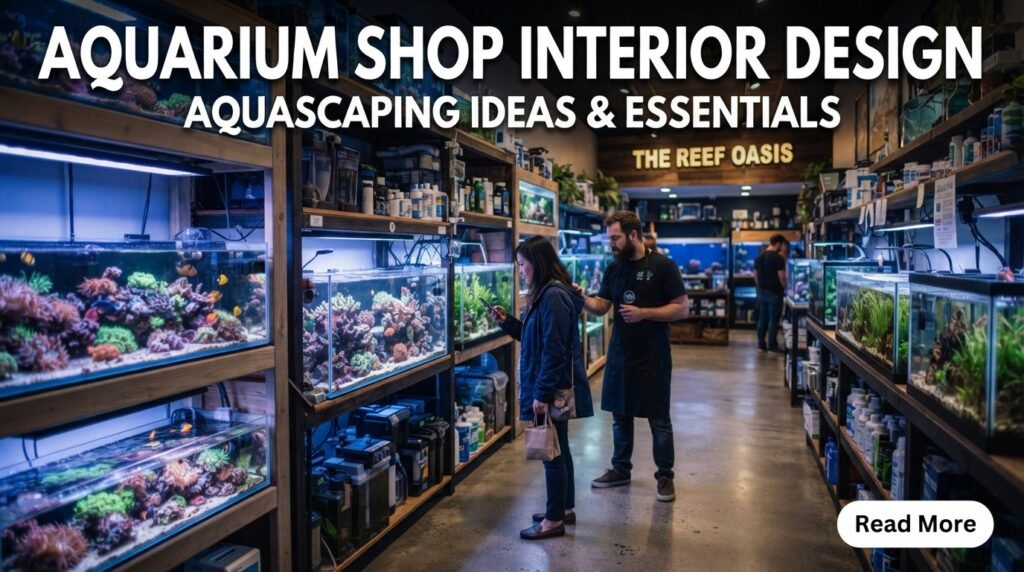
Lighting is extremely important in aquarium shop interior design because it affects both the appearance of the store and the way fish and plants are displayed.
Aquariums should generally have appropriate aquarium lighting rather than relying entirely on the store’s ceiling lights.
For the surrounding interior, use comfortable lighting that allows customers to see products clearly without creating excessive glare on aquarium glass.
Different lighting levels can also create visual hierarchy. A feature aquarium can receive more attention while storage areas remain more neutral.
Avoid excessive reflections because customers need to see the fish clearly through the glass.
Dark Interior With Bright Aquariums
A darker interior can create a dramatic aquarium showroom experience.
Dark walls, black aquarium stands, and controlled lighting can make illuminated tanks appear brighter. This approach is particularly effective for reef aquariums and colorful tropical fish.
However, the store should not become so dark that customers struggle to read product labels or safely walk around.
A balanced combination of darker display areas and adequately lit walkways can provide both atmosphere and practicality.
White Aquarium Shop Interior
White interiors can make small aquarium shops feel larger and brighter.
White walls combined with glass aquariums and simple shelving create a clean appearance. This style is particularly useful when the store has limited natural light.
Because aquarium stores can experience water splashes and humidity, washable and durable surfaces are preferable to delicate finishes.
Small touches of wood, greenery, or dark-colored aquarium stands can prevent an all-white interior from feeling too plain.
Aquarium Shop With Wooden Elements
Wood can add warmth to an aquarium shop.
Wooden counters, shelving, display frames, and decorative panels can work especially well with planted aquarium designs.
Natural wood tones can complement driftwood, aquatic plants, and earthy aquascapes.
For areas that may regularly become wet, choose materials and finishes that are suitable for humid environments rather than untreated wood.
Product Display Shelving
Fish stores sell much more than fish. Customers may need:
- Fish food
- Aquarium filters
- Heaters
- Air pumps
- Aquarium lights
- Substrate
- Water conditioners
- Fish nets
- Cleaning equipment
- Decorations
- Aquatic plants
- Aquarium stands
- Test kits
Organized shelving helps customers quickly find what they need.
Group related products together. For example, aquarium cleaning products can occupy one section while fish food, filters, lighting, and decorations have their own areas.
Create a Dedicated Aquascaping Section
If the shop sells aquascaping supplies, consider creating a dedicated area for them.
Display rocks, driftwood, substrates, aquatic plants, tools, and aquarium layouts together. Small demonstration aquariums can show customers how different materials look when combined.
This approach is especially effective because customers can see products in an actual aquarium rather than only looking at them on shelves.
Small Aquarium Shop Interior Design
Small stores do not need to sacrifice visual quality.
The key is efficient use of vertical and wall space. Instead of filling the floor with displays, use carefully designed aquarium racks and wall-mounted shelving.
Keep the central walking area open.
A small store can also benefit from one strong feature aquarium rather than many competing focal points.
Light colors, glass shelving, vertical displays, and organized product sections can make the store appear larger.
Large Aquarium Shop Interior Design
A larger store provides opportunities for separate zones.
For example, the store can include:
- Freshwater fish section
- Marine fish section
- Aquatic plants section
- Aquascaping section
- Aquarium equipment section
- Decorations section
- Custom aquarium display area
- Checkout area
- Maintenance or service area
Clear signs can help customers navigate the store without asking staff where every product is located.
Aquarium Shop Counter Design
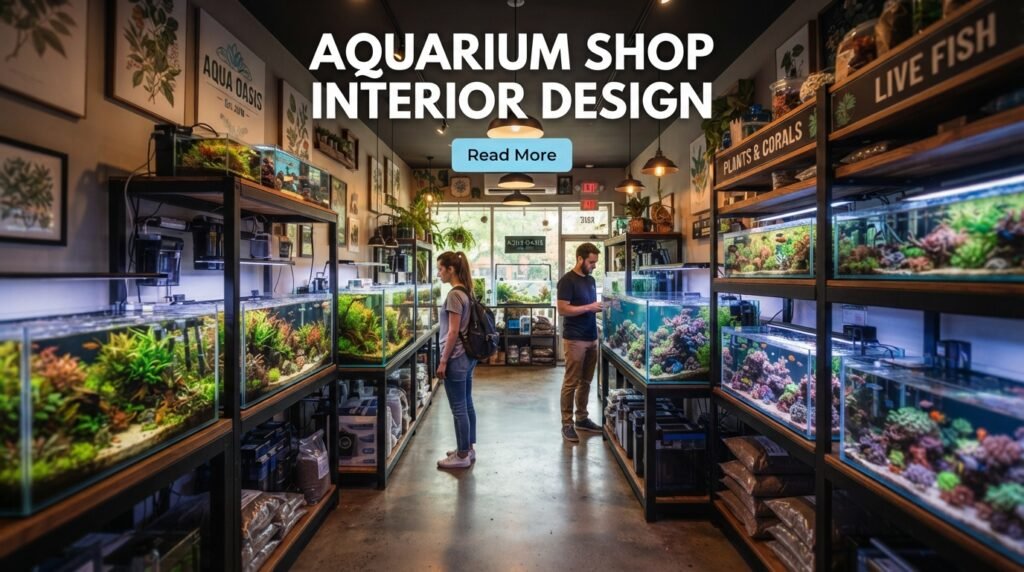
The checkout counter should be easy to locate but should not block the entrance.
A clean counter with storage underneath can provide space for bags, paperwork, small accessories, and other frequently used items.
A branded aquarium backdrop behind the counter can strengthen the shop’s identity.
You can also place small impulse-buy products near the checkout, such as fish food, water treatments, cleaning tools, or small decorations.
Fish Tank Placement and Customer Flow
Tank placement should consider both visual appeal and practicality.
Customers need enough space to walk comfortably between displays. Staff also need access to tanks for feeding, cleaning, water changes, and maintenance.
Avoid placing tanks in locations where customers may accidentally bump into them.
Create a natural route through the shop. Feature displays can encourage visitors to move from one section to another.
Aquarium Safety in Interior Design
Safety should always be a priority.
Aquariums are extremely heavy when filled with water, so racks, stands, and display structures must be designed to support their weight properly.
Electrical equipment should also be positioned carefully around water. Cables should be organized and protected from unnecessary exposure to splashes.
Floors should provide suitable traction because water spills are possible in aquarium stores.
Heavy equipment and chemicals should be stored securely and responsibly.
Ventilation and Humidity
Aquarium shops naturally produce more moisture than many other retail environments.
Good ventilation helps manage humidity and creates a more comfortable environment for customers and staff.
Adequate airflow can also help reduce condensation and moisture-related problems in the building.
When planning the interior, ventilation should be considered alongside tank placement rather than added as an afterthought.
Creating a Jungle Aquarium Shop
A jungle-themed aquarium store can create a strong visual identity.
Use natural-looking displays, aquatic plants, driftwood, rocks, green wall elements, and earthy materials.
However, avoid making the store so visually crowded that customers cannot distinguish products.
A better approach is to create selected jungle-style feature zones while keeping product areas organized.
Reef Aquarium Shop Interior Design
A reef-focused store can use a darker and more dramatic aesthetic.
Blue and neutral tones, illuminated reef aquariums, coral displays, and clean equipment sections can create a specialized showroom atmosphere.
Large reef displays can act as educational examples while smaller tanks can demonstrate different aquarium setups.
Because reef equipment can be extensive, equipment shelving should be carefully organized and labeled.
Using Signs and Categories
Good signage can make an aquarium store easier to navigate.
Instead of placing large amounts of text everywhere, use simple category signs such as:
- Freshwater Fish
- Marine Fish
- Aquatic Plants
- Shrimp
- Aquarium Equipment
- Fish Food
- Aquascaping
- Decorations
Consistent typography and placement create a more professional appearance.
Aquarium Shop Interior Color Ideas
The best color palette depends on the store’s identity.
Natural colors such as green, brown, beige, charcoal, and white work well with freshwater aquariums.
Dark gray and black can make colorful fish and reef tanks stand out.
Bright accent colors can be used in children’s or family-oriented stores, but excessive colors may compete with the aquariums.
Common Aquarium Shop Interior Design Mistakes
One of the biggest mistakes is overcrowding.
When too many aquariums, shelves, decorations, and signs are placed together, the store can become difficult to navigate.
Other common mistakes include:
- Poor lighting
- Narrow walkways
- Inaccessible tanks
- Unorganized products
- Excessive decorative elements
- Poor cable management
- Insufficient storage
- Inadequate ventilation
- Unsafe electrical arrangements
- Lack of maintenance space
- Too many competing focal points
A beautiful store should also be practical for staff.
How to Plan an Aquarium Shop Interior
Start by measuring the available space.
Determine where plumbing, electrical connections, storage, ventilation, and drainage can be placed. Then create zones for aquariums, products, checkout, and customer circulation.
Next, choose a visual theme.
After selecting the theme, decide where the main feature aquarium will go. Then plan aquarium racks, shelving, lighting, signage, and product categories around it.
Finally, test the layout from a customer’s perspective. Make sure visitors can enter, browse, find products, and reach the checkout without obstacles.
Aquarium Shop Interior Design Ideas on a Budget
A professional-looking store does not always require an expensive renovation.
You can improve the interior with relatively simple changes such as:
- Repainting walls
- Improving aquarium lighting
- Organizing shelves
- Adding clear category signs
- Using matching aquarium stands
- Creating one feature aquarium
- Improving cable management
- Adding simple plants
- Replacing damaged displays
- Creating cleaner product sections
Consistency often makes a bigger difference than expensive decoration.
Maintenance-Friendly Interior Design
Aquarium shops require regular cleaning, so interior materials should be selected with maintenance in mind.
Choose surfaces that can tolerate occasional water exposure. Keep equipment accessible and avoid placing decorative objects where they interfere with maintenance.
Aquarium racks should allow staff to reach filters, lights, tubing, and other equipment easily.
A beautiful display that is difficult to maintain will eventually become a problem.
Final Thoughts
Aquarium shop interior design should combine beauty, organization, customer comfort, and practical aquarium care. The best fish stores do not simply place tanks around a room. They create a carefully planned environment where aquariums become part of the overall shopping experience.
A strong feature aquarium can attract attention, while organized tank sections and product displays help customers find what they need. Natural materials, modern shelving, appropriate lighting, clear signage, and comfortable walkways can make even a small aquarium shop feel professional.
Whether you prefer a modern showroom, natural aquascaping store, tropical fish shop, minimalist space, or luxury aquarium gallery, the most important principle is balance. The interior should look impressive while remaining safe, easy to maintain, and comfortable for both customers and staff.
Frequently Asked Questions
What is the best interior design for an aquarium shop?
The best design depends on the store’s products and target customers. Modern, natural, minimalist, and tropical designs are all effective when the layout remains organized and practical.
How should aquariums be arranged in a fish store?
Aquariums can be arranged in organized rows, display walls, racks, or separate sections based on fish type and tank size. Leave enough space for customers and staff to move comfortably.
What color is best for an aquarium shop?
Neutral colors such as white, gray, black, green, and natural wood tones work well. Dark backgrounds can make colorful fish and illuminated aquariums stand out.
How can I make a small aquarium shop look bigger?
Use vertical displays, light colors, organized shelving, glass elements, good lighting, and open walkways. Avoid overcrowding the floor with unnecessary displays.
Should an aquarium shop have a feature aquarium?
Yes. A well-designed feature aquarium can become the visual centerpiece of the store and demonstrate the quality of the fish, plants, and aquascaping products being sold.
How important is lighting in aquarium shop design?
Lighting is very important. Appropriate aquarium lighting helps fish, plants, and aquascapes look attractive, while comfortable store lighting improves product visibility and customer movement.
What should be included in an aquarium shop?
A typical store can include fish tanks, aquatic plants, aquascaping supplies, fish food, filters, heaters, lighting, decorations, cleaning equipment, water treatments, and aquarium stands.
How can I create a natural aquarium shop interior?
Use natural wood, stone textures, aquatic plants, driftwood displays, earthy colors, and planted feature aquariums. Keep product areas organized so the natural theme does not become visually cluttered.
What should I consider when designing aquarium racks?
Consider tank weight, structural strength, maintenance access, electrical connections, plumbing, customer safety, and available space. Aquarium racks should be professionally designed to safely support the intended tanks.
How can aquarium shop design improve sales?
Clear product organization, attractive displays, feature aquariums, easy navigation, good lighting, and informative category signs can make products easier to discover and encourage customers to explore more of the store.
Is a dark interior good for a fish store?
A dark interior can work particularly well for colorful tropical and reef aquariums because illuminated tanks can stand out dramatically. However, walkways and product areas still need adequate lighting.
What is the most important part of aquarium shop interior design?
The most important part is creating a balance between visual appeal and functionality. The store should look attractive while providing safe fish displays, comfortable customer movement, efficient maintenance, and organized products.