
 By admin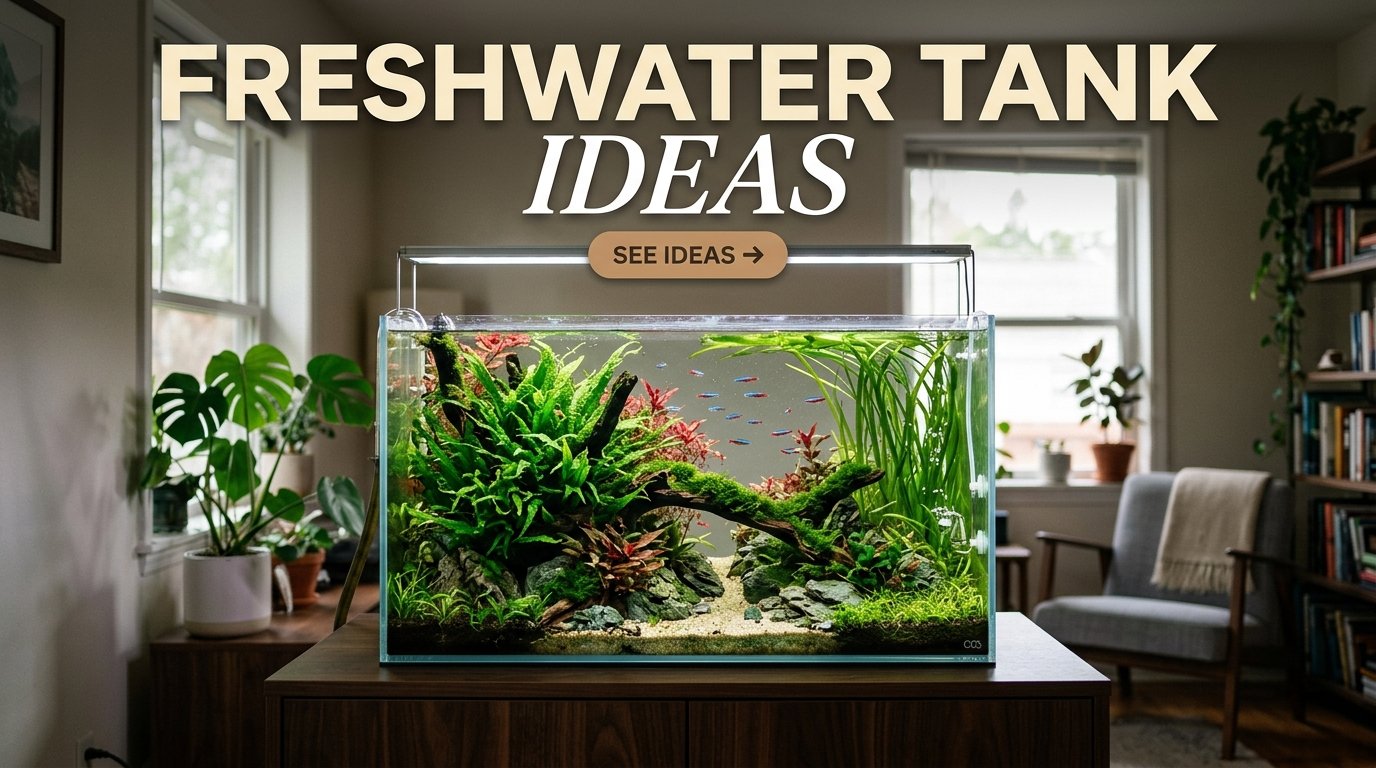
Fresh water tank ideas aquarium designs can help you transform a simple fish tank into a beautiful underwater landscape filled with colorful fish, aquatic plants, natural rocks, and creative decorations. Whether you are setting up your first aquarium or upgrading an existing one, a freshwater aquarium offers endless possibilities for creating a relaxing and attractive display in your home.
Freshwater aquariums are popular because they can accommodate many different fish species, from colorful guppies and bettas to peaceful schooling fish and fascinating bottom dwellers. You can choose a minimalist planted aquarium, a natural river-inspired setup, a vibrant community tank, or a decorative aquarium that complements your interior design.
The best freshwater tank ideas combine visual appeal with the needs of the fish. Proper tank size, filtration, water quality, compatible species, and suitable decorations are essential for creating an aquarium that looks beautiful and supports healthy aquatic life.
1. Natural Freshwater Aquarium Ideas
A natural freshwater aquarium recreates the appearance of an underwater river, stream, or lake. This design uses driftwood, aquarium-safe rocks, live plants, and natural-looking substrate to create a peaceful environment.
Choose sand or fine gravel for the bottom, then arrange driftwood and stones to form a focal point. Add aquatic plants around the hardscape while leaving open swimming areas for fish.
Java fern, Anubias, and Cryptocoryne are useful plant choices for many beginner-friendly natural aquariums. Their different leaf shapes and growth patterns help create depth without requiring an extremely complicated setup.
For fish, consider a compatible group of small schooling species or a carefully planned guppy aquarium. Always select fish according to the tank’s dimensions, water conditions, and adult size.
2. Freshwater Planted Aquarium
A planted freshwater aquarium is an excellent choice for anyone who enjoys greenery and natural aquascaping. Live plants can create shelter, absorb some nutrients, and make the aquarium look more vibrant.
Arrange taller plants at the back, medium-sized plants in the middle, and shorter plants near the front. This arrangement creates depth and keeps the main viewing area open.
Beginner-friendly plants include Java fern, Anubias, Java moss, and many Cryptocoryne varieties. Floating plants can provide shade, although they should not cover the entire water surface.
Lighting should match the plants you choose. Low-light plants can grow without expensive high-intensity lighting, while more demanding plants may need stronger illumination and additional nutrients.
3. Colorful Guppy Aquarium
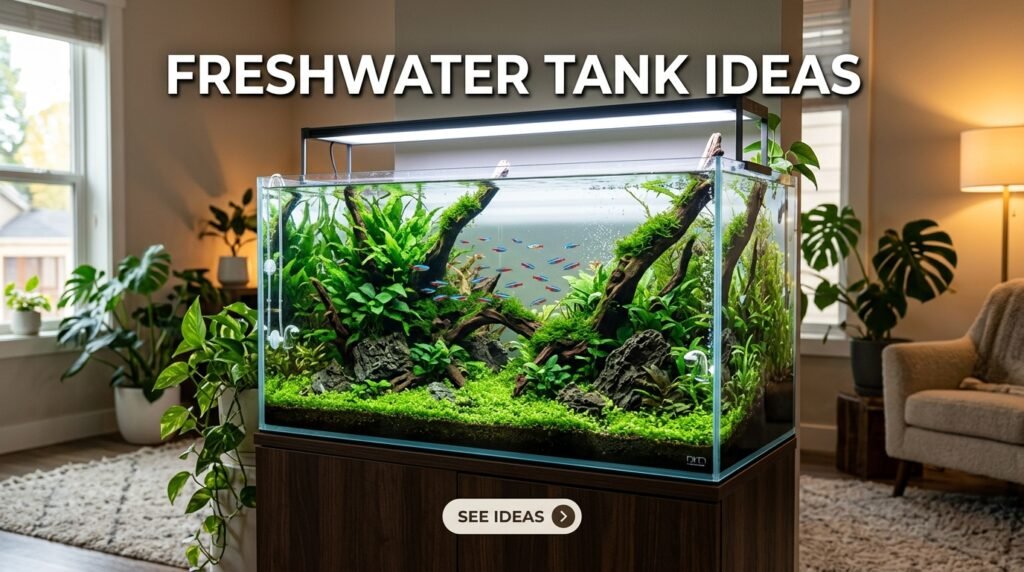
A guppy aquarium is one of the most colorful freshwater tank ideas. Guppies come in many varieties, with different tail shapes, body patterns, and colors, including red, blue, yellow, orange, and multicolored combinations.
A dark background can make their colors stand out, while green aquatic plants create a natural contrast. You can also use a simple layout with open swimming space so that the fish remain the main attraction.
Guppies are active livebearers and can reproduce rapidly. If males and females live together, prepare for population growth and avoid overcrowding.
Provide suitable filtration, stable water conditions, and a varied, balanced diet. A well-maintained guppy aquarium can be both visually impressive and rewarding for beginners.
4. Betta Fish Tank Ideas
Betta fish are known for their striking colors and flowing fins. A dedicated betta aquarium can feature live plants, smooth stones, driftwood, and shaded resting areas.
A planted layout with Anubias and Java fern can create an attractive environment without requiring complex plant care. Choose gentle filtration because strong currents may make swimming difficult for bettas.
A single betta can thrive in a properly maintained aquarium with suitable warm water, a secure lid, and access to the surface. Avoid sharp decorations that could damage its fins.
Although some tankmates may be compatible in particular setups, keeping a betta alone is often the simplest way to avoid aggression and stress.
5. Freshwater Community Aquarium
A freshwater community tank combines compatible species in one aquarium. It can provide movement, variety, and visual interest at different levels of the tank.
For example, a carefully planned setup may include a school of small midwater fish, suitable bottom-dwelling fish, and live plants. The precise combination depends on water temperature, chemistry, adult size, social needs, and behavior.
Do not select fish solely because they look attractive together in a store. Some species need larger groups, while others may nip fins, become territorial, or require different water conditions.
Start with a modest stocking plan, cycle the aquarium before introducing fish, and monitor water quality as the tank matures.
6. Small Freshwater Aquarium Ideas
A small freshwater aquarium can fit on a desk, side table, or dedicated aquarium stand. It is suitable for a compact planted display or certain carefully selected small aquatic animals.
For a minimalist look, use a small piece of driftwood, a few rocks, and easy-care plants. Keep decorations proportional to the tank so there is enough room for swimming and maintenance.
Small aquariums can experience rapid changes in temperature and water quality, so they are not automatically easier to care for than larger tanks.
Choose livestock according to the actual water volume and dimensions. Do not place fish in a tiny aquarium simply because the fish themselves are small.
7. Freshwater Aquarium With Driftwood
Driftwood adds natural texture and creates an attractive centerpiece. Its branches can resemble tree roots or submerged wood in a forest stream.
Position the main piece slightly off-center, then add smaller stones and plants around its base. Attach Anubias, Java fern, or moss to suitable surfaces to create a mature, natural appearance.
Use driftwood intended for aquarium use, prepare it according to the supplier’s instructions, and make sure it is safe for aquatic life. Some wood releases tannins, which can tint the water a light tea color. This effect may be desirable in certain natural-style setups.
Make sure the wood is stable and cannot fall or damage the aquarium glass.
8. Freshwater Aquarium With Rocks
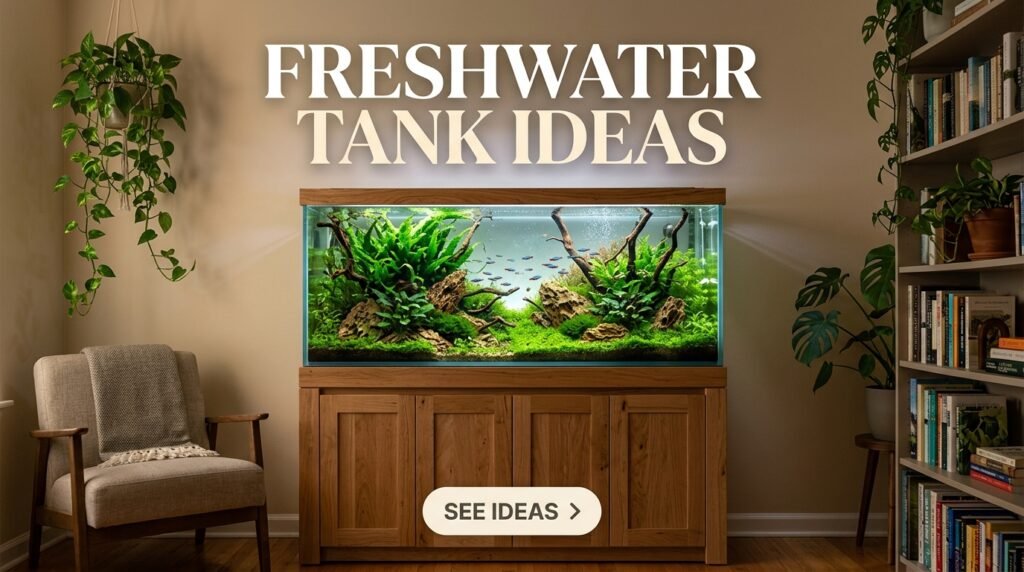
Rock-based aquascaping is ideal for creating a dramatic landscape with strong shapes and contrasting textures. Carefully arranged stones can resemble mountain slopes, riverbeds, or underwater cliffs.
Choose aquarium-safe rocks and arrange them so that the layout looks natural rather than symmetrical. Larger stones can create the main structure, while smaller pieces help blend the design into the substrate.
Avoid unstable stacks and leave enough space for fish to swim through without becoming trapped. Some rocks can alter water hardness or pH, so research the material before adding it to the aquarium.
Low-growing plants and moss can soften the appearance of the stones.
9. Black Background Freshwater Tank
A black background gives a freshwater aquarium a clean, dramatic appearance. It can help colorful fish, green plants, and light-colored decorations stand out.
This design works particularly well for guppies, neon tetras, and planted aquariums. Use a dark substrate and a few natural decorations to create a coordinated look.
A black background can also conceal some equipment, making the aquarium appear less cluttered. However, ensure that filters, heaters, and cables remain accessible for maintenance.
Keep the lighting appropriate for the plants and fish. Excessively bright lighting can encourage algae growth, regardless of the background color.
10. White Sand Freshwater Aquarium
White sand creates a bright, clean appearance and can make a freshwater aquarium feel open and spacious. It pairs well with green plants, dark driftwood, and colorful fish.
Use aquarium-safe sand and rinse it as directed before adding it to the tank. Avoid creating unnecessarily deep layers unless your aquascape and plant choices require them.
Sand can accumulate debris on the surface, so use careful maintenance techniques when cleaning. Some bottom-dwelling fish have particular substrate requirements, which should influence your choice.
A simple white-sand layout with a few rocks and plants can look elegant without needing many decorations.
11. River-Style Freshwater Aquarium
A river-inspired aquarium recreates the appearance of flowing freshwater habitats. Smooth stones, driftwood, sand, and carefully selected plants can form a natural landscape.
Arrange stones in a gentle diagonal line to suggest the movement of water. Leave open swimming space in the foreground and use plants where they naturally fit the design.
Research the habitat requirements of your chosen fish before attempting to recreate a particular river environment. Species from fast-flowing streams may need stronger water movement and high oxygen levels, while others prefer calmer water.
A river-style aquarium should reflect the needs of the animals rather than simply imitate a landscape visually.
12. Jungle-Style Freshwater Aquarium
A jungle aquarium features dense greenery, layered plants, and a natural, overgrown appearance. It is a great option for people who want their tank to resemble a miniature underwater forest.
Use a mixture of plant heights and leaf shapes. Taller plants can fill the background, while moss and smaller plants soften the foreground. Driftwood can create visual structure and provide attachment points for epiphytes.
Leave open areas so fish can swim and you can observe their behavior. Dense planting should not prevent you from accessing the filter or cleaning the glass.
Choose plants with compatible lighting and nutrient requirements to make maintenance easier.
13. Minimalist Freshwater Aquarium
A minimalist aquarium uses a limited number of elements to create a calm, balanced display. Instead of filling the tank with ornaments, focus on a single piece of driftwood, a small rock formation, or a carefully placed group of plants.
A simple aquascape can make a small aquarium feel more spacious. It can also be easier to maintain because there are fewer decorations to remove during cleaning.
Choose a restrained color palette and avoid overcrowding the tank with artificial objects. Ensure that the layout still provides suitable shelter and swimming space for its inhabitants.
Minimalist aquariums can be especially attractive in modern living rooms, bedrooms, and offices.
14. Freshwater Aquarium for a Living Room
A freshwater aquarium can become a beautiful focal point in a living room. A larger rectangular tank on a purpose-built stand often creates a more balanced display than a small tank surrounded by unrelated decorations.
Match the stand to your furniture style. Natural wood can complement warm interiors, while black or white cabinetry suits contemporary rooms.
Position the aquarium away from direct sunlight, heating vents, and busy walkways. Leave enough room behind or beside the tank to access filters, hoses, and cables.
The aquarium’s total filled weight must be supported by a suitable stand and floor. Never assume that an ordinary table can safely hold a large fish tank.
15. Aquarium With LED Lighting
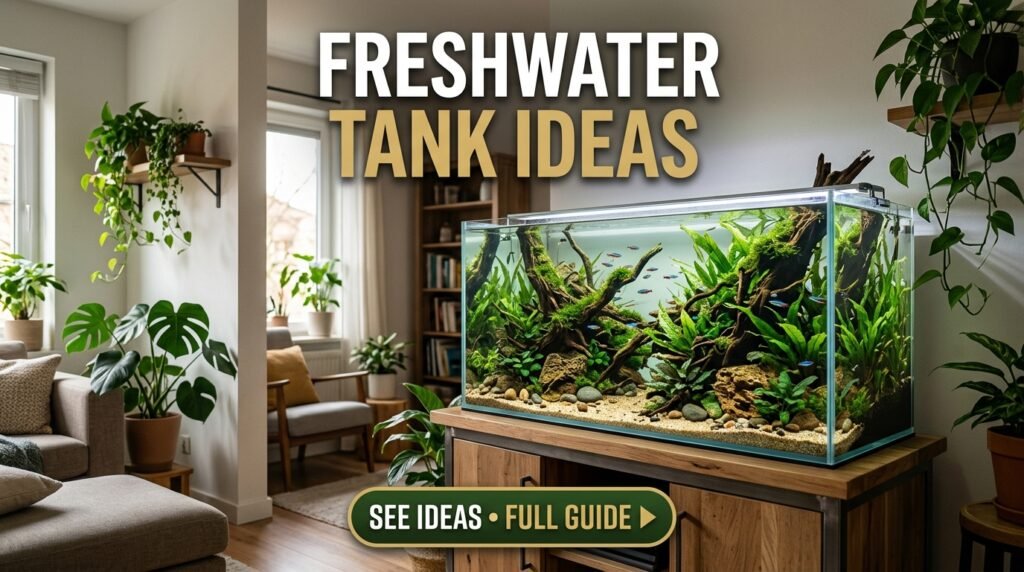
LED lighting can highlight fish colors and make aquatic plants more visually appealing. It also allows you to create different visual moods through brightness and light scheduling.
For planted aquariums, choose a light suitable for the plants you intend to grow. Decorative color-changing lights can be attractive, but they should not replace appropriate lighting for the aquarium’s inhabitants.
Use a consistent daily lighting schedule and avoid leaving the lights on for excessively long periods, as this can contribute to algae problems.
Keep plugs and connections protected from splashes, and use aquarium equipment according to the manufacturer’s safety instructions.
16. Freshwater Shrimp Aquarium
A shrimp aquarium can be a fascinating alternative to a traditional fish tank. Freshwater shrimp such as Neocaridina varieties are available in several colors and can look beautiful against green plants and dark substrate.
Use mosses, small plants, and natural decorations to create surfaces for grazing and hiding. Choose filtration that protects small shrimp from being pulled into the intake.
Shrimp need stable water conditions and may be sensitive to certain chemicals, copper-containing treatments, and sudden changes in water chemistry. Research the needs of your selected species before setting up the tank.
Avoid adding fish that may prey on baby shrimp if you want to maintain a growing colony.
17. Best Freshwater Fish for Different Tank Sizes
The appropriate fish depend on tank dimensions, adult size, group requirements, and water conditions.
| Aquarium size | Possible setup ideas |
|---|---|
| 5 gallons | A carefully planned single-betta setup or suitable invertebrates |
| 10 gallons | A planted shrimp tank or selected small-species setup |
| 20 gallons | Guppies, a small schooling-fish setup, or a planted aquarium |
| 29 gallons | A more spacious community aquarium with compatible species |
| 40 gallons | Larger aquascapes and broader stocking possibilities |
| 55 gallons | A larger community tank or a specialized freshwater habitat |
These are general examples rather than automatic stocking recommendations. Verify the requirements of every species before deciding how many animals to keep.
18. Essential Equipment for a Freshwater Aquarium
A successful freshwater aquarium requires more than a tank and fish. The right equipment helps maintain stable water conditions and makes routine care easier.
- Filter: Provides mechanical and biological filtration to support water quality.
- Heater: Maintains suitable temperatures for tropical species when needed.
- Thermometer: Helps you verify the actual water temperature.
- Aquarium light: Provides illumination appropriate for fish and plants.
- Water conditioner: Helps make tap water suitable when required by the water supply.
- Water test kit: Allows you to monitor ammonia, nitrite, nitrate, and pH.
- Substrate: Supports the chosen design and, where applicable, plant growth.
- Aquarium-safe decorations: Provide visual interest and may create hiding places.
- Maintenance tools: Such as a siphon, algae scraper, and dedicated aquarium bucket.
Select equipment based on tank volume, stocking, and the needs of your chosen species rather than buying the largest or most expensive products automatically.
19. How to Set Up a Freshwater Aquarium
Setting up your tank in the correct order helps prevent common problems.
- Choose a stable, level location away from direct sunlight and temperature extremes.
- Install a suitable aquarium stand that can support the filled tank.
- Rinse the substrate and aquarium-safe decorations according to their instructions.
- Arrange the substrate, rocks, and driftwood before filling the aquarium.
- Add live plants if you are creating a planted setup.
- Fill the aquarium with appropriately treated water.
- Install and start the filter, heater if needed, and lighting.
- Cycle the aquarium to establish beneficial bacteria before adding fish.
- Test the water to confirm that the cycle is complete and conditions suit the intended livestock.
- Introduce fish gradually and continue monitoring water quality.
Cycling often takes several weeks, although the exact time varies. Use water tests to verify the process rather than relying only on the calendar.
20. Freshwater Aquarium Maintenance Tips
Regular maintenance keeps your aquarium attractive and helps prevent water-quality problems.
Perform partial water changes based on stocking, feeding, and water-test results. Remove uneaten food and visible debris, clean the glass when necessary, and inspect equipment to ensure it is working correctly.
Avoid washing biological filter media under untreated tap water or replacing all of it at once, as this can damage the beneficial bacteria that help process fish waste.
Monitor fish behavior and appearance daily. Sudden changes in swimming, appetite, or breathing may indicate stress or an environmental problem.
Keep a simple maintenance record if you want to track water changes, testing, plant growth, and equipment cleaning.
Frequently Asked Questions
What is the best freshwater aquarium for beginners?
A properly maintained 20 gallon aquarium is a versatile choice for many beginners. It provides room for a range of small freshwater setups while offering more water volume than many tiny tanks.
What are the most beautiful freshwater aquarium ideas?
Planted nature aquariums, colorful guppy tanks, minimalist aquascapes, black-background aquariums, and driftwood layouts are popular options. The best design depends on your available space and preferred fish.
Are live plants better than artificial plants?
Live plants can absorb some nutrients, provide shelter, and create a natural appearance. Artificial plants are easier to maintain in some setups, but they should be smooth and aquarium-safe to prevent injuries.
How many fish can I keep in a freshwater aquarium?
There is no universal number. Consider adult fish size, social requirements, activity, filtration, tank dimensions, and water quality. Avoid overcrowding and introduce livestock gradually.
How often should I change freshwater aquarium water?
Many established freshwater aquariums benefit from weekly partial water changes, but the amount and frequency should depend on stocking and water-test results. Do not replace all the water routinely without a specific reason.
Do freshwater aquariums need a heater?
Tropical freshwater fish generally need stable warm water, so a suitable heater is often necessary. Some cold-water species have different temperature requirements. Choose equipment based on the livestock.
Can I keep different freshwater fish together?
Yes, if their temperature, water chemistry, adult size, behavior, and social needs are compatible. Research each species before mixing them.
How do I keep a freshwater aquarium clear?
Use suitable filtration, avoid overfeeding, maintain appropriate stocking levels, cycle the aquarium properly, and perform regular partial water changes. Cloudy water should be investigated rather than treated with random chemicals.
Conclusion
Fresh water tank ideas aquarium designs offer countless ways to create a beautiful underwater world. You can choose a natural driftwood layout, a lush planted tank, a colorful guppy aquarium, a peaceful community setup, or a minimalist display that complements your home.
Start by selecting an appropriate tank size and planning around the needs of your chosen fish. Invest in reliable filtration, cycle the aquarium before adding livestock, and maintain stable water conditions. With thoughtful design and consistent care, your freshwater aquarium can become a healthy, attractive, and rewarding feature in your home.