
 By admin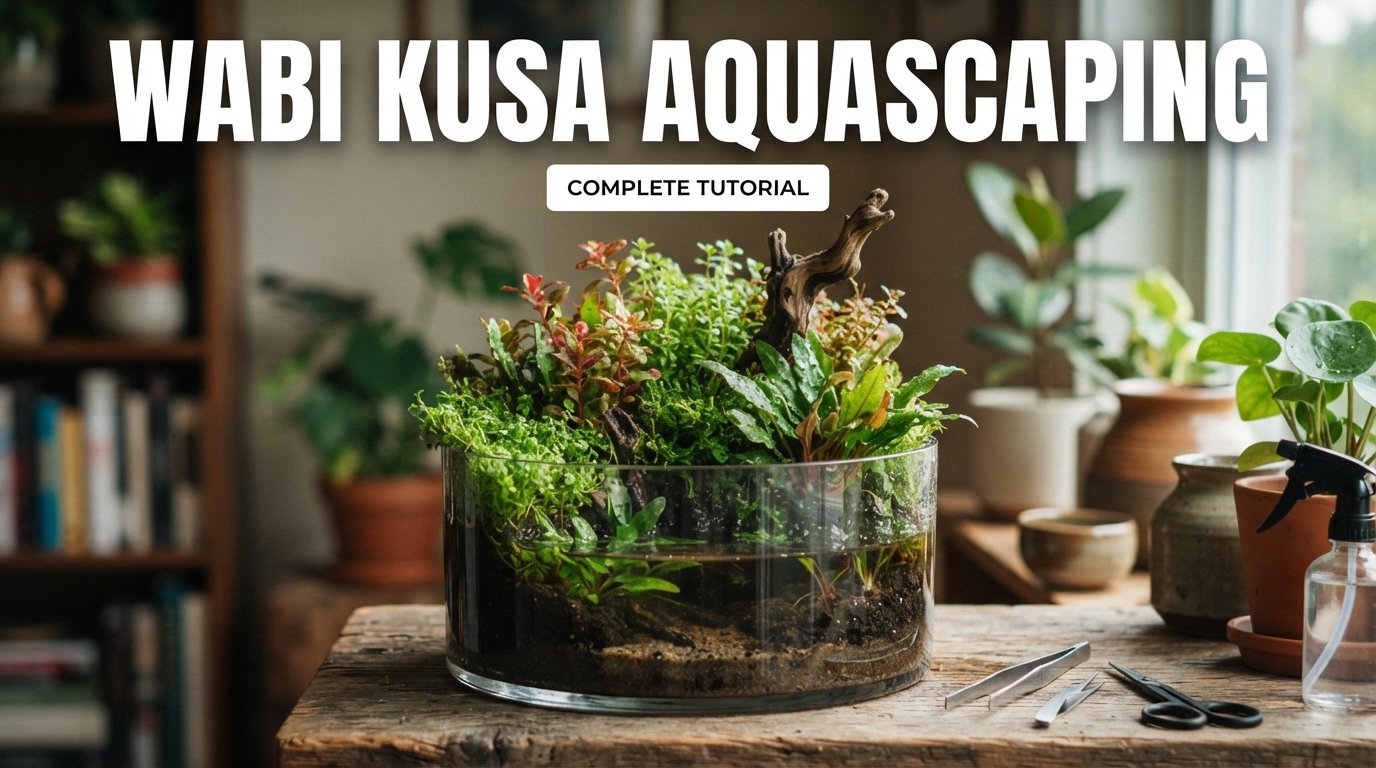
Wabi kusa aquascaping is a unique way to create a beautiful planted display that combines aquatic plants, terrestrial growth, water, and natural textures in one compact environment. Unlike traditional underwater aquascaping, wabi kusa allows plants to grow both above and below the waterline, creating a lush appearance that can resemble a miniature wetland, riverbank, or tropical landscape.
The style is becoming increasingly popular among aquascaping enthusiasts because it offers a natural appearance without requiring a large aquarium or complicated hardscape. With the right plants, lighting, moisture, and container, even a small wabi kusa setup can become an attractive living display.
What Is Wabi Kusa Aquascaping?
Wabi kusa is an aquascaping style associated with Japanese-inspired natural design. The basic concept involves growing a mixture of aquatic and semi-aquatic plants on a planted substrate or growing medium. Some parts of the plants remain underwater while other portions grow above the surface.
This creates an appearance that is different from a conventional aquarium. Instead of focusing entirely on an underwater landscape, wabi kusa aquascaping celebrates the transition between water and land.
The word “wabi” is often associated with simplicity, natural beauty, and appreciation of imperfection, while “kusa” means grass or plants. In practice, wabi kusa displays often have an informal and naturally overgrown appearance rather than perfectly arranged rows of plants.
Why Is Wabi Kusa Aquascaping Popular?
One of the biggest attractions of wabi kusa aquascaping is its natural appearance. Plants are allowed to grow in different directions, creating layers, textures, and colors.
Another advantage is that you do not necessarily need a large aquarium. A small glass container can be enough for a simple wabi kusa display.
Wabi kusa can also be easier to appreciate because you can see both underwater and above-water plant growth. Many aquatic plants change their leaf shape when they transition from submerged growth to emersed growth.
This makes the setup dynamic. As the plants mature, the appearance can gradually change.
Basic Wabi Kusa Aquascaping Styles
There are many ways to create a wabi kusa display. Your choice depends on the container, plants, available space, and the type of appearance you want.
| Wabi Kusa Style | Main Feature | Suitable For |
|---|---|---|
| Mini Wabi Kusa | Small compact display | Beginners |
| Island Style | Raised planted island | Aquariums |
| Jungle Style | Dense plant growth | Natural displays |
| Minimalist Style | Few carefully selected plants | Modern spaces |
| Riverbank Style | Natural transition from land to water | Larger containers |
| Moss Style | Heavy use of mosses | Small displays |
| Floating Style | Plants around open water | Aquariums |
| Paludarium Style | Land and water combination | Advanced setups |
Choosing the Right Container
The container is one of the first things to consider when building a wabi kusa aquascaping project.
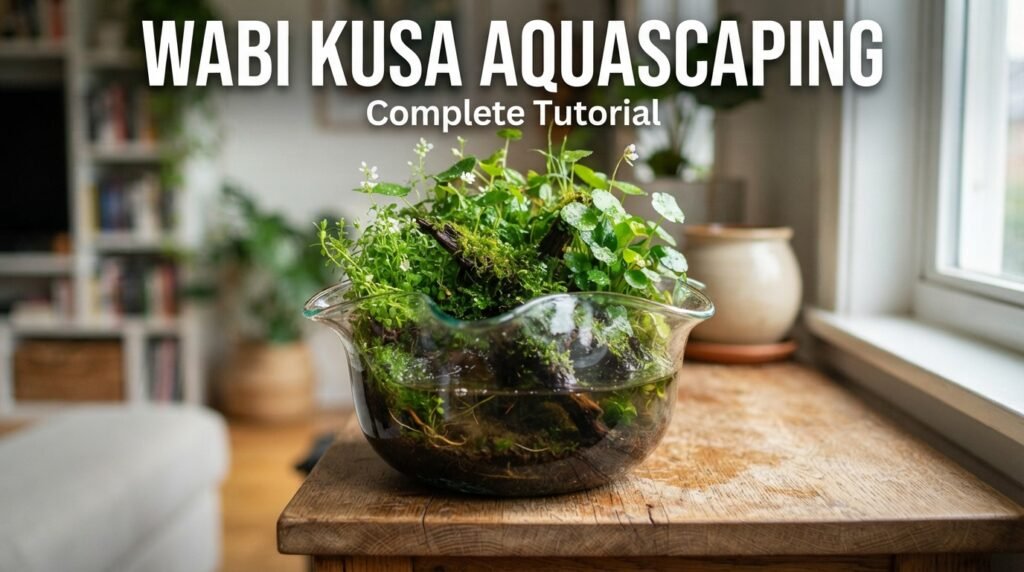
A glass aquarium is a common choice because it provides plenty of room for plants and water. However, bowls, jars, trays, and specialized glass containers can also work for smaller displays.
For beginners, a container with a wide opening is often easier to work with. You can position plants, adjust the substrate, clean the glass, and control moisture more easily.
A taller container can create a stronger vertical appearance, while a wider container gives you more room for spreading plants horizontally.
Choosing Plants for Wabi Kusa
Plant selection is one of the most important parts of wabi kusa aquascaping. The best plants are those that can tolerate either submerged conditions, emersed conditions, or a transition between the two.
Anubias
Anubias is a popular choice because it is hardy and relatively slow growing. It can be attached to rocks or driftwood and can tolerate a variety of aquarium conditions.
Its broad green leaves can provide an attractive contrast against smaller plants and mosses.
Bucephalandra
Bucephalandra is another excellent option for natural aquascaping. Its small leaves and interesting textures make it useful for creating detailed areas in a wabi kusa display.
It works particularly well around rocks and pieces of wood.
Java Moss
Java moss is useful for creating soft, green textures. It can grow across rocks, wood, and other surfaces, helping the hardscape look more established.
Moss can also make a new setup appear more natural as it spreads.
Java Fern
Java fern is a hardy aquarium plant that can work well in many planted displays. Its long leaves can add height and movement to a composition.
Cryptocoryne
Cryptocoryne species can provide attractive leaf shapes and colors. They are especially useful when you want to create a transition between low foreground plants and taller background growth.
Dwarf Hairgrass
Dwarf hairgrass can create a grass-like appearance and works well in open areas where you want a miniature meadow effect.
Monte Carlo
Monte Carlo can be used to create dense green carpets under suitable conditions. It can add a soft foreground appearance when properly established.
Emergent Plants
Plants that grow above the waterline are especially important in wabi kusa. Depending on the setup, you can use suitable moisture-loving plants to create a lush upper layer.
The important thing is to choose species that are appropriate for the humidity and moisture conditions of your container.
Creating a Natural Wabi Kusa Layout
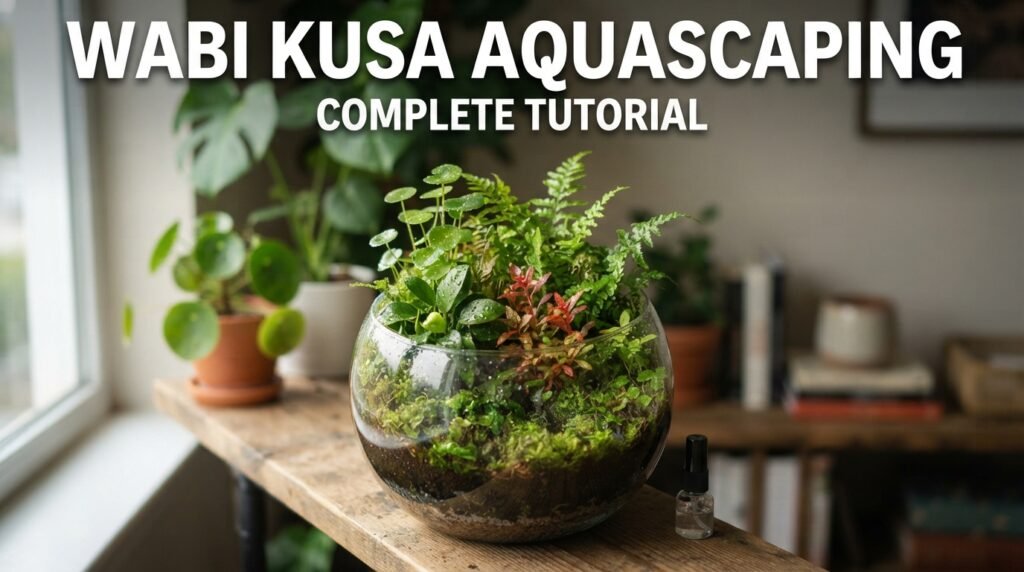
A successful wabi kusa aquascape should not look overly symmetrical. Natural environments usually contain irregular shapes, different plant heights, open areas, and varying textures.
Start by deciding where the highest point of the composition will be. This can be created with a mound of substrate, rocks, or driftwood.
Then gradually move toward lower areas.
This creates depth and helps the display appear larger than it actually is.
Using the Rule of Thirds
The rule of thirds can be useful when designing your wabi kusa aquascaping layout.
Instead of placing the main focal point directly in the center, position it slightly to one side. This can make the composition feel more natural and visually interesting.
You can then use smaller plants or rocks to guide the eye toward the main feature.
Adding Rocks
Rocks provide structure and help define different areas of the layout.
Natural-looking stones with irregular shapes are particularly useful. Try using several rocks of different sizes rather than placing many identical stones.
A larger primary stone can act as the focal point, while smaller stones can surround it.
Avoid arranging rocks in a perfectly symmetrical pattern because this can make the aquascape appear artificial.
Adding Driftwood
Driftwood can dramatically improve a wabi kusa aquascape.
Branches can extend from underwater areas into the emersed portion of the display, creating the appearance of a miniature riverbank or forest floor.
Thin branching wood is especially useful for creating a delicate natural appearance.
Before using driftwood, make sure it is aquarium-safe and properly prepared.
Substrate for Wabi Kusa
The substrate provides both structure and a growing environment for plants.
Aquasoil is commonly used in planted aquarium setups because it can support plant growth and provide nutrients. However, the exact substrate choice depends on the plants and the type of wabi kusa display you are building.
A thicker substrate layer can be useful when creating raised land areas.
You can also shape the substrate to create slopes. A higher back section and lower front section can improve depth and make the display look more spacious.
Building a Wabi Kusa Island
A planted island is one of the most attractive approaches to wabi kusa aquascaping.
To create one, build a mound using suitable substrate and hardscape materials. Keep part of the mound above the waterline.
Plant moisture-loving species across the mound, allowing some plants to grow downward toward the water.
Over time, the plants can cover the mound and create a small natural island.
Wabi Kusa With an Aquarium
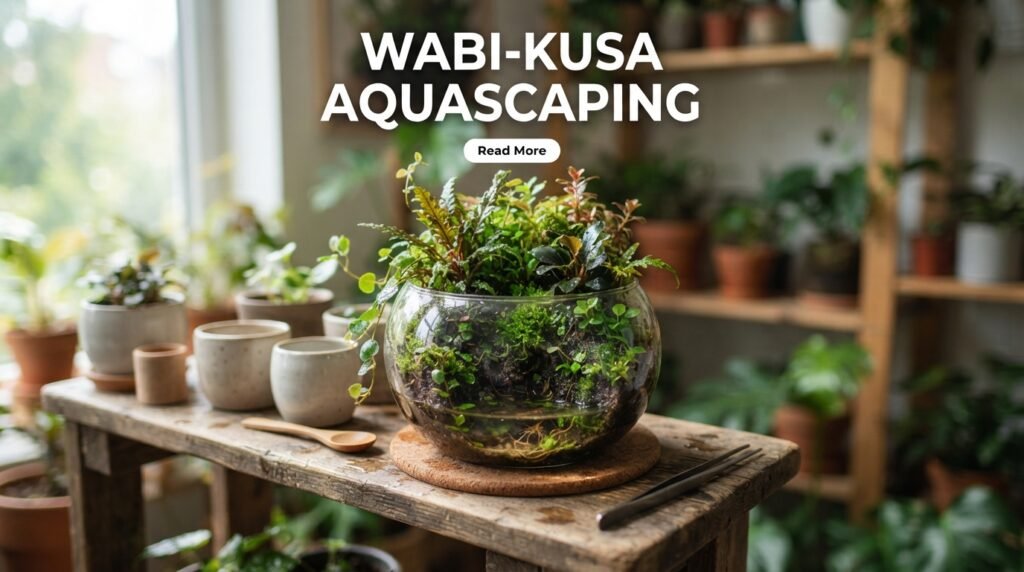
Wabi kusa does not have to exist in a separate bowl or container. It can also be incorporated into an aquarium.
You can create a raised section inside the aquarium where plants grow above the waterline while aquatic plants grow underneath.
This produces a transition between underwater and terrestrial environments.
A larger aquarium gives you more room to experiment with rocks, driftwood, moss, aquatic plants, and emergent vegetation.
Lighting Requirements
Lighting is extremely important for wabi kusa aquascaping because plants are usually grown in both aquatic and emersed conditions.
A quality aquarium light can support submerged plant growth, but plants growing above the water may have different light requirements.
The light should provide enough intensity for the plants without creating excessive heat.
A consistent lighting schedule is generally easier to manage than constantly changing the duration.
If algae becomes a problem, the lighting period or intensity may need adjustment.
Humidity and Moisture
Emersed plants require sufficient humidity, particularly when they are transitioning from underwater growth.
A partially covered container can help retain moisture.
However, completely sealing a container without proper ventilation can sometimes create problems with excessive condensation, stagnant air, or fungal growth.
The ideal balance depends on the plants being grown.
Observe the leaves regularly. If plants repeatedly dry out or show signs of stress, the humidity and watering routine may need adjustment.
Wabi Kusa Aquascaping Without CO2
A wabi kusa setup does not necessarily require carbon dioxide injection.
Many hardy plants can grow successfully without a CO2 system, particularly when lighting, nutrients, and plant selection are balanced.
CO2 can improve growth in some planted aquarium environments, but it also adds complexity.
For beginners, starting with hardy plants and focusing on stable conditions can be a more straightforward approach.
Wabi Kusa for Beginners
If you are new to wabi kusa, start small.
Choose a simple glass container, a few hardy plants, a small amount of hardscape, and an appropriate light.
Do not try to recreate a huge jungle immediately.
A simple composition is easier to maintain and allows you to learn how plants behave as they transition between submerged and emersed growth.
Once you understand moisture, lighting, algae control, and plant growth, you can create more complicated designs.
Small Wabi Kusa Ideas
Small wabi kusa displays are ideal for desks, shelves, bedrooms, offices, and other compact spaces.
A tiny glass bowl containing moss, a small piece of wood, a few stones, and several aquatic plants can create a miniature landscape.
Another idea is to create a small island surrounded by shallow water.
You can also focus on a single plant species for a minimalist appearance.
Large Wabi Kusa Ideas
Larger containers provide more opportunities for dramatic designs.
You can create multiple islands, flowing slopes, larger pieces of driftwood, and different plant zones.
A large wabi kusa display can resemble a miniature forest, wetland, riverbank, or tropical landscape.
However, larger setups also require more maintenance, especially when it comes to trimming plants, cleaning glass, managing water quality, and controlling humidity.
Common Wabi Kusa Aquascaping Mistakes
One common mistake is using too many plants at the beginning.
A new setup may look empty, but plants can grow significantly once established. Leaving some open space allows the aquascape to develop naturally.
Another mistake is ignoring the needs of emersed plants. A plant that thrives underwater may behave very differently above the waterline.
Poor lighting can also cause weak growth, while excessive light can encourage algae.
Overwatering is another issue, particularly in setups with substantial emersed planting. The growing medium should remain appropriately moist without becoming constantly waterlogged unless the selected plants specifically require those conditions.
How to Build a Simple Wabi Kusa Aquascape
Start by selecting a suitable container and cleaning it thoroughly.
Add your substrate and shape it into a natural slope or mound.
Place your largest rock or driftwood piece first. This establishes the main structure.
Next, add smaller rocks and supporting hardscape pieces.
Plant the larger specimens first, followed by medium-sized plants and smaller foreground species.
Add water carefully so the substrate does not become disturbed.
Adjust the plants above the waterline and make sure they remain adequately moist.
Finally, install the lighting and observe the setup over the next several days.
Do not worry if the layout looks slightly different after planting. Natural growth is part of the appeal of wabi kusa.
Maintaining Wabi Kusa Aquascaping
Maintenance is necessary to keep the display healthy and attractive.
Trim plants when they become too dense or begin covering important parts of the composition.
Remove dead leaves quickly because decaying plant material can contribute to poor water quality and encourage unwanted growth.
Clean algae from the glass when necessary.
Perform appropriate water changes if the setup contains aquatic life.
Check the substrate and plant roots regularly.
Also watch for plants that begin growing aggressively into areas where they were not intended.
Can You Keep Fish in Wabi Kusa?
Some wabi kusa aquascapes can be incorporated into aquariums containing fish, but livestock should not be selected solely for appearance.
The aquarium must provide enough swimming space, filtration, stable water parameters, and appropriate habitat for the fish.
Small fish and shrimp may work well in suitable planted aquarium environments, while other species require significantly more space.
A wabi kusa design should support the needs of the animals rather than restrict them.
Can Shrimp Live in Wabi Kusa Aquascapes?
Shrimp can be suitable for certain wabi kusa aquarium setups.
The dense plant growth can provide surfaces for biofilm and hiding places. Mosses are particularly useful because shrimp often graze on their surfaces.
However, water parameters and temperature must remain appropriate for the shrimp species.
A stable mature aquarium is generally preferable to introducing shrimp immediately into a newly established setup.
Wabi Kusa vs Traditional Aquascaping
Traditional aquascaping usually focuses primarily on creating an underwater landscape.
Wabi kusa expands the concept by incorporating plants that grow above the waterline.
| Feature | Wabi Kusa | Traditional Aquascaping |
|---|---|---|
| Above-water plants | Common | Usually limited |
| Underwater plants | Common | Central focus |
| Humidity | Important | Usually less important |
| Land areas | Often included | Usually absent |
| Visual style | Natural transition | Underwater landscape |
| Plant growth | Submerged and emersed | Mostly submerged |
| Containers | Bowls, tanks, trays | Primarily aquariums |
Both approaches can produce beautiful results. The main difference is the relationship between water and land.
Wabi Kusa for Home Decor
A well-designed wabi kusa display can become a natural focal point in a room.
Its combination of glass, water, plants, rocks, and wood works particularly well with minimalist and nature-inspired interiors.
Small displays can be placed on desks or shelves, while larger designs can become part of a living room or office setup.
Because plants continue growing, the display can also change over time instead of remaining static like ordinary decoration.
Final Thoughts
Wabi kusa aquascaping offers a creative way to combine aquatic plants, emersed growth, water, rocks, wood, and natural textures. Its greatest attraction is the transition between underwater and above-water environments.
You do not need an enormous aquarium or an elaborate collection of equipment to get started. A simple container, suitable plants, natural hardscape, proper lighting, and consistent maintenance can be enough to create a beautiful miniature landscape.
The most successful wabi kusa designs usually look natural rather than perfectly arranged. Allowing plants to grow, spread, and change over time is part of the experience.
Whether you prefer a tiny desktop display, a lush jungle-inspired landscape, or a larger aquarium with an above-water section, wabi kusa provides plenty of opportunities for creativity.
FAQs About Wabi Kusa Aquascaping
What is wabi kusa aquascaping?
Wabi kusa aquascaping is a planted design style that combines aquatic and emersed plants, often creating a natural transition between underwater and above-water environments.
Is wabi kusa good for beginners?
Yes. Beginners can start with a small container, hardy plants, simple hardscape, and basic lighting before moving toward more complicated designs.
Does wabi kusa need CO2?
Not always. Many hardy plants can grow without injected CO2, although some species may benefit from additional carbon in suitable aquarium systems.
What plants are best for wabi kusa?
Anubias, Bucephalandra, Java moss, Java fern, Cryptocoryne, and other suitable aquatic or moisture-loving plants can work well depending on whether they are grown underwater or emersed.
Can wabi kusa have fish?
Yes, if it is incorporated into a properly sized and maintained aquarium. Fish requirements should always come first when designing the habitat.
Can shrimp live in a wabi kusa aquarium?
Suitable shrimp can live in some mature wabi kusa aquarium setups when water parameters, temperature, filtration, and habitat requirements are appropriate.
Does wabi kusa need high humidity?
Many emersed plants benefit from higher humidity, especially during transition from submerged growth. The exact humidity requirement depends on the plants.
Can I make wabi kusa in a glass bowl?
Yes. Glass bowls can work particularly well for small wabi kusa displays, provided the container gives the plants adequate space, moisture, and light.
How often should wabi kusa plants be trimmed?
There is no fixed schedule. Trim plants whenever they become overgrown, block other plants, cover the focal point, or begin damaging the overall composition.
Is wabi kusa the same as a paludarium?
They are related but not identical. Both can combine land and water, but wabi kusa traditionally emphasizes planted natural growth and the transition between aquatic and emersed plants.
Can I make wabi kusa without an aquarium?
Yes. Bowls, glass containers, trays, and other suitable vessels can be used to create small wabi kusa displays.
How long does it take for wabi kusa to look established?
The timeline depends on plant species, lighting, humidity, nutrients, and environmental conditions. Many displays become noticeably fuller as plants establish and produce new growth.
What is the most important thing in wabi kusa aquascaping?
Plant selection, moisture management, lighting, and a natural layout are all important. A stable environment and suitable plants are more valuable than having a complicated design.