
 By admin
Nano reef tank aquascaping is the art of designing a small saltwater aquarium using live rock or reef-safe structures, corals, sand, marine life, and carefully planned open spaces. Although nano reef tanks have limited space, thoughtful aquascaping can make them look surprisingly deep, natural, and visually impressive.
A successful nano reef is not simply a collection of rocks and corals placed inside a small aquarium. The arrangement needs to provide swimming space, coral placement areas, water movement, hiding places, and enough open space for the aquarium to breathe visually. Because every element is easy to see in a small tank, good planning is especially important.
What Is Nano Reef Tank Aquascaping?
Nano reef tank aquascaping involves creating a miniature reef environment inside a relatively small saltwater aquarium.
Unlike a freshwater planted tank, the primary structural elements are usually reef-safe rocks, coral skeletons or artificial reef structures, sand, and corals. The goal is to create a natural-looking reef while maintaining practical space for coral growth and maintenance.
Small reef aquariums can feature caves, arches, overhangs, islands, walls, shelves, and open sand beds.
The most successful layouts combine visual appeal with good water circulation and adequate access for maintenance.
Why Is Nano Reef Aquascaping Challenging?
Small aquariums have less room for error.
In a large reef tank, a small change in water chemistry may have a smaller immediate effect because of the greater water volume. In a nano reef, the same type of change can affect the aquarium more quickly.
Aquascaping also becomes challenging because corals grow.
A rock structure that looks perfect when the aquarium is new may become crowded after corals expand.
For this reason, nano reef tank aquascaping should be designed with future growth in mind.
Popular Nano Reef Aquascaping Styles
There are many ways to arrange a nano reef.
| Aquascaping Style | Main Feature | Visual Effect |
|---|---|---|
| Island Reef | Central rock formation | Open and balanced |
| Arch Reef | Rock arch or bridge | Strong depth |
| Lagoon Style | Low rocks and open sand | Spacious |
| Bonsai Style | Branching rock structure | Artistic |
| Wall Reef | Tall rock arrangement | Dramatic |
| Cave Reef | Hollow rock structure | Interesting shadows |
| Two Islands | Two separated structures | Natural balance |
| Minimalist Reef | Limited rockwork | Clean appearance |
Island-Style Nano Reef
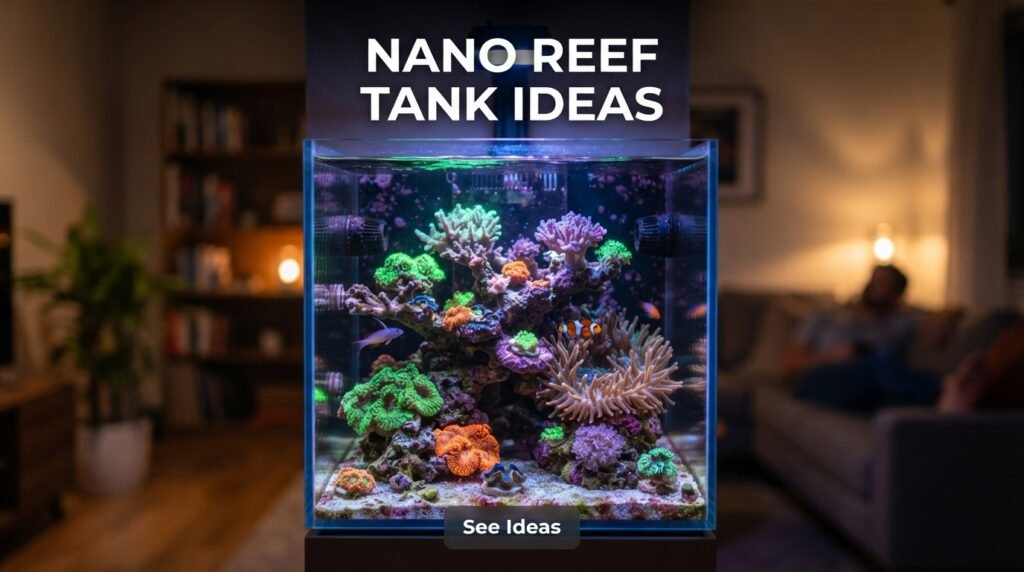
An island reef is one of the easiest layouts to adapt to a small aquarium.
Instead of covering the entire bottom with rock, create one main structure surrounded by open sand.
This gives the aquarium breathing room and makes the tank appear larger.
Corals can be placed at different levels across the island, creating a natural vertical composition.
Two-Island Aquascaping
Two separate rock structures can create an attractive sense of balance.
One island can be slightly larger than the other, with open sand separating them.
This arrangement gives corals different areas to grow while maintaining visual separation.
Avoid making both structures identical because perfectly matching formations can look artificial.
Arch-Style Aquascaping
An arch can become the focal point of a nano reef.
The opening underneath the arch creates a strong sense of depth and gives small marine animals a place to move through.
When creating an arch, make sure the structure is stable and cannot collapse.
Use reef-safe materials and avoid placing unstable rocks directly against aquarium glass.
Bonsai-Style Nano Reef
Bonsai-style reef aquascaping uses branching structures to imitate the appearance of a miniature tree.
The structure usually has a narrower base and several branches extending outward.
This style provides many coral placement points while keeping part of the sand bed open.
Branching reef-safe rock can create a particularly attractive foundation for coral colonies.
Lagoon-Style Nano Reef
A lagoon-style design uses relatively low rockwork and a larger open sand area.
This can create a spacious appearance despite the small aquarium size.
Low structures can also work well when you want corals to remain the primary visual focus.
Choosing Rock for a Nano Reef
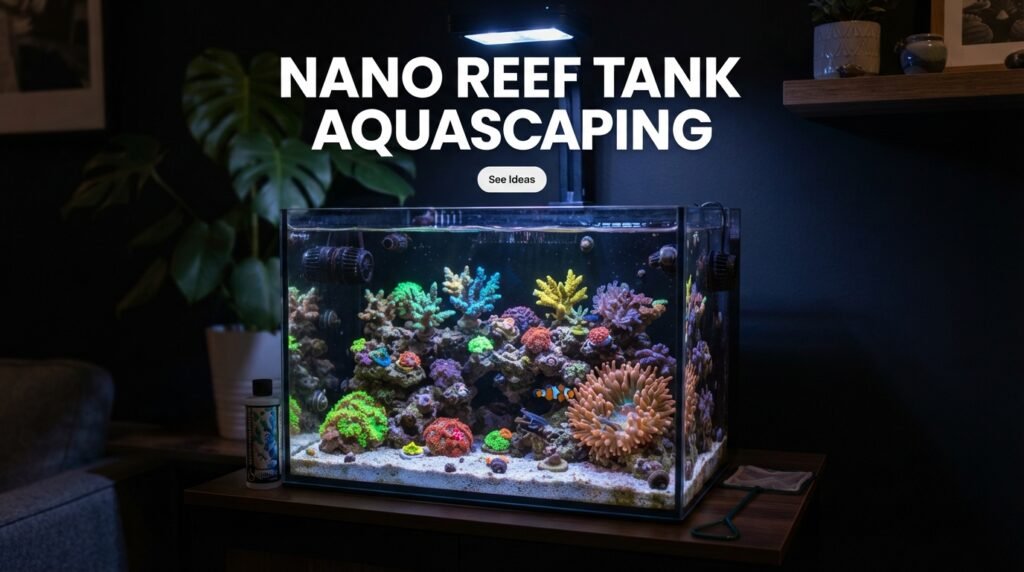
Rock is one of the most important components of nano reef tank aquascaping.
You can use suitable natural reef rock or manufactured reef structures designed for aquarium use.
Look for pieces with interesting shapes, holes, shelves, and natural textures.
Instead of selecting a large amount of rock simply because the aquarium is small, think about how much open water and swimming space you want.
A smaller amount of strategically positioned rock can often create a better composition than filling the aquarium completely.
Creating Open Space
Open space is extremely valuable in a nano reef.
It allows the aquarium to look larger and gives fish and invertebrates room to move.
Open sand can also create contrast against darker rocks and colorful corals.
A common mistake is trying to maximize the amount of rock. More rock does not automatically create a better reef.
Leave enough negative space for the hardscape and corals to stand out.
Creating Depth
Depth can make a small aquarium appear much larger.
One effective technique is to create a higher rock structure toward the back and lower areas toward the front.
Another option is to create an arch or tunnel.
Using smaller pieces of rock in the distance can also create a visual sense of scale.
Avoid placing every rock at the same height because a flat arrangement can make the aquarium look shallow.
Coral Placement
Coral placement should be considered during the aquascaping stage.
Different corals have different space, lighting, and flow requirements.
Place corals according to their eventual size rather than only their appearance when they are small.
A coral that looks tiny when first introduced may eventually occupy a significant portion of the aquarium.
Keep enough distance between colonies to reduce unwanted competition and allow them to develop naturally.
Soft Coral Nano Reef
Soft corals can create movement in a small reef aquarium.
Their flowing forms can contrast with hard rock structures.
When selecting soft corals, consider their eventual growth habits. Some species can spread or grow quickly and may become difficult to control in a small aquarium.
A nano reef should therefore be designed around the long-term behavior of its inhabitants.
LPS Coral Aquascaping
Large polyp stony corals can become attractive focal points in a nano reef.
Their larger polyps and distinctive forms can create dramatic visual interest.
However, spacing is important because some LPS corals can extend tentacles or otherwise interact with neighboring colonies.
Give each coral enough room based on its growth and behavior.
SPS Coral Nano Reef
Small polyp stony corals can produce a highly detailed reef appearance.
They often require more carefully controlled aquarium conditions, suitable lighting, and appropriate water movement.
Because nano aquariums can experience faster changes in water chemistry, maintaining stable conditions is particularly important when keeping demanding corals.
Mixing Coral Shapes
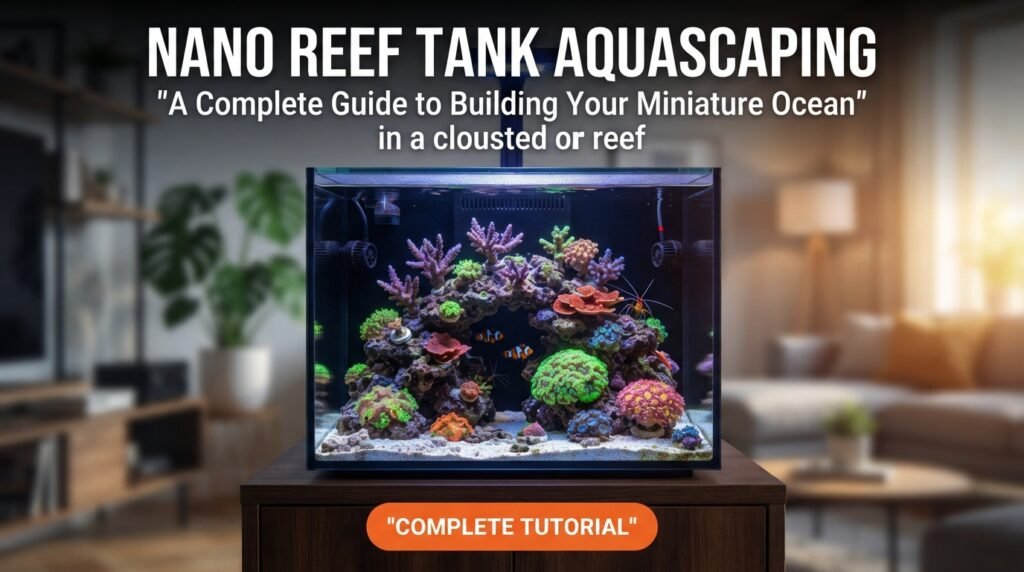
A visually interesting nano reef often combines different coral shapes.
You might use rounded corals alongside branching colonies, encrusting growth, and flowing forms.
This creates texture and prevents the aquarium from looking repetitive.
Try not to place similar-looking corals directly next to each other if they do not provide enough contrast.
Lighting for Nano Reef Aquascaping
Lighting is an essential part of a reef aquarium.
Corals have specific lighting requirements, and the appropriate intensity depends on the species and the aquarium setup.
A reef light should provide suitable coverage across the areas where photosynthetic corals are placed.
Avoid choosing lighting purely because it looks bright to the human eye.
The needs of the coral should determine the lighting system.
Water Flow and Aquascaping
Water movement should be considered before finalizing the rock arrangement.
A dense wall of rock can create areas with poor circulation.
Instead, create spaces between structures where water can move.
Arches, openings, and elevated rock formations can help create more varied flow patterns.
Corals also differ in their preferred flow conditions, so the aquascape should provide areas with different levels of movement.
Hiding Places
Rockwork can create natural hiding areas for fish, shrimp, crabs, snails, and other reef inhabitants.
Small caves and overhangs can make the environment more complex.
However, avoid creating deep spaces that are impossible to clean or monitor.
Every hidden area should still allow reasonable water circulation.
Nano Reef With an Open Sand Bed
An open sand bed can be one of the strongest design elements in a small reef aquarium.
Instead of placing rock across the entire bottom, leave a section completely open.
The contrast between white or natural-colored sand and colorful corals can make the reef appear more spacious.
The sand bed can also create a visual resting area that prevents the aquascape from becoming too busy.
Minimalist Nano Reef Ideas
Minimalism works particularly well in small reef aquariums.
Use one main rock structure, a limited number of coral types, and a generous amount of open space.
This approach allows each coral to become a focal point.
It also makes maintenance and observation easier.
Nano Reef With Branching Rock
Branching rock can create a tree-like appearance.
Place the thicker portion toward the bottom and allow the branches to extend upward and outward.
Small corals can eventually occupy the branches, creating the appearance of a miniature reef tree.
Make sure the rock is stable before adding livestock.
Creating a Coral Garden
A coral garden can be created by organizing several coral colonies across different elevations.
Place larger or visually dominant corals toward the back or center and smaller specimens around them.
Leave appropriate spacing between colonies.
As the corals grow, they can gradually fill the structure without immediately overcrowding the aquarium.
Color Planning
Color can dramatically influence the appearance of a nano reef.
Blue, green, red, orange, pink, purple, and other coral colors can create strong contrast against neutral rock and sand.
However, too many unrelated colors can make a small aquarium appear chaotic.
Choose a general color direction and then add one or two contrasting colors as focal points.
Nano Reef Aquascaping for Beginners
Beginners should keep their first layout relatively simple.
Start with a stable rock structure, an open sand area, and a few appropriately selected corals.
Avoid trying to fill every available space.
Give the aquarium time to mature.
As you learn how the corals grow and how the aquarium behaves, you can refine the design.
Common Nano Reef Aquascaping Mistakes
One common mistake is using too much rock.
Another is placing rock directly against the aquarium glass, which can make cleaning difficult.
Some aquarists also create structures that are unstable or too tall.
Poor planning can make it difficult to remove equipment or reach corals for maintenance.
Another issue is ignoring coral growth.
A coral placement that looks perfect on day one may become problematic months later.
Always think about the mature reef rather than only the initial appearance.
How to Build a Nano Reef Aquascape
Begin by placing the aquarium on a stable surface.
Plan the overall shape before adding permanent rockwork.
Place the largest structural pieces first.
Create open areas around the structure.
Check the layout from the front, side, and top.
Make sure rocks are stable and cannot easily shift.
Create caves, shelves, or arches where appropriate.
Once you are satisfied with the structure, add suitable substrate if the aquarium design includes a sand bed.
Then allow the aquarium to establish appropriately before gradually adding livestock.
Maintenance and Aquascaping
A good aquascape should make maintenance easier rather than harder.
Leave enough space around the glass for cleaning equipment.
Make sure pumps and filtration equipment can be accessed.
Avoid creating areas where detritus can accumulate excessively.
As corals grow, trim or reposition them when necessary.
You may also need to modify rockwork as the reef develops.
Aquascaping is not necessarily finished on the day the aquarium is assembled. A reef is a living landscape that changes over time.
Nano Reef Tank Aquascaping and Future Growth
Planning for growth is one of the most important principles of nano reef design.
Imagine what the aquarium could look like after one year rather than focusing only on its appearance on setup day.
Leave open spaces for corals to expand.
Avoid placing aggressive or rapidly spreading corals next to slower-growing colonies.
Think about how fish and invertebrates will use the structure as they mature.
This forward-thinking approach can prevent many future problems.
Final Thoughts
Nano reef tank aquascaping is about making the most of a small space without making the aquarium feel crowded. A successful design combines stable rockwork, open sand, coral placement, water movement, lighting, and practical maintenance access.
Island layouts, arches, two-island designs, bonsai-style structures, lagoon layouts, and minimalist reefs can all work beautifully in a nano aquarium.
The most important principle is balance. Give the hardscape enough structure to create depth, but leave enough negative space for the aquarium to breathe. Give corals enough room to grow, but use their shapes and colors to create visual interest.
With careful planning and patience, even a small nano reef can develop into a detailed and natural-looking miniature reef environment.
FAQs About Nano Reef Tank Aquascaping
What is nano reef tank aquascaping?
Nano reef tank aquascaping is the process of arranging reef-safe rock, sand, corals, and other aquarium elements in a small saltwater aquarium to create a functional and attractive reef landscape.
How much rock should a nano reef have?
There is no universal amount. Use enough stable rock to provide biological structure and habitat while leaving adequate swimming space, water circulation, and open areas.
Is a nano reef difficult to maintain?
Small reef aquariums can require careful monitoring because changes in water conditions can occur relatively quickly. Stable equipment, consistent maintenance, and appropriate livestock choices are important.
What is the best aquascaping style for a nano reef?
Island, minimalist, lagoon, arch, bonsai, and two-island layouts can all work well. The best layout depends on the aquarium dimensions, livestock, coral choices, and personal design preference.
Should a nano reef have a sand bed?
A sand bed is optional. Some aquarists prefer an open sand bed because it creates visual contrast and a spacious appearance, while others choose bare-bottom designs for specific maintenance or flow considerations.
How do I create depth in a nano reef?
Use different rock heights, open sand areas, arches, caves, and layered structures. Avoid making the entire rock arrangement flat.
Can I keep corals in a nano reef?
Yes, provided the aquarium is appropriately established and the lighting, flow, water quality, and other environmental conditions match the requirements of the selected corals.
How far apart should corals be?
Spacing depends on the coral species and its growth or defensive behavior. Research the eventual size and interaction characteristics of each coral before placing it.
Can fish live in a nano reef?
Some fish species are appropriate for suitably sized nano reef aquariums, while others require considerably more swimming space. Livestock should always be selected according to adult size and habitat needs.
How do I prevent my nano reef from looking crowded?
Leave open sand or water areas, avoid excessive rockwork, and plan coral placement according to future growth rather than the size of newly added colonies.
Can I use artificial reef rock?
Yes. Reef-safe manufactured structures can be used to create stable and attractive aquascapes when they are specifically designed for aquarium use.
How important is water flow in nano reef aquascaping?
Water flow is extremely important because it affects oxygenation, waste movement, coral health, and overall aquarium conditions. The aquascape should allow water to circulate around and through the rockwork.
Should rocks touch the aquarium glass?
It is generally better to leave enough clearance to clean the glass and maintain equipment. Stable placement is also important to prevent rocks from shifting or falling.
How often should I change a nano reef aquascape?
Major changes are usually best avoided once the aquarium is established unless there is a practical reason. Plan the initial layout carefully and make smaller adjustments as corals grow.